

The Planning Board meeting at 8PM this evening will be a roundtable discussion of affordable housing in Medfield. Town Planner, Sarah Raposa, has circulated the 2015 draft Housing Production Plan, the PowerPoint from the 1/21/2015 presentation of the HHP, and the Planning Board minutes where affordable housing was discussed.
Below are links to the draft proposed Housing Production Plan, the 1/20/2015 PowerPoint about the HHP, and inserted below are recent Planning Board minutes when affordable housing was discussed.
20150121-Medfield HPP presentation
January 20, 2015
Members of the PB attend a presentation of the draft Housing Production Plan at the Board of Selectmen’s meeting.
March 2, 2015
The board discussed the issues surrounding a possible affordable housing plan for the town. Mr. Browne does not think this plan would be beneficial for Medfield.
October 5, 2015
- Asked Town Planner to take the lead on coordinating a 40B housing strategy.
- Board wants the town to have an implementable strategy, rather than just waiting for more 40B’s to come to town. Board does not like the Housing Production Plan which it first saw in January, but wants to customize the strategy to meet the town’s goals, not the state’s, but recognize that this is a defense against the potential negative impact of an unattractive state-wide regulation.
- Board likes the idea of dispersing 40B units around town, instead of one very large project. Locations discussed were Medfield State Hospital, Allendale and Joseph Pace and Turtlebrook off Dale Street, Wilkins Glen (now owned by Beacon), Tilden Village, etc.
- Board wants to take a leadership role in a 40B housing plan. The board will meet again to establish a timeline and consolidated mission plan, and will follow up on the issue at each meeting. A reasonable plan will help the town understand the issues.
- Town’s current affordable housing stock is at 4%; once The Parc at Medfield gets on the housing list, the town will be at 6% affordable housing.
- Long-range plan: Revising the 1997 Master Plan, and 1980 residential build-out study
- Board would like to know what the Housing Authority is and can do.
- Town Planner will work with the Assessors to see what town-owned land on which affordable could be built.
- Town Planner will work with Assessors to help evaluate the potential for meeting state requirements through the “1.5% of useable area” metric.
- Board would like to have a joint meeting with the Assistant Town Administrator and others to discuss this, after the Board has worked through some of the issues first, then eventually present a plan to the Board of Selectmen.
- Town needs about 170 units to meet mandated affordable housing goal of 10%. The Board is not in favor of a strategy that requires each development to have a percentage of qualifying 40B housing.
- Suggested the land next to Tilden Village might be the best first project. The Board understands that there needs to be leadership if Tilden Village is to become a realistic 40B project.
- Board asked if the town is up against a full build-out?
- Board wonders if the town can reuse an old school building (Pfaff) for affordable housing.
October 19, 2015
The board wanted to take a leadership role in affordable housing around town. Ms. Raposa handout out guidelines working in Marshfield regarding senior housing which includes some affordable units. Ms. Raposa met with the Housing Authority director, Candace Loewen, who is looking for a grant to fund senior housing concept planning and engineering. There are currently 60 units at Tilden Village, and they would like to add another 60 units but they would have to be three-story buildings because the lot is slightly smaller than the developed site. The board will invite Ms. Loewen to a future meeting.
The town needs another 170 units (approximately) in affordable housing. The 92 units at The PARC apartments at Medfield are not yet reflected in the town’s affording housing stock (DHCD’s Subsidized Housing Inventory).
Mr. Browne noted there are only three towns – Easton, Sudbury, and Westborough – in the state that have met their state-mandated affordable housing number. Mr. Browne asked what happens if the town does not have a housing production plan? Ms. Raposa will get that information and forward it to the board.
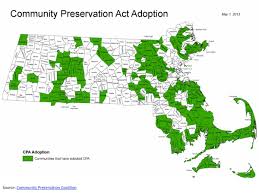
Mr. Lester noted the Community Preservation Act could help the town meet affordable housing needs (as well as conservation land and historic restoration).
Mr. Browne asked if the town needs to approach Beacon Management to see if they will build more housing at Wilkins Glen.
Members agreed the town needs more housing but not at one time; a plan needs to be created that could introduce affordable housing at a reasonable rate. The board will construct an action plan then figure out how to get there; they would like to know what the incremental steps are to get to the town’s affordable housing requirement. Question: What does the town need to do in one year and what amount of time does that buy the town to start another project.
Mr. Dickinson would like clarification on the 1.5% strategy. The board wants to understand the math. Ms. Raposa said she could not explain the methodology behind the former assessor’s analysis of the town’s affordable housing land area but she is working with the current assessor to get the information to the board in time for their Nov. 2, 2015 meeting. Ms. Raposa said the state has issued an RFP through Mass Housing for a methodology on how to calculate the 1.5%.
Mr. Dickinson suggested Medfield could set a precedent and create a plan that could be replicated by other towns. He asked if it would make sense to meet with towns whose 1.5% affordable housing plans were rejected.
Ms. James asked Ms. Raposa to provide the board with a map that indicates (1) land that is not considered part of the housing stock (town-owned land, federal land, etc.), and (2) shows the properties on which affordable housing could be built.
Ms. Raposa said she could have information at the next meeting for the board to review.
Mr. Dickinson asked Ms. Raposa to track down the lawyer for any of the three town’s whose bid was refused and possibly hire them to represent Medfield which has a better chance of success.
Ms. James read from page 30 of the draft housing plan regarding safe harbor.
Mr. Diggans summarized, the board would like:
- Clarification on the 1.5% calculation
- Talk to the town’s current assessor
- Track down and talk to attorney(s) who defended other towns’ affordable housing plans
- Friendly vs. Unfriendly 40B – what percentage gives us the 12-month moratorium?
November 2, 2015
Board met with town assessor Yvonne Remillard regarding the town’s 1.5% land area calculation for affordable housing. Ms. Remillard said the formula used by West Boylston was used. 9,370 acres in the communities, removed roads and railroad, and removed water bodies on public lands and not in lots which equals 8,731 acres.
To get to the general land area minimum, you take the total land area (8732) and then started excluding things including land owned by the town except if there is a housing authority on it (Tilden Village), state land (i.e. DCR), federal land(i.e. Army Corps) land, conservation organization (Charles River), mapped conservation easements on private property [it was noted that some restrictions are missing from the calculation, likely more than 20 years old were not caught], some other restrictions provided by the Conservation Commission, cluster zoning land (Bridlefield, Tubwreck, etc.), standing water on private property, FEMA 100-year plains on private land.
Ms. Remillard said, “So, as we did it, we would take out the federal land first, then we would map the FEMA and then wherever else FEMA was existing, we would only count it once” so it wasn’t get counted twice.
At the bottom of the page, is the affordable housing in town. At Turtlebrook, 25% of the units are affordable so the town can 25% of that land. The town is at 36.97 and the 1.5%
of the total available is 65.21, which equals .88 which is a little over half. The town needs 28 more acres devoted to affordable housing.
Ms. Remillard noted this is a first draft at analyzing the acreage, and can be revised. She noted there are no Chapter 61 properties in the calculation. Schools and churches were not excluded.
The Board noted that Tilden Village would be about six acres. It was suggested some could be built at Medfield State Hospital. It was noted this works if the town wins the 1.5% argument. It was noted that no one currently has the 1.5%. Ms. Raposa said that Newton had two during the first six months of the year; the Housing Appeals Court did not count golf course(s) because, essentially, they are developable. It was noted that Newton is a larger town and has some more variables. It was suggested that Stoneham would be closer in concept to Medfield.
Mr. Diggans said that the town could consider proposing a reasonably sized affordable housing project of approximately 20 units as part of a plan that would satisfy the 1.5% commitment. Habitat for Humanity options were discussed; Ms. James noted they work with the town with their projects. Senior housing (not affordable housing) at Medfield State Hospital was discussed.
Mr. Dickinson said the town is trying to control 40B in a way that the town is in control. He said it’s the town’s job to get all the facts straight. He asked Ms. Remillard to fine-tune the calculations.
It was suggested to have a discussion with public safety to see which strategy they’d prefer – all affordable housing in one place, or scattered throughout the town. Ms. Raposa said the town will likely hold a some sort of affordable housing summit to discuss this and other concerns.
Mr. Diggans asked what exactly qualifies as “in process” when talking toward affordable housing minimum. Ms. Raposa said 92 units at The Parc are not included in the official SHI calculation yet.
January 4, 2016
Candace Loewen, Executive Director, Medfield Housing Authority (HA), Discussion re Tilden Village Expansion – Candace reviewed the Housing Authority’s interest and past actions in expanding Tilden Village. Raposa met with Candace in September to learn about the Housing Authority and how the Planning Board can help with the possibility of expansion. The HA hired Peter Smith from Oxbow Partners to help with the initial stages of planning and they received support from Mike Sullivan but there has been standstill occurred due to town needs, development needs, and funding. There is as large need for
elderly housing in Medfield in general especially affordable. The list is so long in Medfield that they encourage seniors to try to get in Millis or Foxborough.
Recently State funding was geared towards family housing but is changing direction based on the demand. She feels that the timing is right to re-open the expansion conversation. How to move forward? Start with how it was originally permitted. They want to build 40 units, 2 stories with elevators; and they want to mirror what they have at Tilden. Browne asked about the prior permit. The original permit was approved for the 60 units that were built but not for the additional 40 units on 2.79 acres because the need did not exist. They would need to amend the comprehensive permit. Raposa asked about the potential funding sources to be able to do the development. Candace said that there were programs such as the State’s high leverage asset program or through MA Housing Partnership. She said that she wants to be cautious about funding sources because the Housing Authority wants to oversee the project not ownership. Sullivan discussed funding sources and tax credits, private equity, and state funding and grants.
A realistic time frame would be a 5-year time line to get started; but hopefully things can move swifter with funding. Funding is the highest hurdle. There is a need for rentals and priorities and preference for local (and local veterans). The Planning Board supports the efforts to try to move forward with the expansion.
February 1, 2016
Browne reported his discussions with the Trustees of Reservations about trying to secure the non-buildability of their properties. There is a similar agreement in Dover and the Town might consider something similar that would prevent residential development for a period of 30 years. Dickinson described for the audience the Board’s desire to get in front of the 40B issue and Diggans described the methodology for the 1.5% land area calculation. Steve said that firmness on the charity side might exclude more developable acreage and boost the Town’s percentage. The Board acknowledged that we need more affordable housing but at the pace, place, designs that the Town wants.
March 7, 2016
- Housing planning updates:
- Funding options correspondence with Mass Housing
- Development restriction on Trustee property in Dover and how that could affect our 1.5% land area percentage
- Norwood’s methodology for their 1.53% land area calculation is interesting
- The Board should have a clear methodology to make the case that HAC can’t poke holes in. The Assessors database and GIS database isn’t refined enough to exclude all provide conservation restrictions and easements which preclude development. Dickinson said that time is of the essence. Browne said we will create the proposal to
be proactive with the State with a plan to show them what we really plan to do; they may shut us down. Raposa suggested hiring a consultant to assist the Board.
- Raposa said she will follow up with the Board with an RFP for a consultant to help them with this project to designate additional acreage (28 acres) for affordable housing (place, design, pace that is appropriate for Medfield). The Board thinks it is worth it to be proactive.
- Dickinson said that the State Hospital plan is part of this process.
- Browne thinks this should be part of the special town meeting for the State Hospital Plan in the fall
April 12, 2016
- Mark Cerel, Affordable Housing and 1.5% Land Area Calculation
Raposa gave an introduction to the concept of 1.5% Land Area Calculation. Diggans reviewed the calculation:
| Criteria | |||
| Total Medfield Land Area | 8732 | ||
| Owned by Town (ex Tilden Village) | -1657.31 | ||
| Owned by State (ex DMH House) | -350.81 | ||
| Owned by Fed (Army Corp) | -490.47 | ||
| Conservation Organizations | -1399.72 | ||
| Mapped Con Easements | -23.4 | ||
| Restrictions on Private Land & HOA | -39.05 | ||
| Standing Water on pvt prop | -37.69 | ||
| 100-Year Fema Plains on pvt prop | -385.87 | ||
| Total Available Land Area | 4347.68 | ||
| 1.5% of Total Available Land Area | 65.2152 | ||
| Affordable (SHI) Land Area | |||
| Project Name | Total Land Area | SHI % | SHI Eligible |
| Turtlebrook | 4.78 | 25 | 1.195 |
| Allen Dale | 2.373 | 100 | 2.373 |
| Tilden Village (MHA) | 6.79 | 100 | 6.79 |
| The Parc | 9.22 | 100 | 9.22 |
| Wilken’s Glen | 14.91 | 100 | 14.91 |
| DMH House | 2.49 | 100 | 2.49 |
| total | 36.978 | ||
| .88% land area | Medfield Assessor & GIS, 10/30/15 | ||
The Board seeks to come up with a reasonable and defensible strategy to combat unfriendly 40Bs by rezoning about 28 acres of land for affordable housing. Diggans suggested that approximately 40 units on 30 acres would be a nice development, but would be a leap of faith towards this goal as it is not well defined. Atty. Cerel stated that he didn’t think that this would work. He said that the Town would probably not get the credit that you think automatically. The 40B statute is barebones and DHCD fleshes the statute out in the regulations, along with design guidelines. The legal defenses are also outlined, i.e. when a developer comes in a proposes a 40B to the Town, the Town can deny the application on the basis that the it has reached its 10% SHI goal or has achieved the 1.5% land area calculation. The denial would be litigated with the ZBA, HAC, and ultimately to the Courts. The calculation is not well defined and is not a “bright-light deal-breaker”. The 10% goal may also be challenged because it is a moving target because when a 40B is approved, the units go on the list for a year and then fall off the list if construction is not completed. Also, the year round housing stock is calculated every 10 years with the census. Atty. Cerel said sometimes units fall off the list as affordability restrictions expire.
Diggans said that even though the math might work, there is uncertainty in it being overturned in a challenge.
Cerel was concerned about rezoning the 30 acres and what type of density will be assigned. DHCD does not have a specific threshold for density and it is site specific. Diggans questioned their ability to say that a project is too nice. Cerel agreed and added that DHCD might say that land is being wasted with large lots. Allendale has 6-8,000 sf lots. Dickinson clarified that a 1.5% calculation might not hold up. Cerel agreed and said there might also be unintended consequences. If you put the zoning in place for affordable housing, you might actually meet your 10% based on density. Dickinson thought that having a reasonable plan for the zoned land would be defensible. Atty. Cerel mentioned that there have only been one or two towns that have been upheld.
Cerel put the issue in context in that DHCD’s/HAC’s mandate is to create affordable housing. Usually the developer is going to win, so affordable units get created. There is deference in the courts towards the HAC.
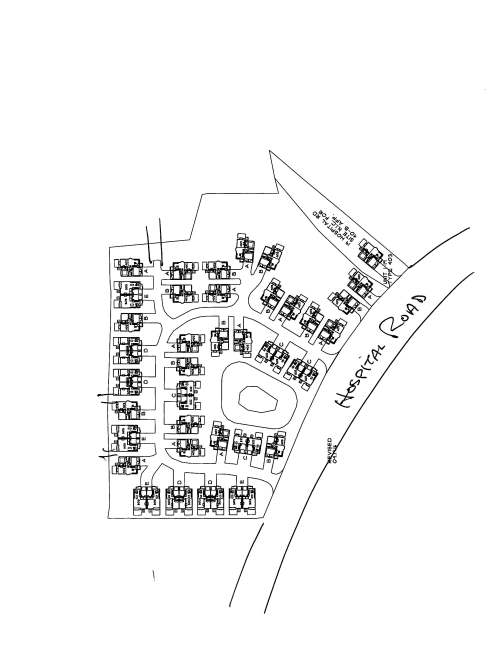
The Board discussed the draft Housing Production Plan, certification, and temporary safe harbor periods. Lemke asked how many units we are short of our goal. The Hospital Road 40B will add 25% of their units towards the goal, but all of the units in the project will count towards the denominator. Cerel noted that any housing that does not have an affordable component will do nothing to advance the Town in the 10% goal and will cause the Town to slide further away. Sullivan asked about the definition of “affordable”; Cerel replied housing for a family making 80% of Area Median Income (AMI). Raposa noted that in Medfield that is almost $100,000, which is about $70,000 for a family of 4 (artificially lowered because 80% is still too high to be compatible with the intent of the law).
Cerel discussed the differences in home ownership and rental projects. If the project is home ownership (like the Hospital Road 40B is proposed to be) the Town will only get the 25% affordable units to count towards the SHI. If the project is rental with 25% affordable rental units, then 100% of the units count towards the SHI. The State created an incentive for towns to
meet the rental needs, acknowledging that communities prefer home ownership projects. The Parc is not an example because the units there all happen to be affordable targeted at 30-50% AMI. Raposa noted that units only count towards the SHI if they are created via 40B or have an affordable deed restriction. Just because a unit is available at a price that fits the “affordable” definition, it will not count on the SHI, known as “capital A” vs. “lowercase a” (counts on SHI as “Affordable” vs. doesn’t count on the SHI, but is still “affordable.”
Lemke asked what remains to be done on the housing production plan? Lester recalled board discussions about not liking the plan. Diggans said that they didn’t want to commit themselves blindly to a plan or timeline. They wanted to understand safe harbors and when the units count (shovel in ground, building permit, completion?). Lester said that they had talked to Candace from the Housing Authority (HA) and felt that the Tilden Village project would be a good kick-off project. Raposa said that the HA wants to retain control of the property so they need funding to make that happen. If they sold the extra land to a private developer, then the project could kick off a lot sooner.
A certified plan would allow for certain safe harbors; i.e. ½% would be 22 units per year for safe harbor. Dickinson asked about having land available and issuing RFPs to developers to create the units. The State Hospital land, Ice House Road, and Hinkley are important and land disposition requires town meeting approval.
Raposa said there are other opportunities in the HPP, i.e. additional info about density and design, education, capacity, advocacy, zoning techniques like inclusionary zoning. James discussed land donations and Habitat for Humanity-type projects. The board discussed home ownership provisions, and pros and cons. DHCH has good info on their website and a lot of the info is in Dropbox. They discussed meeting with the State Hospital Planning Committee about affordable housing component of their planning and the old 440 unit plan.
They further discussed the land area and possibility of excluding the 400’ radius of no construction around wells and if the Trustees properties can be restricted so that the calculation was more solidified. Cerel wondered if the properties in Medfield that the Trustees owns are “sacrosanct” and possibly Article 97 land, and would be upheld as non-developable without a restriction.
Sullivan asked about protections for the town from an exceptionally tall apartment building. Raposa referred to the affordable housing section from SHAC’s 2014 MSH vision plan where a large project for a community like Medfield is 200 units. Cerel discussed the 2004 design guidelines from the Cecil Group. There is a cottage industry of consultants for 40B to help developers with the process. Lester asked if the State Hospital Committee would be the implementers of the housing plan in their planning and if it counts toward safe harbor? Cerel acknowledged that we do not have to have a plan, but no, the planning does nothing to add to safe harbor. James gave some bullets points about housing from the MSH surveys from last summer. Housing was described as both a dream and a nightmare. The survey wasn’t scientific but there are people who want more types of housing and people who don’t want any housing. The public is concerned about density, design, schools, etc.
TO DO:
- Lemke to do research on affordable housing plans, triggers, certifications, safe harbors
- Additional GIS calculations on the 400’ radius of no construction around wells (Polaris)
- Disseminate HPP info & share MSHMPC Community meeting video of 4/11/16 (Raposa)
- Board members will review info (all)
- Meet with MSH Master Planning Committee to share what the Planning Board has learned to see if something can be incorporated in their planning efforts (James)
- Consultant ideas for affordable housing planning (Raposa)
May 16, 2016
Affordable Housing Consultant:
Raposa said, At the last planning board meeting, the board requested that there be a joint meeting with the Planning Board and the State Hospital Master Planning Committee to discuss Affordable Housing. They were very receptive to the meeting and so that is going to happen on June 6th . Raposa asked the Planning Board to consider hiring the consultant who drafted the Housing Production Plan to be present at the June 6th meeting, That is somebody who can speak with experience and great depth of knowledge, not only about Affordable House, but who also wrote the plan, and who knows the demographics of Medfield. Her firm, Community Opportunities Group, submitted a proposal not to exceed $1,500 and that would include: prepping and being ready to be present, or to do a presentation for the 6/6/16 meeting.
The second part is that the Board has approximately $9,000 in the FY16 Budget for consultants that we are about to lose as of June 30th. You may be inclined now or after that June 6th meeting to enter a contract with this Consultant to help the board out with either 1.5% land area or other strategies for the Board to consider; it might be helpful for you to have the expertise available to work on that action plan. Dickinson questioned why pay her for a presentation she has already done. Sarah replied, she would have to prepare, it has been 3 years since she wrote the plan, and 1 year since she made the presentation, so she would need to re-familiarize herself. Dickinson asked what her experience is in 1.5% land area. Raposa wasn’t sure, but the board will get more value from COG than from her.
Diggans asked if it would make sense to engage the attorneys that handled the Newton proposal. Raposa said that they were town attorneys.
Dickinson said the next big lift up is the GIS portion; and asked if this Consultant has the ability to work the next steps. Raposa said, yes they definitely have GIS ability. Her original thought was that we need to know what is on every single property, basically to do property research. So our own Consultants said they could do that for $15/hr. x 4,000 properties, which would far exceed any budget we might have for that. She does not think a parcel by parcel analysis is all that feasible. Diggins said, so do we get something that has validity and backing, to be the basis for an argument that has accuracy and could
withstand scrutiny. Raposa said you are only going to get that if you make up the difference with the 28 or 25 acres, and you have a cushion. What you have to ask is: what is the likelihood of being able to get this amount of land zoned adequately. Diggans said, it is probably going to be ½ acre zoning if you do it for x amount of houses. The problem is you don’t know if what you have done is going to stand up till after you do it and it is challenged. If you put two families on ½ acres, or some sort of nice setting, you could be challenged for making it be too nice. Raposa said, that is where the Hospital Committee conversation comes in too. How does your vision work with the land that is available up there, whether it is the Core Campus or what. Dickinson asked Raposa, if she thinks this Consultant knows intimately the details on the other towns that have tried the 1.5%. Raposa thinks so, this is a Consultant that specializes in affordable housing field. Dickinson said, maybe we should have her at the June 6th meeting, and they can tell us what they recommend and put a proposal together prior to June 20th for follow up work. Raposa added that time is definitely of the essence. Dickinson agreed we should have a follow up contract ready for 6/20/16. Raposa said she will request a proposal from them for the follow up work. Dickinson said he would like equal strategy 1.5% and the housing production. Raposa said everything falls under strategies, I think you want to supplement it with other strategies like Tilden Village, and scatter site projects. James said if you take the $9,300, and divide it by her special rate of $120/hr. = 77 hrs.; so we could keep the scope pretty general and list the different types of strategies.. Dickinson added we need to really steer what she does, because we could end up with something we don’t need or want. James asked Raposa if she thought this Consultant was the best, and Raposa replied that she would do a good job. She is a fine affordable housing consultant, and comes from a respectable firm. James thought she should come prepared to the 6/6/16 meeting with a look at the preliminary 1.5% calculations, so she knows we have progressed somewhat at looking at a different approach. Dickinson said, as a goal for the 6/6/16 meeting, as a part of the discussion, where are these spots for our affordable housing to go, we should identify possibly areas as potential sites for affordable housing, ie., Ice House Rd, Core Campus-a portion of Hospital area, Hinkley property, Tilden Village, a little piece of the sledding hill, so that she doesn’t have to do the research. James added we have to be mindful of other housing development that is going to affect our 10%. James also suggested that our most recent version of 1.5% calculation info be provided to the consultant for consideration and review before the 6/6 meeting. Raposa said that Housing Production Plan identified for areas for housing such as MSH.
Diggans made a motion to appropriate up to $1,500 to Community Opportunities Group. McKechnie seconded the motion. The vote 3-0.




 Medfield02052's Blog