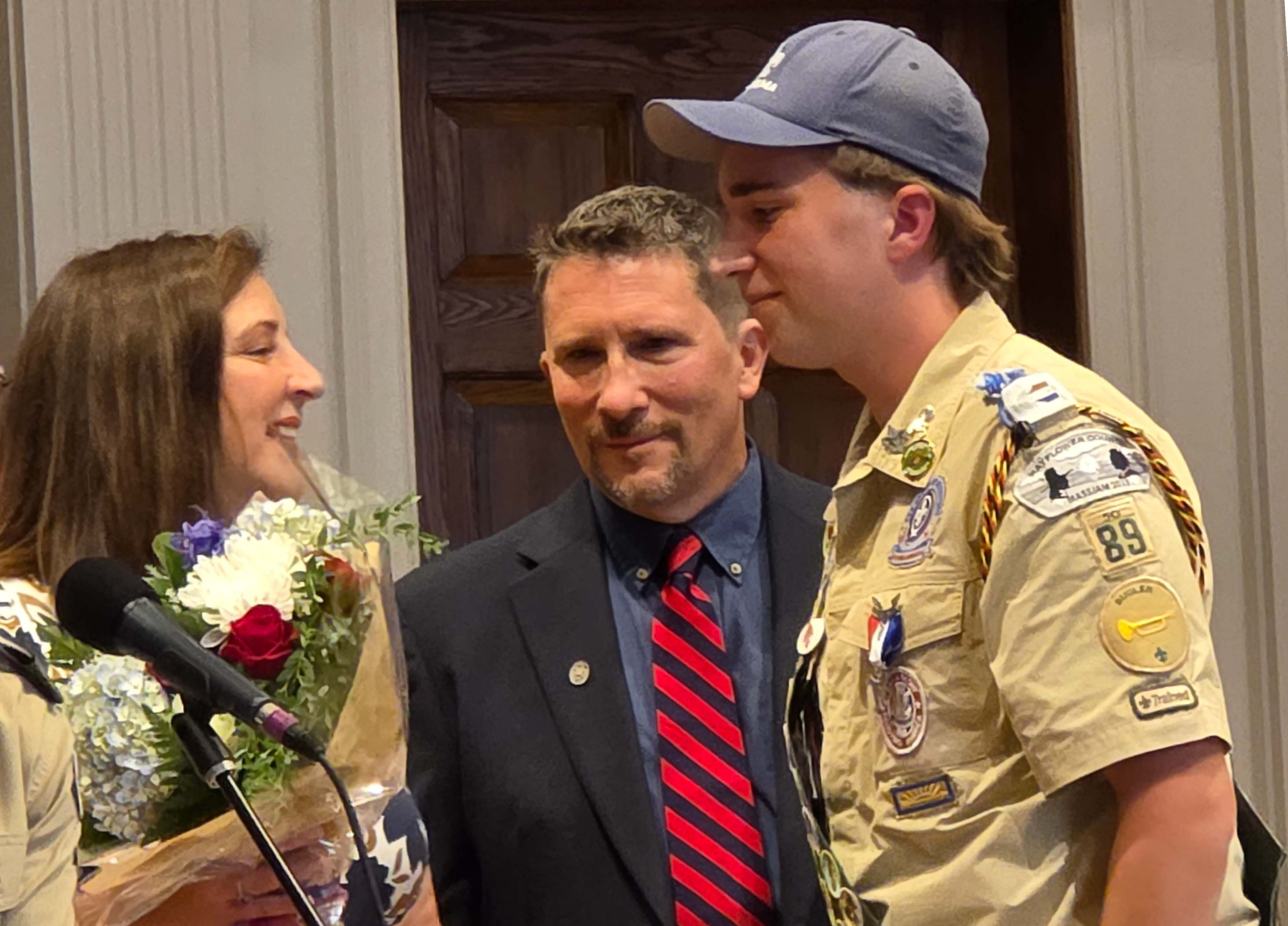
I hold regular monthly office hours at The Center on the first Friday of every month from 9:00 to 10:00 AM. Residents are welcome to stop by to talk in person about any town matters.
Suggested possible questions you might want to ask this month:
Posted onSeptember 4, 2026|Comments Off on GRACE SKOGEN CELEBRATES 103rd BIRTHDAY
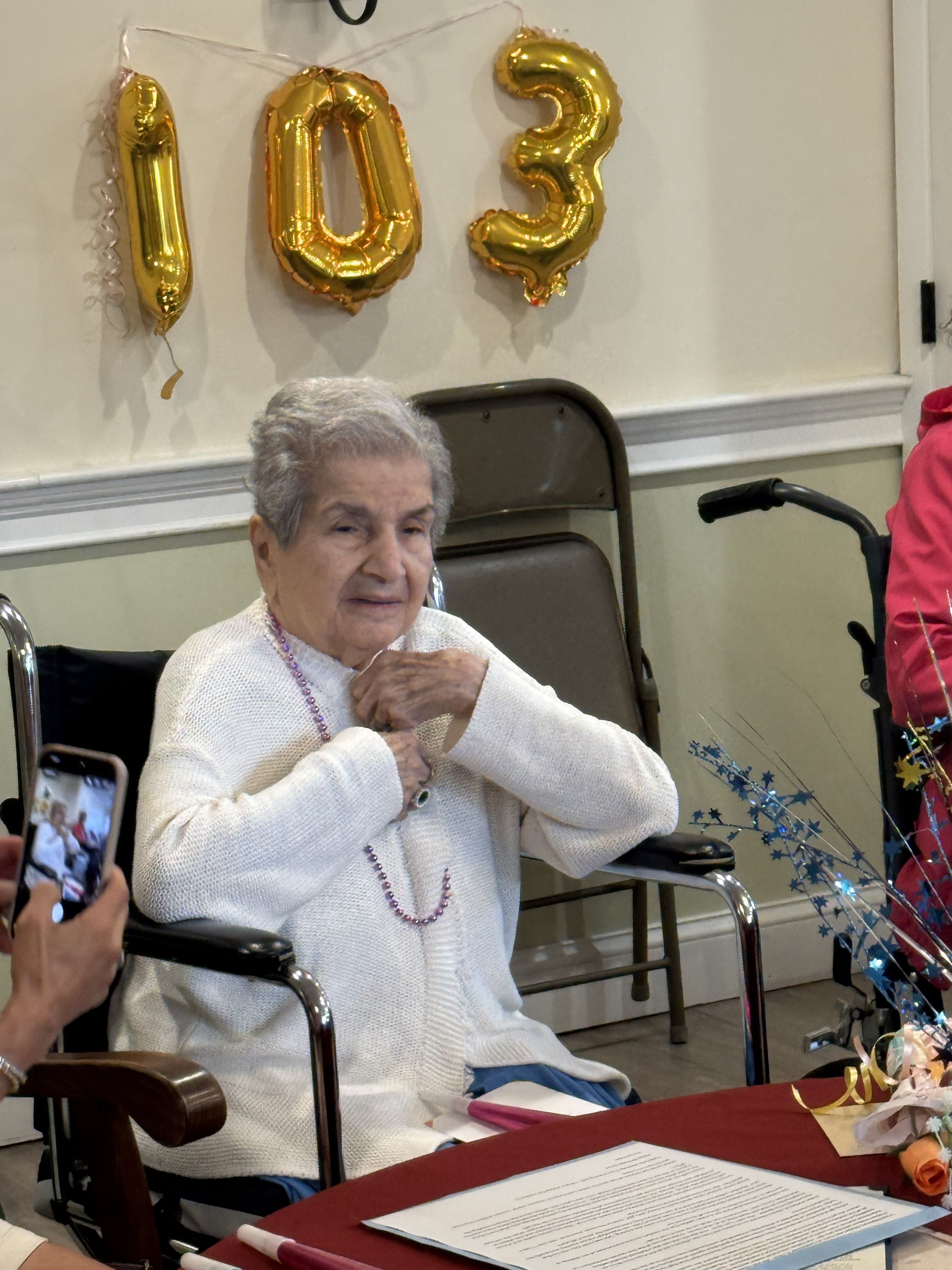
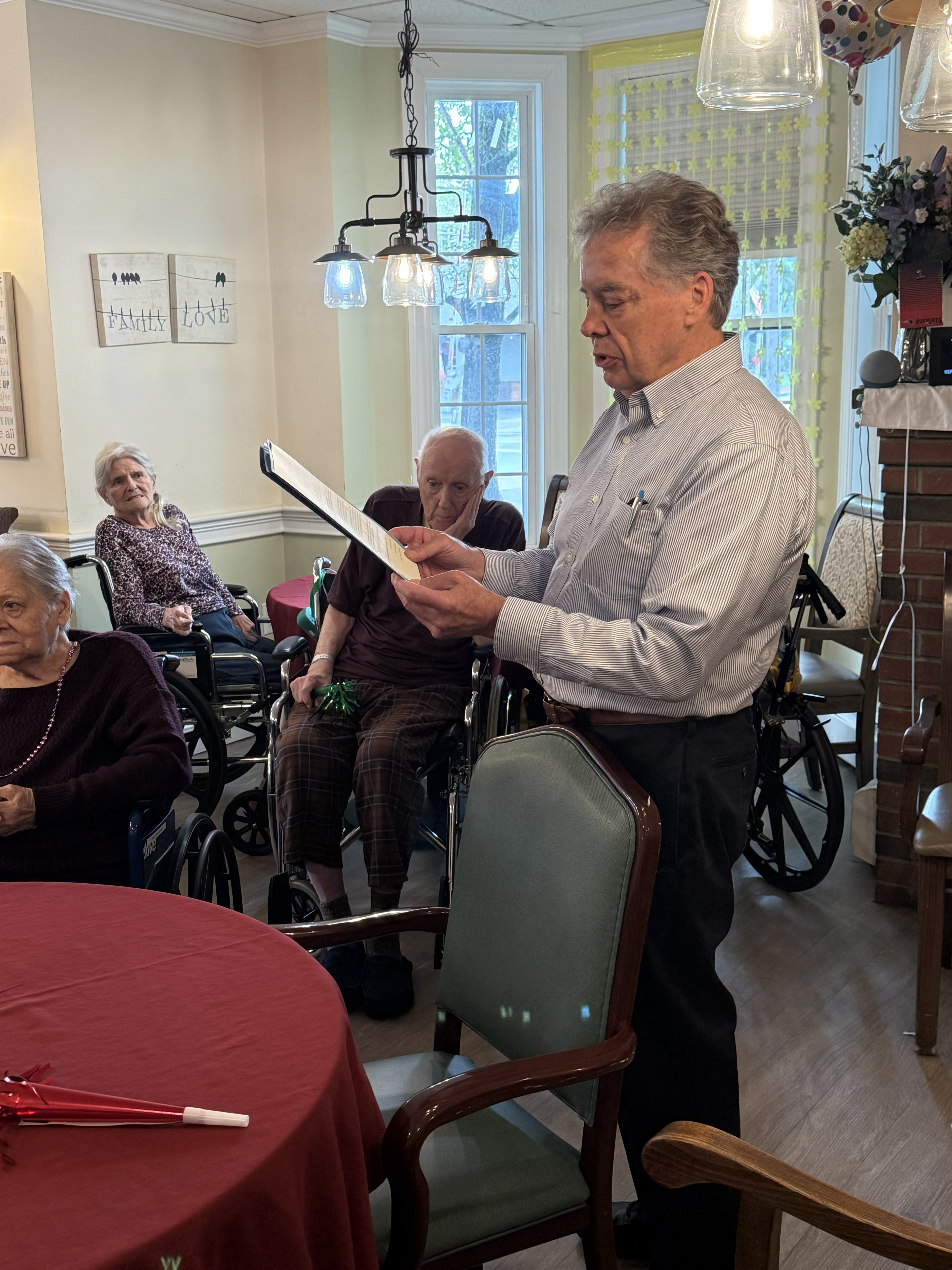
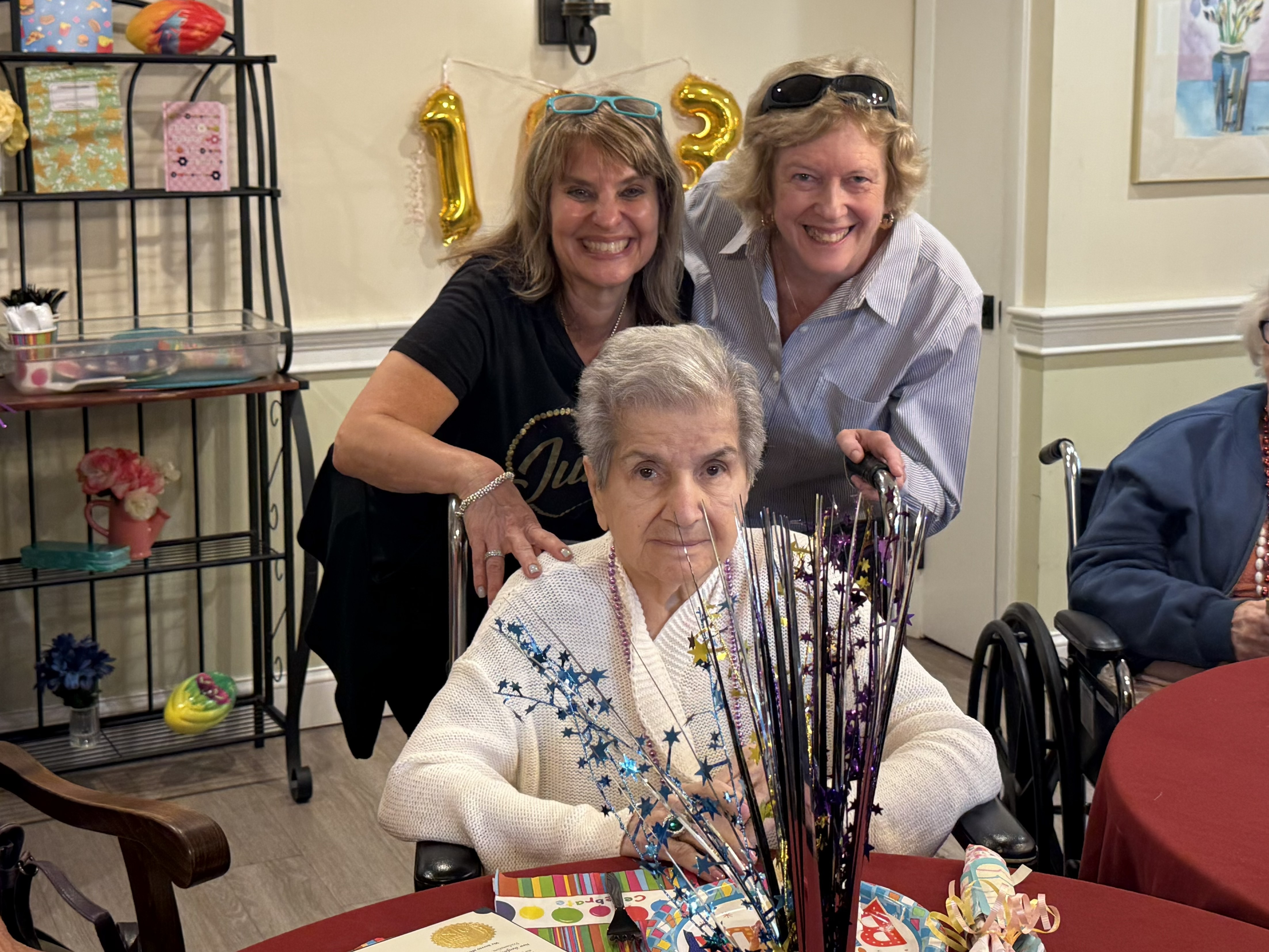
On September 3, 2026 Grace Skogen celebrated birthday #103 at the Thomas Upham House.
I had the delighted to read to her the Town of Medfield proclamation Honoring her on her 103rd birthday.
AMAZING GRACE
Grace (Dilanian) Skogen was born on September 3, 1923. She was raised in Jamaica plain. She was the oldest of three children and the only girl. Her father was a shoe maker until he lost his job during the Great Depression and her mom went to work sewing ties for a manufacturer. Grace remembers helping her mom by traveling on the train with her younger brother to Boston for pickup and delivery of the ties. Her mom made all of her clothes and beautiful dresses. Grace recalls a teacher commenting on her dress and asking her where she got it when Grace said my mother made it the teacher asked if she could make her one also. Although she lived in Jamaica Palin She walked every day to Roxbury Memorial High for girls and graduated in 1941 as president of the senior class. Grace gave the graduation speech at Symphony Hall and can still recite it today. Grace was awarded a scholarship to Radcliff but unfortunately was unable to go she had to go to work to help the family. Grace worked at Athens Olympia as a hostess and then was offered a job at RW Press Prich & Co. an accounting firm in Boston. She said “I can do it.” And she did. She was also a Railroad Annalist before accepting the job that she loved most of all, Wall Street. Grace was one of the first women stockbrokers on Wall Street. Grace said “you have to love what you do and it’s not a job.” She remembers buying her first car a white Cadillac that she couldn’t drive home because of the shifting, so she had to call her brother to drive it off the lot for her. She met her husband, Sheridan on her way home from work one evening. She was in NY City near Central Park when she saw him and asked if it was a safe place to walk. He responded “not for a pretty young lady like you” Sheridan walked her home and the rest is history they were married for around 60 years. Grace never smoked never drank loved to dance, play golf, swim in the ocean and travel. She said “I had a good life.” She and her husband loved to travel Europe. Grace loved clothes and was always seen wearing a dress, heels and a hat. She was always stylish and was so well dressed (she still is). She loved the designer dress sale at Filenes Basement in Boston and was always in line before the doors opened. Her niece, Lynne remembers going with Grace and her mom when she was just a little girl and thought she would get trampled from all the people running in for the sale. Grace built her dream home in NJ she picked out everything that she wanted and was only able to live there for a year when Sheridan was transferred to Florida. In Vero Beach, Florida she felt that there was a need for a plaza, so she got to work and helped design a ten store plaza with offices above the stores (including her office.) Grace never had children of her own her niece, Lynne and her nephew, David are her children they have always been very close. Today we celebrate Grace turning 103. What a wonderful milestone. Happy Birthday Grace We love you.
Prepared by Grace’s family.
From last year’s 102nd Birthday.
Comments Off on GRACE SKOGEN CELEBRATES 103rd BIRTHDAY
Djuna Perkins – the “D” is silent, she is not. She has had the administrative experience needed to run the DA’s office.
Dear Friends,
Please join me in voting Djuna Perkins for Norfolk County District Attorney in the September 1 Democratic Primary. Djuna is the most qualified candidate for the job. She’s a former Assistant Attorney General, Assistant District Attorney and head of the Suffolk County Domestic Violence Unit, and a lawyer with 30+ years of experience standing up for victims of crime.
• Djuna has been unafraid to challenge the political status quo to restore justice to Norfolk County. She got into this campaign early because she wanted to stand up for what is right and amplify the voices of those unheard.
• Djuna’s commitment to justice is shaped by her lived experience. Her mother died by suicide when Djuna was a baby and she grew up in poverty and on public assistance. She understands what injustice is because she has lived it, and she has dedicated her life’s work to protecting those who need it most.
• Djuna speaks truth to power. From calling out the current District Attorney’s failure to charge the murderer of Sandra Birchmore and her refusal to treat those with money, connections and power differently, to her vocal opposition to ICE abuses and attacks on our most vulnerable neighbors from the Trump administration, Djuna will always stand up for what is right.
• Djuna is a longtime resident of Dedham. She and her husband, a Milton Public Schools teacher, have three young adult children. Aside from me, Djuna’s endorsers include Progressive Mass, Progressive MA Western Norfolk County, and over one hundred highly respected city and town councilors, select board members, criminal justice professionals and Democratic and community leaders. A full list is here.
The Democratic Primary is September 1. Early In-Person Voting began Saturday, August 22.
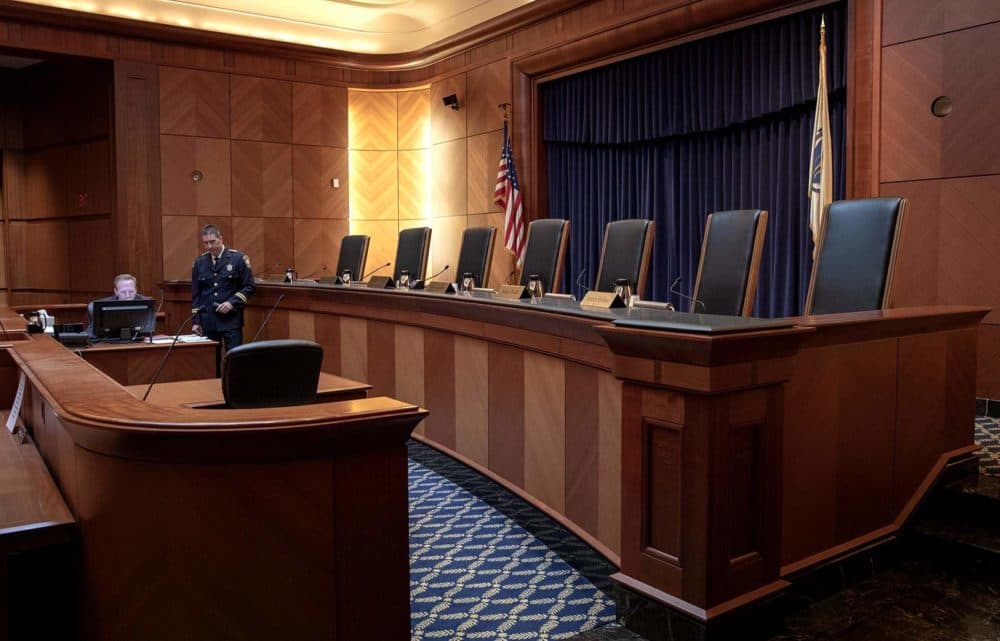
KAFKER, J. The mayor of the city of Quincy (city) seeks to install two ten-foot-tall statues on the façade of the city’s new public safety building at taxpayer expense. One statue depicts Saint Michael, an archangel with wings, stepping on the
head and neck of a demon.3 The other depicts Saint Florian, a larger-than-life Roman soldier towering above a burning building and extinguishing the fire with water from a single vessel. Saint Michael and Saint Florian are recognized as religious saints by the Catholic Church. They are also important symbolic figures for police officers and firefighters, respected for the values of bravery and honor they represent. The plaintiffs, fifteen residents and taxpayers of the city, sued the city and the mayor in his official capacity to prevent the installation of the statues, arguing that the expenditure of public funds on, and the display of, the statues violate art. 3 of the Massachusetts Declaration of Rights, as amended by art. 11 of the Amendments to the Massachusetts Constitution, which provides: “all religious sects and denominations . . . shall be equally under the protection of the law; and no subordination of any one sect or denomination to another shall ever be established by law.” A Superior Court
judge granted the plaintiffs’ motion for a preliminary injunction and denied the city’s motion to dismiss. The city appealed, arguing the plaintiffs lack standing and the statues are permissible under art. 3.
We conclude that the plaintiffs have standing as taxpayers under G. L. c. 40, § 53. We further conclude that the constitutionality of the statues must be evaluated according to the framework we set out in Colo v. Treasurer & Receiver Gen., 378 Mass. 550 (1979), a decision that explored and applied the evolving text, constitutional history, and purposes of art. 3. That decision further considered, as helpful guidance, additional factors recognized in Federal and State case law, particularly the United States Supreme Court’s decision in Lemon v. Kurtzman, 403 U.S. 602 (1971), which reflected the Supreme Court’s establishment clause analysis at the time, to identify improper intermingling of State and religion. Applying the comprehensive reasoning of Colo, we conclude that the motion judge did not abuse his discretion in granting the preliminary injunction. We therefore affirm.4
Comments Off on SJC Blocks Statues of Saints at Quincy PSB
Posted onAugust 18, 2026|Comments Off on Water Main Break near 40 Indian Hill Road
Town alert –
August 18, 2026 Water Main Break- 40 Indian Hill- Hopi Ave Due to a water main break near 40 Indian Hill Rd and Hopi Ave, water service will be temporarily shut off to isolate and repair the break. We are working diligently to resolve the issue and hope to have the water restored as soon as possible. View it on website
Comments Off on Water Main Break near 40 Indian Hill Road
I started this blog to share the interesting and useful information that I saw while doing my job as a Medfield select board member. I thought that my fellow Medfield residents would also find that information interesting and useful as well. This blog is my effort to assist in creating a system to push the information out from the Town House to residents. Let me know if you have any thoughts on how it can be done better.
For information on my other job as an attorney (personal injury, civil litigation, estate planning and administration, and real estate), please feel free to contact me at 617-969-1500 or Osler.Peterson@OslerPeterson.com.