As vaccines become available to people, my mind necessarily turned to when can I get it. The NN Chamber of Commerce newsletter today (a copy of the email appears below) had a good explanation of vaccines and when we might be eligible. I especially found this “new searchable map” helpful, as it connects to the state’s website with all the vaccine data and explanation.
Good morning friends,
Every action has an equal and opposite reaction.
So when Gov. Charlie Baker announced yesterday that he was moving residents 65 or older up on the COVID vaccination priority list, it meant pushing back workers in grocery, restaurants, transit, sanitation, public works, public health workers and K-12 teachers who had been next in line.
Just how much of a delay that creates for those who thought they were next depends on how much vaccine is in the federal pipeline.
Starting Monday (Feb. 1), residents 75 and older are eligible to be vaccinated as the second phase opens; followed by those 65-plus; then those listed above and in the vocations listed here; and then individuals with one comorbidity.
Everyone else is in phase 3, scheduled to start in April, although that’s subject to change.
Baker also promised to accelerate the state’s distribution infrastructure in the coming weeks, adding dozens of new vaccine sites by mid-February, for a total of seven mass vaccination sites and 165 overall.
Massachusetts ranks in the bottom half of the 50 states when it comes to number of vaccine doses administered per capita according to federal data, and lags behind all other New England states, despite having what the state often touts as the best healthcare system in the world, notes Sarah Betancourt at CommonWealth.
Just over 360,000 of the state’s 5.8 million adults have been given at least a first-dose, leaving 5.44 million more.
The email below is from the Massachusetts School Building Authority today.
One of the next steps is for the town to evaluate using the MSBA’s Model School approach. Assistant Town Administrator, Nick Milano, reports that employing a Model School approach saved the City of Marlborough around $11m. on construction of a new school when he worked there, before coming to Medfield.
A subcommittee of the School Building Committee is also looking into whether the town can make the new school a net zero building. Lexington reported to the Select Board that its last new school was a net zero school that saved the town money from the first year, while also being better facility for the students, teachers, and the environment.
Unfortunately, the MSBA has yet to adopt a net zero Model School.
RE: MSBA/Medfield: Dale Street Elementary School: Facilities Assessment Subcommittee Meeting
Good afternoon, Mr. Peterson:
I would like to thank the Town of Medfield (the “District”) and its consultants for their presentation on the proposed Dale Street Elementary School project (the “Proposed Project”) at the Facilities Assessment Subcommittee (“FAS”) meeting on January 20, 2021.
In addition to the comments which were discussed as part of the District’s FAS presentation, Christina Forde, MSBA Project Manager, included the following comments in her opening statements:
· The academic organization of the proposed building;
· Site circulation; and
· Opportunities for outdoor learning.
The following items were topics of discussion:
· Appreciation of the Educational Program;
· Inclusion and location of outdoor learning spaces
· Appreciation of the Main Street concept
· Appreciation of a campus approach
The MSBA will be forwarding a formal Model School Evaluation to the District under separate cover shortly.
Should you have any questions or concerns, please do not hesitate to contact me or Christina Forde
Posted onJanuary 19, 2021|Comments Off on DLS comparison data for towns
This Division of Local Services (DLS) dashboard has really interesting data on comparing towns, one to another, however, it is just a little hard to use because of the small size of the map and the need to roll your cursor over the town on the map to get its data.
New DLS Data Visualization Tool Now Available
The Division of Local Services has a new tool available for quickly finding key financial and demographic information for all 351 Massachusetts cities and towns. The Municipal Finance Snapshot Dashboard uses Tableau visualizations to display data in 14 financial categories including Average Single Family Tax Bill, Local Receipts, New Growth and much more. Selecting a city or town from the map provides a wealth of data about that community. Please visit the Municipal Finance Snapshot Dashboard to explore all the information DLS has to offer in a new, easy-to-use way!
Please contact the Data Analytics & Resources Bureau at databank@dor.state.ma.us with questions or feedback. You are receiving this message through the Massachusetts Department of Revenue’s Division of Local Services DLS Alerts system. These periodic notices include our City & Town e-newsletter, IGRs, Bulletins, Cherry Sheets and other municipal finance-related information. To unsubscribe to DLS Alerts and the City & Town e-newsletter, please email dls_alerts@dor.state.ma.us.
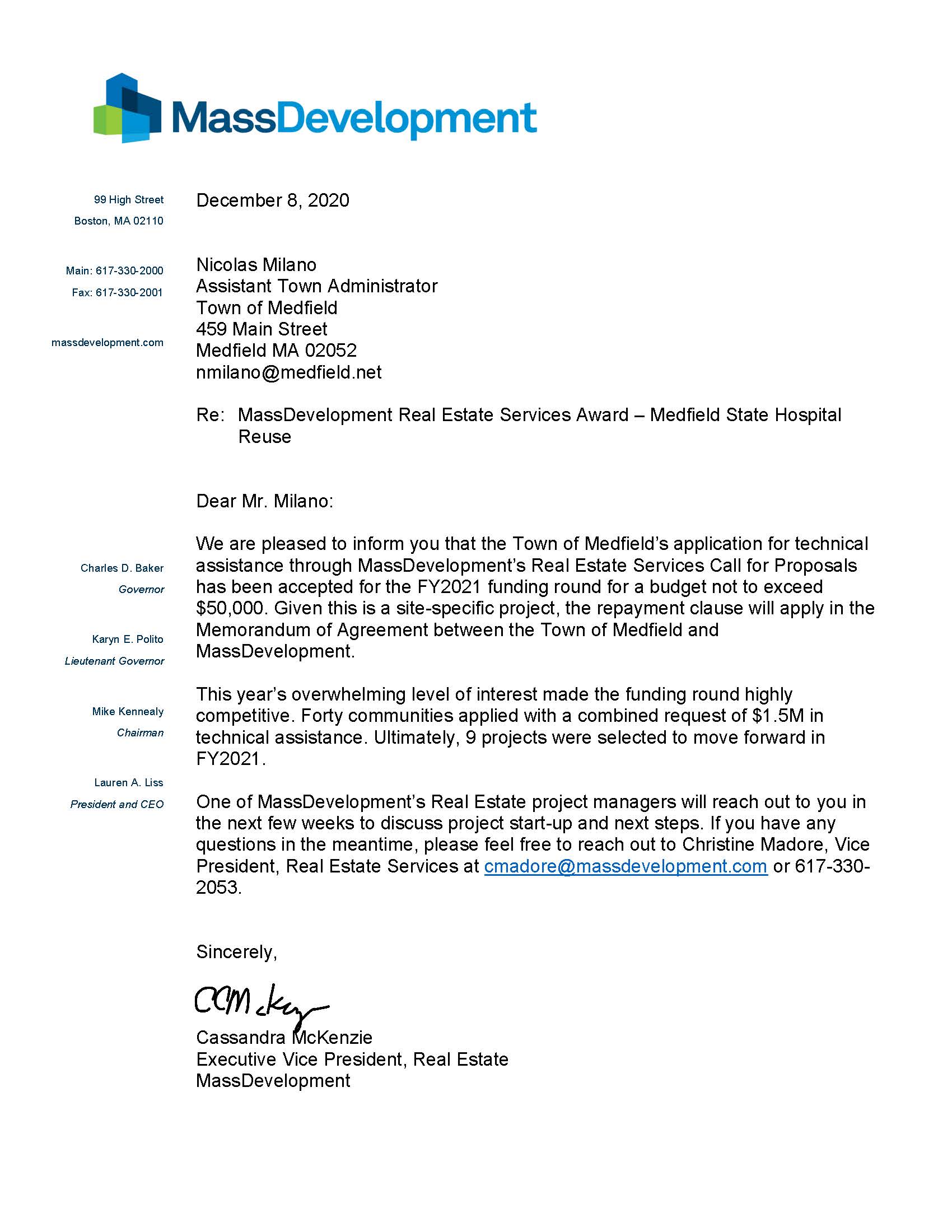
Posted onDecember 17, 2020|Comments Off on $50K MassDevelopment grant for RFP assistance re MSH
The town received a $50,000 state grant to assist with the RFP for the former Medfield State Hospital site. Here is the announcement letter that came yesterday, despiteits date. –
Comments Off on $50K MassDevelopment grant for RFP assistance re MSH
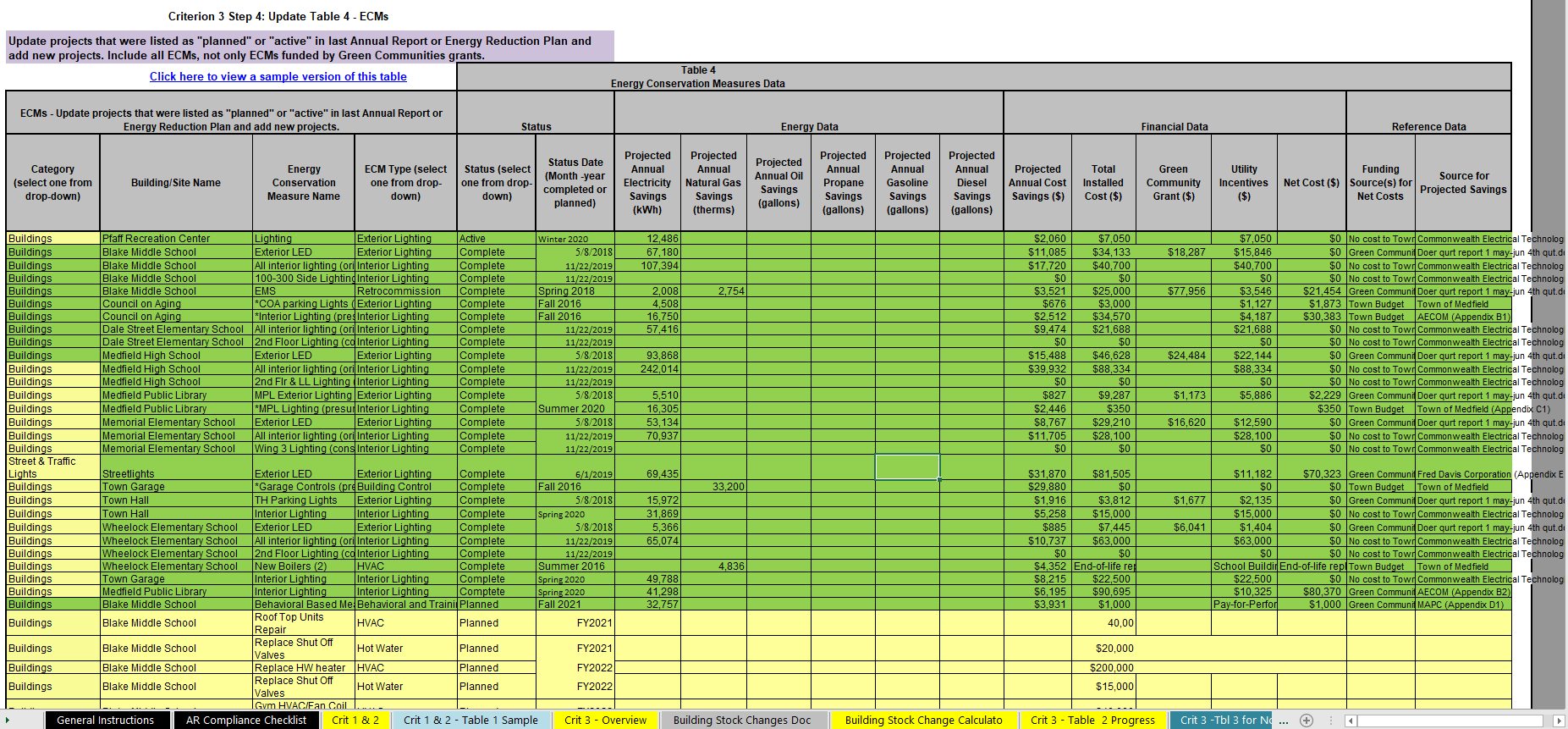
The Green Communities Act requires the town to submit an annual report of what energy conservation measures (ECM’s) have been done and what are planned to be done. Yesterday I reviewed and signed off on the final report for this year. Filing the annual report is a prerequisite to getting the generous Department of Energy Resources (DOER) annual grants, so an important annual step. The Medfield Energy Committee and Amy Colleran, Facilities Director have championed getting the report prepared and filed, this year with the assistance of an Metropolitan Area Planning Council (MAPC) consultant obtained with grant monies.
I found this spreadsheet (partial copy below) listing about 100 ECM’s the most interesting (lots has already been accomplished and lots is still planned). Note how much of what is planned will be paid for by the DOER grant monies.
November 03, 2020 10:10 AM The Board of Health has announced the following case numbers of COVID-19 in Medfield: 74 confirmed, 15 active Read on Click here for more information
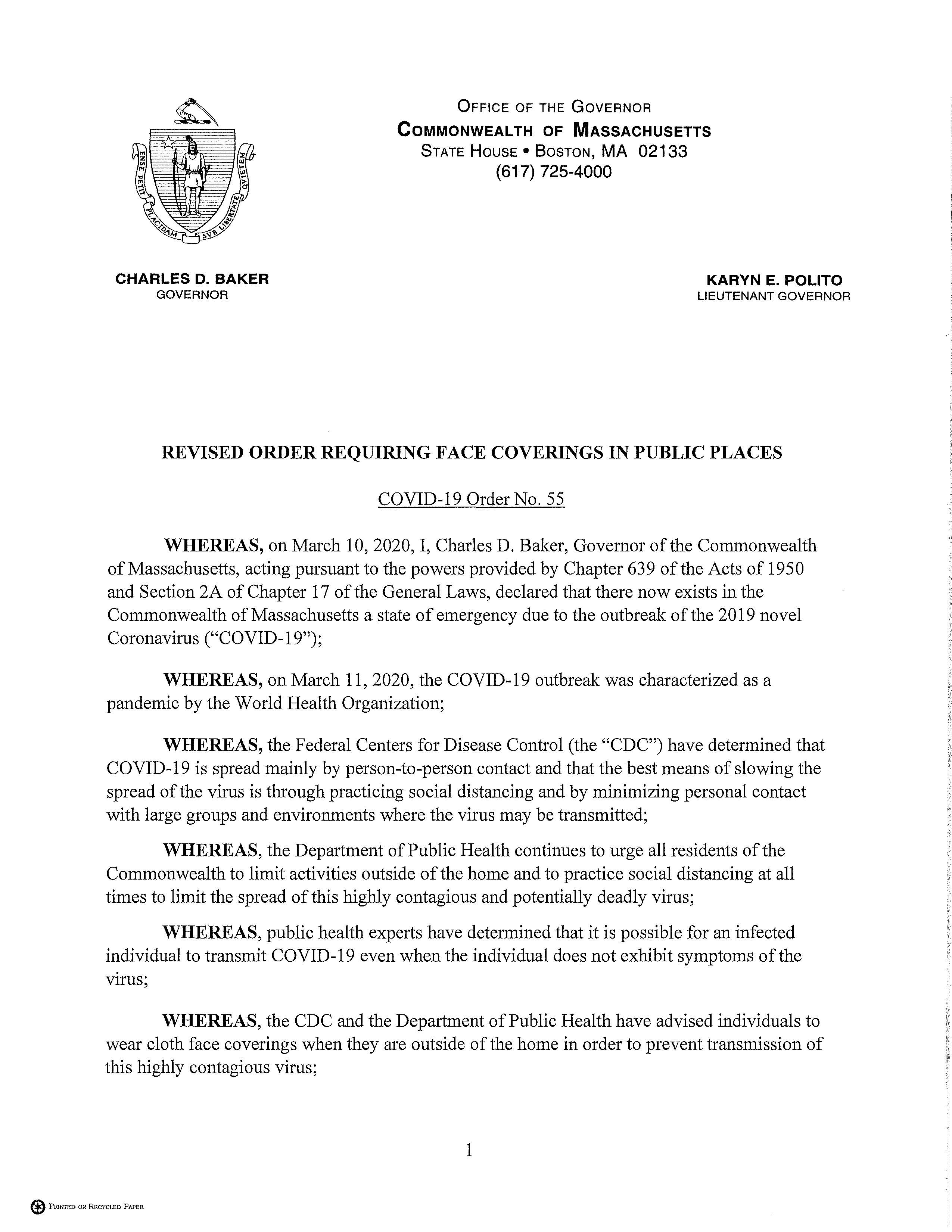
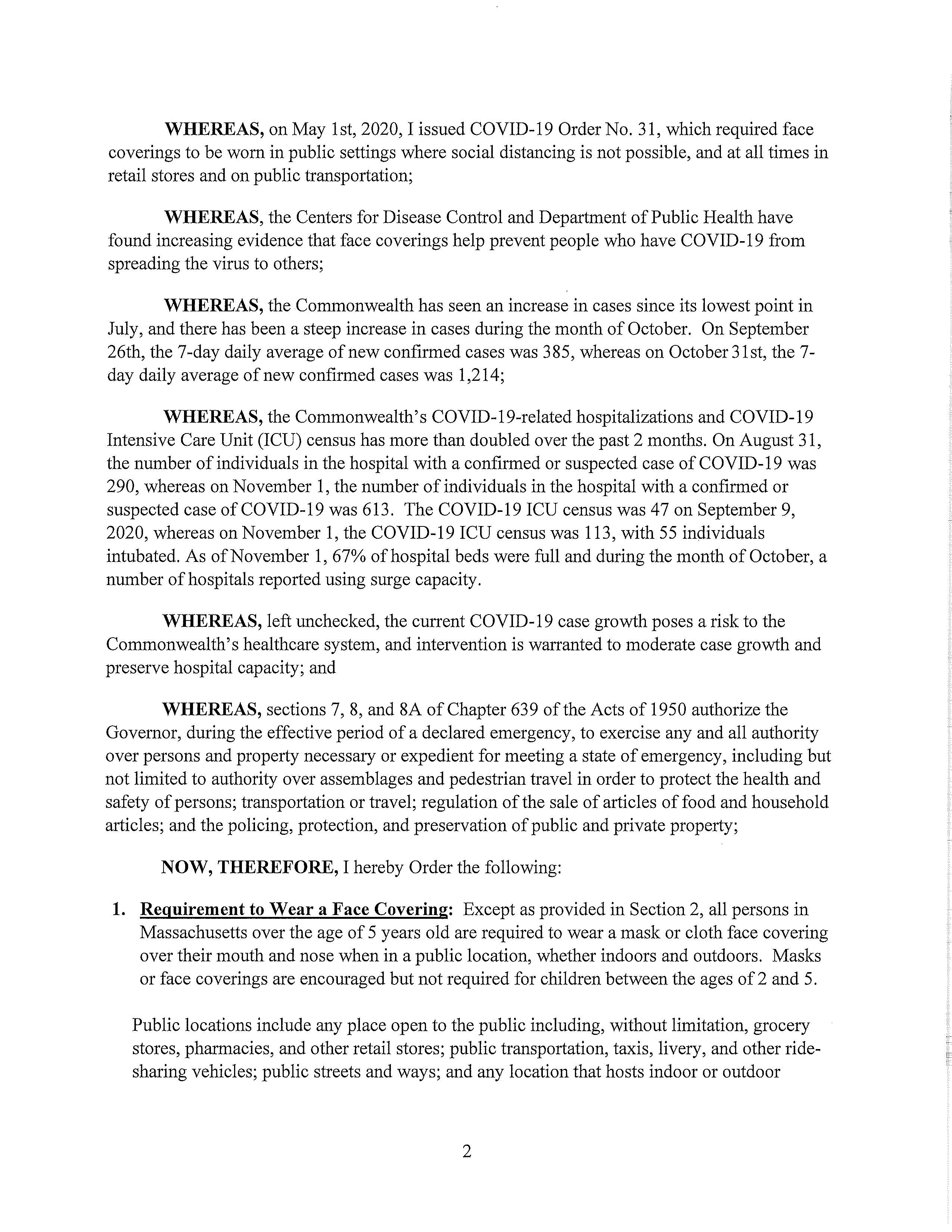
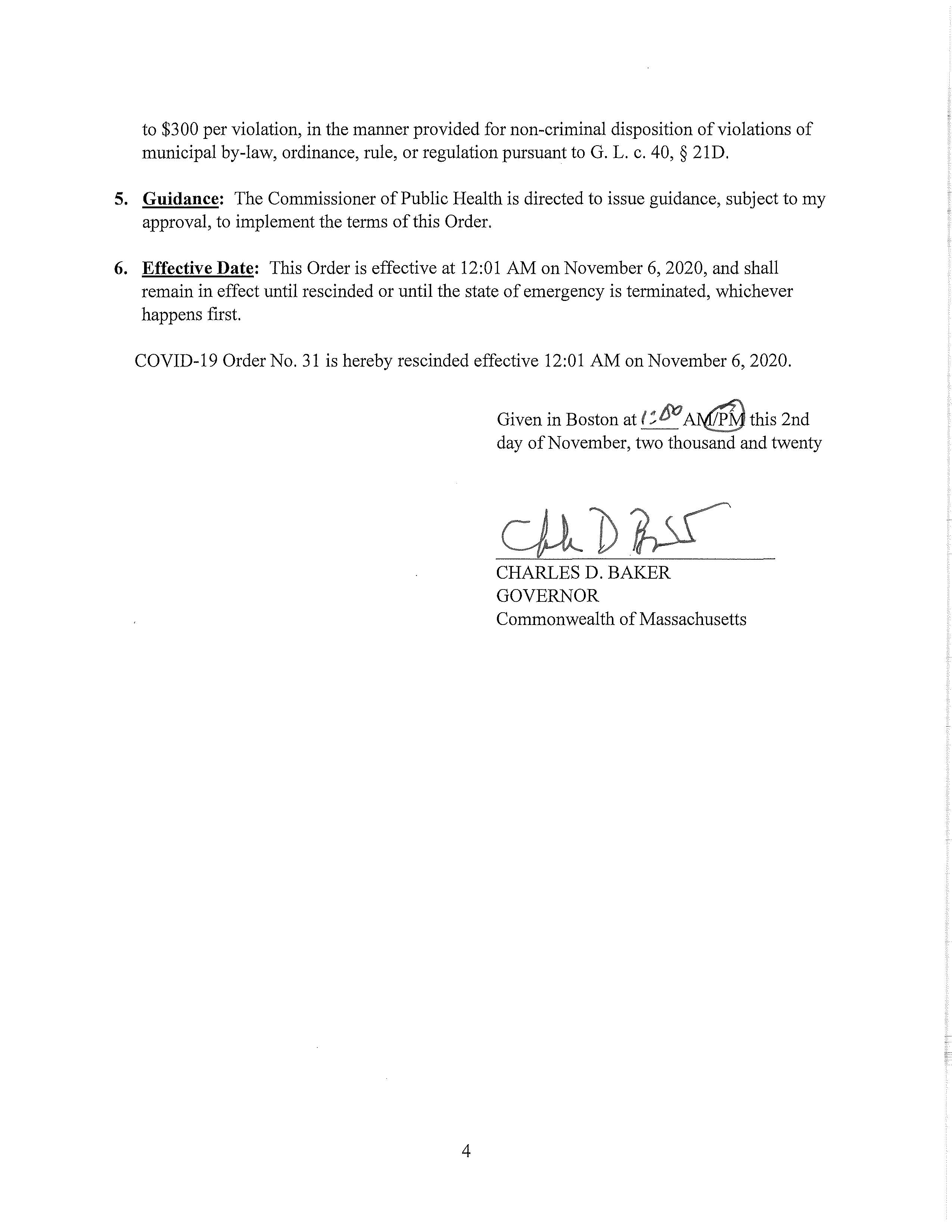
Governor Baker entered the following order yesterday –
all persons in Massachusetts over the age of 5 years old are required to wear a mask or cloth face covering over their mouth and nose when in a public location, whether indoors and outdoors
Comments Off on 74 confirmed, 15 active / Gov. orders masks
Following the state’s declaration of a Level 3 drought for the Charles River watershed, the Town of Medfield is now subject to a mandatory prohibition on all nonessential water use. This restriction goes into effect immediately and remains in effect until further notice. This state-mandated restriction prohibits all nonessential outdoor water use. The state’s announcement of the new restrictions can be found at this link.
In addition, since Monday, September 28, 2020, the Town has been working on a long-planned maintenance project on the Mt. Nebo Water Tower that will take approximately two months to complete. The Mt. Nebo Water Tower has been drained and taken temporarily offline. The Town’s contractor is making repairs to and painting the outside of the water tower as well as making repairs to the interior of the tank. This project will extend the life of the water tower. The Town currently has only one water tower in operation (the Medfield State Hospital Water Tower).
The Medfield Board of Water and Sewage and the Medfield Water Department will continue to monitor the weather, water demand, and the Town’s infrastructure throughout the Mt. Nebo project.
Thank you to all residents for your continued diligence in helping to conserve our water resources.
A Tier 5 water restriction prohibits nonessential outdoor water use.
Examples of nonessential outdoor water use that are now prohibited include:
Irrigation of lawns, gardens, flowers, and ornamental plants via handheld hoses.
Uses that are not required for health or safety reasons
Irrigation of lawns via sprinklers or automatic irrigation systems
Washing of vehicles other than by means of a commercial car wash, except as necessary for operator safety
Washing of exterior building surfaces, parking lots, driveways or sidewalks, except as necessary to apply paint, preservatives, stucco, pavement or cement
This water restriction was put into place due to the state’s Level 3 drought declaration for the Charles River watershed.
Posted onAugust 27, 2020|Comments Off on Medfield awarded $139,316 in GCA grant
Email from the Medfield Energy Committee Chair, Fred Davis –
Announced today: Medfield is being awarded $139,316 in Green Communities funding from the Massachusetts Dept. of Energy Resources.
Congratulations and appreciation to Director of Facilities Amy Colleran, and MEC members for all the work the grant application entailed.
Leveraged with expected utility incentives of $28,858, the effort will result in a total funding of $168,174 for energy-efficiency projects.
All the work will be done at no cost to the Town.
This is the first Green Communities funding that Medfield has applied for since its initial funding as a Green Community. The initial round of projects involved upgrading to LED lighting in Town buildings, along with upgrade of the Blake Middle School controls system.
Most of this next work will involve upgrading two other control systems in the schools. Additional measures involve lighting, gas traps, weatherization, hot water.
The projects are expected to bring about reductions in greenhouse gases: gas and electricity consumption to decline by 2,107 MBtu/year, with about 3/4 of that being reduction in gas heating.
Dollar savings are projected at $41, 286 each year.
In addition, $13,490 of the funding is allocated for professional development and administrative support. — Fred Davis Chair, Medfield Energy Committee
——– Forwarded Message ——–
Subject:
FOR IMMEDIATE RELEASE: Baker-Polito Administration Awards $13 Million in Green Communities Grants
Below is the Competitive Grant 2020 press release announcing $13 Million in grant awards to 103 communities. Over the next week you will receive more information from the Green Communities Division on next steps. Congrats to all the awardees!
FOR IMMEDIATE RELEASE August 27, 2020CONTACT Eric Noreen Eric.Noreen@mass.gov Baker-Polito Administration Awards $13 Million in Green Communities Grants103 Communities Receive Funds for Energy Efficiency and Clean Energy Projects BOSTON – The Baker-Polito Administration today awarded $13,000,558 in Green Communities competitive grants to 103 municipalities across Massachusetts to fund clean energy projects. With today’s announcement, the Department of Energy Resources (DOER) has awarded over $136 million to Green Communities in Designation Grants and Competitive Grants since 2010. “The Green Communities program continues to make significant progress in helping municipalities reduce their carbon footprint and save on energy costs,” said Governor Charlie Baker. “Our administration is committed to supporting clean energy and energy efficiency efforts that make the Commonwealth’s cities and towns cleaner, healthier, and more affordable places to live.” “As we work to meet our net zero by 2050 emissions goals, the Green Communities program gives our dedicated municipal partners the resources they need to continue making progress in increasing energy efficiency and lowering energy costs,” said Lieutenant Governor Karyn Polito. “We look forward to seeing the continued growth in energy innovation and energy savings that these grants will enable in towns and cities across the Commonwealth.” Under the Green Communities Act, cities and towns must meet five criteria to be designated a Green Community and receive funding. 271 Massachusetts cities and towns have earned the Green Communities designation, which accounts for 84 percent of the Commonwealth’s population. This ninth annual round of DOER Green Communities competitive grants is awarded to existing Green Communities that have successfully invested their initial designation grants and previous competitive grant awards. The grants provide financial support for energy efficiency and renewable energy projects that further the designated communities’ clean energy goals. Grants are capped at $200,000 per municipality. Funding for these grants is available through proceeds from carbon allowance auctions under the Regional Greenhouse Gas Initiative (RGGI). “The Green Communities program helps cities and towns make important investments at the local level to combat climate change by reducing emissions,” said Energy and Environmental Affairs Secretary Kathleen Theoharides. “Air-source heat pumps, ventilation system upgrades, and electric vehicle charging stations are just some of the exciting new projects that these grants will fund in order to increase energy efficiency and clean energy innovation in municipalities across the state.” “Municipalities play a crucial role in achieving the Governor’s ambitious net zero by 2050 emissions target,” said Department of Energy Resources Commissioner Patrick Woodcock. “Today’s announcement is a testament to the hard work and dedication of both the Green Communities team and the many hardworking and dedicated municipal partners across the state who successfully implement these projects that lower energy costs and provide long-term greenhouse gas savings.” The grants announced today fund a range of projects from ventilation system upgrades and high efficiency lighting to the installation of insulation and energy management systems at municipal buildings and facilities. Also included are the installations of air-source heat pumps, hybrid police cruisers, and electric vehicle charging stations. The following municipalities received grant awards:
. . . Medfield $139,316 . . .
All Green Communities commit to reducing municipal energy consumption by 20 percent over five years. These commitments amount to collective savings of 2,534,787 MMBtu, energy use equivalent to heating and powering nearly 20,000 homes and reducing greenhouse gas (GHG) emissions by 233,640 tons, equivalent to taking over 45,000 cars off the road. For additional information on awarded projects and funding amounts, please see here.
Comments Off on Medfield awarded $139,316 in GCA grant
My friend and attorney colleague, Carol Steinberg, got a great write up in today’s Boston Globe from Joan Vennochi, for what Carol does advocating for disability rights. I liked the photograph in the Globe’s print edition better, as it shows Carol in front of the door to the Governor’s office, which is being blocked by two of his staff, when Carol and friends refused to leave until they got to speak with him.
In addition to practicing law as a plaintiffs’ personal injury attorney, Carol writes, served on the state’s Architectural Access Board, serves on the ABA Committee on Disability, and is a strong advocate for disability rights. I have learned a lot from our doing cases together and tagging around with her.
OPINION
Wanted: allies in the fight for disability rights
‘We don’t have allies. It’s just people in wheelchairs,’ said Carol Steinberg.
By Joan Vennochi Globe Columnist,Updated August 5, 2020, 10:13 a.m.6
Attorney Carol Steinberg, an advocate for people with disabilities, spoke in front of the State House at a 2015 rally.PAT GREENHOUSE/GLOBE STAFF
When the landmark Americans With Disabilities Act turned 30 last month, Carol Steinberg was doing what she always does: pushing hard for more accessibility for people with disabilities.
As Beacon Hill lawmakers took up a major economic development package — which includes money for affordable housing — Steinberg was lobbying to add language that would require that buildings constructed before 1991 that are being converted into apartments must include units that can be adapted to the needs of senior citizens or people with disabilities. The amendment, sponsored by state Senator Michael Moore of Millbury, was not adopted. Given the crush of last-minute amendments, Steinberg knew it was a long shot. But the outcome was still a disappointment — especially as it came a few days after the headlines and hoopla over the 30th anniversary of the ADA. But Steinberg, who has been fighting for this measure for at least 10 years, isn’t giving up. She said she owes it to previous generations of disability activists.Get Today in Opinion in your inboxGlobe Opinion’s must-reads, delivered to you every Sunday-Friday.Sign Up
“They fought so hard,” said Steinberg, a lawyer who uses a wheelchair due to multiple sclerosis. “Their fight is not over. We have to carry on their legacy.” She is also motivated by the coronavirus pandemic, which has been devastating to people in nursing homes. More than 60 percent of the people who have died of COVID-19 in Massachusetts resided in such facilities. If there were more accessible housing, more people could live independently and more safely, said Steinberg.
In the response to the other pandemic that has been sweeping the nation — systemic racism — Steinberg sees a model for disability activists. Since the police killing of George Floyd in Minneapolis, doing nothing in pursuit of racial justice — while claiming not to be racist — is no longer acceptable, assuming it ever was. Allies are needed. The same is true in the fight for disability rights. “We don’t have allies. It’s just people in wheelchairs,” said Steinberg.
People like Steinberg are forces of nature, and you know it the minute you meet them. I first encountered her in October 2019, when she and a band of fellow activists gathered at the entrance to Governor Charlie Baker’s State House office suite, trying to get him to pay attention to a variety of accessibility issues. During the several hours they hung out in hopes of meeting with the governor, I spoke to them about the help they said they needed to make housing more accessible. In December, Baker did meet with them but didn’t commit to any specific housing policy.
“Please don’t say anything bad about Governor Baker,” said Steinberg, who remains hopeful he will embrace her mission. So, in the interest of her protecting her optimism, I won’t. What I will say is that there are some champions, like Moore and state Representative Christine Barber of Somerville, who are seeking compromise with opponents who believe accessibility costs too much money. More champions are needed.
The biggest obstacle to progress may be those who do nothing. Nothing great happens without a groundswell of support. That was certainly true of the ADA, which was signed into law on July 26, 1990, by President George H.W. Bush on the South Lawn of the White House. “More than 2,000 people, many in wheelchairs, cheered from the lawn. Activists had waited years for this moment,” wrote The New York Times in a special section on the recent ADA anniversary. Considered one of the country’s most comprehensive civil rights laws, it prohibits discrimination and is supposed to guarantee that people with disabilities have the same opportunities as everyone else.
Yet, 30 years later, the gap between that sweeping promise and the experience of living with a disability is huge. That’s why Steinberg is on the front lines, pushing for the kind of change that will make buildings accessible to all. It’s a simple goal that has proved difficult to achieve. More allies would definitely help the cause.
I started this blog to share the interesting and useful information that I saw while doing my job as a Medfield select board member. I thought that my fellow Medfield residents would also find that information interesting and useful as well. This blog is my effort to assist in creating a system to push the information out from the Town House to residents. Let me know if you have any thoughts on how it can be done better.
For information on my other job as an attorney (personal injury, civil litigation, estate planning and administration, and real estate), please feel free to contact me at 617-969-1500 or Osler.Peterson@OslerPeterson.com.



 New DLS Data Visualization Tool Now Available