Category Archives: History

Clark Tavern 5 condo proposal

Clark Tavern Proposal

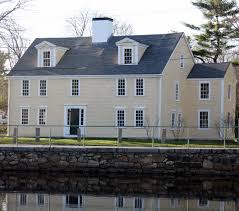
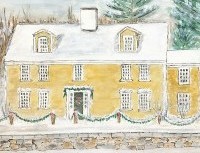
The application to turn the Clark Tavern into a five unit condominium development (two in the renovated/expanded existing structure and three all new behind) has been filed and the plans are now available on-line at the town website.


Posted on: June 1, 2020

Clark Tavern – Historic Property Reuse

rendering crop 353-355 MAIN ST. UNIT 1 and 2 copy

The project requires the following approvals under the Medfield Zoning Bylaw:

Section 5.6 (ZBA Special permit for historic properties, adaptive reuse) 14.10 (ZBA special permit criteria), and 14.12 (PB site plan approval). The Medfield Board of Health will also review the stormwater component of the application per their more stringent rules and regulations.

ZBA Application HERE

Planning Board Application HERE

Preliminary schedule via Zoom:

  • July 8 – Joint Planning Board and ZBA meeting scheduled to kick-off the application (open PB & ZBA public hearings, present concepts, identify issues, continue as needed)
  • August – Board continuances as needed

More information will be posted as it is received.

A 1969 review of our first 5 years of implementing the first master plan

The first Town of Medfield master plan was done in 1964, and five years later the stewards of master planning in town looked back at what had been accomplished.

Interestingly, the town voted down in 1967 the recommendation to install a traffic signal at Main and North, but recanted a year later.

Of those named, I only recognize Bob McLeod as still in town.

THE MEDFIELD MASTER PLAN THE FIRST FIVE YEARS 1964 - 1969 The MEDFIELD Master Plan is a tribute to the wisdom and vision of those who, in the Town Meeting of 1962, showed sufficient concern over Medfield's future to authorize the expenditure of $21,000 ($14,000 of which was provided by government funds) for the preparation of such a Plan by Metcalf and Eddy, a firm of civil engineers eminently qualified for this undertaking. Before a blueprint for the future of our Town through 1980 could be proposed it was first necessary to analyze those trends in its past which had shaped its present, and how these trends, without proper provision for their development, would affect all of us in the years ahead. So there followed two years of exhaustive investigation and research into every phase of Medfield's life--a period during which Medfield residents themselves provided substantial assistance to the Planners in the collection and analysis of data. Nine Working Committees prepared detailed reports on their assigned subjects and over 2500 residents participated in comprehensive surveys. From school buildings to road systems, from zoning requirements to conservation problems every aspect was examined in complete detail and nothing was judged too insignificant to merit the Planners' closest scrutiny. In 1964 the Planners completed their assignment and published their Master Plan in seven volumes. With the aid of statistics and maps, problems are analyzed, priorities assigned and remedies are proposed which, if implemented in the manner and at the time recommended by the Plan, will ensure that Medfield's growth through 1980 is orderly and controlled. (A Summary of the Master Plan is available to all Medfield residents and those who do not have a copy are urged to obtain one from the Town Hall.) Following a recommendation by the Planning Board, a Special Town Meeting in 1965 sanctioned the appointment of a Master Plan Implementation Committee (MPIC) , the primary function of which is to channel the efforts of other Town Committees and Boards in the directions recommended in the Plan. The fifth anniversary of the Plan's publication now provides the MPIC an appropriate opportunity to review the major accomplishments and failures of the Town Meetings in recent years in implementing the Plan's recommendations. These can be summarized as follows: 1. SCHOOLS The new Junior High School, approved by the Town in 1964, was completed and opened in 1966. In 1968, construction began on the Elementary School on Elm Street--on land acquired for that specific purpose in 1965. The school is scheduled to open in 1969. 2. BUILDING CODES AND ZONING LAWS Regulatory measures are fundamental to orderly growth. Such measures, essential to the implementation of the Master Plan and undertaken since 1964, include: -Adoption of a Building Code, approved by the Attorney General's Office. -Revision of Subdivision Rules and Regulations. -Amendment of Zoning By-laws with respect to apartment buildings. -Adoption of Zoning By-laws for the Industrial Area. -Drafting of Zoning Regulations for the Central Business District. This matter is still under review and the services of Metcalf and Eddy have again been retained to re-examine the whole question of the location and character of the Central Business District. As is evident, progress in these matters has been impressive but much still needs to be done. An immediate necessity is for a Soils Survey Analysis, a proposal for which was rejected by the Town in 1968. Such a Survey is essential for efficient planning and without it serious consequences could develop, particularly with respect to on lot water and sewage systems. Therefore, the Planning Board have provided for this Survey in their 1969 budget, to be presented at Town Meeting in March. 3. RECREATION A major development has been the opening of a new Community Recreation Center in the old North Street School, an accomplishment which owes most of its success to the resourcefulness of the youth themselves who not only renovated the building and are now maintaining it but, with some Town appropriation, have contributed the funds necessary for this project. Although the conversion of North Street School to a Recreation Center is not proposed in the Master Plan, the MPIC nevertheless considers this a most valuable asset, both for the young people and for the many Town Committees and organizations who also now use it extensively. In 1966, the Town approved funds for the building of new basketball and tennis courts at the Junior High School. In 1967 the Town approved funds to operate a skating rink on Green Street. Additional land adjacent to the Town's swimming pond was acquired in 1968. 4. CONSERVATION Land along the Charles and Stop Rivers acquired by the Town and set aside for conservation now totals 190.85 acres. Conservation and recreation land in Medfield administered by the Trustees of Reservations now total 662 acres. 5. HIGHWAYS AND STREETS Medfield has kept in touch with other towns affected by the proposed relocation of Route 109 and with the State Department of Public Works in whose hands the matter now rests. The Town has sanctioned the financing of land takings resulting from the planned reconstruction and relocation of Route 27. The new route--from Main Street to the Sherborn Line--will roughly parallel that recommended in the Master Plan. Approval has been given to reconstruct a section of Elm Street from South Street to cater to the requirements of the new school. Traffic lights are to be installed at the North and Main Street intersection. This proposal was defeated in 1967 but accepted by the Town in 1968. The street numbering project on all existing and proposed streets in the Town was completed in 1966. various streets have been reconstructed and others have been paved under the Street Improvement Program. 6. WATER SYSTEM AND SEWERAGE The Town's water supply has been augmented by the commissioning of a new well off Elm Street. r A new package sewage treatment plant has been installed and while this may satisfy current needs discussions continue between various Town departments and outside engineers on the possible requirement for additional sewerage and a larger treatment plant. 7. TOWN BUILDINGS AND LANDS It is under this heading that the Master Plan has suffered most of its defeats so far: -In 1965 the proposal to acquire land adjacent to the Town Hall for the purpose of a Common and parking area was rejected. -In 1965 and 1966 funds for North Street School's renovation and conversion to a municipal office building were denied. (In 1967, however, sanction was given to transfer the building to the Park and Recreation Commission for use as a Community Center.) -In 1967 the voters rejected the proposal to acquire land and construct thereon a garage to house Town equipment. -Although the Town had/ in 1965, approved the purchase of the adjacent bank building for the expansion of the existing Library, funds to implement this program were denied in 1966 and 1967. In 1968, however, funds were voted to redecorate and refurbish the existing library. The old bank building is now used by the Historical Society. SUMMARY In retrospect/ it can be seen that, despite some setbacks, much has been accomplished in the last five years, and the Town's investment in a Master Plan has paid substantial dividends. In order to carry the Plan through its next/ and perhaps most critical stage of development/ the MPIC, in consultation with other Town Committees and Boards, is now preparing a Capital Outlay Program, the implementation of which will ensure that the next five years will contribute even more to Medfield's orderly growth. Joseph C. Donnelly, Jr. Chairman Paul Hurd, Vice Chairman Grace P. Ritchie, Secretary John V. Cracknell Richard Kaerwer Robert Macleod Elizabeth M. Place Richard V. Sturtevant l 11964-1969 The First Five Years_Page_21964-1969 The First Five Years_Page_31964-1969 The First Five Years_Page_4

July 4th

Declaration-of-Independence

Have you ever wondered what happened to the 56 men who signed the Declaration of Independence?

24 of the 56 were LAWYERS . . . and damn good ones too . . . because they all valued the American civil jury system

Five signers were captured by the British as traitors, and tortured before they died.


Twelve had their homes ransacked and burned.


Two lost their sons serving in the Revolutionary Army; another had two sons captured.


Nine of the 56 fought and died from wounds or hardships of the Revolutionary War.


They signed and they pledged their lives, their fortunes, and their sacred honor.


What kind of men were they?


Twenty-four were lawyers and jurists.


Eleven were merchants, nine were farmers and large plantation owners; men of means, well-educated, but they signed the Declaration of Independence knowing full well that the penalty would be death if they were captured.


Carter Braxton of Virginia, a wealthy planter and trader, saw his ships swept from the seas by the British Navy. He sold his home and properties to pay his debts, and died in rags.


Thomas McKeam was so hounded by British that he was forced to move his family almost constantly. He served in the Congress without pay, his family was kept in hiding. His possessions were taken from him – poverty was his reward.


Vandals or soldiers looted properties of Dillery, Hall, Clymer, Walton, Gwinnett, Heyward, Ruttledge, and Middleton.


At Battle of Yorktown, Thomas Nelson,Jr., noted that the British General Cornwallis had taken over the Nelson home for his headquarters. He quietly urged General George Washington to open fire. The home was destroyed, and Nelson died bankrupt.


Francis Lewis had his home and properties destroyed. The enemy jailed his wife, and she died within a few months.


John Hart was driven from his wife’s bedside as she was dying. Their 13 children fled for their lives. His fields and his  gristmill were laid to waste. For more than a year he lived in forests and caves, returning home to find his wife dead and his children vanished.


So, take a few minutes while enjoying your 4th of July holiday and silently thank these patriots.  It’s not much to ask for the price they paid.


Remember: freedom is never free! We thank these early patriots, as well as those patriots now fighting to KEEP our freedom!


Peak House Heritage Center opens Sunday

20190616-peak house jeritage opening

The Peak House, one of the town’s and the country’s oldest houses is newly rejuvenated by the creation of the Peak House Heritage Center, a Medfield Foundation initiative.  Their website is chock-a-block full of data, details, graphics, and information – in a word it is spectacular.  It is also beautiful, fascinating, authoritative, and has an easy to navigate interface.  Link to it here https://peakhouseheritagecenter.org/


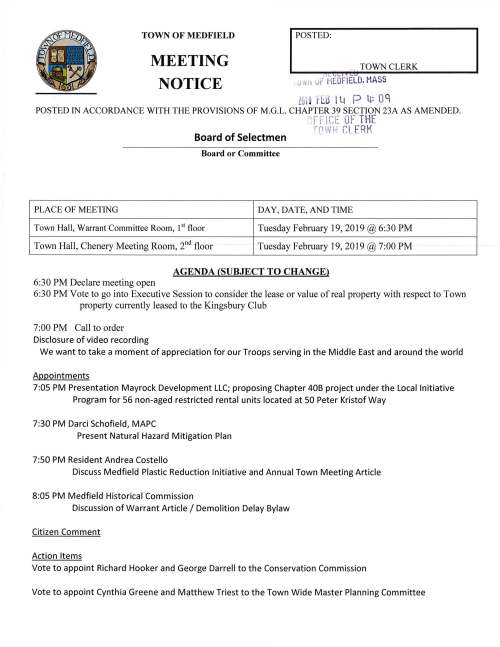
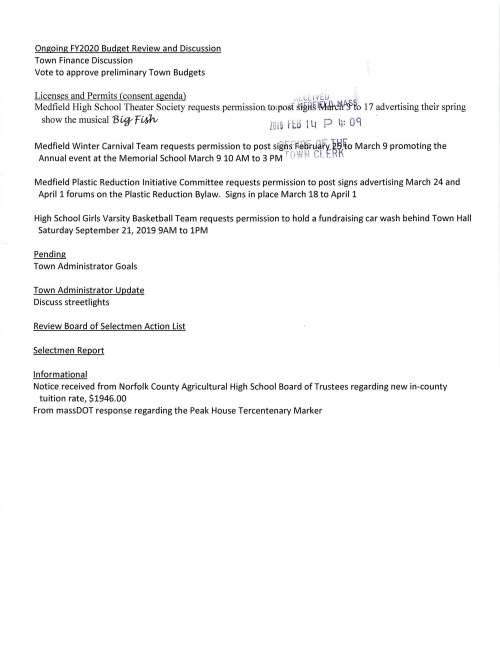
BoS 2/19 & Peak House’s sign

I posted the agenda for the Tuesday meeting already.  I will insert the agendas again at the end of this post.

The agenda and informational materials for the Tuesday meeting of the select board are available here – 20190219-agenda and materials

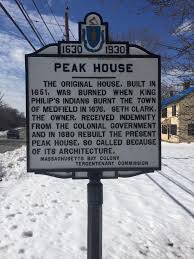
Peak House sign

Peak House sign

My favorite part of the materials is the letter to Senator Feeney, from the MassDOT Administrator, about the request from the Peak House Heritage Center to correct the factual errors in the MassDOT sign at the Peak House.

First, it is instructive as to what matters most in state government, since MassDOT gotthe letter about the issue from the Peak House Heritage Center, with letters of support from both the Board of Selectmen and Senator Feeney.  MassDOT opted to address its response to the writer who had the least to do with the matter and the Town of Medfield, our State Senator, rather than to the person who addressed the issue to them.

Second, I was fascinated to learn where and why the sign originated, as it is certainly substantially nicer than most state signs.

Third, I was amused by the language MassDOT used to deny the request:  “MassDOT would be reluctant to deface the marker because of minor factual
errors that have come to light after such a long period of time.”

MassDOT’s letter does propose a “compromise” solution, a new MassDOT sign to be added that notes the error in the original sign:

Please be aware that the Peak House marker is one of 275 cast iron roadside historical markers that were erected throughout the Commonwealth in 1930 by the Massachusetts Department of Public Works, MassDOT’s predecessor agency, to commemorate the 300th anniversary of the founding of the Massachusetts Bay Colony. The Massachusetts Bay Colony Tercentenary Commission designed the markers, chose the historical subjects, and prepared the text under the guidance of Samuel Eliot Morison, eminent author and Professor of History at Harvard University. Approximately 170 of these markers still exist. 

Mr. Robert Gregg of the Peak House Heritage Center has notified MassDOT that the text on the Peak House marker contains three factual errors. Mr. Gregg has suggested to Mary Rafferty of the MassDOT Environmental Services staff that MassDOT should remove the errors by grinding off certain raised cast iron letters and numbers from the marker and then applying new letters and numbers to provide the correct information. The Medfield Board of Selectmen has endorsed Mr. Gregg’s proposal in a letter to MassDOT dated January 15, 2019.

MassDOT considers the Tercentenary Markers to have historical significance in their own right, above and beyond the text conveyed on each marker. The original markers are nearly 90 years old and they interpret history as it was understood at the time of the Tercentenary commemoration. MassDOT would be reluctant to deface the marker because of minor factual errors that. have come to light after such a long period of time.

TOWN OF MEDFIELD MEETING NOTICE I POSTED: , TOWNCLERK 1 L f..i[i ,) tet , ifot> UF MEDF IELD. HASS Z0!9 H:.5 l Lt P lf: OC POSTED IN ACCORDANCE WITH THE PROVISIONS OF M.G.L. CHAPTER 39 SECTION 23A AS AMENDED. "' f-~· 1'' t- ·; tvt:. 0F THE·. Board of Selectmen T("11.,.!/ l;l CL. ERK Board or Committee PLACE OF MEETING DAY, DATE, AND TIME Town Hall, Warrant Committee Room, I st floor Tuesday February 19, 2019 @6:30 PM Town Hall, Chenery Meeting Room, 211 d floor Tuesday February 19, 2019 @ 7:00 PM AGENDA (SUBJECT TO CHANGE) 6:30 PM Declare meeting open 6:30 PM Vote to go into Executive Session to consider the lease or value ofreal property with respect to Town property currently leased to the Kingsbury Club 7:00 PM Call to order Disclosure of video recording We want to take a moment of appreciation for our Troops serving in the Middle East and around the world Appointments 7:05 PM Presentation Mayrock Development LLC; proposing Chapter 40B project under the Local Initiative Program for 56 non-aged restricted rental units located at 50 Peter Kristof Way 7:30 PM Darci Schofield, MAPC Present Natural Hazard Mitigation Plan 7:50 PM Resident Andrea Costello Discuss Medfield Plastic Reduction Initiative and Annual Town Meeting Article 8:05 PM Medfield Historical Commission Discussion of Warrant Article I Demolition Delay Bylaw Citizen Comment Action Items Vote to appoint Richard Hooker and George Darrell to the Conservation Commission Vote to appoint Cynthia Greene and Matthew Triest to the Town Wide Master Planning Committee Ongoing FY2020 Budget Review and Discussion Town Finance Discussion Vote to approve preliminary Town Budgets Licenses and Permits (consent agenda) ,,c_1, L / C:.U , Medfield High School Theater Society requests permission to~post s:il~W.§ lMJA~~o 1 7 advertising their spring show the musical 13~ F0Jv l1Ji9 Fltl I Lt P ~: 020190219-agenda_Page_2

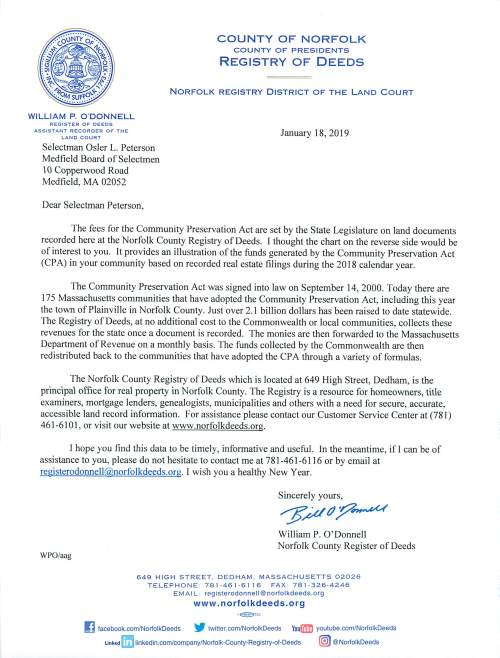
CPA – town missing out

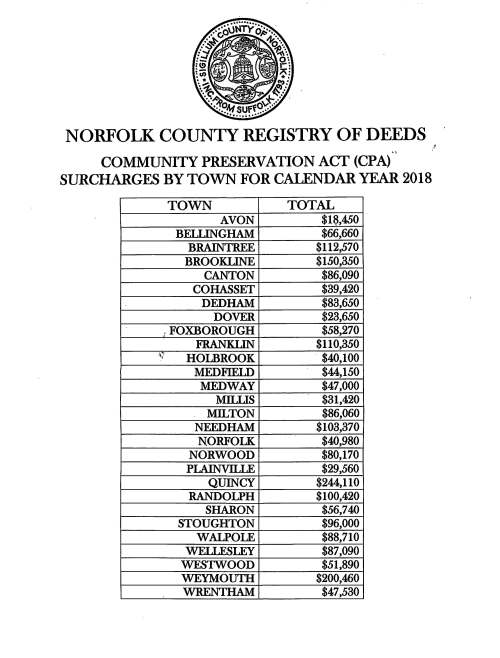
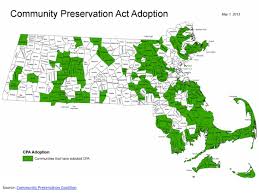
The letter below that I received this week from the Norfolk Register of Deeds highlights for Medfield how, as a town, we all pay in to the Massachusetts Community Preservation Act (CPA) fund ($44,250 last year), but we get none of the monies or benefits back because we have not adopted the CPA.

The CPA is a self-imposed additional tax of from 1-3%, in exchange for which the town get state matching monies.   CPA monies have to be spent on one of three areas:

  • historic preservation
  • affordable housing
  • open space and recreation

My analysis has always been that where we already spend on those three things anyway, that by not adopting the CPA that we are merely forgoing the state matching monies.

The one time the CPA went to the annual town meeting (ATM), about ten years ago, it was defeated.

WILLIAM P. ODONNELL REGISTER OF DEEDS ASSISTANT RECORDER OF THE LAND COURT Selectman Osler L. Peterson Medfield Board of Selectmen  0 Copperwood Road Medfield, MA 02052 Dear Selectman Peterson, COUNTY OF NORFOLK COUNTY OF PRESIDENTS REGISTRY OF DEEDS NORFOLK REGISTRY DISTRICT OF THE L AND C O URT January 18, 2019 The fees for the Community Preservation Act are set by the State Legislature on land documents recorded here at the Norfolk County Registry of Deeds. l thought the chart on the reverse side would be of interest to you. It provides an illustration of the funds generated by the Community Preservation Act (CPA) in your community based on recorded real estate filings during the 2018 calendar year. The Community Preservation Act was signed into law on September 14, 2000. Today there are 175 Massachusetts communities that have adopted the Community Preservation Act, including this year the town of Plainville in Norfolk County. Just over 2.1 billion dollars has been raised to date statewide. The Registry of Deeds, at no additional cost to the Commonwealth or local communities, collects these revenues for the state once a document is recorded. The monies are then forwarded to the Massachusetts Department of Revenue on a monthly basi s. The funds collected by the Commonwealth are then redistributed back to the communities that have adopted the CPA through a variety of formulas. The Norfolk County Registry of Deeds which is located at 649 High Street, Dedham, is the principal office for real property in Norfolk County. The Registry is a resource for homeowners, title examiners, mortgage lenders, genealogists, municipalities and others with a need for secure, accurate, accessible land record information. For assistance please contact our Customer Service Center at (781) 461-6101 , or visit our website at www.norfolkdeeds.org. J hope you find this data to be timely, informative and useful. In the meantime, if I can be of assistance to you, please do not hesitate to contact me at 781-461-6116 or by email at registerodonnell@norfolkdeeds.org. I wish you a healthy New Year. WPO/aag Sincerely yours, "P~(}p~ William P. O'Donnell Norfolk County Register of Deeds 649 HIGH STREET. DEDHAM. MASSACHUSETTS 02026 TELEPH ONE : 781 ·46 I · 61 16 FAX 78 1 ·326·4246 EM A I L : registerodonnell@norlolkdeeds.org www .norfolkdeeds.org •~7SC ~ facebook.com/NorfolkDeeds ~ twitter.com/NorfolkDeeds YouiD youtube.com/NorfolkDeeds Linked rm linkedin.com/company/Norfolk·County·Registry·Of·Deeds (.@) @NorfolkDeeds NORFOLK COUNTY REGISTRY OF DEEDS •I COMMUNITY PRESERVATION ACT (CPA) SURCHARGES BY TOWN FOR CALENDAR YEAR 2018 TOWN TOTAL AVON $1~,450 BF.I ,IJNGHAM $66,660 BRAINTREE $112,570 BROOKLINE $150,350 CANTON $86,090 COHASSET $39,420 DEDHAM $83,650 DOVER $23,650 , FOXBOROUGH $58,270 FRANKLIN $110,350 •( HOLBROOK . $40,100 MEDFIET,n $44,150 MEDWAY $47,000 MILLIS $31,420 MILTON $86,060 NEEDHAM $103,370 NORFOLK $40,980 NORWOOD $80,170 PLAINVILLE $29,560 QUINCY $244,110 RANDOLPH $100,420 SHARON $56,740 STOUGHTON $96,000 WALPOLE $88,710 WELLESLEY $87,090 WESTWOOD $51,890 WEYMOUTH $200,460 WRENTHAM $47,530 II :''20190118-norfolk register of deeds-ltr from-cpa figures for 2018_page_2

QR signs are up and running on Medfield’s historic buildings

This is a really cool and a really useful Eagle Scout project by Caillian Sheehy.  Given our critical mass of historic houses in town, Medfield has an opportunity to be a destination for those interested in things historic.  We just need a good “Medfield Trail” for visitors to follow, and now we have a good start on that history trail.

The material below was an email from David Temple of the Medfield Historical Society.  I believe that the Medfield Historical Society funded Caillan’s project.

Dwight-Derby House-3

QR signs are up and running on Medfield’s historic buildings

For his Eagle Scout project, Caillian Sheehy created signs (using the library’s 3D printer) with QR codes on the Peak House, the Dwight-Derby House, the old meetinghouse, the grist mill, the Baptist church, the historical society, Vine Lake cemetery, and the Inness studio.


When you go to any of these historic sites, get out your smart phone and use it to read the QR code.  (If you don’t already have one, free downloadable QR code reader apps are widely available.) You’ll be led to the historical society web site, with more information about each historical site, and you can play the one-minute audio intro that Caillian recorded for each site.


When Caillian first approached me, I thought it was a great idea – why didn’t we think of this before? But Caillian had the idea and made it happen. Bravo, Caillian!


In your reply, please include my original message.

David F. Temple
President, Medfield Historical Society

Co-chair, Medfield Historical Commission

Mike Sullivan retiring in January

Mike sullivan

Michael Sullivan announced at the Board of Selectmen meeting on Tuesday that he will be retiring in January, 2019.  Mike will have served as the Town Administrator for 44 years, and he has been the longest serving town administrator in the state for almost the last ten years.  Prior to Mike being hired, the Medfield employed an executive secretary, so Mike is also the town’s one and only town administrator to date.

This selectman has asked Mike to write down all he knows about the town (and maybe its residents), as he has a huge institutional memory of what happened and why, all in his head.

Mike was educated at the Wharton School at the University of Pennsylvania, and he has a tremendous understanding of and facility with the town finances and budgets.  I have come to think that he can almost run the  budget process off the cuff, especially where he has done it so many times and has seen so many things in those four decades of being in charge of our town.

CPA needs to come to town

cpa

Medfield voted down the Massachusetts Community Preservation Act (CPA) at our annual town meeting (ATM), maybe 7-8 years ago, and as a result we have missed out on huge amounts of state CPA matching monies that we could have been using to pay for our open spaces, our historic preservation, or our affordable housing.  I hope that we can agree to finally adopt the CPA soon, as every year we are leaving state matching monies on the table, despite that we pay in to the Norfolk Registry of Deeds recording surcharges that create the pool of monies used for the matching funds.  Our payments are instead going to other towns in their matching monies.

In recent years, the matching monies have been so low from the registry surcharges that the legislature has annually supplemented the matching monies via an appropriation – almost half the cities and towns have adopted the CPA, so a lot of legislators are interested in keeping the CPA match high.

When we do adopt the CPA, since the whole reason to do so is to get the most state matching monies, we should adopt the highest level surcharge, which is 3%, because only those who agree to the 3% CPA surcharge get the most and largest state matches.

I have been asking for several years in a row to have an ATM warrant article to adopt the CPA, and I have been requested to not proceed by CPA proponents due to their not having educated the residents sufficiently.  This year I think we just need to go ahead, and expect that residents will understand that the CPA will save us money in the long run.  The Community Preservation Coalition website (www.communitypreservation.org) is excellent at explaining the CPA.

This article below about the CPA matching monies just issued was in my Massachusetts Department of Revenue newsletter this week –

==================================================================

FY18 Community Preservation Act (CPA) State Match Info
Lisa Krzywicki – Municipal Databank Director

On November 14th, the Division of Local Services (DLS) released the FY2018 CPA state match to the 162 communities that have adopted the CPA surcharge. The CPA allows a community to adopt a local surcharge of up to three percent that is added to real estate property tax bills. The purpose of the CPA is to help communities preserve open space and historic sites, create affordable housing and develop outdoor recreational facilities. The CPA statute, M.G.L. 44B, provides a state match to eligible communities from revenues collected by the registry of deeds for surcharges on fees charged for recording various documents.

In FY2018, the available balance in the CPA state trust fund was $26M, and the local surcharges committed by cities and towns totaled $120.9M, which provided for a 17.2 percent base state match. Chapter 44B provides for an additional state match if a community adopted a three percent surcharge or the “blended” CPA by voting a surcharge of at least one percent and appropriating other funds to the community preservation fund so that the total equals three percent of the real estate tax levy. For FY2018, 76 communities are eligible for the second round or equity distribution and third round surplus distribution. The equity and surplus distributions use population and equalized valuation (EQV) to determine a ranking that would provide a greater portion of the balance of the state trust fund after the initial calculation to poorer and more densely populated communities. However, only those that committed a three percent surcharge whether by adopting a three percent surcharge or the blended CPA (as stated above) are eligible for these additional distributions. The decile ranking used to determine the equity and surplus rounds can be found by clicking here. The distribution summary can be found in this report.

The state community preservation trust fund was created in 2000 and revenues from the registry of deeds started funneling into the trust fund right away. In FY2003, communities started collecting the local CPA surcharge. The first state match occurred in FY2004 based on those local surcharges. In FY2003, 34 communities adopted the CPA and were eligible for the state match. In FY2018, 162 communities were eligible to receive the state match. Until FY2009, the state trust fund was sufficient to provide communities with a 100 percent state match. Due to increasing participation and declining registry collections, DLS has not been able to provide a 100 percent state match since then.

In FY2018, ten additional communities will begin assessing the local CPA surcharge and will be eligible for the state match in FY2019. In the spring of 2018, DLS will project the first round state match for the 172 communities eligible for the state match in FY2019. The ten new communities are Billerica, Boston, Holyoke, Hull, Norwood, Pittsfield, Rockland, Springfield, Watertown and Wrentham. For a complete list of all communities that have adopted the CPA, please click here. As of today, only one other community has scheduled a ballot question to adopt the CPA. Voters in the town of Northbridge will decide next spring whether to add the CPA surcharge at one percent. For the up-to-date listing of communities considering adoption of the CPA, please refer to the Community Preservation Coalition website at www.communitypreservation.org or by clicking here.

Dwight-Derby House water issues

Dwight-Derby House-2

TOWN OF MEDFIELD
Medfield Public Schools
459MainStreet
MEDFIELD, MASSACHUSETTS 02052
Director of Facilities
Gerard McCarty, Director
508-906-3068
MEMORANDUM

TO: Michael Sullivan
FROM: Jerry McCarty
DATE: November 2, 2017
RE: Dwight Derby House Funds

The Dwight Derby House Historical Committee has approximately $10,000 in funds for repairs for the Dwight Derby House (DDH). The two projects that the Committee want to address are the Gutters and the sump pump/drainage.

This memo is to address the sump pump/drainage issue. The DDH incurs an excessive amount of ground water during the wet season. If not addressed, ground water rises to a level that impacts the basement crawl space heating system which is suspended from the floor above.. Currently, the DDH has a sump pit on the west side of the house which discharged into the sewer line, which is not permitted. To address the excessive ground water, and correct a discharge violation, my office is installing a new exterior discharge and drainage bed system on the east side of the property. The materials cost will come out of the above mentioned fund.

In an effort to save cost, I propose using some of the fund to pay DPW employees overtime to perform this machine work in digging trenches and installing stone (estimated cost of labor is $1000). This effort will be cheaper than having to bid and outsource this work. With the good fall weather, the DPW has been concentrating its effort on doing road projects in preparation for winter. By doing the DDH work on overtime hours, this project will not tie up men or machine work of the DPW to do its core function of road preparation, and will be cheaper bidding and outsourcing work.

Please let me know how I should proceed with this project.