Category Archives: health

Please vote “NO” on legal marijuana

Reasons legal marijuana is not good:

  • Marijuana’s long-term negative impact on youth. Use by adolescents can impair brain development, reduce academic success, and lower IQ. Marijuana is also associated with susceptibility to long-term mental health issues (e.g., paranoia, depression, suicidal thoughts, and schizophrenia) and heart attacks.3,4,5,6,7,8,9,10
  • Marijuana can be addictive. The earlier someone begins using marijuana, the higher their risk of addiction –one in six users who start under age 18 become dependent; 25-50% of teen heavy users become addicted.1
  • Marijuana’s potency is greater than in the 1970s. Marijuana products available today range from 5% to85% THC (the psychoactive part of marijuana). This includes edibles (candies, cookies, sodas). Highly concentrated marijuana is more likely to be associated with addiction and the negative health consequences in young people seen in recent years.2
  • Marijuana dependency is associated with addiction to other drugs. In a prospective study, marijuana use was linked to a 6.2 times higher risk of developing a substance use disorder. The younger marijuana is used, the higher the rates of addiction to marijuana and to other drugs, including opioids.11,12
  • Where marijuana is legal, young people are more likely to use it. Since becoming the first state to legalize, Colorado has also become the #1 state in the nation for teen marijuana use. Teen use jumped 20% in Colorado in the two years since legalization, even as that rate has declined nationally.13,14, 17
  • Colorado saw a 49% increase in marijuana-related emergency room visits during the two years after marijuana was legalized (2013-14) compared with the prior two years. 14, 15, 16, 17
  • Increased accidental marijuana use by young children. Marijuana infused products such as gummy bears, candy bars and “cannabis cola” are often indistinguishable from traditional products and attractive to children, placing them at significant risk of accidental use. 14,16, 17

Footnotes:

1Comparative Epidemiology of Dependence on Tobacco, Alcohol, Controlled Substances, and Inhalants: Basic Findings From the National Comorbidity Survey,”
Experimental and Clinical Psychopharmacology, 1994;

2Potency trends of Δ9-THC and other cannabinoids in confiscated cannabis preparations from 1993 to 2008. J Forensic Sci., 2010.

3Persistent cannabis users show neuropsychological decline from childhood to midlife. Proc Natl Acad Sci U S A., 2012.

4“Impact of adolescent marijuana use on intelligence: Results from two longitudinal twin studies,” Proceedings of the National Academy of Science of the United States of America;

5Cannabis use and depression: a longitudinal study of a national cohort of Swedish conscripts. BMC Psychiatry, 2012.

6Marijuana Use and High School Dropout: The Influence of Unobservables. Health Econ., 2010.

7Proportion of patients in south London with first-episode psychosis attributable to use of high potency cannabis: a case-control study. The Lancet Psychiatry, 2015.

8Daily use, especially of high-potency cannabis, drives the earlier onset of psychosis in cannabis users. Schizophrenia Bulletin., 2014.

9Marijuana use in the immediate 5-year premorbid period is associated with increased risk of onset of schizophrenia and related psychotic disorders. Schizophrenia
Research, 2015.

10Adverse cardiovascular, cerebrovascular, and peripheral vascular effects of marijuana inhalation: what cardiologists need to know. Am J Cardiol.,
2014.

11Cannabis Use and Risk of Psychiatric Disorders: Prospective Evidence From a US National Longitudinal Study. JAMA Psychiatry, 2016.

12Young adult sequelae of adolescent cannabis use: an integrative analysis. 2014.

13“20 percent increase in youth marijuana use,” WSAV, 1/13/2016; SAMHSA National Survey on Drug Use and Health, December 17, 2015;

14“The Legalization of marijuana in Colorado: The Impact,” Rocky Mountain High Intensity Drug Trafficking Area, September 2015.

15“Marijuana Tourism and Emergency Department Visits in Colorado,” The New England Journal of Medicine, 2/25/2016.

16The Implications of Marijuana Legalization in Colorado. Journal of the American Medical Association. 2015.

17“The Legalization of marijuana in Colorado: The Impact,” Rocky Mountain High Intensity Drug Trafficking Area, Vol. 4, September 2016.

www.mapreventionalliance.org

MARIJUANA LEGALIZATION: What Does Ballot Question 4 Mean?

  • Sets no limits on potency of marijuana products. Ballot question 4 specifically authorizes marijuana edibles (products like candy bars, gummy bears, “cannabis cola,” etc.), oils and concentrates.
  • Severely limits municipalities’ (and the state’s) ability to limit the nature and presence of the marijuana industry in their communities. Ballot question 4 potentially invalidates any state or local rule deemed “unreasonably impracticable.” Municipality must allow marijuana retail businesses in an amount at least 20% of the number of alcohol package stores – unless voters pass an ordinance or bylaw by majority vote. 94G, s. 3(a)(2)(ii).
  • Sets no limit on the number of stores that can sell marijuana statewide or number of operations to grow or manufacture marijuana and marijuana products. As written, ballot question 4 prohibits communities from enacting meaningful numerical caps on the number of marijuana stores (or types of marijuana businesses) except if explicitly authorized by special city/town referendum.
  • Mandates that communities must allow retail marijuana stores to open in any “area” that already has a medical marijuana dispensary. Additionally, it grants existing medical marijuana facilities the right to enter the recreational market at the same location—i.e. convert their dispensary into a “pot shop.” If ballot initiative is enacted in November, then any existing or future medical dispensary is guaranteed cultivation, manufacturing and retail licenses for recreational sales until a 75 quota is reached. Ballot initiative SECTION 10 and 11.
  • Bars communities from restricting “home grows.”
  • Sets the tax rate very low, meaning little or no net revenue benefit. Ballot question 4, prohibits host agreements that require marijuana businesses to pay anything over and above whatever costs are directly attributable to their operation. This would limit the amount of money a community could collect from “pot shops”.
  • No protections against drugged driving. Evidence shows that marijuana use impairs driving but there is no standard test to clearly identify a person under the influence of marijuana.
  • No provisions for data collection and research. This would limit the ability of Massachusetts to determine the impact of commercialization of recreational marijuana on our communities and our state without significant costs to taxpayers.

**Commercialization of marijuana will result in increased access to marijuana by our young people. This coupled with decreased perception of harm associated with marijuana use as a result of the “normalization” of marijuana products, including candies, cookies, and sodas, will increase the likelihood that MA adolescents will use marijuana.**

Sources: “What legal marijuana in Mass. would mean for your town,” Boston.com, 4/22/2016; “Medical pot dispensaries get first crack at licenses, exemptions under referendum,” CommonWealth, 5/24/2016; http://www.mass.gov/ago/docs/government/2015-petitions/15-27.pdf
www.mapreventionalliance.org

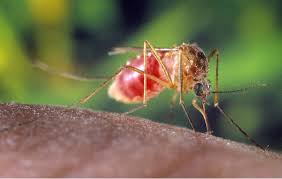
HHAN Alert re: WNV Mosquito

Board of Health email this afternoon about West Nile Virus mosquitoes found in Dedham and Norfolk.  HHAN stands for Health & Homeland Alert Network System, part of our Commonwealth of Massachusetts state government.

mosquito

Alert Detail

View History

Top of Form

Alert Information
Alert Identifier: PTLV3_IX6RXSZSV4OQW7DUWPPCA6Z5AO
Alert Title: WNV Positive Mosquito Samples have been identified in your area
Alert Severity: Moderate
Alert Sensitivity: Yes
Work Email Only: No
Voice Call Delay: 0
Voice PIN Required: No
Confirmation Required: Yes
Confirmed: Yes
Alert Owner Name: Elizabeth Traphagen
Organization: MDPH
 
Created Time: 09/13/2016 12:30:11
Message for Web Page: The following cities and towns have had WNV positive mosquito sample(s): Dartmouth, Dedham, Easton, Fairhaven and Norfolk. Please click on this link to access details on today’s positive results: http://www.mosquitoresults.com/additional_results/. If you have difficulty accessing this information please call Elizabeth Traphagen (617) 983-6787.
Alert Message: West Nile virus positive mosquito samples in your area. Check the HHAN for detailed information.
Uploaded File(s): There are no uploaded files

Bottom of Form

Copyright © 2007-2016 http://mass.gov/hhan All Rights Reserved
Massachusetts Department of Public Health Contact Us Web Accessibility Statement
Developed in collaboration with the Children’s Hospital Informatics Program
at the Harvard-MIT Division of Health Sciences and Technology.


Mosquito spraying ceasing

mosquito

This from Mike, in turn from Nancy Bennotti of the Board of Health this morning –


Good Morning,

Please be advised that due to the low mosquito counts in the traps along with the on-going drought; the final spray application will be on Thursday (night), September 1, 2016.  Trapping for virus will continue through September into October.


If you have any questions, please contact the office.  Thank you.


Elizabeth Donnell

Norfolk County Mosquito Control District

61 Endicott Street, Suite 66

Norwood, MA  02062


781-762-3681

781-769-6436

West Nile Virus in Dover

mosquito

Email just now from Mike –


The Board of Health was notified today that a mosquito sample taken in Dover tested positive for the West Nile Virus(WNV). The notice was a moderate risk notice. I notified the School Department and the Parks & Recreation Department. I also called Norfolk County Mosquito Control and spoke to David Lawson, Director, who confirmed this. He said recently positive samples have been found in other area towns. There are no positive findings in horses or people in this area as of this date. He said that the group most at risk for complications from WNV  are the elderly as they might have weakened immune systems. I am notifying Roberta Lynch so that she can take appropriate action to alert Medfield Seniors. Mike

MMA on opiates

MMA-2

The Massachusetts Municipal Association recently released a white paper suggesting what towns should be doing about opiates.  It has a list of the 10 best practices, several of which we are already doing (e.g. – the drug return turn in box at the MPD, Narcan in cruisers, and MCAP), but we have not yet appointed a point person to lead our effort or dealt with some of the other recommendations.

The report notes that someone has died from opiates in almost 75% of our towns in Massachusetts.

A PDF of the MMA’s white paper can be downloaded here – http://www.mma.org/images/stories/NewsArticlePDFs/municipal_services/mma_opioid_task_force_jan2016.pdf

The MMA’s article (below) can be found here –

http://www.mma.org/municipal-services/15918-mma-releases-report-with-opioid-strategies-for-cities-towns


MMA releases report with opioid strategies for cities, towns

January 25, 2016

At its Annual Meeting on Jan. 22 and 23, the MMA released a 16-page report intended to help local officials take action on the escalating opioid abuse epidemic that has claimed thousands of lives in recent years and is affecting virtually every community in Massachusetts.

“Local officials have the ability to lead by providing prevention programs, encouraging public awareness, ensuring safe disposal sites for prescription drugs, and serving as a clearinghouse for valuable resources for treatment and support,” said Attleboro Mayor Kevin Dumas, co-chair of the MMA’s Municipal Opioid Addiction and Overdose Prevention Task Force.

Task force co-chair Michael McGlynn, who recently concluded 28 years as the mayor of Medford, said the 16-page report “will offer some direction and information to the public and our colleagues in government.”

“Municipal officials across the Commonwealth have the obligation to lead the fight against the devastating impact of substance use disorders,” McGlynn said.

The report, titled “An Obligation to Lead,” outlines 10 specific opportunities for local officials to lead the fight against the public health epidemic surrounding the abuse of prescription drugs and opioids. Local officials are urged to lead an effort to increase public awareness and to designate a point person in city and town halls focused on the epidemic and available resources.

The report recommends the facilitation of broad-scale collaboration across departments, the development of a one-page resource guide for families and those seeking treatment or assistance, and a partnership with schools to develop a prevention curriculum.

Local officials are urged to provide naloxone (Narcan) to first responders and designate safe prescription drug disposal sites in their communities.

The opioid abuse epidemic claimed an estimated 1,200 lives in 2014 – complete data are not yet available for 2015 – and accounts for more than half of all deaths among 25- to 44-year-olds. In 2014, the epidemic caused more deaths than car accidents and gun violence combined in Massachusetts.

The MMA’s report represents the findings of the MMA’s 11-member task force, which held many meetings over an 18-month period with policy makers, experts, advocacy organizations, and partners.

The task force concluded that local officials are best positioned to manage the opioid crisis, but the group also developed a series of policy recommendations for state leaders in order to assist cities and towns in their efforts to manage this growing epidemic.

The task force called for the state to create a centralized database of all treatment services, to work to make more treatment beds available, to develop and fund a model prevention curriculum, and to better enforce the Prescription Monitoring Program.

Download “An Obligation to Lead” (365K PDF)

By Katie McCue and John Ouellette


Stress & mental health big student issues

MHS sigh

This article is from the Medfield Press.

At the Medfield Cares About Prevention (MCAP) meeting this morning, that focused on the high levels of student stress and mental health issues noted in the MetroWest Adolescent Health Survey, Jeff Marsden, the Superintendent, said that the full survey will be released after the March 9 presentation on the data to parents.  Seeing in the data the high numbers of our kids that are contemplating suicide requires us, as a town, to respond.


  • Posted Feb. 29, 2016 at 2:22 PM

    MEDFIELD

    Medfield often receives praise for its small-town community atmosphere and strong school system, but similar to other towns in the region, more Medfield adolescents are experiencing stress, feelings of sadness, and suicidal thoughts, according to the most recent MetroWest Adolescent Health Survey administered in 2014.

    In addition to stress-related data, parents and community members at large will have a chance to learn what other important information the survey revealed about Medfield students at a special presentation at 6:30 p.m., Wednesday, March 9 in the Medfield High School auditorium.

    Speakers will be Susan Cowell, head of the Wellness Department for Medfield Public Schools, and Christi Barney, RN, MSN, a mental health expert from Brigham and Women’s Faulkner Hospital, who will talk about the unique signs of adolescent stress and share strategies parents can use to help their children.

    “On the positive side, the survey showed a decline in cigarette and marijuana use, however, the uptick in areas related to mental health are very concerning,” said Cowell, who has overseen student participation in the biennial survey since it was first administered in 2006.

    Other areas of concern based on survey findings include:

  • Bullying/cyberbullying
  • Distracted driving
  • Sleep deprivation
  • High-risk alcohol use
  • Unhealthy weight loss and body image
  • Use of e-cigarettes (“vaping”)

“Medfield is not alone in trying to address student stress and related mental health issues – it’s a problem affecting youth across the MetroWest region and beyond,” said Cowell. “We also know mental health issues are on the rise in college-aged adults too.”

Medfield Superintendent of Schools Jeff Marsden said, “It is critical that all of us – the school community and greater Medfield community – become more aware of the issues impacting the health of our youth and identify ways we can work together to support them. Our presentation on March 9 will be an important step in the right direction.”

The MetroWest Adolescent Health Survey, developed by the MetroWest Health Foundation, is part of a long-term initiative to monitor trends in health and risk behaviors. Based on 2014 responses, more than 40,000 students in grades 6 through 12 from 25 towns took the anonymous survey.

According to Cowell, with a few exceptions, Medfield’s local data reflects the regional data. Regional data on all health topics surveyed among high school students can be found at http://bit.ly/1QnskE4.

MCAP’s new website

MCAP Logo_1C_300

Medfield Cares About Prevention (MCAP) has a brand spanking new website.   Check it out at www.MedfieldCares.org.

  • looks great,
  • works great,
  • great content to help Medfield residents and youth find assistance.

Thanks to Medfield’s own Evan Weisenfeld for the website.

West Nile

20150917_beaver dam at Fork Factory-4

Email from Evelyn –


Medfield Board of Health received a notice from Dept. of Public Health that in the towns of Natick, Sherborn, Millbury Northridge west nile virus tested positive in only a mosquito sample.

Concussions in Elementary School

This came from HVMA today, and was information I would like to have had when I was coaching girls soccer and basketball, so I am passing it along –


Concussions in Elementary School: What you need to know

boy with soccer ball.concussionImagine you’re seated at work when you receive a call from the school nurse who tells you your son hit his head during recess. Thankfully, he didn’t lose consciousness, so no concussion, right?

Not necessarily.

Elementary-aged students do not lose consciousness as easily as teens or adults do. They also may not yet have the language skills necessary to convey the pain or symptoms they are experiencing. They might simply say they don’t feel “good.” With children participating in contact sports at younger ages it is crucial for parents, coaches, teachers and school nurses to be aware of the signs of a concussion and diligent about any changes in behavior that could signal the need for treatment.

Changes in behavior in children with concussion may include:

  • Appearing dazed or stunned
  • Being unsure of game, score or opponent
  • Moving clumsily
  • Showing behavior or personality changes
  • Having difficulty organizing tasks or shifting between tasks
  • Displaying inappropriate or impulsive behavior
  • Exhibiting greater irritability
  • Behaving more emotional than usual
  • Experiencing fatigue
  • Having difficulty handling a stimulating school environment (lights, noise, etc.)
  • Experiencing other physical symptoms (headache, nausea, dizziness)

If you observe any of the above symptoms you should contact a healthcare professional immediately. They can help you set up a plan for treatment and recovery. It is important to work with your healthcare provider as concussions affect people differently. Younger children can experience symptoms lasting anywhere from a few days up to a week. While children often appear to bounce back from everyday injuries, they actually take longer to recover from concussions than adults.

The best treatment for concussions – regardless of age—is rest, both physically as well as mentally, as this helps the brain heal. Restricting strenuous physical activity and getting plenty of sleep are very important for a steady recovery, but rest also involves cognitive rest, which means limiting mental tasks that require concentration or focused thinking. This includes no or limited screen time (phone, TV, computer) as the screen can worsen symptoms. Lighter mental activities, such as listening to audio books or drawing, are usually acceptable. However, it is important to continue monitoring for increased pain or behavioral changes. School work and reading are to be reintroduced gradually, stopping if symptoms reappear. Regardless of a child’s seeming recovery, students need to be evaluated and cleared by a doctor before returning to school or sports.

Because children who play sports are at greater risk for concussion, Harvard Vanguard offers ImPACT testing, a computerized concussion evaluation tool. We perform baseline testing – done before a child has a concussion – for kids 10-19, which can then be used as a point of comparison for tracking recovery if a child experiences a head injury in the future.

– See more at: http://blog.harvardvanguard.org/2015/08/concussions-in-elementary-school-what-you-need-to-know/#sthash.Uwk17zWQ.dpuf

Beam signed

Last night before the selectmen met Chief Kingsbury brought a beam from the public safety building clock tower on a trailer by the Town House for the selectmen to sign. I had imagined signing with a white pen, but it turned out that the beam was white. Very cool.

Mark signed remotely.

Good thing Mark was not there last night as the meeting went to 9:45 – beavers at Fork Factory took most of the time. TTOR actually have a last revised in 2005 beaver policy, which is basically hands off unless beavers cause a nuisance. Killing trees is not a nuisance in their eyes, but erosion of Hartford Street would be. TTOR will follow up with DPW, and may add another beaver deceiver water bypass pipe into the beaver dam. Alec Stevens was concerned about sudden water releases at Fork Factory overwhelming his Jewels Pond, and that seemed to be heard by TTOR.

Good update by Board of Health – new sharps disposal container is located at DPW Garage, and they increase age to buy tobacco to age 21 effective January 1.