WGBH’s recent email contains a link to a 1973 Zoom episode about a 10 year old Karen Allan who was the dispatcher for her Medfield family’s Newell’s Taxi company.

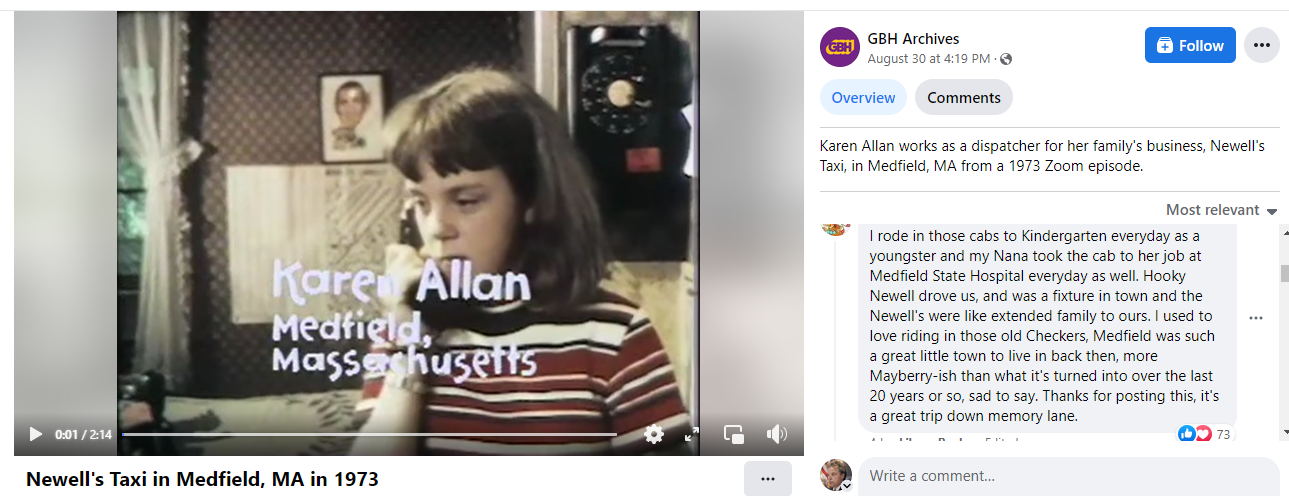

WGBH’s recent email contains a link to a 1973 Zoom episode about a 10 year old Karen Allan who was the dispatcher for her Medfield family’s Newell’s Taxi company.
Comments Off on WGBH 1973 Zoom video of Newell’s Taxi
Posted in Uncategorized
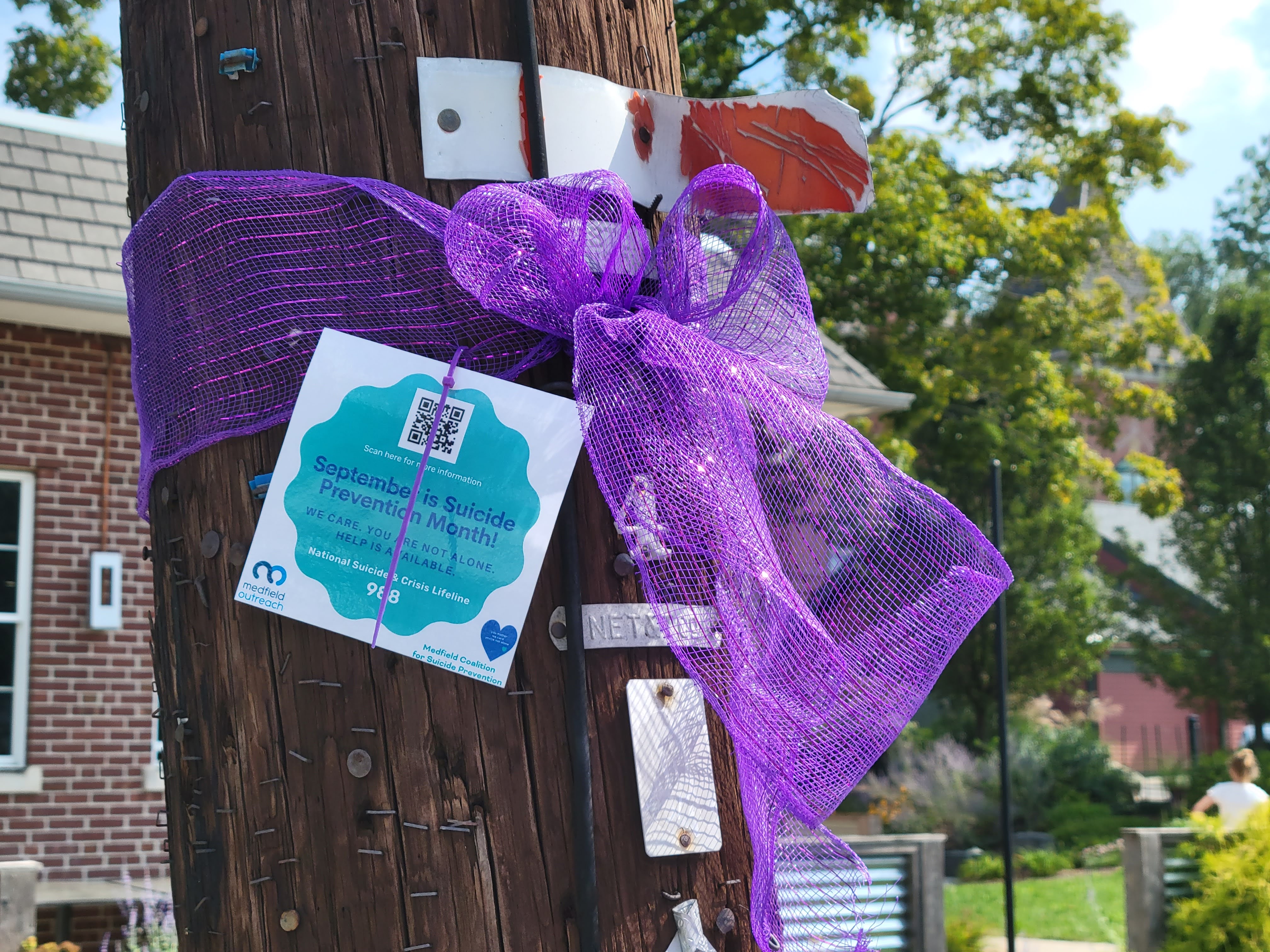
Medfield Outreach and Medfield Coalition for Suicide Prevention are hanging purple ribbons and QR codes around town.
NB the still mystery “new restaurant” in background.
See full Patch article below here
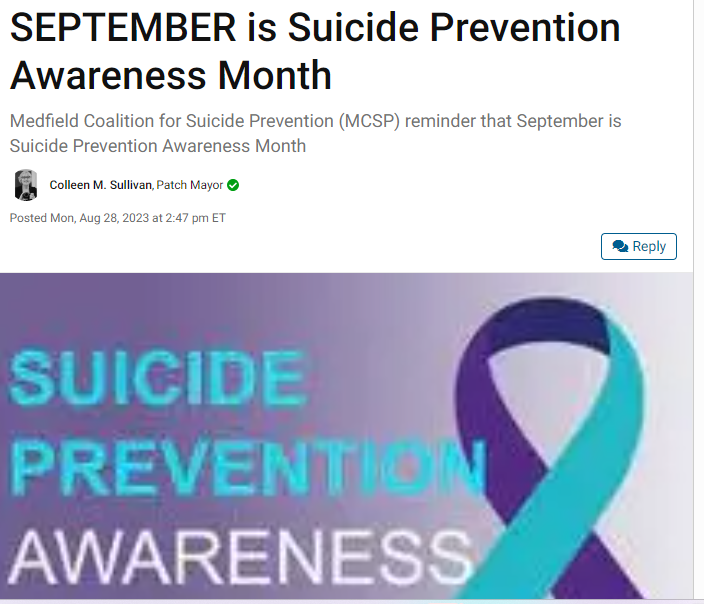
Comments Off on September is Suicide Awareness Month
Posted in Uncategorized
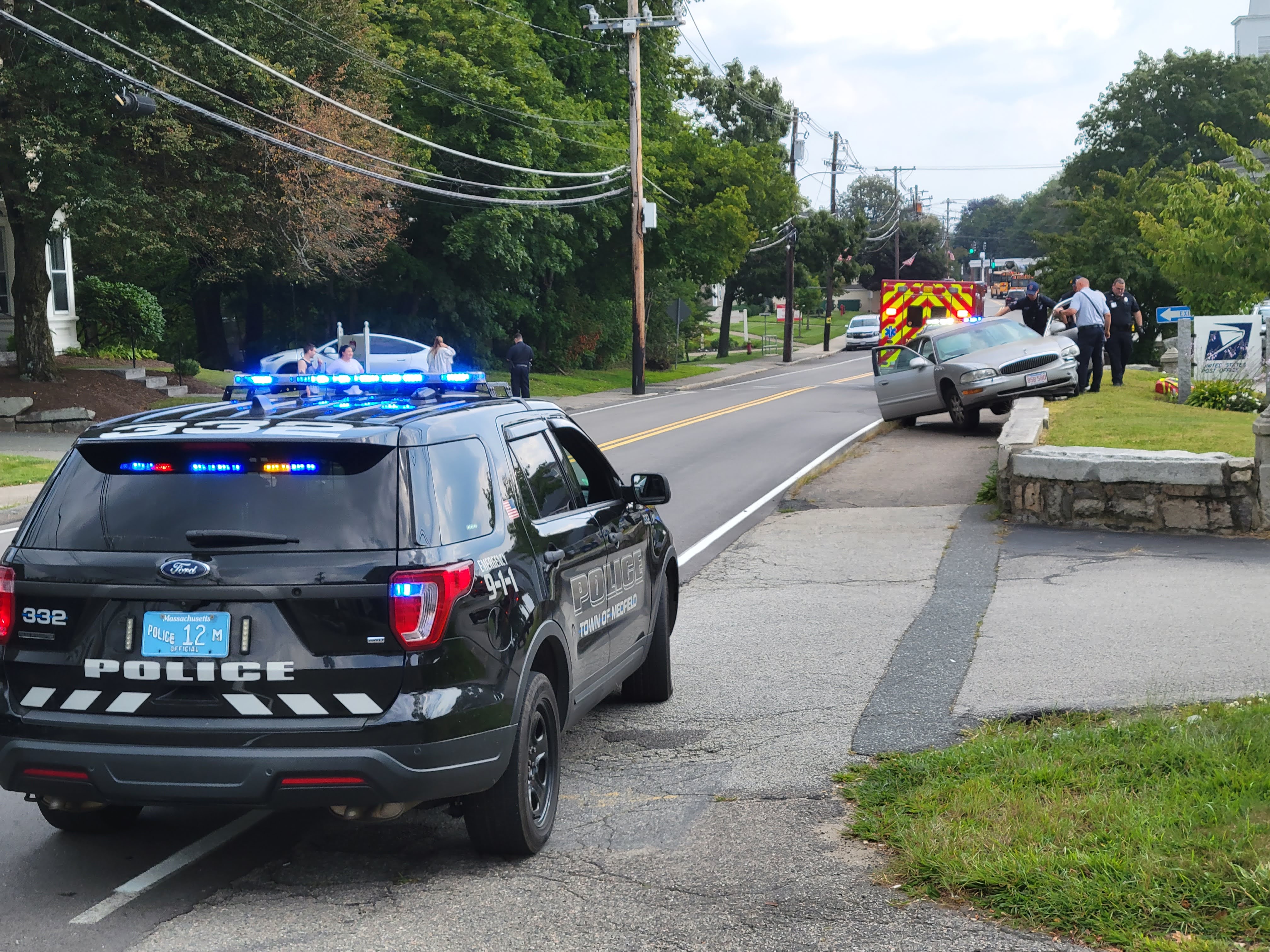
Comments Off on Happening now in front of post office & my office
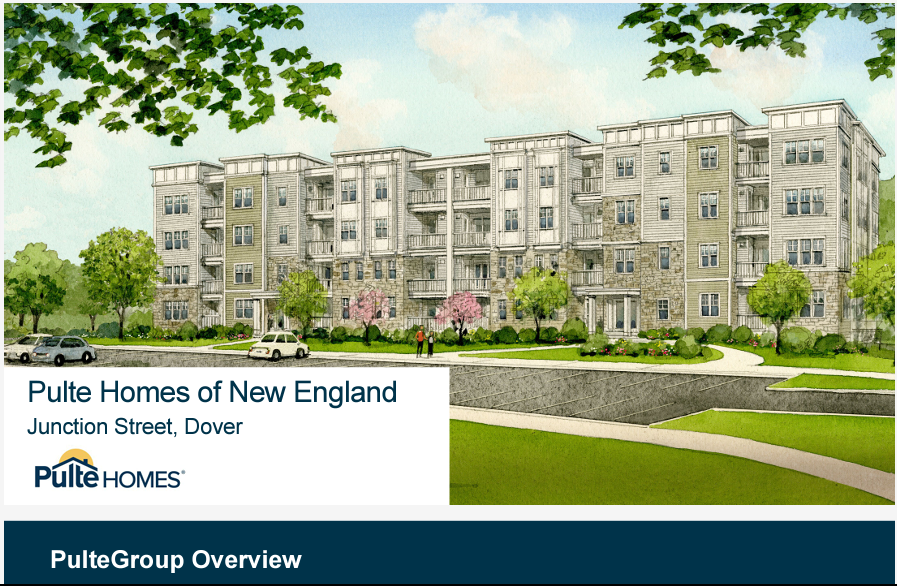
Above photo is from Pulte’s slide used in its presentation to the Dover joint Select Board & Planning Board meeting
This morning a Medfield resident visit me at my monthly first Friday office hours at The Center to ask about the Pulte project off Junction Street in Dover. I shared what I knew from watching the Dover joint planning board and Select Board meeting at which Pulte made a presentation. In that presentation Pulte showed a slide on which it noted that the project could move forward via either a special permit from the planning board or a 40B comprehensive permit from the Zoning Board of Appeals. Where I knew nothing more than what I had learned attending that planning board meeting and my own research at the Norfolk Registry of Deeds, I suggested the resident contact the Dover Town Administrator. Dover turned out to be exceedingly helpful and said the information could be shared (hence below a copy of his email to me and of their emails to him).
========================================================
Hi Pete,
Thanks for the time this morning–good to see you as always! Per your suggestion, I wrote to Dover and have the following updates to pass along to you, with their permission.
———- Forwarded message ———
From: Carol Lisbon
Date: Fri, Sep 1, 2023 at 12:40 PM
Subject: FW: Questions
XXXX, please share this email with anyone you think might be interested. We have already received other information requests from your neighborhood. The Medfield Town Planner, Maria De La Fuente, is serving as Medfield’s point person. The Dover Planning Board will add you to our list. We have created a webpage ( https://www.doverma.gov/646/Pulte-Homes—Junction-Street) as a repository for all documentation received by the Dover land use boards which I hope you will find helpful.
Best, Carol Lisbon
Chair, Dover Planning Board
———- Forwarded message ———
On Fri, Sep 1, 2023 at 11:21 AM Michael Blanchard wrote:
Good Morning XXXX,
Thank you for reaching out. The Town of Dover was contacted by Pulte Homes regarding their intent to build multifamily housing on land they acquired at 17-19 Junction Street. At this point, Pulte has only indicated their intent to pursue development of the site, no application for approval for development is before any board. (Please note – Pulte has submitted an Abbreviated Notice of Resource Area Delineation (ANRAD) application with the Conservation Commission. This is not for project approval, but is required to conduct test pit explorations as part of their due process on the site.) Should Pulte pursue development of the site they have options that could include approval by the Planning Board (under existing or new zoning bylaws) or by the Board of Appeals (under Chapter 40B). Until there is a formal application, we do not know if, when, or which board this development will be before. I have cc’d our Planning Board Chair and staff who are maintaining an email list and have created a webpage (Pulte Homes Proposed Multifamily Housing on Junction Street | Dover, MA (doverma.gov) to keep the public informed.
Thank you,
Michael Blanchard
Town Administrator
Town of Dover
508-785-0032
===================================================================
I looked on-line at the Norfolk Registry of Deeds at the Town of Medfield takings for the streets around Evergreen Way and it seemed to me that the stubs that ran off Evergreen Way to the Dover town line, such as Stony Brook, were not taken by the Town of Medfield as public ways. That usually means that they remain as private ways and may therefore be owned by the adjoining home owners to the middle of the private way. That could lead one to conclude that without an easement from those home owners, one would not expect that Pulte could access any proposed development in Dover as of right from the streets in Medfield.
There was a wetlands delineation that was shared (see my prior post), which appeared to show a lot of wetlands on the site. I jogged the trail across the site maybe 30 year ago and recall wet feet.
Posted in Uncategorized
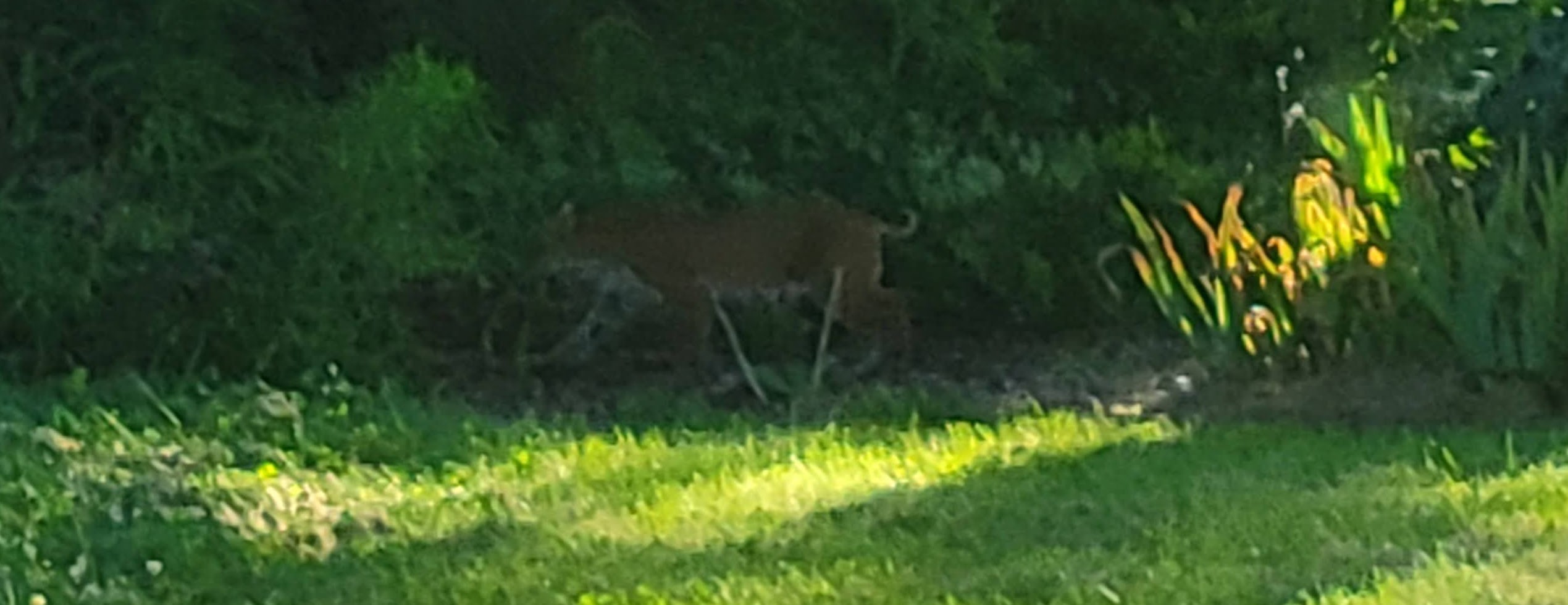
This morning a bad photographer got a bad picture of the first bobcat he had ever seen.
Note also the bad picture of the clover on the left that the bad photographer planted last fall after 1/3 of the lawn died when the town would not let residents water their grass for that whole prior summer.
Comments Off on Bobcat on Copperwood Road
Posted in Uncategorized

I hold regular monthly office hours at The Center on the first Friday of every month from 9:00 to 10:00 AM.
Residents are welcome to stop by to talk in person about any town matters.
Residents can also have coffee and see the Council on Aging in action (a vibrant organization with lots going on).
I can be reached via 508-359-9190 or this blog about Medfield matters
Comments Off on Office hours this Friday
Posted in Uncategorized
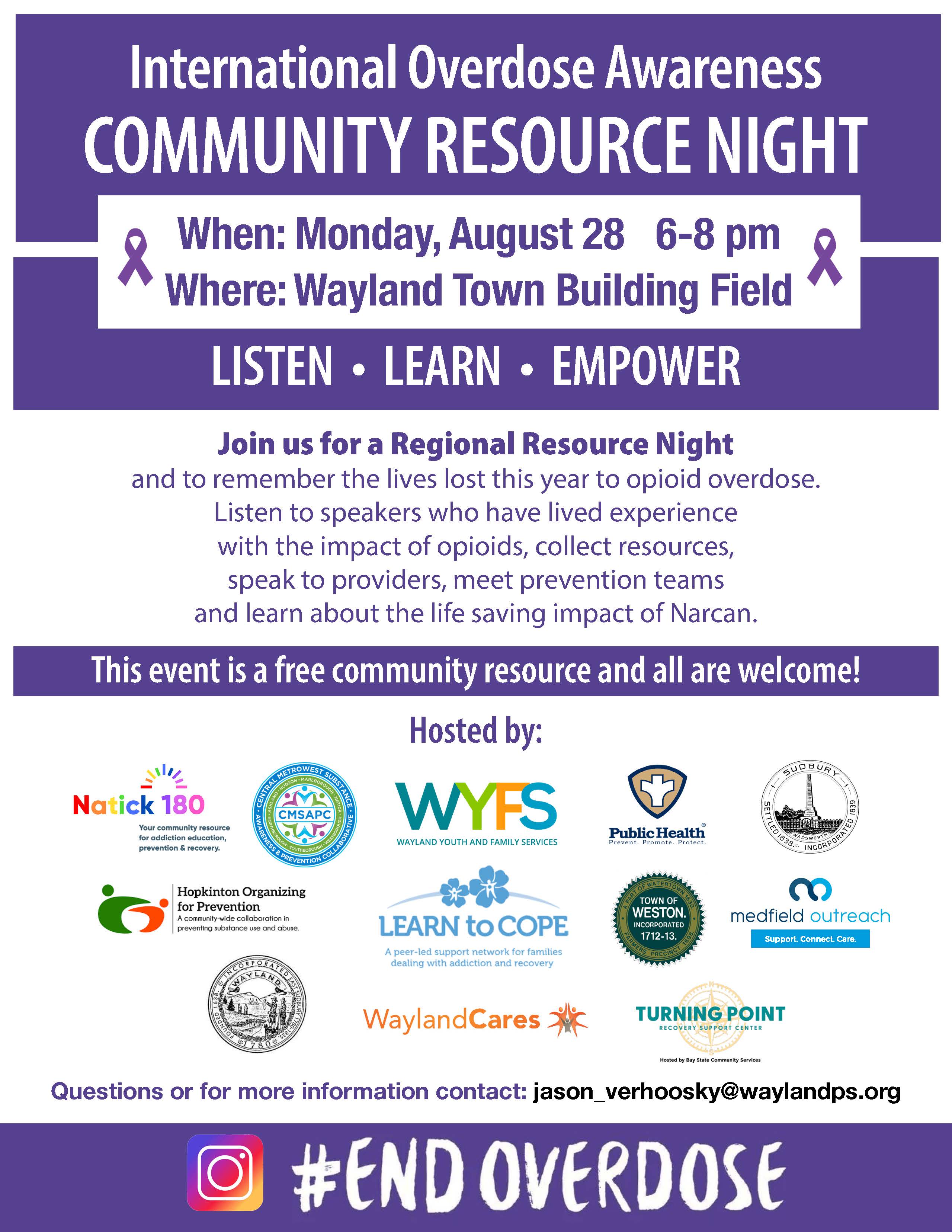
Comments Off on COMMUNITY RESOURCE NIGHT re opioids – tonight 6-8
Posted in Uncategorized
From Carol Lisbon, Chair Dover Planning Board – below is an email to Carol Lisbon with a copy of the wetlands delineation for the proposed Pulte proposal –
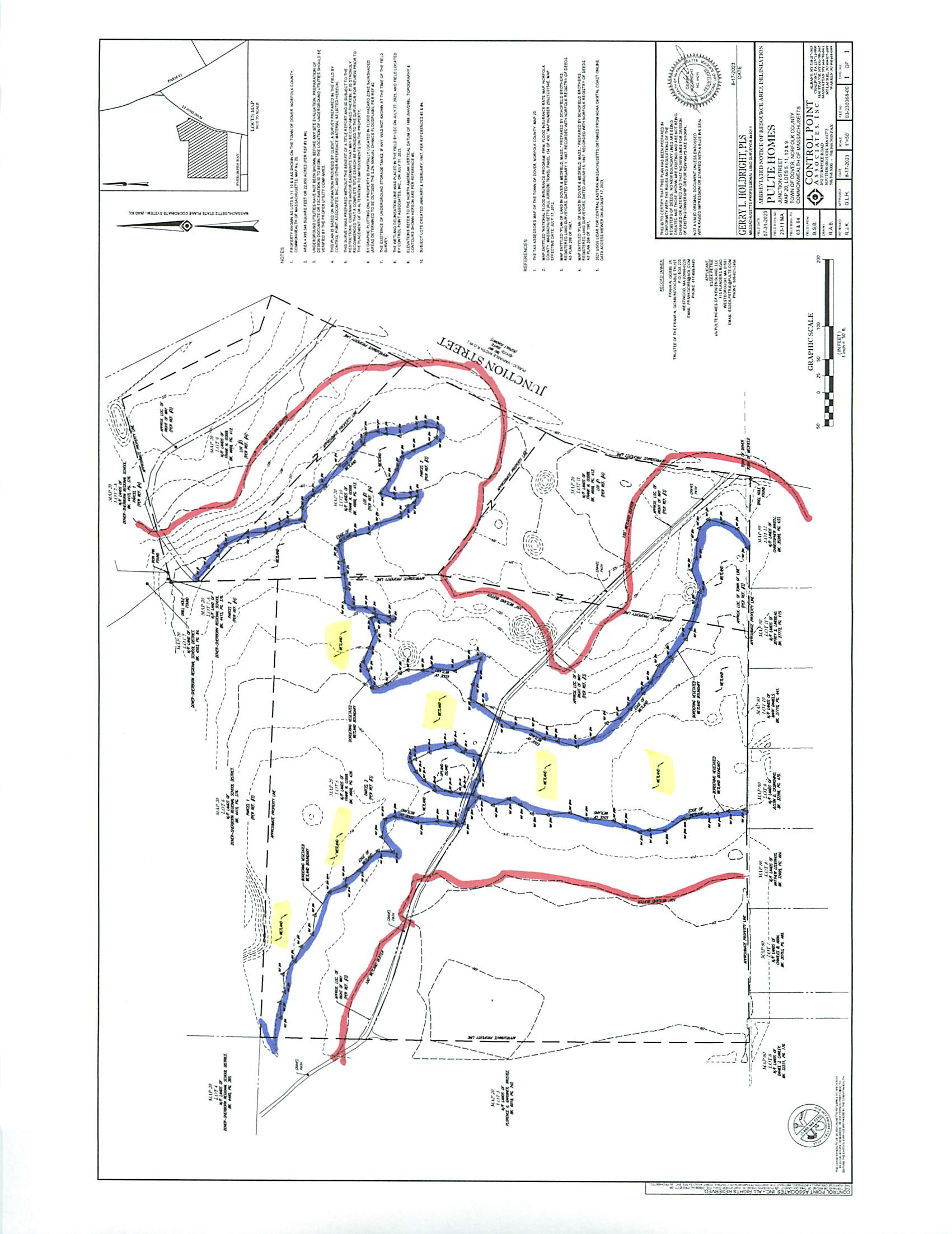
As requested, please find attached the ANRAD Application for the Pulte Junction Street property for posting on the project’s webpage and the public hearing on it will be opened at the Commission’s Sept. 13th Meeting. As shown on the submitted delineation site plan, the wetlands on the property are substantially greater than those depicted on the State’s MassMapper GIS.
Sincerely,
Janet Hartke Bowser
Conservation Commission Agent
Town of Dover
5 Springdale Avenue
Dover, MA 02030
781-856-5915 (cell)
*************************************************************************************************
BELOW IS MY HAND EDITTED VERSION OF THE WETLANDS MAP IN THE ABOVE PDF:
This is my drawing on the wetlands plan from the attached PDF so as to better see the wetlands line (blue) and the 100′ buffer (red). I also yellow highlighted the words “wetlands” where I saw them. NB, I was working on a letter sized version of the plan, so all type was so small as to be hard to read.
Comments Off on Dover Pulte project wetlands map
Posted in Uncategorized

____________________________________________________________________________
According to the National Institutes of Health (NIH), over 100,000 people in the US died of a drug overdose in 2021. The majority of these deaths involved opioids.
Fentanyl is the leading cause of opioid overdoses, and the Drug Enforcement Agency (DEA) estimates that six of ten fake prescription pills contain a potentially lethal dose of fentanyl. These fake pills can be bought over the internet and through popular social media apps such as SnapChat. Fortunately, there is a lifesaving reversal agent to counteract the effects of an opioid overdose. This drug is called naloxone, also known under the brand name Narcan.
A study by Brigham and Women’s Hospital showed that 93% of people who receive naloxone will survive their overdose. Naloxone is available without a prescription, and it can be accessed at most pharmacies in Massachusetts. The more people that have access to naloxone, the more lives that are likely to be saved.
It can be difficult to predict when, where, or to whom an overdose might occur. Similar to carrying an EpiPen for someone with allergies, carrying naloxone is a simple practice that can have life-saving implications.
In partnership with the SAFE Coalition, the Medfield Cares About Prevention Coalition (MCAP) is hosting free drop-in nasal spray Narcan (naloxone) training sessions for all Medfield residents and local businesses on Tuesday, September 26th. Members of the SAFE Coalition will lead the training and supply free nasal spray Narcan to all attendees. Training sessions will be offered at 4:30, 5:00 and 5:30 PM at the Medfield Public Library (468 Main St, Medfield, MA 02052).

Comments Off on Narcan Training 9/26 at Library 4:30, 5:00 & 5:30
Posted in Uncategorized
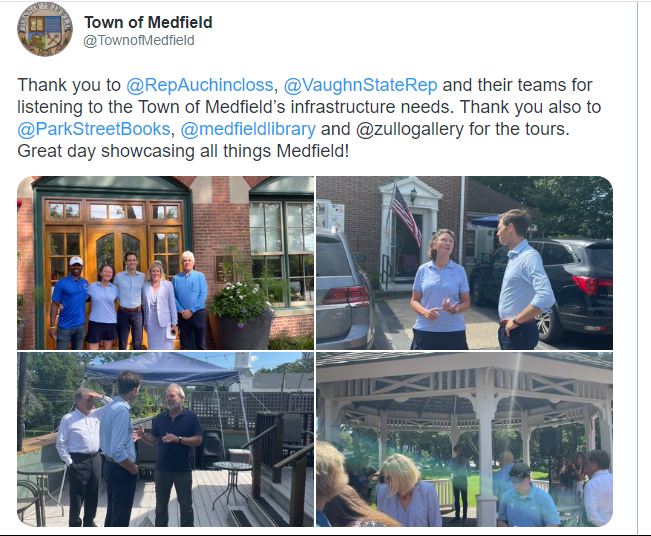
Comments Off on Congressman Jake Auchincloss and Rep. Marcus Vaughn toured Medfield yesterday
Medfield Select Board member
I started this blog to share the interesting and useful information that I saw while doing my job as a Medfield select board member. I thought that my fellow Medfield residents would also find that information interesting and useful as well. This blog is my effort to assist in creating a system to push the information out from the Town House to residents. Let me know if you have any thoughts on how it can be done better.
For information on my other job as an attorney (personal injury, civil litigation, estate planning and administration, and real estate), please feel free to contact me at 617-969-1500 or Osler.Peterson@OslerPeterson.com.
 | Donna Knott on Reading for “Read Across… |
 | Lester Cohen on Town’s Buildings Require… |
 | Select Board member… on Black Out at Budget Works… |
| Lester Cohen on Black Out at Budget Works… |
 | The Sullivans on Thank you Linda Thompson! |

 Medfield02052's Blog