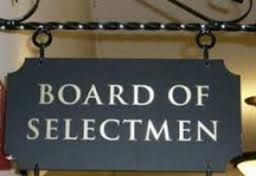
DHCD site visit to Rosebay site 11/6

Email this afternoon from Sarah Raposa about the Department of Housing and Community Development site visit to the Tilden expansion project called Rosebay (a copy of the email appears below) –

Rosebay

The Town of Medfield has received notice (from the Developer) that DHCD is currently reviewing an application for Site Approval submitted by NewGate Housing LLC (the “Applicant”). The proposed development will consist of 45 age restricted (62+) rental units comprised of 37 one-bedroom units and 8 two-bedroom units contained within one residential building with amenities, facilities, driveways/roadways and associated infrastructure on ~2.4 acres.


Access to the site will be provided from Pound Street. The project will access the utility infrastructure located on Pound Street, including sanitary sewer, water, gas, electric, telephone and cable. The stormwater management system will be designed to fully comply with all the standard of the MA DEP Stormwater Management Regulations. The Applicant is proposing that all units (100%) will be identified as affordable units for the Town’s Subsidized Housing Inventory.


The application may be viewed on the Town’s website: HERE


Should DHCD deem the conceptual design appropriate for the site, the Applicant is then allowed to submit a formal comprehensive permit application to the Medfield Zoning Board of Appeals for this project.


As part of its review, DHCD will conduct a site visit, which Local Boards[1] may attend. The site visit for The Rosebay at Medfield has been scheduled for Tuesday, November 6, 2018 at 10:00 am. Please meet at the project location (at or near 30 Pound Street).


A municipality has an opportunity to submit comments to the agency within 30 days.  The public may also wish to submit comments.  The deadline for comments is no later than TBD.


Please inform us of any issues that have been raised or are anticipated in the review of this application within 7 days of the site visit so that comments may be incorporated in to the Board of Selectmen’s municipal comment letter.


[1] Local Board – means any local board or official, including, but not limited to any board of survey; board of health; planning board; conservation commission; historical commission; water, sewer, or other commission or district; fire, police, traffic, or other department; building inspector or similar official or board; city council or board of selectmen.  All boards, regardless of their geographical jurisdiction or their source of authority (that is, including boards created by special acts of the legislature or by other legislative action) shall be deemed Local Boards if they perform functions usually performed by locally created boards.


Sarah Raposa, AICP

Town Planner

MFC’s 2018 Annual Appeal

MFC-sign

Letter from the Medfield Food Cupboard, courtesy of Susan Maritan –

==============================================================

Dear Friends, Volunteers and Supporters of the Medfield Food Cupboard,


This past week the c communications. In the appeal we ask for the community’s help and support. The Food Cupboard depends on donations of money, food and time to keep our shelves filled and our organization running smoothly. Last year, with the assistance of the community, we were able to provide enough food for our clients to make over 4,000 meals — an accomplishment about which we can all feel proud.


Please visit our website to read our annual appeal newsletter or to donate to this important cause: medfieldfoodcupboard.com


For your dedication to our shared mission we are most grateful.

The Medfield Food Cupboard Volunteers

Angel Run early registration closes 10/28

Early bird registration closes 10/28 at Midnight.
View this email in your browser

Greetings Angel Run Friends,

Early Bird Registration for the Angel Run closes on October 28 at Midnight. Don’t miss out on the lower price and your chance to get one of the famous Angel Run shirts.

Thank you to those who have already registered. If you have, be sure to pass this email along to your friends so they have the chance to register. If you haven’t already registered, we ask that you not wait until the last minute.

Registration is online at www.medfieldfoundation.org/angel-run. After October 28 you may still register online however the price goes up and there is no shirtincluded. You may also print a registration form to send in by mail. Be sure to send it early as forms received after 10/28 will be considered late.

Once again this year we will be offering bib tag timing to provide you the most accurate time possible and we are back to our official USATF certified 5K route.

Finally we will again have a special separate starting corral for competitive runners as well as a special group for those pushing a sleigh (stroller). Be sure to note if you want to be in one of these sections on your registration.

Register Now!
Needham Bank Logo
Once again Needham Bank is the Exclusive Presenting Sponsor
of the 2018 MFi Angel Run.

Thank you to the team at Needham Bank for their
continued generosity towards Medfield.

We hope to see you there (with bells on!)

Cheers,

The MFi Angel Run Team

MSA training today

The Massachusetts Municipal Association’s Massachusetts Selectman’s Association is holding its fall training for selectmen today from around the state in Devens. Programs are over and we are hearing now from Lieutenant Governor Karen Polito. State is providing grants for small bridges and IT.

Gus Murby and I car pooled.

As always, some useful ideas. Ironically, one program was on how to hire a town administrator, which Medfield only does every 43 years, so I will file that away for 43 years from now.

Motions for STM Warrant Articles (with $)

EMAIL FROM Mike –

==================================================================

Attached are the motions for the articles at the October STM meeting. This version includes the amounts being requested for Article 10, the COA request for funds to open on Saturdays ($9,500) and for Article 11, the Water and Sewerage Board’s request to transfer funds from Article 34 of the 2018 Annual Town Meeting (Iron/Manganese  Treatment) to Article 11 of the Oct. STM for Unaccounted-for water ($50,000), This should give you the amounts you need to vote on recommendations for the Town Meeting. Funding sources for the articles are included in the motions, although for Article 10, the source needs to be voted on. Mike S

=================================================================

      MOTIONS FOR OCTOBER 29, 2019 Special Town Meeting


Article 1.   Move that Article 1 be dismissed.


Article 1.   Move that Town accept G.L. Chapter 90, Section 17C.


Article 2.  Move that Article 2 be dismissed.


Article 2.  Move that Town accept G.L. Chapter 90, Section 18B.


Article 3.  Move that Article 3 be passed as set out in the Warrant.


Article 3.  Move  that Article 3 be dismissed.


Article 4. Move that Article 4 be passed, as set out in the Warrant


Article 4.  Move that Article 4 be dismissed.


Article 5.  Move that Article 5 be passed as set out in the Warrant.


Article 5.  Move that Town amend the Medfield Town Code Article 300 Zoning by a new Section 300-14.17 Senior Housing Residential Development District, as set out in the Warrant.


Article 5.  Move that Article 5 be dismissed.


Article 6.  Move that Article 6 be passed as set out in the Warrant.


Article 6.  Move that Article 6 be dismissed.


Article 7.  Move that Article 7 be passed as set out in the Warrant.


Article 7.  Move that Article 7 be dismissed.


Article 8.       Move that the Town propose amendments to the Town Charter to be submitted to the voters at the next annual town meeting for the election of officers for their approval, pursuant to the Home Rule Procedures Act, G.L. Chapter 43B, Section 10 and 11 as follows:


Amend Article 3 The Board of Selectmen

Section 3.3 Appointments by adding, in first line, after “Town Administrator”: the Town Clerk, and


Amend Article 6 Other Elective Offices

Section 6.1 Elective Offices Designated, by deleting: a. The Town Clerk for a term of three years, and re-lettering the remaining sub-sections.


Transitional provision: The foregoing amendments shall take effect upon the completion of the currently-serving Town Clerk’s current elected term,


Article 8.   Move that Article 8 be dismissed.


Article 9.:  Move that the Town propose an amendment to the Town Charter to be submitted to the voters at the next annual town meeting for the election of officers for their approval, pursuant to the Home Rule Procedures Act, G.L. Chapter 43B, Sections 10 and 11 as follows:


Amend Article 2 Legislative Branch: Open Town Meeting Section 2-2 Time of Annual Town Meeting by deleting “last Monday in April” and replacing with: “first Monday in May”,


Transitional provision: This charter amendment shall become effective, beginning with the 2020 annual town meeting.


Article 9.  Move that Article 9 be dismissed.


Article 10.  Move that the Town appropriate the sum of $9.500., said sum to be transferred from the unexpended balance of funds in________________________________________________(get account name and number from Joy or Matt), for the purpose of funding the opening of the CENTER at Medfield on Saturdays through June 30th, 2019, including staffing, operating expenses, programming, meals, utilities and other associated costs.


Article 10.  Move that the Town appropriate the sum of $9,500., said sum to be raised on the fy19 tax levy, for the purpose of funding the opening of the CENTER at Medfield on Saturdays through June 30th, 2019, including staffing, operating expenses, programming, meals, utilities and other associated costs.


Article 10.  Move that Article 10 be dismissed.


Article 11.  Move that the Town appropriate the sum of $50,000, said sum to be transferred from the unexpended balance of funds appropriated for Iron/Manganese removal from the water supply under Article 34 of the 2018 Annual Town Meeting, for the purpose of studying and/or implementing the reduction of unaccounted-for water in the Town’s water supply.


Article 11.  Move that Article 11 be dismissed.


Run in the 2018 Angel Run, apprentice for the 2019 Angel Run, run the 2020 Angel Run

Home_Page_Angel_Run_800x600-500x300

Rose Colleran and Susan Weisenfeld (above) have co-chaired the Medfield Foundation Angel Run for many years, and today announced that they will do so for two more spectacular, family fun filled Angel Runs, this December 2 and in 2019.

Therefore, the Medfield Foundation is looking for someone interested in learning how to operate the Angel Run over the next fifteen months by apprenticing to these two pros, to learn the ropes, and to then take over running the Angel run to be held in early December 2020.  The Angel Run is Medfield premier family fun event, and raises monies for Medfield families in need.


  • Run in the 2018 Angel Run

  • Apprentice in the 2019 Angel Run

  • Run the 2020 Angel Run


Angel Run

Planning for Autonomous Vehicles

From Route Fifty – see on-line here

Most Big Cities Are Planning for Autonomous Vehicles

Waymo cars are displayed at the Google I/O conference in Mountain View, California, on May 8.

Waymo cars are displayed at the Google I/O conference in Mountain View, California, on May 8. JEFF CHIU / AP PHOTO

The National League of Cities has seven recommendations for those looking to launch pilots.

More than half of the largest U.S. cities are preparing for autonomous vehicles in their long-range transportation plans—up from less than 10 percent three years ago, according to a new National League of Cities report.

Between 2011 and 2017, 22 states passed 46 bills, and five governors signed executive orders related to AV development and use—most permitting pilots. A second wave is underway with 28 states introducing 98 bills in 2018, according to “Autonomous Vehicle Pilots Across America”.

Pilot projects range from informal agreements to structured contracts between cities and AV companies.

“Mayors are welcoming in that innovation and really trying to get an understanding of how these self-driving cars will interact with the urban environment in a particular place,” Brooks Rainwater, senior executive and director of NLC’s Center for City Solutions, told Route Fifty.

Close to fully autonomous vehicles are being piloted by Google subsidiary Waymo in Chandler and Phoenix in Arizona. Several companies are operating in Pittsburgh.

Uber saw a setback in Tempe, Arizona, when one of its AVs hit and killed a woman walking her bicycle across the street in March, and local police are seeking a manslaughter charge against the driver, who video shows was watching “The Voice” on her phone at the time.

Still, AVs bring with them the promise of 90 to 99 percent fewer traffic fatalities, Rainwater said.

Waymo is testing in 15 to 20 markets because much of the work around self-driving cars is based on data and mapping; the more miles traveled, the better, he added.

Arlington, Texas has already purchased autonomous shuttles and is working with the private sector on a pilot, while no Arizona city has a formal agreement with an AV company because the state controls everything.

Transportation officials and automakers have both pressed Congress to codify a federal framework for testing and operating AVs, but no timetable exists for what seems like a nonpartisan issue. In the meantime, states and localities have shown few signs of slowing down on their own regulations.

“I think that we’re in a place where [federal rules] can be rolled out with existing regulations and legislation on the books,” Rainwater said. “Final rules of the road will help the industry long term, but I don’t see what’s been playing out as a true impediment.”

NLC’s report recommends localities thinking about setting up a pilot of their own start by outlining their goals and metrics before partnering with consultants, tech companies, outside groups, or academia to form a consortium.

After engaging the private sector, governments should consider creating a regional alliance because AVs will inevitably cross jurisdictions, Rainwater said.

To scale a pilot appropriately, finances, timeframes, geography and safety precautions must all be taken into account, according to the report.

Intergovernmental coordination is important, as is a phased plan that gradually introduces AVs to a community, Rainwater said.

Boston is in the midst of AV mobility tests backed by the World Economic Forum, while Portland remains in the planning phase. But those plans are focused on service delivery rather than vehicle delivery because the city wants to improve residents’ access to education and jobs while avoiding congestion privately owned AVs could bring.

Portland’s pilot is targeting a 2019 start, so there’s time to incentivize ride-sharing and deployment in high-need areas, Rainwater said.

“This new technology has the potential to build equity and create opportunities for vulnerable populations,” said Clarence Anthony, CEO and executive director of NLC, in a statement. “As always, cities are supporting the needs of their residents and meeting them where they are, both literally and figuratively.”


Dave Nyczepir is a News Editor at Government Executive’s Route Fifty and is based in Washington, D.C.

Meghan Glenn elected to School Committee

At the Board of Selectmen meeting last night by the split joint vote of the four then current School Committee members and the three selectmen Meghan Glenn, a former teacher, was elected to fill the open School Committee spot created by the resignation of Tim Bonfatti last month.

When there is an open position on a Town of Medfield board, that position is filled by the joint vote of the two boards.

Dr. Meredith Chamberland, who holds a doctorate, also agreed to be nominated.  The town is fortunate to have two such well credentialed, knowledgeable  candidates willing to serve on the School Committee (both have been active in school matters).  Based on the responses by both Ms. Glenn and Dr. Chamberland to numerous questions last night, our town will be exceedingly well served if both continue their active participation in school matters going forward.

Meghan Glenn letter 20180914


All should subscribe to Medfield’s Vine Lake Preservation Trust newsletter

Here is the website so you can get the latest one, which came today and details the gravel roads reconstruction, among other things – they are always interesting.

http://www.vinelakepreservationtrust.org/

Vine Lake Cemetery - little walter

Car ownership to cease

I think that the Town of Medfield will need to plan for this coming sea change in how we get around.  I see:

  • less need for buses at the Council on Aging;
  • requiring fewer parking spaces for the Medfield State Hospital development;
  • no real need to spend money to alleviate the current parking congestion in the downtown, as it will disappear on its own; and
  • since we receive about $2m. a year from the auto excise taxes residents pay, the town will need to find a replacement source for those receipts as they dry up as car ownership declines.


Click here to read on-line


Why you have (probably) already bought your last car

  • 10 October 2018
A Matreshka self-driving taxi cab performs a test drive at the first autonomous transport training ground at the Kalibr technoparkImage copyrightGETTY IMAGES
Image captionDriverless taxis – the transport of the future?

I’m guessing you are scoffing in disbelief at the very suggestion of this article, but bear with me.

A growing number of tech analysts are predicting that in less than 20 years we’ll all have stopped owning cars, and, what’s more, the internal combustion engine will have been consigned to the dustbin of history.

Yes, it’s a big claim and you are right to be sceptical, but the argument that a unique convergence of new technology is poised to revolutionise personal transportation is more persuasive than you might think.

The central idea is pretty simple: Self-driving electric vehicles organised into an Uber-style network will be able to offer such cheap transport that you’ll very quickly – we’re talking perhaps a decade – decide you don’t need a car any more.

And if you’re thinking this timescale is wildly optimistic, just recall how rapidly cars replaced horses.

Take a look at this picture of 5th Avenue in New York in 1900. Can you spot the car?

5th Avenue in New York in 1900Image copyrightNATIONAL ARCHIVES

Now look at this picture from 1913. Yes, this time where’s the horse?

5th Avenue in New York in 1913Image copyrightLIBRARY OF CONGRESS

In 1908 the first Model T Ford rolled off the production line; by 1930 the equestrian age was, to all intents and purposes, over – and all thanks to the disruptive power of an earlier tech innovation – the internal combustion engine.

So how will this latest transportation revolution unfold?

The driverless Uber model

First off, consider how Uber and other networked taxi companies have already changed the way we move around. In most major cities an Uber driver – or one of its rivals – is usually just a couple of minutes away, and charges less than established taxis, let’s say £10.

The company’s exponential growth is evidence of how powerful the Uber business model is.

Now take out the driver. You’ve probably cut costs by at least 50%.

Uber self-driving carImage copyrightGETTY IMAGES
Image captionUber has been experimenting with driverless cars

So if we’re trying to work out when this revolution will begin in earnest the key date will be when self-driving vehicle technology is available and – crucially – has regulatory backing.

That could well be sooner than you think. The UK has said it hopes to authorise the first fully autonomous cars as early as 2021.

And, say enthusiasts for autonomy, it will only take one city to prove the technology is safe and useful and the rest of the world will very quickly rush to catch up.

So self-driving cars have cut our £10 journey to £5.

The switch to electric

Now imagine the current mostly fossil fuel-powered taxi fleet is replaced with electric cars.

At the moment electric vehicles are more expensive than similar models with internal combustion engines, but offer significantly lower lifetime costs.

They are more reliable, for a start. The typical electric car has around 20 moving parts compared to the 2,000 or so in an internal combustion engine.

As a result electric vehicles also tend to last much longer. Most electric car manufacturers expect their vehicles to keep on going for at least 500,000 miles.

These factors aren’t that important for most consumers – after all, the average driver in England does less than 10,000 miles a year and our cars are parked 95% of the time. However, they are huge issues if you’re using a vehicle pretty much continuously, as would be the case with a self-driving taxi.

Internal combustion engineImage copyrightGETTY IMAGES
Image captionThe end of the road for the internal combustion engine?

Add in the low cost of recharging batteries compared to refuelling and you’ve got another dramatic reduction in costs.

And it’s worth noting that the cost of electric vehicles is likely to continue to fall, and rapidly. As they become mainstream, returns to scale will drive down costs. That’s the logic behind Tesla’s $5bn (£3.8bn) battery plant, the so-called “Gigafactory”.

How does this affect our £10 journey?

It brings another dramatic reduction. Fully autonomous electric taxi networks could offer rides at as little as 10% of current rates.

At least that’s what tech prophet Tony Seba reckons. He and his team at the think-tank RethinkX have done more than anyone else to think through how this revolution might rip through the personal transportation market.

‘Transport as a service’

We’ve now cut our £10 fare to just £1.

Mr Seba calls the idea of a robo-taxi network “transport as a service”, and estimates it could save the average American as much as $6,000 (£4,560) a year. That’s the equivalent of a 10% pay rise.

And don’t forget, when the revolution comes you won’t be behind the wheel so now you’ll be working or relaxing as you travel – another big benefit.

You still think that car parked outside your flat is worth having?

What’s more, once this new model of getting around takes hold the benefits are likely to be reinforcing. The more vehicles in the network, the better the service offered to consumers; the more miles self-driving cars do, the more efficient and safer they’ll get; the more electric vehicles manufactured, the cheaper each one will be.

Electric car charging at charging pointImage copyrightGETTY IMAGES
Image captionDon’t worry about running out of charge

Don’t worry that rural areas will be left out. A vehicle could be parked in every village waiting for your order to come.

And range anxiety – the fear that you might run out of electricity – won’t be a problem either. Should the battery run low the network will send a fully charged car to meet you so you can continue your journey.

You’ve probably seen headlines about accidents involving self-driving cars but the truth is they will be far safer than ones driven by you and me – they won’t get regulatory approval if they are not. That means tens of thousands of lives – perhaps hundreds of thousands – will be saved as accident rates plummet.

That will generate yet another cost saving for our fleets of robo-taxis. The price of insurance will tumble, while at the same time those of us who insist on continuing to drive our own vehicles will face higher charges.

Human drivers banned

According to the tech visionaries it won’t be long before the whole market tilts irreversibly away from car ownership and the trusty old internal combustion engine.

RethinkX, for example, reckons that within 10 years of self-driving cars getting regulatory approval 95% of passenger miles will be in these electric robo-taxis.

Cars parked outside housesImage copyrightGETTY IMAGES
Image captionWill cars parked outside houses soon be a thing of the past?

The logical next step will be for human beings to be banned from driving cars at all because they pose such a risk to other road users.

Take a moment to think about the wide-reaching effects this revolution will have, aside from just changing how we get around. There will be downsides: millions of car industry workers and taxi drivers will be looking for new jobs, for a start.

But think of the hundreds of billions of dollars consumers will save, and which can now be spent elsewhere in the economy.

Meanwhile, the numbers of cars will plummet. RethinkX estimates that the number of vehicles on US roads will fall from nearly 250 million to just 45 million over a 10-year period. That will free up huge amounts of space in our towns and cities.

And, please take note: I haven’t mentioned the enormous environmental benefits of converting the world’s cars to electricity.

That’s because the logic of this upheaval isn’t driven by new rules on pollution or worries about global warming but by the most powerful incentive in any economy – cold hard cash.

That said, there’s no question that a wholesale switch away from fossil fuels will slow climate change and massively reduce air pollution.

In short, let the revolution begin!

But seriously, I’ve deliberately put these arguments forcefully to prompt debate and we want to hear what you think.

You can comment below, or tweet me @BBCJustinR.