Category Archives: Budgets

Override election is June 11

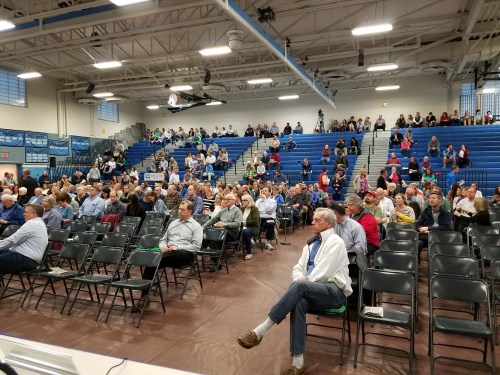
This was the start of night two of the annual town meeting (ATM) – more residents did show up, but it was still a much smaller crowd than night one.  I ballparked the attendance on night one at about 900.

  • YES
    • ALS – $250K per year
    • Municipal Stabilization Fund to maintain town buildings – $1m. per year
    • Dale Street School feasibility study for MSBA – $1m. (funded from the above monies)
    • Medfield Park & Recreation Commission site planning – $150K
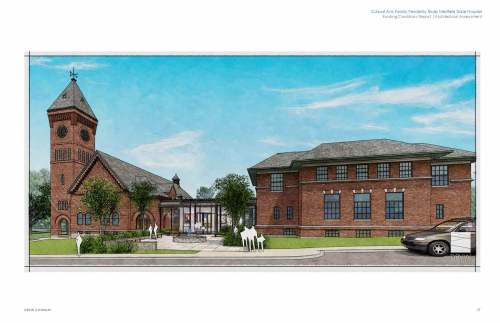
    • Medfield Cultural Alliance matching grant for Cultural Center at former Medfield State Hospital site – $25K
  • NO
    • Council on Aging expansion money – $150K

Given all the votes, taxes will be up about 10%.

20180501_193456.jpg

This posted by the Carol Mayer, Town Clerk –

Town Clerk

Posted on: May 2, 2018

SPECIAL TOWN ELECTION 6/11/2018

If not already registered, the deadline is Tuesday, May 22nd. The Town Clerk’s office will be open 8:30 AM – 8:00 PM. You can check your registration status on line at
http://www.sec.state.ma.us >ELECTIONS AND VOTING

School Committee office hours 7PM tomorrow

From Anna Mae O’Shea Brooke –

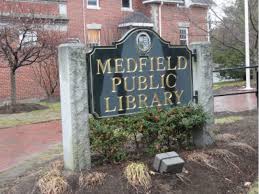
library sign

Because of the upcoming override and the questions that the citizens of Medfield may have, we are offering another option for School Committee Office Hours this week:
 
– Newly added: Tuesday, April 24 from 7-8pm in the conference room at the Medfield Public Library
 
Wednesday, April 25 from 9-10am at Dale Street School

MMA on House budget

This alert came today from the Massachusetts Municipal Association about the areas needing protection by our legislators in the House budget negotiations this coming week.  I did email both our representatives to ask that they follow the Massachusetts Municipal Association recommendations.

MMA-2

House to Start FY19 State Budget Debate on Monday


Representatives to Decide on Many Municipal and School Amendments

Please Oppose Costly Health Insurance Amendments


Please Call Your Representatives Today


April 20, 2018


Dear Osler Peterson,


This coming Monday, April 23, the House is scheduled to start debate on the fiscal 2019 state budget. House members will take up the 1,400 amendments that were filed by the deadline last Friday, including dozens related to municipal and school aid accounts, and many on important policy issues that affect local government. Debate is expected to wrap up by the end of the week.


The MMA has sent a detailed letter to all House members, taking a position on the major local government amendments. The House Ways and Means budget (H. 4400) and the proposed amendments can be found on the Legislature’s website.


Please Click Here for a Copy of MMA’s Budget Letter on House Amendments


Please review the MMA’s House budget letter, and call your Representatives to let them know how these amendments would impact you. This is the best time to influence their support for the issues and amendments that matter most. Please call on them to support amendments that would fully fund state obligations, such as the special education “circuit breaker” and charter school reimbursements, and oppose amendments that would pre-empt local decision-making in the area of health insurance.


This is a quick reference to amendments covered in the MMA letter.


Municipal Aid

Support for: Payment-in-Lieu-of-Taxes (#830), Shannon Anti-Gang Grants (#40), Planning Grants (#282 and #731), and Public Libraries (#1171)


School Aid

Support for: Charter School Impact Payments (#952), Special Education “Circuit Breaker” (#693), Chapter 70 Minimum Aid at $50 per Student (#1154), McKinney-Vento Student Transportation (#930), Regional School Student Transportation (#29, #785, #823 and #974), Out-of-District Vocational Student Transportation (#192 and #1278), Summer Learning (#888), and Sumer Jobs (#456)


Labor Relations and Health Insurance

Oppose: Undermining Municipal Retiree Health Insurance Authority (oppose #1048 and #13)

Support for: Mediation and Dispute Resolution (#1153, #248 and #1160) and, and Municipal Police Training Fund (#1235 and #1380)


Other Amendments

Support for: Community Benefit Districts (#1074), Municipal Impact Statements (#62), water Infrastructure Funding (#813), Community Preservation Act Revenues (#466), Conservation Tax Credit (#1248), Bulk Purchasing of Naloxone (#223, #226, #477 and #1209), and Firefighter Equipment Cleaning Grants (#1189).


If you have any questions about amendments, please contact MMA Legislative Director John Robertson at jrobertson@mma.org or (617) 427-7272.


Please Call Your Representatives Today and Ask them to Support Cities and Towns in the House Budget Debate


Thank You!!


House budget #s

The Division of Local Services (DLS) today put online the House Ways and Means Committee’s numbers (copy attached below).  The Senate typically gives us a little more.

Massachusetts Department of Revenue Division of Local Services Municipal Databank/Local Aid Section Preliminary Municipal Cherry Sheet Estimates 1. Where present, uncheck NULL boxes and enter values (no commas) to set min and max data ranges. 2. Report will always include all data, but will display only communities within set ranges. 3. Click “View Report” and scroll down to check report status. 4. To view or sort data, export to Excel. Close Municipality (type municipality name): Fiscal Year (must be greater than 2010) of 2 ? Find | Next FY2019 Local Aid Estimates Medfield FY2018 Cherry Sheet Estimate FY2019 Governor's Budget Proposal FY2019 House Budget Proposal FY2019 Senate Budget Proposal FY2019 Conference Committee Education: Chapter 70 6,137,784 6,188,024 6,213,144 School Transportation 0 0 0 Charter Tuition Reimbursement 13,415 0 0 Smart Growth School Reimbursement 0 0 0 Offset Receipts: School Choice Receiving Tuition 0 0 0 Sub-total, All Education Items: 6,151,199 6,188,024 6,213,144 General Government: Unrestricted Gen Gov't Aid 1,448,128 1,498,812 1,498,812 Local Sh of Racing Taxes 0 0 0 Regional Public Libraries 0 0 0 Urban Revitalization 0 0 0 Veterans Benefits 15,060 13,811 13,811 State Owned Land 27,898 43,926 43,926 Exemp: VBS and Elderly 36,842 35,498 35,498 Offset Receipts: Public Libraries 16,164 16,623 16,484 Sub-Total, All General Government 1,544,092 1,608,670 1,608,531 Total Estimated Receipts 7,695,291 7,796,694 7,821,675

House budget gives us $25K more

The House budget is out this afternoon, and from my look I compute that it is about $25K more in Chap. 70 aid for Medfield that the Governor’s budget.  This is the Massachusetts Municipal Association alert –

MMA-2

HOUSE BUDGET COMMITTEE OFFERS $40.98B FY 2019 STATE BUDGET THAT MAKES KEY INVESTMENTS IN MUNICIPAL AND SCHOOL AID

• INCLUDES THE FULL $37.2M INCREASE IN UNRESTRICTED MUNICIPAL AID (UGGA)

• INCREASES CHAPTER 70 BY $125M TO FUND MINIMUM AID AT $30 PER STUDENT

• ADDS $18.8M TO THE SPECIAL EDUCATION CIRCUIT BREAKER

• ADDS $1M MORE FOR REGIONAL SCHOOL TRANSPORTATION

• LEVEL-FUNDS MOST OTHER MUNICIPAL AND SCHOOL ACCOUNTS

April 11, 2018


Dear Osler Peterson,


Earlier this afternoon, the House Ways & Means Committee reported out a $40.98 billion fiscal 2019 state budget plan to increase overall state expenditures by 3.1 percent. The House Ways and Means budget is $83 million more than the budget filed by the Governor in January, increasing Chapter 70 aid by $21 million above the Governor’s recommendation by increasing minimum aid from $20 per student to $30 per student. The full House will debate the fiscal 2019 state budget during the week of April 23.


  1. 4400, the House Ways and Means budget, provides progress on many important local aid priorities, including the full $37.2 million increase in Unrestricted General Government Aid that the Governor proposed and communities are counting on. The House W&M Committee would increase funding for other major aid programs, by adding $18.8 million to the Special Education Circuit Breaker, adding $1 million to Regional School Transportation, $1 million to McKinney-Vento reimbursements, and increasing Chapter 70 aid by $125 million more than fiscal 2018 levels.


Please Click this Link Now to See the Chapter 70 and Unrestricted Municipal Aid Numbers for Your Community


Later Today or Early Tomorrow – Click on this Link to See Your Community’s Local Aid and Preliminary Cherry Sheet Numbers in the House Ways & Means Budget, as Posted by the Division of Local Services


$37.2 MILLION INCREASE IN UNRESTRICTED MUNICIPAL AID

In a major victory for cities and towns, the HW&M fiscal 2019 budget plan would provide $1.1 billion for UGGA, a $37.2 million increase over current funding – the same increase proposed by Governor Baker. The $37.2 million would increase UGGA funding by 3.5 percent, which matches the projected growth in state tax collections next year. Every city and town would see their UGGA funding increase by 3.5 percent.


CHAPTER 70 MINIMUM AID WOULD INCREASE TO $30 PER STUDENT

The House budget committee is proposing a $125 million increase in Chapter 70 education aid (this is $21 million higher than the $103.6 million increase in House Two), with a provision that every city, town and school district receive an increase of at least $30 per student (compared to the $20-per-student amount in the Governor’s budget). The House budget would continue to implement the target share provisions enacted in 2007. Further, the House Ways & Means Committee proposal would build on the Governor’s initial proposal to start addressing shortfalls in the foundation budget framework, by increasing the cost factors for employee health insurance by $39 million more than in fiscal 2018.


In the context of a tight budget year, the House budget committee’s increase in Chapter 70 funding is progress over the Governor’s proposal that was filed in January. The MMA continues to give top priority to full funding for the Foundation Budget Review Commission’s recommendations, and over the long-term will work to build on this increase.


Please ask your Legislators to support a funding increase for Chapter 70 school aid that ensures that all schools receive a suitable and appropriate increase in fiscal 2019, which the MMA targets at $100 per student. The MMA also strongly supports implementation of all of the recommendations of the Foundation Budget Review Commission to update the Chapter 70 “foundation budget” minimum spending standards for special education and employee health insurance, and to add to the spending standard a measure of recognition for the cost of services for low-income, English Language Learner (ELL) and other students who would benefit from more intensive services. The Commission recommended phasing in the changes over a four-year period, a position the MMA supports as well. Increasing minimum aid and fixing the inadequacies in the foundation formula are essential.


$18.8 MILLION INCREASE GETS CLOSER TO FULL FUNDING FOR SPECIAL EDUCATION CIRCUIT BREAKER

In H. 4400, House leaders have announced that they support increased funding for the Special Education Circuit Breaker program. The House budget plan would provide $300 million, an $8.9 million increase above the Governor’s proposed fiscal 2019 level of $291.1 million, and $18.8 million more than the $281.2 million fiscal 2018 level. However, the House budget would still be about $23 million short of full funding in fiscal 2019. This is a vital program that every city, town and school district relies on to fund state-mandated services. The MMA and local leaders will work to build on this increase to get to full funding during the Legislature’s budget deliberations.


ADDS $1 MILLION TO REGIONAL SCHOOL TRANSPORTATION

House Ways and Means Committee budget would add $1 million to bring regional transportation reimbursements up to $62.5 million, compared to the Governor’s proposal to level fund the program at $61.5 million. The MMA will work to continue building on this increase to get to full funding.


CHARTER SCHOOL REIMBURSEMENTS WOULD BE FUNDED AT $90 MILLION

Both budgets filed by the Governor and the House Ways & Means Committee would underfund charter school reimbursements in fiscal 2019. The HW&M budget would provide $90 million, compared to the Governor’s recommendation to level fund the program at $80.5 million. Both proposals are far below the amount necessary to fully fund the statutory formula that was originally established to offset a portion of the funding that communities are required to transfer to charter schools. The fiscal 2018 funding level is $73.4 million below what is necessary to fund the reimbursement formula that is written into state law. If the HW&M amount is enacted, the shortfall will grow to an estimated $76.8 million in fiscal 2019. This would lead to the continued and growing diversion of Chapter 70 funds away from municipally operated school districts, and place greater strain on the districts that serve 96% of public school children. Solving the charter school funding problem must be a major priority during the budget debate.


PAYMENTS-IN-LIEU-OF-TAXES (PILOT), LIBRARY AID ACCOUNTS, METCO, McKINNEY-VENTO, AND SHANNON ANTI-GANG GRANTS

The House budget committee’s proposal would level-fund PILOT payments at $26.77 million, provide $91K less to library grant programs, add $1.5 million to METCO, and add $1 million to McKinney-Vento reimbursements at $9.1 million. The HW&M budget would level fund Shannon Anti-Gang Grants at $6 million.


Please Call Your Representatives Today to Thank Them for the Local Aid Investments in the House Ways and Means Committee Budget – Which Increases Direct Municipal and School Aid Accounts by $41 Million More Than the Governor’s Budget


Please Explain How the House Ways and Means Budget Impacts Your Community, and Ask Your Representatives to Build on this Progress During Budget Debate in the House


Warrant Committee positions on town meeting articles, to date

This list below from Warrant Committee chair, Tom Marie today on the Warrant Committee positions on the various warrant articles for the annual town meeting (ATM).  Here is my annotated list of those warrant articles – 20180306-warrant articles

Warrant Articles (including votes taken) ·      Articles 1-10 RECOMMENDED (9-0)

·      Article 15 DISMISSED (9-0)

·      Article 24 RECOMMENDED (9-0)

·      Article 25 DISMISSED (8-1)

·      Article 30 RECOMMENDED (9-0)

·      Article 31 RECOMMENDED (9-0)

·      Article 32 RECOMMENDED (9-0)

·      Article 33 RECOMMENDED at $400K (9-0)

·      Article 34 RECOMMENDED (9-0)

·      Article 35 RECOMMENDED (9-0)

·      Article 36 RECOMMENDED (9-0)

·      Article 39 RECOMMENDED (9-0)

·      Article 42 DISMISSED (9-0)

·         Article 26 – West St/Rt 27 – dismissed (9,0)

·         Article 27 –Pre-disaster plan – recommend  (9,0)

·         Article 38 – Dog Control  – recommend (9,0)

·         Article 19,20,21,22 – dismissed (9,0)

·         Article 23 – MSH more affordable housing – recommend (7,2)

·         Article 14 – MPR building – recommend (5,4)

  • Article 16 – in house ALS – dismissed ( 6,3)


New DLS dashboard

I get newsletters from the Division of Local Services (DLS) that are often interesting.  Today’s one has a link to a new state DOR dashboard where we can compare Medfield to other towns.  When you try it out, be sure to check the 351 compare box to get the data point for all the cities and towns.  I wish they stated a preferred data point for each of their metrics.

Interesting point learned today:  Cambridge has a budget of about $600m., and they have reserves of 30% (i.e. – about $200m. banked).

===========================================================================

DLS

DLS Unveils the Municipal Finance Trend Dashboard
Sean Cronin – Senior Deputy Commissioner for Local Services

I’m pleased to announce that for the first time, the Commonwealth of Massachusetts is offering a comprehensive Municipal Finance Trend Dashboard currently available on the Division of Local Services (DLS) website! Governor Baker highlighted this initiative at the Massachusetts Municipal Association’s (MMA) Annual Meeting on January 19th and I now welcome the opportunity to provide additional information here.

The dashboard is comprised of key municipal fiscal health indicators based upon data that is part of required municipal submissions to DLS, annual financial statements, state agency databases, and the US Census. It graphically displays trends in revenues and expenditures, municipal operating positions, demographic information, unfunded liabilities, property taxes, Proposition 2 ½ data, and debt. These municipal fiscal health indicators are displayed through dashboard data compiled over multiple fiscal years. Within each dashboard panel, we also identify the source for the live data point such as the Public Employee Retirement Administration Commission (PERAC) and the Massachusetts Department of Elementary and Secondary Education (DESE) and make every effort to ensure the accuracy of the information presented.

The Municipal Finance Dashboard offers a wide array of metrics broken down by subject that can be viewed both at the individual community level and on a state-wide basis. They include:

  • Operating Position – Trends in certified free cash, stabilization fund balances, overlay reserves, general fund unassigned fund balances and outstanding receivables
  • Unfunded Liabilities – Trends in pension liabilities, OPEB liabilities and fund balances for those municipalities that are self-insured for health insurance
  • Property Taxes – Trends in average single family tax bills, new growth, levies, assessed values, excess and override capacity and Proposition 2½ ballot questions
  • General Fund Revenues and Expenditures – Trends in general fund revenues and expenditures
  • Demographics – Trends in labor, income, population and equalized property valuations (EQVs)
  • Debt – Trends in outstanding debt, debt service, bond ratings, and authorized but unissued debt

Below are a few example graphs from the dashboard:

For decades, the Municipal Databank has served as an invaluable resource for local and state officials, professional associations, academic institutions, bond rating agencies, advocacy organizations, think tanks, the media, and interested taxpayers for research, analysis, and policy development. We are now leveraging that resource to provide those same stakeholders a clearer portrayal of the fiscal health of all of Massachusetts’ 351 cities and towns. Whether it’s a finance director meeting with the finance committee, a member of the board of selectman referencing statewide trends, or the general public looking to learn more about certain financial metrics for their community, we think the information contained in the dashboard can serve innumerable purposes. To see how it could best suit your needs, we highly encourage you to take our Municipal Finance Trend Dashboard for a test drive.

The new dashboard makes it easier to get the information that you need. No longer will you need to pull down multiple spreadsheets, combine different datasets, and create charts and graphs. For these key metrics, that is done for you. (However, if you want the data for all 351 municipalities over multiple years, you can still download that. So no fears for those who like the raw data!) This is also a great transparency tool and hopefully helps simplify the analysis that goes into determining the fiscal health of a community.

I want to thank the entire DLS team for their hard work identifying the metrics, building the dashboard, and retrieving the data. As we move forward, we will provide updates and pursue additional metrics and variables, so if you have any feedback, please let us know by emailing me at croninse@dor.state.ma.us. We hope you enjoy and utilize the dashboard!

MMA analysis of Gov.’s budget

MMA-2

Dear Osler,


GOV. BAKER FILES $40.9 BILLION FY 2019

BUDGET PROPOSAL

• UNRESTRICTED MUNICIPAL AID WOULD INCREASE BY $37.2 MILLION (3.5%)

• BASE CHAPTER 70 AID WOULD INCREASE BY $103.6 MILLION (2.2%)

• $15 MILLION IN SCHOOL AID ADDED FOR STUDENTS FROM PUERTO RICO

• MOST OTHER MUNICIPAL AND SCHOOL ACCOUNTS LEVEL-FUNDED


Earlier this afternoon, Gov. Charlie Baker submitted a $40.9 billion fiscal 2019 state budget plan with the Legislature, proposing a spending blueprint that would increase overall state expenditures by 2.6 percent, as the Administration seeks to close an ongoing structural budget deficit by restraining spending across the board and placing an estimated $96 million into the state’s rainy day fund. The budget relies on $95 million in one-time revenues.


As Gov. Baker pledged to local officials on Jan. 19 at the MMA’s Annual Meeting, his budget includes a $37.2 million increase in Unrestricted General Government Aid, and $103.6 million more for Chapter 70 school aid. The Gov.’s proposal for Chapter 70 aid includes a minimum aid increase of $20-per-student, full funding of the foundation budget requirements, and continued implementation of the “target share” equity provisions. The foundation budget calculation would continue modest progress to implement the Foundation Budget Review Commission’s recommendation to use a more realistic factor for the cost of employee health insurance in school systems.


Most other municipal and education aid accounts in the Governor’s budget proposal would remain at fiscal 2018 levels. The special education circuit breaker would increase by $10 million, but would remain underfunded by about $20 million. Payments-in-lieu of taxes ($26.8M), regional school transportation ($61.5M), Shannon anti-gang grants ($6M), McKinney-Vento reimbursements ($8.1M) and METCO ($20.6M) would all be level-funded at fiscal 2018 amounts.


The Governor would level-fund charter school reimbursements at $80.5 million, a painful proposal that is approximately $85 million below the amount necessary to fully fund the statutory formula that is designed to offset a portion of the amount that communities are required to transfer to charter schools. Level-funding this account would lead to the continued and growing diversion of Chapter 70 funds away from municipally operated school districts, and place greater strain on the districts that serve 96% of public school children.


Click here to see the Division of Local Services preliminary fiscal 2019 Cherry Sheet aid amounts for your community, based on the Governor’s proposed budget (you will need to insert the name of your community in the field)


Click here to see DESE’s calculation of fiscal 2019 Chapter 70 aid and Net School Spending requirements for your city, town, or regional school district, based on the Governor’s proposed budget


UNRESTRICTED MUNICIPAL AID INCREASED BY $37.2 MILLION

In a major victory for cities and towns, House 2 (the Governor’s fiscal 2019 budget submission) would provide $1.1 billion for UGGA, a $37.2 million increase over current funding. This fulfills one of Gov. Baker’s major promises to increase direct municipal aid by the same rate of growth as state tax revenues.


The $37.2 million would increase UGGA funding by 3.5 percent, the same rate of growth projected for state tax revenues. Every city and town would see their UGGA funding increase by this 3.5 percent growth rate.


CHAPTER 70 SCHOOL AID WOULD GO UP JUST 2.2 PERCENT

The Governor’s budget submission proposes a small 2.2 percent increase in Chapter 70 education aid of $103.6 million, providing every city, town and school district with a minimum increase of $20 per student. The Governor’s budget would continue to implement the target share provisions enacted in 2007. The Governor’s budget includes a partial reflection of one of the Foundation Budget Review Commission’s key recommendations, which is updating the foundation budget to reflect the cost of employee health insurance. But this adjustment in the foundation budget is not enough to increase aid to many districts. A high majority of cities, towns and districts would only receive an increase of $20 per student under the Governor’s budget. This below-inflation increase is too low, and would force communities to reduce school programs or further shift funds from the municipal side of the budget.


Please ask your Legislators to support a funding increase for Chapter 70 school aid that ensures that all schools receive a suitable and appropriate increase in fiscal 2019, which the MMA believes should be at least $100 per student. The MMA also strongly supports implementation of all of the recommendations of the Foundation Budget Review Commission to update the Chapter 70 “foundation budget” minimum spending standards for special education and employee health insurance, and to add to the spending standard a measure of recognition for the cost of services for low-income, English Language Learner (ELL) and other students who would benefit from more intensive services. The Commission recommended phasing in the changes over a four-year period, a position the MMA supports as well. Increasing minimum aid and fixing the inadequacies in the foundation formula are essential.


SPECIAL EDUCATION CIRCUIT BREAKER UNDERFUNDED

The Governor’s budget would add $9.9 million to fund the Special Education Circuit Breaker program at $291.1 million. Because special education costs are expected to rise in fiscal 2019, this means that the Governor’s budget underfunds reimbursements by approximately $20 million. This is a vital account that every city, town and school district relies on to fund state-mandated services. The MMA will again be asking lawmakers to ensure full funding in fiscal 2019.


CHARTER SCHOOL REIMBURSEMENTS LEVEL FUNDED AT $80.5 MILLION

As noted above, the Governor would level-fund charter school reimbursements at $80.5 million, far below the amount necessary to fully fund the statutory formula that was originally established to offset a portion of the funding that communities are required to transfer to charter schools. The fiscal 2018 funding level is $73 million BELOW what is necessary to fund the reimbursement formula that is written into state law, so it is clear that the shortfall will grow significantly in fiscal 2019. MMA’s estimate is that this account is at least $85 below what is necessary. This would lead to the continued and growing diversion of Chapter 70 funds away from municipally operated school districts, and place greater strain on the districts that serve 96% of public school children. Solving the charter school funding problem must be a major priority during the budget debate.


REGIONAL SCHOOL TRANSPORTATION REIMBURSEMENTS LEVEL FUNDED

Gov. Baker’s budget submission would level-fund regional transportation reimbursements at the $61.5 million amount. This will be a hardship for virtually all communities in regional districts. Reimbursements for transportation of out-of-district vocational students remains significantly underfunded at $242K. Increasing these accounts is a priority for cities and towns.


McKINNEY-VENTO REIMBURSEMENTS LEVEL FUNDED

The Governor’s budget would level-fund reimbursements for the transportation of homeless students at $8.1 million. The impact of this funding level will vary from community-to-community depending on the number of homeless families that remain sheltered in local hotels and motels. The Administration has been successful in reducing the number of homeless students who are dislocated from their original district, but those communities that continue to provide transportation to many students may continue to see shortfalls.


PAYMENTS-IN-LIEU-OF-TAXES (PILOT) AND SHANNON GRANTS LEVEL FUNDED, AND LIBRARY AID UP $191K

The Governor’s budget would level fund PILOT payments at $26.77 million, Shannon anti-gang grants at $6 million, and fund library grant programs at $19.3 million (up $191K).


GOV. PROPOSES APPLYING HOTEL-MOTEL TAX TO AIRBNB AND OTHER SHORT-TERM RENTALS, BUT ONLY IF RENTED FOR 150 DAYS

House 2 includes an outside section (section 32) that would subject Airbnb and other short-term rentals to the local room occupancy excise tax. However, this would only apply in cases where the property is rented for 150 days or more. The MMA strongly supports extending the room occupancy excise to ALL short-term rentals. The 150-day threshold would continue to shield a large percentage of seasonal and short-term rentals from taxation, and would not close the loophole that exists now.


PLEASE CONTACT YOUR LEGISLATORS TODAY AND CALL ON THEM TO PUBLICLY SUPPORT THE GOVERNOR’S PROPOSAL TO INCREASE UNRESTRICTED MUNICIPAL AID BY $37.2 MILLION – THIS INCREASE IS VITAL TO LOCAL BUDGETS IN EVERY CORNER OF MASSACHUSETTS


AND PLEASE ASK YOUR LEGISLATORS TO COMMIT TO INCREASING CHAPTER 70 EDUCATION AID, FIXING THE FLAWS IN CHARTER SCHOOL FUNDING, AND FULLY FUNDING KEY MUNICIPAL AND SCHOOL PROGRAMS


THANK YOU!

Medfield in Gov’s budget

The following are our $ figures in the Governor’s proposed budget that was released today.  Our state aid is up about $101K, and our assessments are down about $40K.  The Governor committed to an increase that matches the state’s 3.5% projected revenue increase, but that only applies to the unrestricted general governmental aid category, which has gone up 3.5%.

If all of our state monies went up 3.5%, we would be getting $272K more, instead of $101K more.  As time goes by, the state seems to transfer more of the cost of providing municipal services to the towns.

20180124-Cherry Sheet-Gov budget-120180124-Cherry Sheet-Gov budget-2

Disturbing medical news

From Medpage Today

https://www.medpagetoday.com/blogs/revolutionandrevelation/69125

*********************************************************************


Who Actually Is Reviewing All Those Preauthorization Requests?

Milton Packer thinks you should know how the system works

  • by Milton Packer MD

Several months ago, I was invited to give a presentation about heart failure to a group of physicians who meet every month for a lunch meeting.

Don’t worry. No company sponsored the talk, and I did not receive any payment. I accepted the invitation, because it seemed like to good thing to do.

However, the audience was a bit unusual for me. Among the 25 physicians in the room, nearly all were in their 70s and 80s. All were retired, and none were actively involved in patient care. I guess that explains why they had time in the middle of the day for an hour-long presentation.

I gave my talk, but there were no questions.

I had a few moments afterwards to speak to my audience. Since the physicians were not involved in patient care, I wondered why they wanted to hear a talk about new advances in heart failure.

The response surprised me: “We no longer care for patients, but we care about what’s going on. You see, most of us are employed by insurance companies to do preauthorization for drugs and medical procedures.”

My jaw dropped: “I just gave a talk about new drugs for heart failure. Are you responsible for preauthorizing their use for individual patients?” The answer was yes.

I was really curious now. “So did I say anything today that was helpful? I talked about many new treatments. Did I say anything that you might use to inform your preauthorization responsibilities?”

Their answer hit me hard. “Oh, we’ve heard about those drugs before. We’re asked to approve their use for patients all the time. But we don’t approve most of the requests. Nearly all of them are outside of the guidelines that we are given.”

I stammered. “I just showed you evidence that these new drugs and devices make a real positive difference in people’s lives. People who get them feel better and live longer.”

The physicians agreed. “Yes, you were very convincing. But the drugs are too expensive. So we typically reject requests, at least the first time. We figure that, if doctors are really serious, then they should be willing to make the request again and again.”

I was astonished. “If the drugs will help people, how can you say no?”

Then I got the answer I did not expect. “You see, if it weren’t for us, the system would go broke. Every time we say yes, healthcare becomes more expensive, and that isn’t a good thing. So when we say no, we are keeping the system in balance. Our job is to save our system of healthcare.”

I responded quickly. “But you are not saving our healthcare system. You are simply making money for the company that you work for. And patients aren’t getting the drugs that they need.”

One physician looked at me as if I were from a different planet. “You really don’t understand, do you? If we approve expensive drugs, then the system goes broke. Then no one gets healthcare.”

Before I had a chance to respond, he continued: “Plus, if I approve too many expensive drugs, I won’t get my bonus at the end of the month. So giving out too many approvals wouldn’t be a smart thing for me to do. Would it?”

I walked out of the room slowly. Although I had been invited to share my knowledge, it turned out that — this time — I was the real student.

The physicians in the audience taught me a valuable lesson. And amazingly, none of them showed a single slide.

Packer has recently consulted for Amgen, Boehringer Ingelhim, Cardiorentis and Sanofi. He was one of the two co-principal investigators for the PARADIGM-HF trial (sacubitril/valsartan) and currently chairs the Executive Committee for the EMPEROR trial program (empagliflozin).

last updated

117 Comments