Category Archives: Affordable housing / 40B

Citizen ATM warrant article for senior housing

Mike Sullivan share this morning the following citizen petition for an annual town meeting (ATM) warrant article that Mike received Friday from Tony Centore, Chair of the Senior Housing Study Committee.  Citizen petitions for ATM warrant article need ten signatures to qualify for inclusion in the town meeting warrant, and this petition contained seventy-five signatures.

The Medfield State Hospital Master Planning Committee is working towards a special town meeting (STM) in March 2018 where both Lot 3 and the Hinkley parcel are recommended to be developed as senior housing – a 42 unit 40B rental project on Lot 3 and a 12 unit ownership proposal for the South end of the Hinkley parcel, respectively.

VOTER PETITIONED ARTICLE FOR TOWN MEETING (D) To the Board of Selectmen: We, the undersigned voters of the Town of Medfield, hereby petition the Board of Selectmen pursuant to MGL Chapter 39, Section J 0, to insert the following article in the Warrant for the X_Annual Special Town Meeting to be held on April 24, 2018 To see if the Town will vote to: To determine whether the Town in order to expedite development along Ice House Rd. will vote to authorize the Board of Selectmen to remove Lot 1 (Hinkley Property) and Lot 3 from the control ofthe Medfield State Hospital Planning Committee and transfer said control to the Medfield Senior Housing Study Committee and the Council on Aging (COA) or other Town Board. Further to direct the Board of Selectman to expeditiously enter into a Local Initiative Project (LIP) on Town owned land on Lot 1 (Hinkley Property) off Ice House Rd. The land or any portion thereof shall be incorporated into said project at no cost by donation to the Affordable Housing Trust. The project shall contract with a developer to build appropriate and affordable Senior 65+ housing featuring ranch type condominiums with price points between $350,000 to $500,000 with preference for Medfield Seniors. Land will continue to be owned by the Town. In addition the details of said housing shall be subject to approval of the Senior Housing Study Committee and the Council on Aging. Or take any other action in relation thereto.

Meetings yesterday

The Board of Selectmen held a meeting yesterday afternoon with seniors at The Center, for a no holds barred discussion of the options, status, and timing for senior housing.  I learned a lot.  Selectmen were supported by members of the Medfield State Hospital Master Planning Committee, who did the heavy carrying about explaining the status of that committee’s huge amount of work with respect to the redevelopment of the former MSH site.

Then Gus and I attended an evening regional selectmen meeting in Millis, attended by selectmen from six towns (see Medfield Press article below), where we discussed how each town is dealing with 40B, marijuana, and the new Federal stormwater rules.  I learned a lot there too.

20171207-BoS-Senior housing meeting

Region’s selectmen convene

MILLIS – Local officials from several towns led a discussion Thursday on the deficiencies and possible reform of affordable housing rules.

Selectmen from Medway, Ashland, Hopkinton, Holliston, Medfield and Millis – convened in Millis to discuss a number of issues of regional importance, such as stormwater management, retail marijuana regulation and the voting process at town meetings. The towns have met several times over the past year.

Medway Town Administrator Michael Boynton noted that the “40B” affordable housing legislation – which allows developers to circumvent certain local zoning bylaws if their project has an affordable housing component and the town falls below a 10 percent affordable housing threshold – first went into effect in 1969.

“It’s not going anywhere,” he said, noting that a ballot initiative to repeal the rule in 2010 had failed. He added that many towns, when they reach the 10 percent threshold, lose interest in reform.

Boynton said the town had experienced – in the last 18 months – both friendly and unfriendly 40B developments.

Medway Selectman Glenn Trindade said the legislation, as currently written, does not solve the affordable housing problem in the most efficient way. He said apartments are most in demand, but developers want to build houses. With apartments, he noted, the residents’ incomes are reviewed after a period of time to ensure they still quality; the same does not occur with houses or condos.

“What we’ve got with this system is someone hits the lottery (and is awarded an affordable house or condo), and you help one person,” he said.

Fellow Selectman Dennis Crowley said he was concerned about what happened to affordable housing units. He said the town had seen instances in which condo owners had bought their units, refinanced at the market value of the condo, pocketed the difference and left. He also cited incidents in which people owned the units, but moved out and rented them to other people.

“Nobody’s monitoring these units,” he said.

Boynton suggested several reforms to the law. One change would allow towns to prioritize senior housing, while another would tie developments to a municipality’s master plan.

State Rep. Shawn Dooley, R-Norfolk, noted the difficulty of changing the legislation. He said he was pursuing reforms that would allow a slightly higher-priced unit to count as a percentage of an affordable housing unity. He pointed at his hometown of Norfolk as an example of where such housing is needed.

“We’re losing teachers, firefighters and police officers – they can’t afford to live in town,” he said. “We have (affordable housing) at $130,000, and the next house up is $500,000.”

Mike Gleason can be reached at 508-634-7546 or mgleason@wickedlocal.com. For news throughout the day, follow him on Twitter @MGleason_MDN.

93-95 North Street 40B update

93-95 North street

Caitlin Dufault asked for an update in a comment to an earlier post, and I thought that there would be more general interest in my response, so I will include it here as well.

****************************************************

Tuesday evening at the 6:30 PM joint meeting of the Affordable Housing Trust Committee and the Board of Selectmen, there was a presentation by the developers of the 93-95 North Street 40B proposal, Dave and Rob MacCready. Because there is not agreement over the density (among other factors) of that proposal, and also because the Affordable Housing Trust has other proposals that are not as controversial, the Affordable Housing Trust voted to table the MacCready proposal.

Since that proposal is being put forward as a Local Initiative Program (LIP), it needs approval from the Board of Selectmen to proceed, which it does not now have. Where the Town of Medfield is currently in a safe harbor with respect to unfriendly 40B projects, if the developer opted to proceed while the town is in the safe harbor, the Zoning Board of Appeals could just deny the developer’s application for an unfriendly 40B comprehensive permit, so it could not proceed.

It is my expectation that the developers will next be trying to work out a more amicable proposal with the neighbors, which could then return to the Affordable Housing Trust Committee and the Board of Selectmen for their consideration.

Housing report

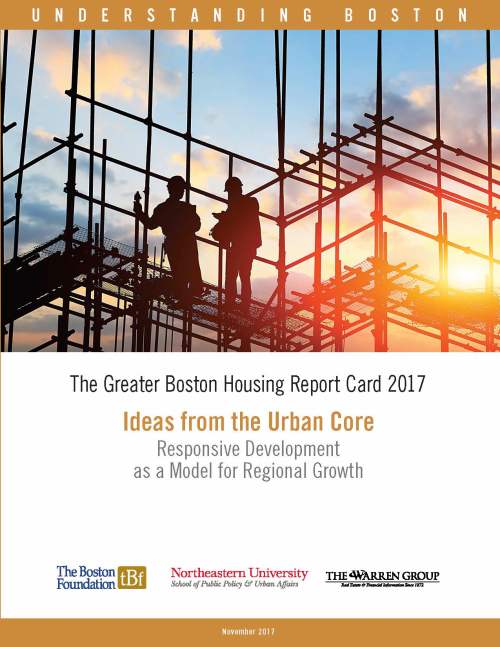
This report is for the whole Greater Boston area, and has good news for the demand for any housing that gets built at the former Medfield State Hospital site.  There is pent up demand, especially for small units suitable for one to two people, which are perfect for housing either millenials or seniors.  This matches precisely what the speaker from the Smart Growth Alliance told the Medfield State Hospital Master Planning Committee about a year and a half ago – build small units of 900-1,000 sq. ft. and those units will suit either group.

20170615-Senior Housing Study Committee-draft report

2017 HousingReportCard(1)

Senior Housing Study Committee Report

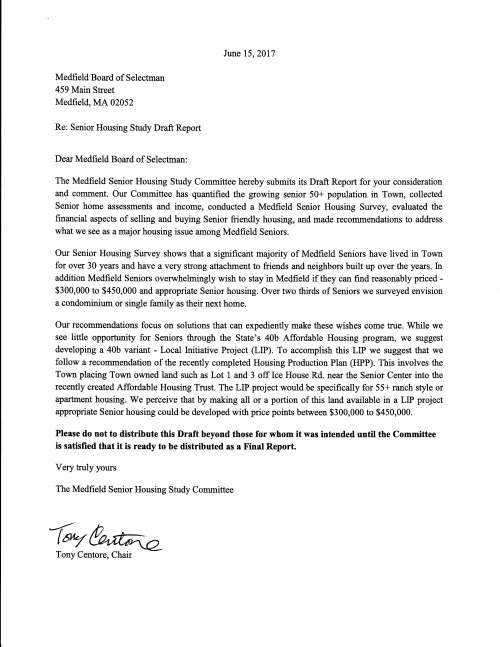
Given the meeting about senior housing this Thursday, people may want to see the Senior Housing Study Committee Report via the link below.

20170615-Senior Housing Study Committee-draft report

Medfield Board of Selectman 459 Main Street Medfield, MA 02052 Re: Senior Housing Study Draft Report Dear Medfield Board of Selectman: June 15, 2017 The Medfield Senior Housing Study Committee hereby submits its Draft Report for your consideration and comment. Our Committee has quantified the growing senior 50+ population in Town, collected Senior home assessments and income, conducted a Medfield Senior Housing Survey, evaluated the financial aspects of selling and buying Senior friendly housing, and made recommendations to address what we see as a major housing issue among Medfield Seniors. Our Senior Housing Survey shows that a significant majority of Medfield Seniors have lived in Town for over 30 years and have a very strong attachment to friends and neighbors built up over the years. fu addition Medfield Seniors overwhelmingly wish to stay in Medfield if they can find reasonably priced - $300,000 to $450,000 and appropriate Senior housing. Over two thirds of Seniors we surveyed envision a condominium or single family as their next home. Our recommendations focus on solutions that can expediently make these wishes come true. While we see little opportunity for Seniors through the State's 40b Affordable Housing program, we suggest developing a 40b variant - Local fuitiative Project (LIP). To accomplish this LIP we suggest that we follow a recommendation of the recently completed Housing Production Plan (HPP). This involves the Town placing Town owned land such as Lot 1 and 3 off Ice House Rd. near the Senior Center into the recently created Affordable Housing Trust. The LIP project would be specifically for 55+ ranch style or apartment housing. We perceive that by making all or a portion of this land available in a LIP project appropriate Senior housing could be developed with price points between $300,000 to $450,000. Please do not to distribute this Draft beyond those for whom it was intended until the Committee is satisfied that it is ready to be distributed as a Final Report. Very truly yours The Medfield Senior Housing Study Committee ~~ Tony Centore, Chair

CPA needs to come to town

cpa

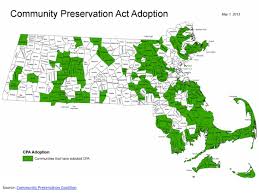
Medfield voted down the Massachusetts Community Preservation Act (CPA) at our annual town meeting (ATM), maybe 7-8 years ago, and as a result we have missed out on huge amounts of state CPA matching monies that we could have been using to pay for our open spaces, our historic preservation, or our affordable housing.  I hope that we can agree to finally adopt the CPA soon, as every year we are leaving state matching monies on the table, despite that we pay in to the Norfolk Registry of Deeds recording surcharges that create the pool of monies used for the matching funds.  Our payments are instead going to other towns in their matching monies.

In recent years, the matching monies have been so low from the registry surcharges that the legislature has annually supplemented the matching monies via an appropriation – almost half the cities and towns have adopted the CPA, so a lot of legislators are interested in keeping the CPA match high.

When we do adopt the CPA, since the whole reason to do so is to get the most state matching monies, we should adopt the highest level surcharge, which is 3%, because only those who agree to the 3% CPA surcharge get the most and largest state matches.

I have been asking for several years in a row to have an ATM warrant article to adopt the CPA, and I have been requested to not proceed by CPA proponents due to their not having educated the residents sufficiently.  This year I think we just need to go ahead, and expect that residents will understand that the CPA will save us money in the long run.  The Community Preservation Coalition website (www.communitypreservation.org) is excellent at explaining the CPA.

This article below about the CPA matching monies just issued was in my Massachusetts Department of Revenue newsletter this week –

==================================================================

FY18 Community Preservation Act (CPA) State Match Info
Lisa Krzywicki – Municipal Databank Director

On November 14th, the Division of Local Services (DLS) released the FY2018 CPA state match to the 162 communities that have adopted the CPA surcharge. The CPA allows a community to adopt a local surcharge of up to three percent that is added to real estate property tax bills. The purpose of the CPA is to help communities preserve open space and historic sites, create affordable housing and develop outdoor recreational facilities. The CPA statute, M.G.L. 44B, provides a state match to eligible communities from revenues collected by the registry of deeds for surcharges on fees charged for recording various documents.

In FY2018, the available balance in the CPA state trust fund was $26M, and the local surcharges committed by cities and towns totaled $120.9M, which provided for a 17.2 percent base state match. Chapter 44B provides for an additional state match if a community adopted a three percent surcharge or the “blended” CPA by voting a surcharge of at least one percent and appropriating other funds to the community preservation fund so that the total equals three percent of the real estate tax levy. For FY2018, 76 communities are eligible for the second round or equity distribution and third round surplus distribution. The equity and surplus distributions use population and equalized valuation (EQV) to determine a ranking that would provide a greater portion of the balance of the state trust fund after the initial calculation to poorer and more densely populated communities. However, only those that committed a three percent surcharge whether by adopting a three percent surcharge or the blended CPA (as stated above) are eligible for these additional distributions. The decile ranking used to determine the equity and surplus rounds can be found by clicking here. The distribution summary can be found in this report.

The state community preservation trust fund was created in 2000 and revenues from the registry of deeds started funneling into the trust fund right away. In FY2003, communities started collecting the local CPA surcharge. The first state match occurred in FY2004 based on those local surcharges. In FY2003, 34 communities adopted the CPA and were eligible for the state match. In FY2018, 162 communities were eligible to receive the state match. Until FY2009, the state trust fund was sufficient to provide communities with a 100 percent state match. Due to increasing participation and declining registry collections, DLS has not been able to provide a 100 percent state match since then.

In FY2018, ten additional communities will begin assessing the local CPA surcharge and will be eligible for the state match in FY2019. In the spring of 2018, DLS will project the first round state match for the 172 communities eligible for the state match in FY2019. The ten new communities are Billerica, Boston, Holyoke, Hull, Norwood, Pittsfield, Rockland, Springfield, Watertown and Wrentham. For a complete list of all communities that have adopted the CPA, please click here. As of today, only one other community has scheduled a ballot question to adopt the CPA. Voters in the town of Northbridge will decide next spring whether to add the CPA surcharge at one percent. For the up-to-date listing of communities considering adoption of the CPA, please refer to the Community Preservation Coalition website at www.communitypreservation.org or by clicking here.

40B at 93-95 North Street

40b

40B at 93-95 North Street

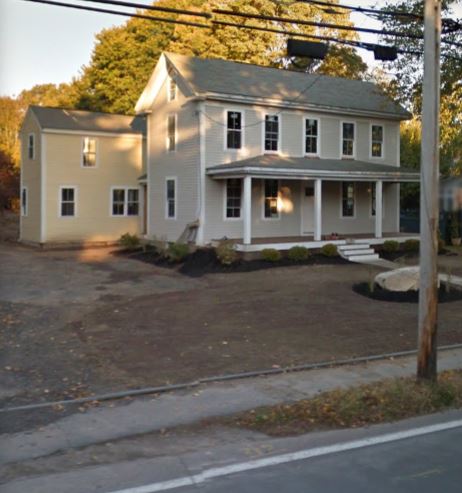
The Board of Selectmen was recently presented with a proposal for a fourteen unit rental 40B project at 93-95 North Street that the developer, David MacCready, was asking the town to approve as a friendly Local Initiative Program (LIP).  There is currently a two-family house and a small barn on the site, which is about 0.8 acres in size.  The proposal called for construction of a new ten or twelve unit apartment building at the back of the yard, and moving the barn behind the two-family structure, to perhaps house two units.  There seemed to be some continuing flux as to the actual planned configuration and whether the barn would house apartments or not.

I had been told by Mike Sullivan for months that he had been meeting with the developer about some proposals, but I had no report on, nor knew any of the details, until I first heard the proposal presented to the Board of Selectmen.  That meeting was well attended by the neighbors, who were uniformly opposed to the proposal per my poll at the meeting.  The neighbors were also critical of the developer for storing construction debris at the site and for failing to follow directions from the Building Commissioner.  I am not yet aware of the truth of those allegations.  The neighborhood is now also replete with signs protesting the project.

I have been thinking about the proper density for the downtown ever since serving on the Zoning Board of Appeals, but more so when this same developer built a row of about ten townhouses on Brook Street, that to my eye looked too dense and too tall.  However, that project was built as of right, based on the then zoning in the RU zone, the zoning district that encompasses the downtown.  From memory, at that time, the first unit required 12,000 sq. ft., but additional units could be added for each extra 6,000 sq. ft. of area.  Glover Place and Old Village Square were also built, as of right, based on that same density we then had in our RU zoning.  I think that former zoning allowed about 6-7 units per acre.

At our annual town meeting (ATM) last year we increased the RU district density requirements so that now for any multi-family building, the first three units require 30,000 sq. ft. of land and each additional unit requires another 8,000 sq. ft.  The zoning now would therefore only allow for about four units on the 93-95 North Street site, as of right, versus what might formerly have been 6-7 units.  We as a community have made a choice via our zoning requirements, that such levels of density in the downtown are what we want.

I asked Mike Sullivan during a meeting if he had talked to the developer about the proposed density at 93-93 North Street, and Mike said that he had, but that the developer “had not followed his advice.”  As I have considered whether, as a selectmen, I would vote to support this proposal, I find that at this time I am not so inclined at its current density.  I would, however, reconsider if the density were closer to the as of right density.

Where this proposal is a 40B, it is exempt from our zoning.  However, where the town is currently in a 40B safe harbor (due to both having a Housing Production Plan approved by the Department of Housing and Community Development and having actually permitted 21 Subsidized Housing Inventory (SHI) units this year), the only way that this current proposal can proceed is as a friendly 40B (i.e., as a LIP with selectmen support), unless the town falls out of its safe harbor next spring.  And the Board of Selectmen and the Affordable Housing Trust Committee are working to make sure that does not happen.

The current expectation is that 93-95 North Street proposal will next be vetted by the Affordable Housing Trust Committee, and may then return to the Board of Selectmen for its consideration.


Selectmen discuss senior housing 12/7

COOA's Center_and_sign

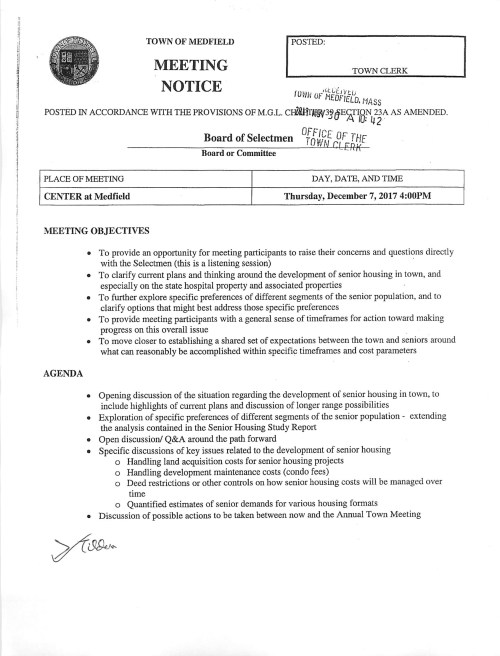
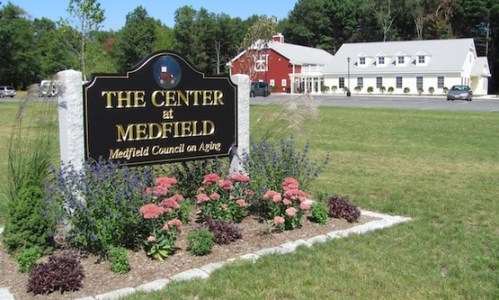
Selectmen will meet from 4-7 PM, Thursday, December 7 at The Center to Discuss Senior Housing

The Board of Selectmen will hold a special meeting to address the issue of housing for seniors in Town of Medfield.  All are welcome to attend.


Lot 3 & Hinkley

LOT 3

Lot 3 & Hinkley Property

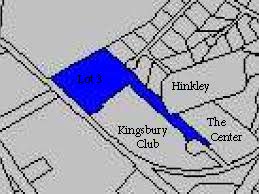
The Board of Selectmen received the following memo from the Medfield State Hospital Master Planning Committee at last night’s (really long – 4+ hours) meeting.  I am an abutter to an abutter of both Hinkley and Lot 3 (in blue above), so I recuse myself from any discussions about either.

After hearing from Chair Nolan and his fellow committee members, the Selectmen agreed last night to allow the Medfield State Hospital Master Planning Committee process, as planned, to proceed to its expected January special town meeting (STM) to consider the rezoning and disposition of the Medfield State Hospital land, instead of doing either an immediate disposition and/or a commercial use disposition.

========================================================

MEMORANDUM


TO:                 Medfield Board of Selectmen                      

FROM:           Stephen M. Nolan, Chair

Medfield State Hospital Master Planning Committee


RE:                 Hinkley Property and Lot 3, Ice House Road       

DATE:           July 6, 2017   


At your meeting on June 20, 2017, Mike Marcucci raised the possibility that Lot 3 on Ice House Road (“Lot 3”) and the adjacent Hinkley property (the “Hinkley Property”) be removed from the purview of the Medfield State Hospital Master Planning Committee (the “Committee”) and instead assigned to the newly-created Affordable Housing Trust (the “Trust”).  I raised this subject for discussion at our Committee meeting the following evening.  After further discussion at our meeting on July 5, the Committee voted unanimously to recommend to Board of Selectmen that Lot 3 and the Hinkley Property remain as part of our charge, with the understanding that two members of our Committee would be designated to work with one or more members of the Trust and/or the Affordable Housing Committee on an RFP for disposition of Lot 3 and the Hinkley Property to one or more developers for the following uses: 42 units of senior affordable rental housing (40B compliant) on Lot 3 and approximately 15 small single-family units on the Hinkley Property.  Our thought process is set forth in more detail below.


  1. Intended Use of Lot 3 and the Hinkley Property.

The consensus that has emerged from our public sessions, our meetings with the Council on Aging and the Senior Housing Study Committee and Committee deliberations is that the most desirable use for Lot 3 and the Hinkley Property is senior housing.  The principal reasons for this are twofold: access to The Center and the possibility that a senior housing development could happen on a more expedited basis than the re-development of the MSH core campus because infrastructure is more readily available and the properties are distinct enough from the core campus to be susceptible of proceeding on an independent track without pre-determining other uses at the core campus that are still under discussion.  The Council on Aging has expressed potential willingness to cede a small portion  of the land at the corner of The Center adjacent to Hinkley for purposes of enhancing the development potential of the Hinkley Property.  In addition, our consultant has advised that more intense commercial uses at Lot 3 and the Hinkley Property are likely to negatively impact The Center and overload Ice House Road.

Concern has been expressed by some, including Mike Sullivan and Gus Murby, about using a commercially zoned property for residential purposes, but the overall MSH master plan is likely to include not only a site on the MSH property for a recreational facility (whether Town-owned, private or public-private-partnership is a subject to be addressed by the Town) but also other commercially-designated parcels at the core campus that are more likely to draw interest from commercial users due to their favorable location in midst of a vital redevelopment project.  Given the proximity of the MSH property to McCarthy Park and the fact that there are no restrictive covenants applicable to that land (unlike the covenants that the Town is subject to under the Kingsbury Club lease), the MSH property is a more favorable site for a recreational facility.  And we have heard from the Economic Development Committee that the only serious proposal for a commercial use at Lot 3 that came out of their request for expressions of interest was a recreational facility, the other potential use being senior housing.  If other land at the MSH property is being proposed for such a use as well as other commercial uses, the Committee does not see any disadvantage to changing the zoning of Lot 3 to residential, effectively swapping this commercial land for other more-suitable commercial land at the MSH property.

  1. Advantages to Keeping Properties within MSH Master Plan.

The biggest reason for keeping Lot 3 and the Hinkley Property as part of the charge of the Committee is that by doing so they can be rezoned as part of the overall re-zoning of the MSH property.  Such re-zoning will significantly enhance the value of the properties because a developer will not be required to obtain a Chapter 40B comprehensive permit, which is both time-consuming and expensive, even if it is a “friendly 40B”.  In addition, the Committee believes that moderately-priced single-family homes are in demand by Medfield seniors and such units would not qualify for a comprehensive permit.  So without including the Hinkley Property under the MSH re-zoning, those units would not be feasible at the Hinkley Property.  The Committee is also looking at possible creation of a Chapter 40R district that would encompass Lot 3 and the Hinkley Property, possibly resulting in financial incentive payments to the Town.

An additional consideration is that the MSH master plan is more likely to succeed at Town Meeting if it draws upon the broadest coalition of supporters, including seniors and advocates for maintaining safe harbor status under Chapter 40B.  The Committee believes that if key parts of the redevelopment plan are removed from our scope and made stand-alone proposals, the MSH master plan is less likely to pass due to the loss of constituencies who might otherwise be expected to vigorously support the master plan.  This dissipation of support through segmentation of the plan poses a real risk to our ability to muster two-thirds support at Town Meeting.

Finally, in examining the financial impact of the MSH redevelopment, the location of senior housing at Lot 3 and the Hinkley Property, rather than at the core campus, will produce a net shift of positive economic benefits from the core campus to Lot 3 and the Hinkley Property due to (i) senior housing being a net revenue generator because of the lack of school children and (ii) a relatively higher purchase price for those properties because of lower infrastructure costs.  On the other hand, the possibility of family housing around the core campus and the higher infrastructure costs are likely to make the financials at the core campus more challenging.  For these reasons we prefer to keep Lot 3 and the Hinkley Property within our scope.

  1. Potential Disposition Process and Timing.

Finally, the issue of speed needs to be examined in light of other affordable housing efforts in Town.  We look to the Selectmen, the Affordable Housing Committee and the Affordable Housing Trust for guidance in this area.  We are aware of multiple efforts on the affordable housing front, including Tilden Village (42+ units), the American Legion property (42+ units), Lot 3 (42 units) and the core campus (undetermined number of units, but likely at least 50 units).  The combination of these units would bring the Town over the 10% mark.  Managing the delivery of these units so as to keep within safe harbor will be a complicated task, but given the difficulty of getting projects permitted and funded, it seems to us better to be pro-active and have multiple irons in the fire rather than trying to stretch out efforts in order to avoid overlap.  If one of the proposed projects were to slip for unanticipated reasons and another wasn’t well along in the process, the Town could fall out of safe harbor, and be vulnerable to unfriendly 40Bs.  In addition, the seniors in Town are impatient for progress on the goal of providing alternative housing options in order to avoid losing more of their number to out-of-town options.

Because Lot 3 and the Hinkley Property are Town-owned properties, they require a public disposition process in addition to re-zoning.  We would propose that the Town proceed on a parallel track to prepare a disposition RFP that would allow for selection of a preferred developer/purchaser, subject to re-zoning and Town Meeting approval.  This would allow for a potential disposition shortly after Town Meeting in January.  We have already done significant planning work with respect to Lot 3 and the Hinkley Property, including wetlands mapping and infrastructure analysis, and as a result our Committee is familiar with the constraints and development potential of the two sites.  Because our planning consultant is working with us on possible lay-outs of Lot 3 and the Hinkley Property and because, as stated above, we believe it makes sense to keep the properties under the MSH master plan, we suggest our Committee proceed to work on an RFP for the disposition, either as a single project comprising both the affordable senior rentals (40B) and the moderately-priced single family units or as two separate projects. We would consult with the Affordable Housing Trust and Affordable Housing Committee as we draft the RFP and we would welcome their input.  A recommendation on disposition as one single or two separate projects would be made by the Committee, once it digs into the substance more thoroughly and examines the merits of both approaches.



Affordable Housing Trust constituted

affordable-housing

Affordable Housing Trust Members

At the Board of Selectmen meeting last night the Affordable Housing Trust members were appointed:

  • Mike Marcucci
  • Adam Ameden
  • Timothy Bonfatti
  • Todd Trehubenko
  • Jack Wolfe
  • Ann Thompson

Under the terms of the Affordable Housing Trust adopted at the annual town meeting (ATM) in April, one selectman was to serve, the Affordable Housing Committee appointed one member (Ann Thompson), the Warrant Committee and the Planning Board were to each nominate individuals.  Jack Wolfe, a Warrant Committee member, was taken as the Warrant Committee nominee and the Planning Board is meeting next Monday to make its nomination (the selectmen left the seventh position open to be filled after getting that Planning Board suggestion).

The town was fortunate that a really strong field of candidates with huge experience, much with affordable housing, stepped forward to volunteer, making the selection of the actual committee members a difficult process of selecting from among so many with such great resumes.  I encouraged those who could not be appointed to still attend the Affordable Housing Trust meetings and to seek to contribute.