Category Archives: Uncategorized

Medfield Press on EDC’s report to BoS on downtown

Downtown Summit

Medfield Press has a  good article (copy also inserted below) on the report to selectmen at our meeting Tuesday on the downtown summit held by the town’s Economic Development Committee with the assistance of the MAPC.  The MAPC representative stressed that what the town will ultimately get in the end is a To Do List for our downtown.

Also, Adam Stuhlman of the Medfield Press reported to us on Tuesday that the Medfield Press now has two reporters covering the town, which is welcome news, as the town can only benefit from good newspaper coverage – and Adam is doing a good job.


Medfield study shows residents’ downtown wishlist

Posted Mar. 24, 2016 at 12:32 PM

MEDFIELD

The Economic Development Committee and the Metropolitan Area Planning Council released the results of a study from February that showed what residents felt were the strengths and weaknesses of the downtown area.

The study showed that while residents like the area, they are concerned about traffic and parking. The Board of Selectmen Tuesday agreed to a proposal to do a parking and sidewalk study. Before the study begins they want to reach out to old members of the dormant Downtown Study Committee, said Patrick Casey, chairman of the Economic Development Committee.

On Feb. 9, the committee and the council held a public forum at the Medfield Public Library to determine what residents thought of the area in terms of necessary changes and good uses. Casey said about 90 people attended, with the results showing most people enjoying what the area offers.

“People said the downtown area was walkable and visually appealing,” he said. “They like the fact that it has historic structures like the Peak House, Clark’s Tavern and the churches. They also liked the independent shops.”

At the same time, he said the results showed several needed areas of improvement, according to residents. People were worried about traffic, parking and pedestrian safety. Also mentioned was the low number of retail stores and there being “no gathering places for kids,” according to Casey.

Casey also said the committee talked to about 30 downtown area businesses last summer, with most of them saying the town has been good to work with.

“We have a good starting point and we want to make it stronger. We just need to remove negatives like traffic and parking to make a trip there easier,” he said.

Steve Winter, director of economic development for the MAPC said the study was paid for by the state and cost $15,000. He said a lot of work remains to be done on this project and that residents need to appreciate what they have in the downtown area.

“The history of Medfield is woven into the downtown area,” he said.

4/11 report on MSH planning

This meeting is an opportunity for all residents to both get informed about and also to provide input into the planning process for the MSH, before the scenarios to be studied in greater depth are selected.

Medfield State Hospital Master Plan Committee Update

The Medfield State Hospital Master Planning Committee (MSHMPC) will hold an open forum regarding the Medfield State Hospital property on Monday, April 11 at 7:00 PM in the Medfield High School Auditorium.


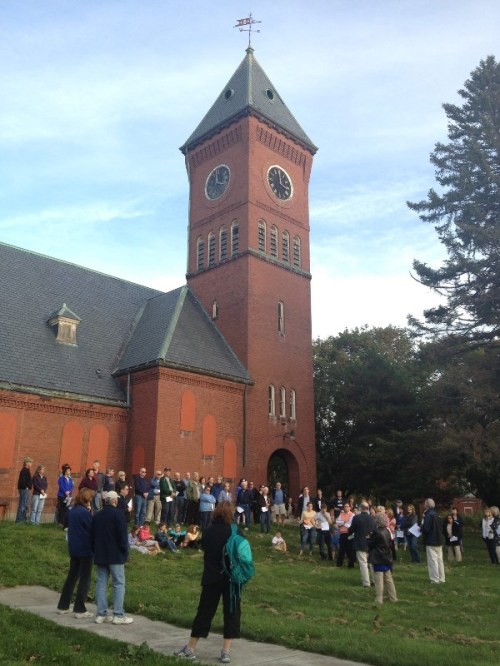
Lee Chapel at msh

Lee Chapel

Recent walking tour of the property led by Buildings & Grounds Chair John Thompson.
Photo courtesy of Kathy McCrossan


Community Meeting for the Medfield State Hospital Property
 

The April 11th meeting has two major goals.  The first is to provide transparency about the master planning process to Medfield citizens: to educate residents about the planning process; to summarize all that the Committee has learned; and, to outline the next steps. The second goal is to maintain an open dialog with the Town to ensure any proposal accurately addresses the goals of its residents.

MSHMPC will start with a brief overview of its work with VHB, an established master planning consultant that is assisting the Committee.  Results of the three surveys sent out this past summer will be reviewed.  These surveys provide invaluable feedback to MSHMPC in assessing the priorities given to any particular aspect of a plan. The Committee will discuss initiatives and uses that are under consideration and intends to introduce various study scenarios used to strengthen the planning process.  An explanation of the financial model employed in the study  scenarios will also be included.

An update on the Buildings and Grounds will be provided.  The property is becoming a popular venue for a broad variety of passive recreation uses and is increasingly providing a source of enjoyment to many residents.

Future outreach will be discussed. The forum will close with an extended Question and Answer period to get feedback from the residents and to answer questions.

All citizens are encouraged to attend. Medfield TV will cover the meeting for those unable to attend in person.

Gold Award & Ambassador Bridging Ceremony

20160319-GS-Gold Awards

At St. Edward’s this afternoon, above are the 17 MHS seniors in Girl Scouts, who as Ambassador Scouts bridged over to Adult Scouts.  7 of them also got Gold Awards.

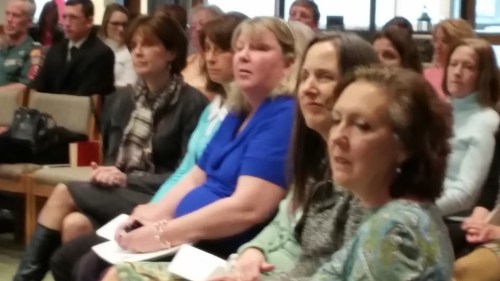
Below are some of the Mom’s of the Gold Award scouts who made it all possible.

20160319GS-Gold Award-Moms

Katherine Steeger and Linda Frawley have been leading a remarkably strong resurgence of Girl Scouting in town for many years,  and both of their daughters were among those being honored.

Gold Award projects were impressive, covering poverty, poetry, bats, bridges, tutoring, and volunteerism.  See the longer descriptions I posted before.

BoS 3/22

cropped-medfield-town-house2.jpg

AGENDA (SUBJECT TO CHANGE)

Tuesday March 22, 2016@ 7:00 PM

APPOINTMENT

Steve Winter, MAPC
Discuss February 9, 2016 Downtown Summit results

7:30 PM Public Hearing-Application for All Alcohol License for new restaurant, Avenue
Josh Foley, Manager

PENDING

Agreement between the Town and Open Space LLC for the use of Town owned land on Janes Avenue for municipal parking lot

NEW BUSINESS

Discuss Curve Street traffic

Other business that may arise

Ransomware

DLS

The DLS newsletter also had this article on ransomware –


Local Officials Directory

Municipal Calendar

IGR’s & Bulletins

Workshops, Seminars & Events

What’s New?

City & Town is published by the Massachusetts Department of Revenue’s Division of Local Services (DLS) and is designed to address matters of interest to local officials.

Editor: Dan Bertrand

Editorial Board: Sean Cronin, Anthonia Bakare, Robert Bliss, Linda Bradley, Nate Cramer, Patricia Hunt, Tara Lynch and Tony Rassias

In this Issue:
Leveraging the Power of Data

Happy St. Patrick’s Day!

It’s now been just over a year since I began my tenure at the Division of Local Services. Having served as a local official, I interacted regularly with DLS in a number of ways over the years, combing through data, reviewing best practices, obtaining opinions from the Municipal Finance Law Bureau, and depending on Bureau of Accounts and Bureau of Local Assessment field staff to work with the finance team we had in Brookline in order to get the tax rate approved. However, it wasn’t until I came on board that I was able to appreciate the scope of work DLS is tasked with and the many ways in which we help municipalities achieve and maintain financial stability.

It is because of this combination of regulatory responsibilities, the depth and breadth of our municipal finance data, and the knowledge of our staff that I believe we have the capacity to provide significant insights and direction to municipalities that will allow them to recognize potential challenges and address them before they impact the overall fiscal health of a community.

I strongly support using data as a means to drive municipal innovation and address potential financial pitfalls and challenges, and this will be our focus at DLS in the coming weeks and months. To that end, we will provide additional tools and support best practices that utilize data. Here’s how we’ll do it.

351 Report

Still in early development, I envision this report as a way to utilize a set of standardized metrics and variables (for example, receivables, reserve levels, debt, new growth, etc.) to provide a useful snapshot of a community’s fiscal health. It will have broad utility as an information tool. As we found with the improvements to our website, particularly with our databank reporting tools, data visualizations project information in a way that can be reviewed and interpreted by a broad range of people from local officials to residents.

Increased analytic review and data analysis in City & Town

These types of pieces in our municipal finance e-newsletter take the most time and effort from our staff, but they are extremely beneficial to our partners in municipal government. Judging from past survey results, statewide trend analyses and articles that comprehensively review data are exactly the types of articles our readers appreciate. Our dedicated staff is committed to providing these types of contributions to our publication, and I thank them for that as we move forward.

Web-based tutorials

For quite some time, we’ve heard feedback from across the state regarding the need for more online tutorials and information. As part of these efforts and with the goal of one day providing a fully online version of our Assessment Administration: Law, Procedures and Valuation (aka Course 101) seminar, I’m pleased to announce that we’ve taken the initial step toward this goal with our new Proposition 2 1/2 YouTube videos. We’ll be rolling out more of these informational vignettes over the coming year, but, for now, take a look and feel free to access the videos as you see fit!

I welcome and appreciate your feedback. If you have ideas for articles and analyses you’d like to see, as always, I’d like to hear from our colleagues in local government as we go forward. If you have any comments or suggestions, please pass them along by emailing me at croninse@dor.state.ma.us. Thank you.

Sean R. Cronin
Senior Deputy Commissioner of Local Services

Protecting Your Computer Network from Malware and Ransomware
Susan Whouley – Bureau of Accounts Analyst, Kirsten Shirer-Taylor – Director of Information Technology and Tony Rassias – Bureau of Accounts Deputy Director

Maintaining the public trust is of paramount importance at all levels of government. In our digital world, this means safeguarding a tremendous amount of data – a task that is increasingly difficult, as a number of Massachusetts communities are well aware after having their IT infrastructure attacked by cybercriminals.

This article includes tips on how to protect your IT resources from cybercrime and shares one town’s experience dealing with a specific ransomware attack.

Malware

Malware, short for malicious software, is a general term for any software installed by a cybercriminal to disrupt computer operations or gain access to computer systems or information with malicious intent. Malware comes in a variety of forms (viruses, worms, trojans, ransomware, spyware, adware, scareware, and others) and is often embedded in email or disguised as a common file like a Zip file or PDF.

Recent Reports

In one well-publicized report, hackers attempted to gain access to a Massachusetts town’s finances in an attempt to transfer $4 million from its bank accounts to several overseas and domestic banks. Keylogging malware on a town computer and a deceptive phone call to a town office gave the criminals enough information to make the attempt, which was ultimately stopped by the town’s financial advisory service with no financial loss. The town appropriately responded to this event by hiring a consultant to perform a security audit of its entire IT system, after which improvements were made to both IT infrastructure and internal policies.

Another common threat is a ransomware attack where cybercriminals use email to deliver and install a malicious program like CryptoLocker or WinLocker to lock screens or encrypt and lock important files. In several Massachusetts communities, CryptoLocker infections have effectively disabled departmental or entire computer systems, sometimes including backup systems, with criminals demanding ransoms between $300 and $750 payable in Bitcoin (a form of digital currency) in exchange for unlocking the files. In most cases, after numerous unsuccessful attempts to unlock the files, the communities were forced to pay the ransom to regain access to mission-critical data. In those cases, the data was successfully restored after payment. For contrast, the story of one community that chose not to pay the ransom follows.

We’ve been hacked!

The town of Royalston discovered a notice on a town computer stating that the computer’s files had been encrypted and that a $300 ransom must be paid within 72 hours or else files would be destroyed. The attack is presumed to have begun by the opening of an infected email.

Having never been attacked by such a virus before, the town wasn’t fully prepared. The town was fortunate, however, in four ways:

  1. The computer was connected to the Internet only and was not networked to other computers in town hall;
  2. The computer was used for administrative operations and did not contain personal, financial or other critical information;
  3. A backup existed to recover the user’s email; and
  4. The town had a computer expert nearby.

Jon Hardie, husband of town tax collector Rebecca Krause-Hardie and an IT expert whose background includes serving as the Director of Technology Initiatives for the Nellie Mae Foundation, advised the town to disconnect the computer from the Internet but to leave it turned on until he arrived at town hall. According to Jon, “Ransomware sends an encryption ‘key’ to the infected computer that can unlock files after a ransom is paid. Turning off the computer deletes the key or sends it back to the hacker and any option to pay the ransom is probably lost.”

While Jon worked on the infected computer, Rebecca sent an email from her computer to all town staff warning them not to open any emails sent from anyone they didn’t know, especially one entitled “admin,” which they suspected was the source of the malware.

Town administrative officials then quickly met to determine their options. There were few: either pay the ransom and hope the files would be unlocked with no further complications or don’t pay the ransom and attempt to rebuild files.

They decided not to pay. Jon arrived with a USB thumb drive containing software designed to combat ransomware, which he downloaded and installed on the infected computer. After much time was spent, the computer’s files were successfully reconstructed.

To guard against future incidents, the town instituted the following changes:

  • New firewalls were created;
  • Antivirus software with automatically renewing licenses was installed on every non-networked town computer;
  • Additional file backups were put in place;
  • More complex passwords were required; and
  • Staff was trained in proper computer use.

In addition, Jon was hired as an IT consultant to continue the process of risk management. The Board of Selectmen added support by distributing policies concerning appropriate use of town computers and by making funds available for implementing security improvements.

Protecting Municipal Digital Assets

Protecting your computers and network infrastructure should be a group effort, because no one person or department can provide complete security against malware and ransomware. In addition to the steps taken by Royalston, DLS recommends these best practices to protect your computers and network against malware:

  • Be proactive: identify an individual or committee to spearhead efforts for improving cybersecurity, and commit to providing adequate financial, political and human resources. Don’t wait for a worst-case scenario; plan for it now.
  • Use the services of a professional IT consultant or company if you don’t have IT pros on staff.
  • Keep all computer operating systems up to date.
  • Ensure that firewalls and Internet security software are in place and kept up to date.
  • Include cybersecurity in any risk management program or exercise.
  • Develop and implement a comprehensive backup and recovery strategy.
  • Regularly test backups to make sure critical files can be successfully restored.
  • Allow users to download and install files only when necessary.
  • Educate users early and often on the importance of following “safe browsing” and other acceptable use policies.
  • Limit the use of municipal computers to municipal business. Give municipal users email accounts on the city/town domain to eliminate the need for using personal email accounts.
  • Enable the built-in security tools available in all major web browsers and keep the browsers updated.
  • If the worst does happen, alert local law enforcement so steps can be taken to try to identify the criminals.

Read More about Malware, Ransomware and Related Topics

FBI Cyber Crimes Stories
New E-Scams and Warnings

File an Internet Crime Complaint

Taking Steps to Protect Privacy and Control Losses

The authors would like to thank Jon Hardie and Rebecca Krause-Hardie of Royalston for their contributions to this article.

DLS data

DLS

The state’s Division of Local Services sends me an interesting newsletter, which this time lead me to the data that they track on us at http://www.mass.gov/dor/local-officials/municipal-databank-and-local-aid-unit/databank-reports-new.html .


These are our FY15 receipts from the state:                                    ESTIMATED       ACTUAL

175 Medfield 2015 PAYMENTS IN LIEU OF TAXES 1,860 2,941
175 Medfield 2015 DEPARTMENTAL REVENUE – SCHOOLS 0 6,058
175 Medfield 2015 FINES AND FORFEITS 19,225 15,237
175 Medfield 2015 DEPARTMENTAL REVENUE – CEMETERIES 18,000 29,654
175 Medfield 2015 INVESTMENT INCOME 28,000 33,501
175 Medfield 2015 FEES 49,000 52,770
175 Medfield 2015 PENALTIES AND INTEREST ON TAXES AND EXCISES 82,000 85,473
175 Medfield 2015 a.Meals 53,000 98,793
175 Medfield 2015 RENTALS 275,532 281,180
175 Medfield 2015 SPECIAL ASSESSMENTS 366,958 496,741
175 Medfield 2015 OTHER DEPARTMENT REVENUE 448,994 585,766
175 Medfield 2015 LICENSES AND PERMITS 642,901 779,442
175 Medfield 2015 MOTOR VEHICLE EXCISE 1,969,000 2,050,159


These are their estimates for FY16 –

NB – some have some large changes downward from the “actual” #s from last year.

175 Medfield 2016 PAYMENTS IN LIEU OF TAXES 2,941
175 Medfield 2016 FINES AND FORFEITS 15,237
175 Medfield 2016 DEPARTMENTAL REVENUE – CEMETERIES 26,700
175 Medfield 2016 INVESTMENT INCOME 38,000
175 Medfield 2016 FEES 49,728
175 Medfield 2016 PENALTIES AND INTEREST ON TAXES AND EXCISES 83,000
175 Medfield 2016 a.Meals 120,000
175 Medfield 2016 RENTALS 281,180
175 Medfield 2016 SPECIAL ASSESSMENTS 333,128
175 Medfield 2016 MISCELLANEOUS NON-RECURRING (PLEASE SPECIFY) 445,905
175 Medfield 2016 OTHER DEPARTMENT REVENUE 514,284
175 Medfield 2016 LICENSES AND PERMITS 615,470
175 Medfield 2016 MOTOR VEHICLE EXCISE 2,050,000  


MHS students -> NO IDLING!

quit idling

Message to parents:

Hopefully you have noticed the new No Idling signs posted outside of our schools. Despite the signs, some parents are still idling their cars in drop-off and pick-up lines and in parking lots. Mr. Cowell’s High School Environmental Science students wrote and produced a terrific video to highlight the importance of not idling your car. Please take a few moments to watch the video via the link below, and perhaps to show it to your kids, as it is a fun way to educate them about this issue. The No Idling Committee and the students, faculty, staff and community members who breathe the air in our schools’ driveways and parking lots thank you!
https://www.youtube.com/watch?v=6EA-RerqAA4&ab_channel=MichaelCowell

Solarize Medfield! – town chosen

Marie Zack Nolan lead the Medfield Energy Committee effort for Medfield to be named to the one of the few Solarize Mass slots.

doer

State Energy Officials Announce New Communities to Join Solar Program

Media Inquiries

Katie Gronendyke (DOER) (617) 626-1129  katie.gronendyke@state.ma.us
Matt Kakley (MassCEC) (617) 315-9339 mkakley@masscec.com

Program Will Lower Costs of Installing Solar Electric Systems for Bolton and Medfield
Mar 17, 2016 –
Boston

State energy officials today announced the selection of two additional communities, Bolton and Medfield, to participate in Solarize Mass for 2016.  The community-based solar energy group-buying program is currently underway in Somerville, Natick and Shelburne, Colrain and Conway, with the latter three communities participating as a group.

“As Massachusetts looks to diversify its energy mix, partnering with local communities on programs like Solarize Mass drives down costs while reducing our carbon footprint and helping reach our goal of 1,600 megawatts of solar by 2020,” said Energy and Environmental Affairs Secretary Matthew Beaton.

A partnership between the Massachusetts Clean Energy Center (MassCEC), the Department of Energy Resources (DOER) and local communities, Solarize Mass reduces the overall cost of solar in communities across the state, helping residents save as much as 20 percent on solar pricing (compared to the statewide average).  Through a competitive bidding process, communities select designated Solarize Mass installers that feature the most attractive pricing, outreach and community education packages.

“Reducing the cost of solar makes the technology more affordable for homeowners across the state and DOER is proud to partner with these communities on this initiative,” said DOER Commissioner Judith Judson.

“Solar electricity provides environmental and economic benefits for homeowners and our communities,” said MassCEC Interim CEO Stephen Pike. “Solarize Mass makes solar electricity even more affordable and accessible for residents in cities and towns across the Commonwealth.”

Since its launch in 2011, 51 cities and towns have participated in Solarize Mass, which has led to the contracting of more than 2,600 new small-scale installations at homes and businesses resulting in 18 megawatts of contracted solar capacity. To date, systems installed under Solarize Mass have reduced greenhouse gas emissions equivalent to removing 1,500 cars off the road annually.

Massachusetts currently has 1,058 megawatts of solar capacity installed statewide, more than halfway to the Commonwealth’s goal of 1,600 megawatts installed by 2020 and enough to power more than 161,000 homes. MassCEC and DOER are currently accepting applications from communities interested in participating in the 2016 round of the Solarize Mass program. More information on the application process can be found here.

“I want to congratulate the town of Bolton on their participation with Solarize Mass,” said State Senator Jennifer Flanagan (D-Leominster). “Clean energy solutions are certainly starting to lead the way, and programs such as Solarize Mass are the perfect opportunity for communities to not only benefit from the cost effectiveness of solar, but to also get excited about clean energy in general.”

“The Town of Medfield has once again shown their commitment to forward-thinking cost-saving efforts for their citizens,” said State Senator Jim Timilty (D-Walpole). “There were many proposals for the Solarize Mass project submitted and I am thrilled that MassCEC and DOER saw fit to bring this important state program to my district.”

“I am proud to see that the Town of Bolton will be participating in the next round of Solarize Mass,” said State Representative Kate Hogan (D-Stow). “Our region has long been committed to clean energy solutions and Bolton’s participation in this program will further increase local solar power opportunities. Thank you to all of the stakeholders, volunteers, and committed citizens who worked together to achieve this goal.”

“The Town of Medfield is a leader in its commitment to provide choice and opportunity to residents seeking a variety of energy sources,” said State Representative Denise Garlick (D-Needham). “This initiative aids the homeowner and also strengthens the Commonwealth’s environment and economic development through employment opportunities.”

“Medfield is excited to be selected for the next Solarize Mass program,” said Andrew Seaman, Energy and Facilities Manager for the Town of Medfield. “The Town has made great strides towards diversifying their electric supply by developing solar on Town land, and we are happy to have a similar initiative in place for residents to add solar to their property.”

“Bolton is delighted to be recognized as a Solarize Massachusetts community by MassCEC and DOER,” said Tony Jagodnik, Bolton’s volunteer solar coach. “We look forward to increasing education, awareness, conservation, and local adoption of solar via a best-quality and value group purchase for our homes and businesses, while reducing greenhouse gas emissions and making the grid more-robust for everyone.”

– See more at: http://www.masscec.com/about-masscec/news/state-energy-officials-announce-new-communities-join-solar-program#sthash.Q1dxGSjV.dpuf

http://www.masscec.com/about-masscec/news/state-energy-officials-announce-new-communities-join-solar-program doerdoer

MHS debate judging

20160317-Pascal Debates

Bonnie Wren-Burgess had Maris Abbene and me judging her 10th grade Honors English debates this morning.  The debaters did impressive jobs of speaking and rebutting on their feet and on the fly, on topics they themselves crafted, vetted, and chose.  First debate was on using genetic modifications in health care, and the second was on  religion as the only moral course.  The debaters are to use Pascal’s method of reasoning.

Great project Mrs. WB!

LCB buys Clark Tavern

Good article from the Medfield Press –  the Clark Tavern now appears headed to becoming a private residence (to which the public will not have access).

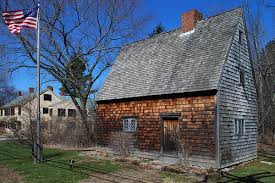
Peak House & Clark Tavern

Peak House & Clark Tavern

LCB has purchased the old Clark Tavern.

LCB has purchased the old Clark Tavern. The company plans on fixing up the historic building and to plant a lot of pine trees on the property.
LCB has purchased the old Clark Tavern.John and Michelle Linnert have sold the Clark Tavern to LCB after giving up on their plans for the historic building that were tied up in the state’s land court for the past few years.

By Adam Stuhlman

Posted Mar. 17, 2016 at 8:42 AM

MEDFIELD

LCB Director of Corporate and Marketing Affairs Ted Doyle said his company has agreed to a purchase and sale agreement to take ownership of the historic Clark Tavern off Route 109 as part of their plan to develop a senior citizen assisted living facility on 361-363A Main Street. Of the 14.7 acres LCB owns, Doyle said that 2.7 acres would be developed, leaving approximately 12 acres unused.

Doyle anticipates LCB closing on the property during the summer.

Many Medfield residents are concerned about the proposed development and the effect it would have on the Clark Tavern and the Peak House. Residents want both historic buildings and the land they sit on protected.

John and Michelle Linnert sold LCB the Clark Tavern. They originally wanted to use the tavern, which today is in rough shape, as a restaurant and a multi-use function facility, according to a March 13, 2015 article in http://medfield.wickedlocal.com/article/20150313/News/150317844.

David Temple, president of the Medfield Historical Society, said the Linnerts bought the property several years ago. The Linnerts’ plans, which were approved by the town, were delayed in state land court on multiple occasions by objectionable neighbors. The former owners become tired of the delays and decided to sell the property to LCB.

“I’m disappointed for them because they felt that due to stalling from neighbors in court that they had enough and were going to give up,” Temple said.

While Doyle said this design enhances the proposal without changing it, Temple said he has spoken with the Linnerts in the past about the tavern and is concerned that LCB might try and do something to it.

“I am concerned about whether or not the Linnerts could put in a clause to say that nothing will happen to the building,” he said. “Could the corporate headquarters of LCB decide to take it down?”

The Linnerts did not return a call in time for print.

Doyle is seeking to alleviate the worries of residents.

“People are concerned the tavern might be torn down,” said Doyle. This is “absolutely not our intention. The whole point in doing this is to protect it.”

“This [proposal] takes that [worry] off the table. We are trying to put our best project together and we see this as a real opportunity to work well with the community. We hope this is a win/win scenario because we want to maintain it as a two-family residential use and protect it from commercial development,” said Doyle.

Doyle said this proposal addresses many concerns that the citizens have.

“The combination of the assisted living community and a residential use of the tavern represent 48 percent less weekly traffic than the (previously) approved tavern project alone,” Doyle said.

The design proposal enhances the esthetics by “eliminating 43 parking spaces next to the Peak House” and adding area lighting. This plan would allow them to save numerous trees and do extensive planting of several dozen 20-foot tall pine trees throughout the site, thus allowing “for more privacy” while addressing “the visual concerns of the project,” Doyle said.

As a part of the agreement, LCB will pledge $5,000 a year for preservation and maintenance of the Peak House for as long as the company owns the assisted living property. In addition, they will donate $10,000 worth of supplies to the Medfield Food Cupboard and an internship program for local students.

Medfield resident David Stephenson, one of the lead antagonists towards the proposed development, and said it is good news that the future of the tavern is secure even if the development moves ahead. Following the concept of real estate – location, location, location, he maintained his opposition to the assisted living facility location.

“The proposed facility’s location is unacceptable. There is no amount of fine tuning they can do that will change our opposition to this,” he said.

Doyle said that if the assisted living project is rejected by the town, LCB would sell the land and the Clark Tavern.

Follow reporter Adam Stuhlman on Twitter: @adam_wtimes