Posted onNovember 19, 2021|Comments Off on Medfield virtual meeting with Congressman Jake Auchincloss, 5-6PM on 11/30
Medfield virtual meeting with Congressman Jake Auchincloss
Dear friends,
It is my pleasure to invite you to attend a virtual Medfield Roundtable with U.S. Congressman Jake Auchincloss on Tuesday, November 30th from 5:00-6:00 pm.
The Roundtable with the Congressman will provide an opportunity for local community leaders and stakeholders to receive an update about the American Rescue Plan and the pending Federal infrastructure legislation packages and how they can benefit Medfield. The Congressman will share a brief overview of his first several months in office and then will open most of the session for Q & A from participants.
Jake wants to hear what is on the mind of Medfield residents, so please plan on joining us for this unique opportunity to become inform about his work in Washington D.C.
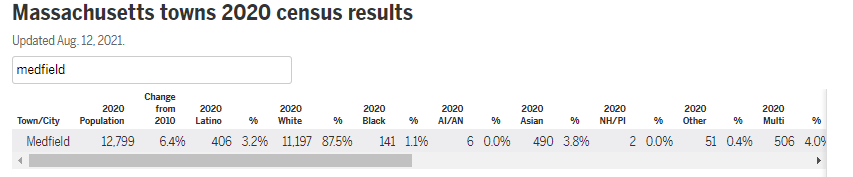
I have not yet seen the census figures on the number of residences in town in 2020, which will be essential for determining our 40B safe harbor status.
Posted onJuly 12, 2021|Comments Off on County on our ARPA monies
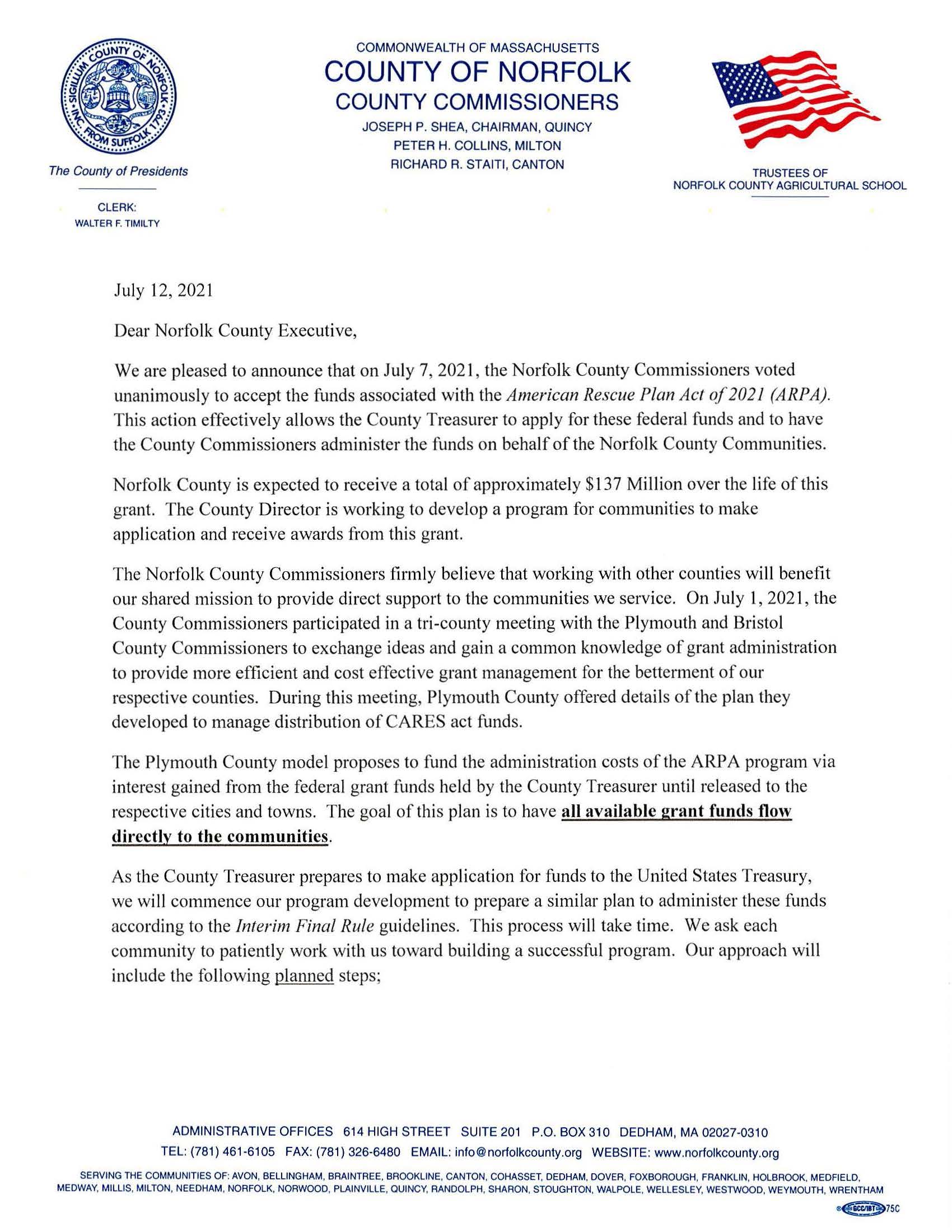
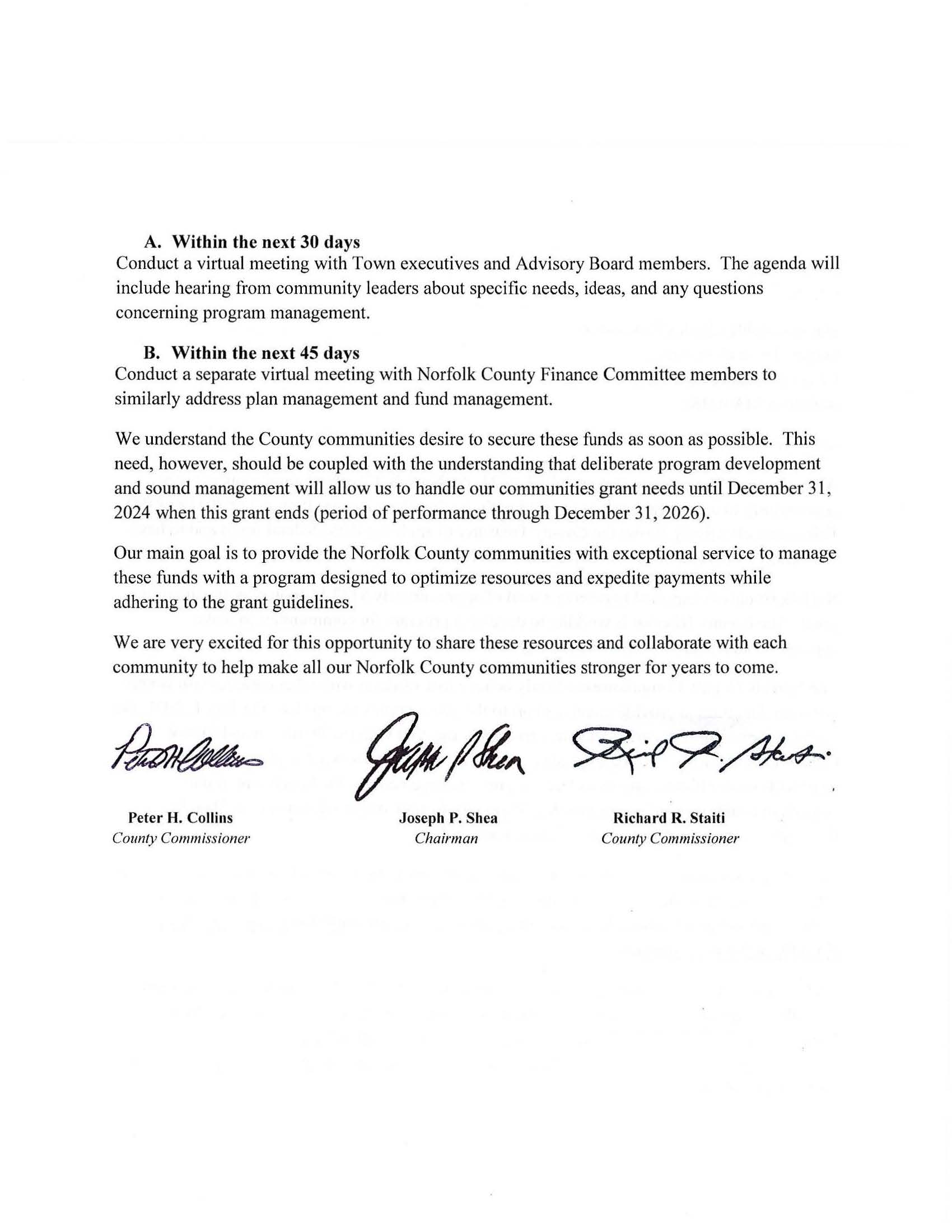
This from the County Commissioners. It is not clear to me how much they intend to administer our ARPA monies, versus just paying us our ARPA monies. Reading the 2024 and 2026 dates causes me some concern about their planned level and length of involvement.
Posted onApril 12, 2021|Comments Off on Federal covid monies for Medfield
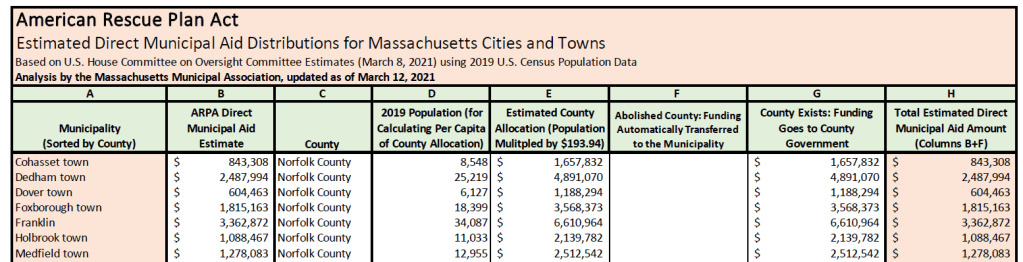
This email today from the Division of Local Services (DLS) contains a link to a spreadsheet that details the Federal covid related monies the Town of Medfield and the 350 other Massachusetts cities and towns have been allocated and have received – by clicking here;
COVID-Related Federal Funding Information
On behalf of Governor Baker, Lieutenant Governor Polito, and Secretary Heffernan, please find information about COVID-related federal funding that is available to or has already been claimed by the municipalities. The goal of these documents is to consolidate existing information and present it in a format that can be a resource for you.
Please be advised that this information changes regularly as the federal government provides updates and additional guidance.
The information provided, which is current as of April 1, 2021, includes: An excel spreadsheet with information broken down by municipality available by clicking here; A companion document, entitled “Municipality Program Descriptions”, which explains each source of funding and their eligible uses as determined by the federal government available here.For additional details on general Covid-19 Federal Funds, you can also refer to this website: http://www.mass.gov/federalfunds.
Town Administrator, Kristine Trierweiler, reports that the County has not determined what the County will do with their share and how it will be distributed.
This email is from Congressman Auchincloss’ office about the third item:
From: O’Neil, Kevin Date: Fri, Mar 19, 2021 at 12:29 PM Subject: FW: American Rescue Plan- Estimated ESSER Funds To:
Good morning Superintendent, State Senator, State Representatives, and Town Administrator,
The Congressional Research Service recently released estimates for grants expected to be issued to Local Education Agencies under the Elementary and Secondary School Emergency Relief (ESSER) Fund included in the American Rescue Plan. Below is the estimated amount your school district can expect to receive, along with information on how funds can be used. As the Department of Education and Department of Elementary and Secondary Education (DESE) release further guidance, our office will continue to update you all and answer any outstanding questions.
Medfield School District estimated funds under the ESSER Fund – $414,000
How funds can be used (please note this list is not exhaustive and will be subject to further agency guidance)-
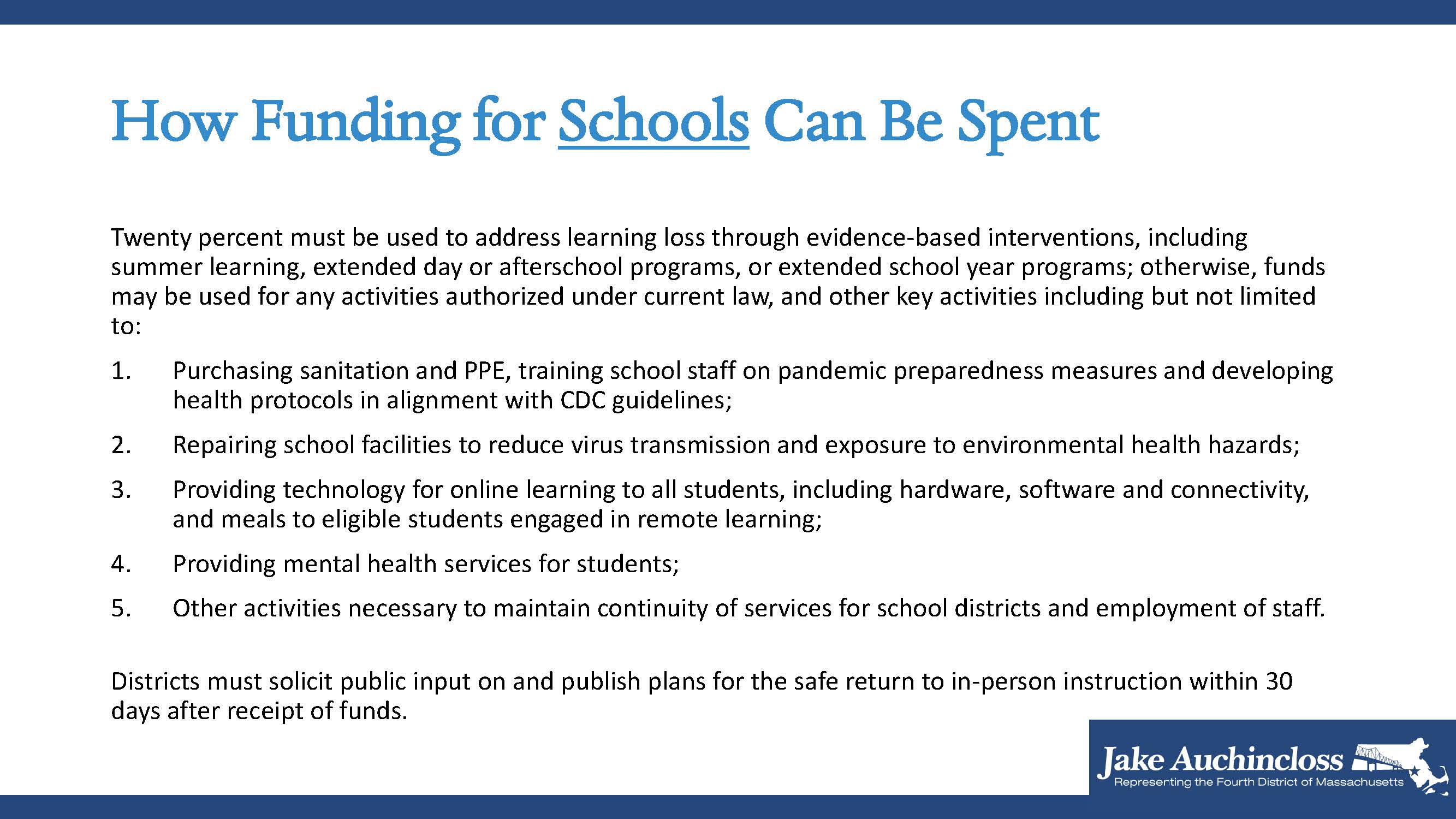
At least 20% of funds received by an LEA must be used to address learning loss through the implementation of evidence-based interventions, including summer learning, extended day or afterschool programs, or extended school year programs.
Remaining funds may be used for any activities under current law, and other key activities including but not limited to:
Purchasing sanitation and PPE, training school staff on pandemic preparedness measures and developing health protocols in alignment with CDC guidelines;
Repairing school facilities to reduce virus transmission and exposure to environmental health hazards;
Providing technology for online learning to all students, including hardware, software and connectivity, and meals to eligible students engaged in remote learning;
Providing mental health services for students;
Other activities necessary to maintain continuity of services for school districts and employment of staff
Additionally, school districts must solicit public input on and publish plans for the safe return to in-person instruction within 30 days after receipt of funds.
Please reach out if you have any questions or concerns.
Best,
Kevin O’Neil
Kevin O’Neil | District Representative Office of Congressman Jake Auchincloss, MA-4
Posted onMarch 13, 2021|Comments Off on Medfield to get $1.28 million of Federal $
Congressman Auchincloss’s office sends explanation of the Medfield monies in the American Rescue Plan
I have inserted below the email and both of its attachments that came last night.
From: Hanson, Dana Date: Fri, Mar 12, 2021 at 6:56 PM Subject: American Rescue Plan Info for Medfield To: CC: osler.peterson@verizon.net
Dear Ms. Trierweiler,
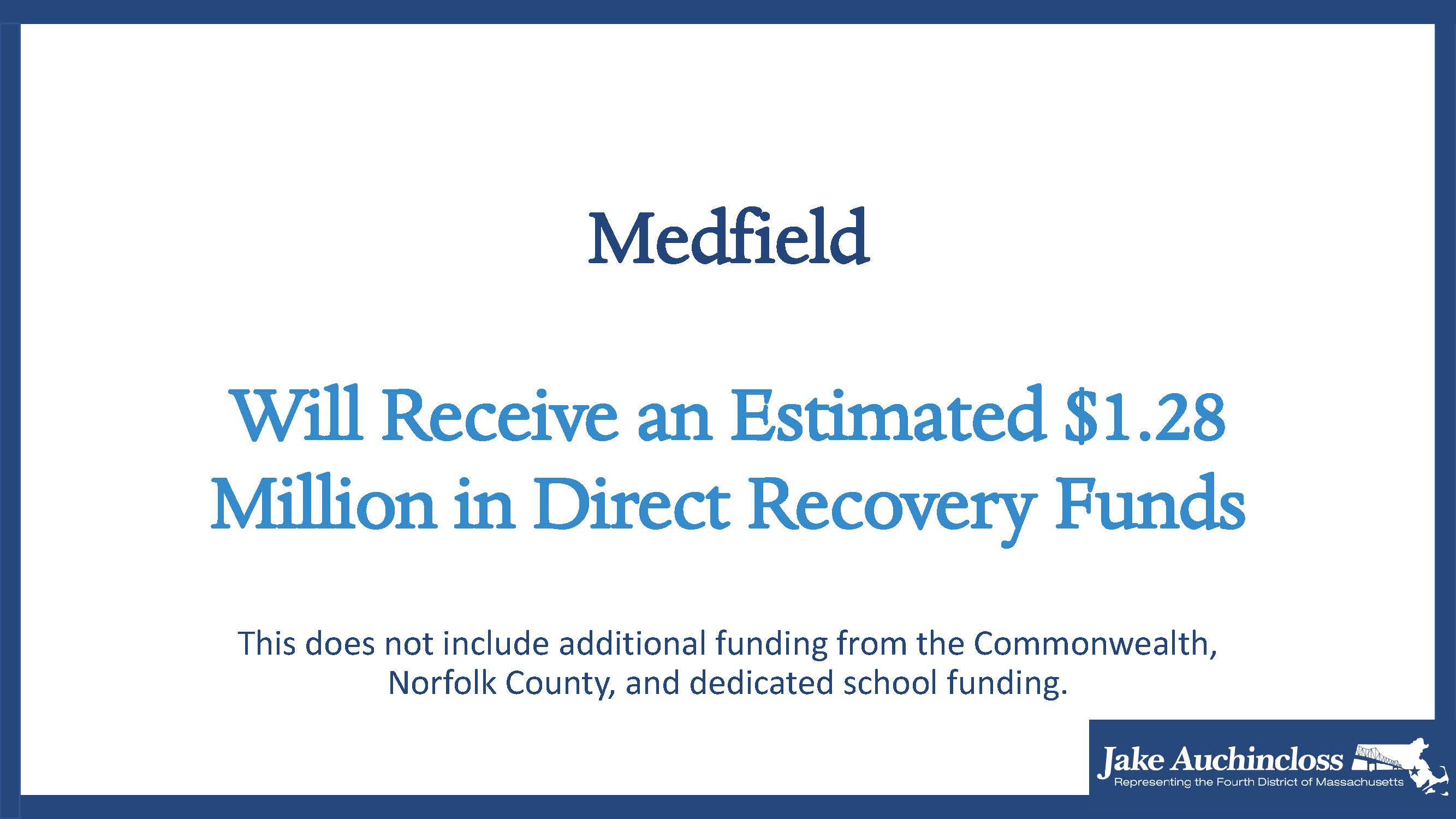
Attached are a couple of resources that Congressman Auchincloss asked me to forward over to you regarding the American Rescue Plan passed by Congress and just signed by President Biden. The good news is that help is on the way! Medfield will receive an estimated $1.28 million directly from the federal government. This does not include other American Rescue Act funding that will come from the Commonwealth, Norfolk County, and additional dedicated school funding.
The first attachment is a baseline summary of this critical legislation that is going to help us get shots in arms, kids back in school, Americans back to work, and much needed relief to state and local governments.
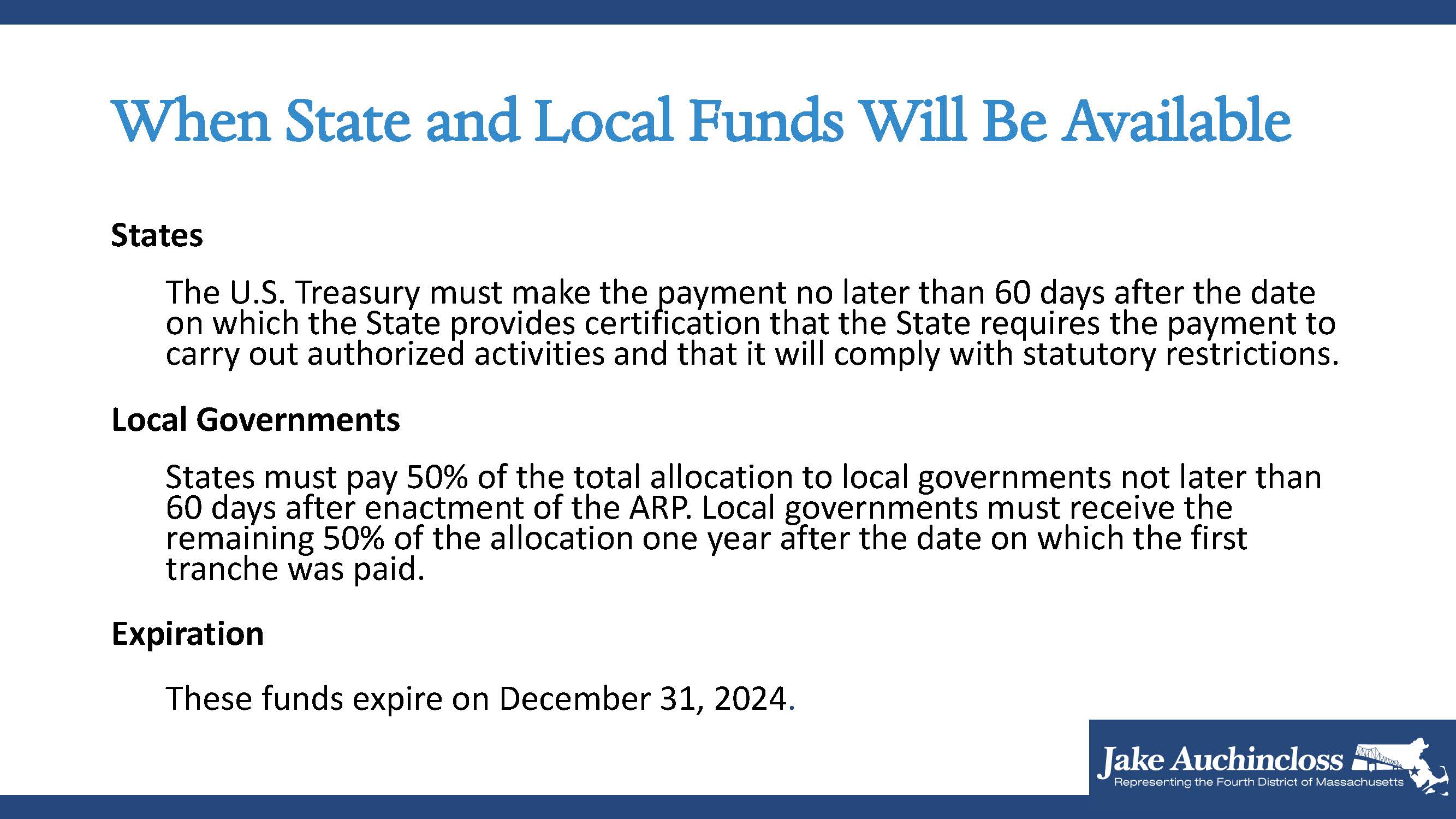
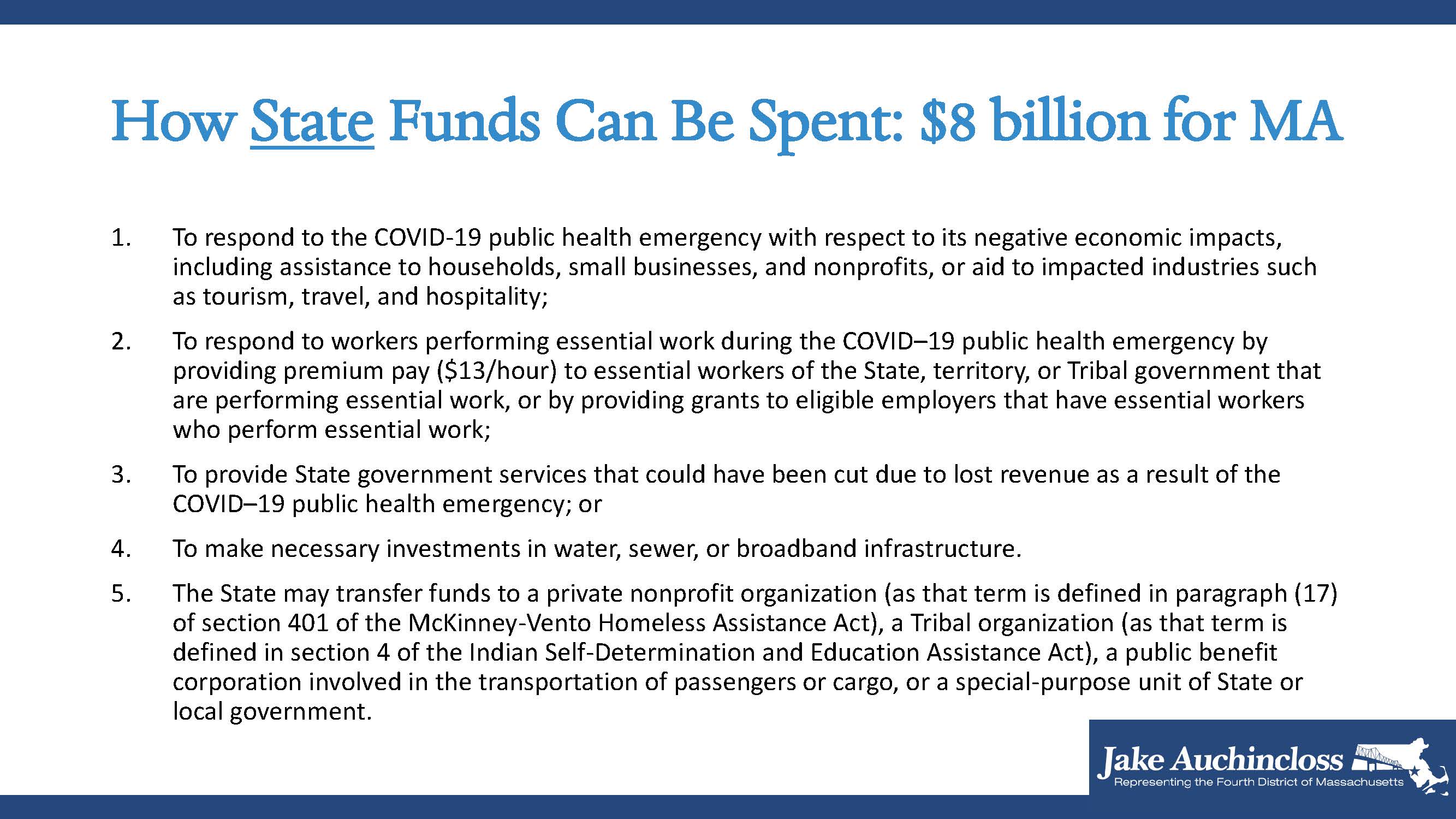
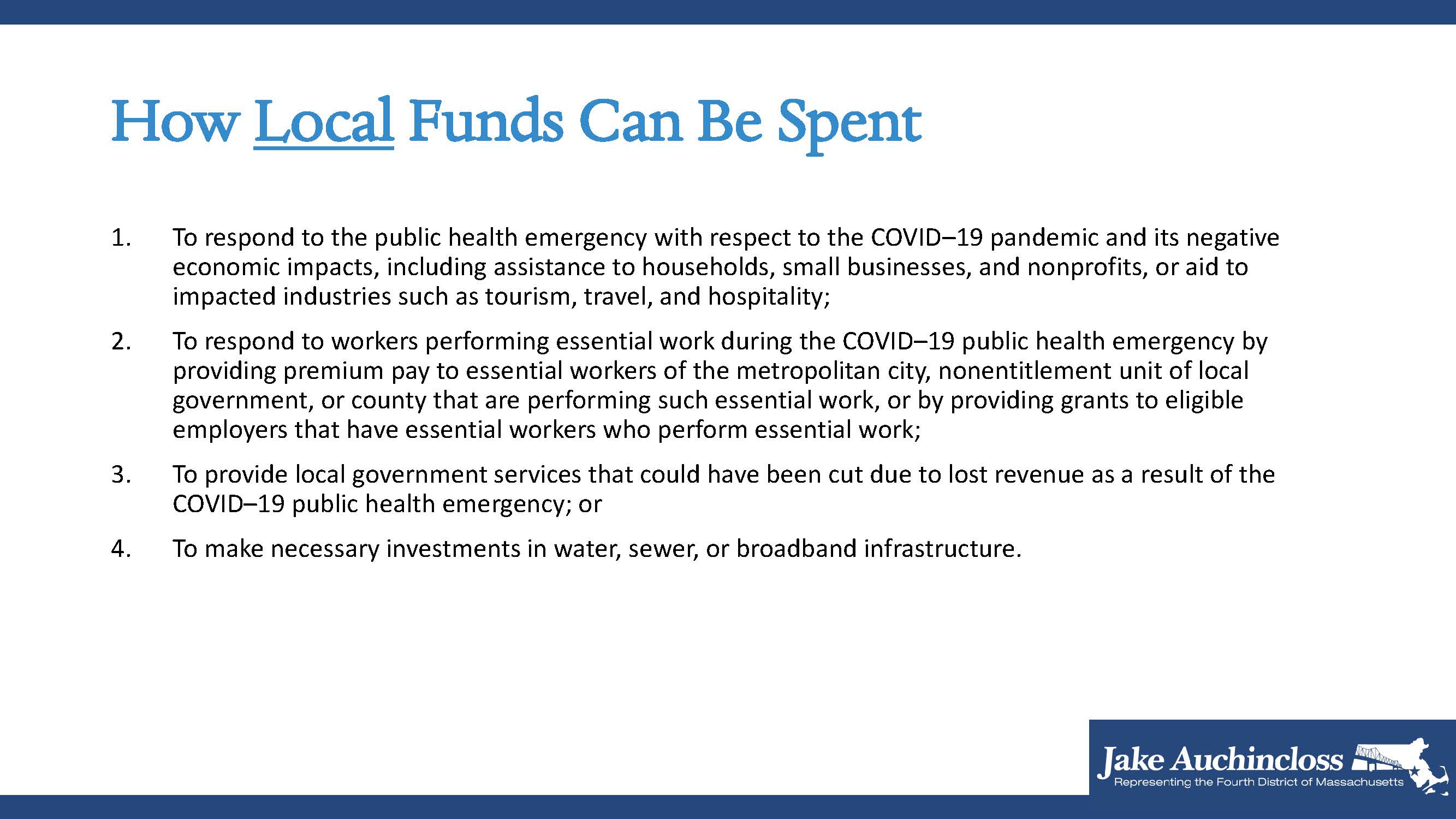
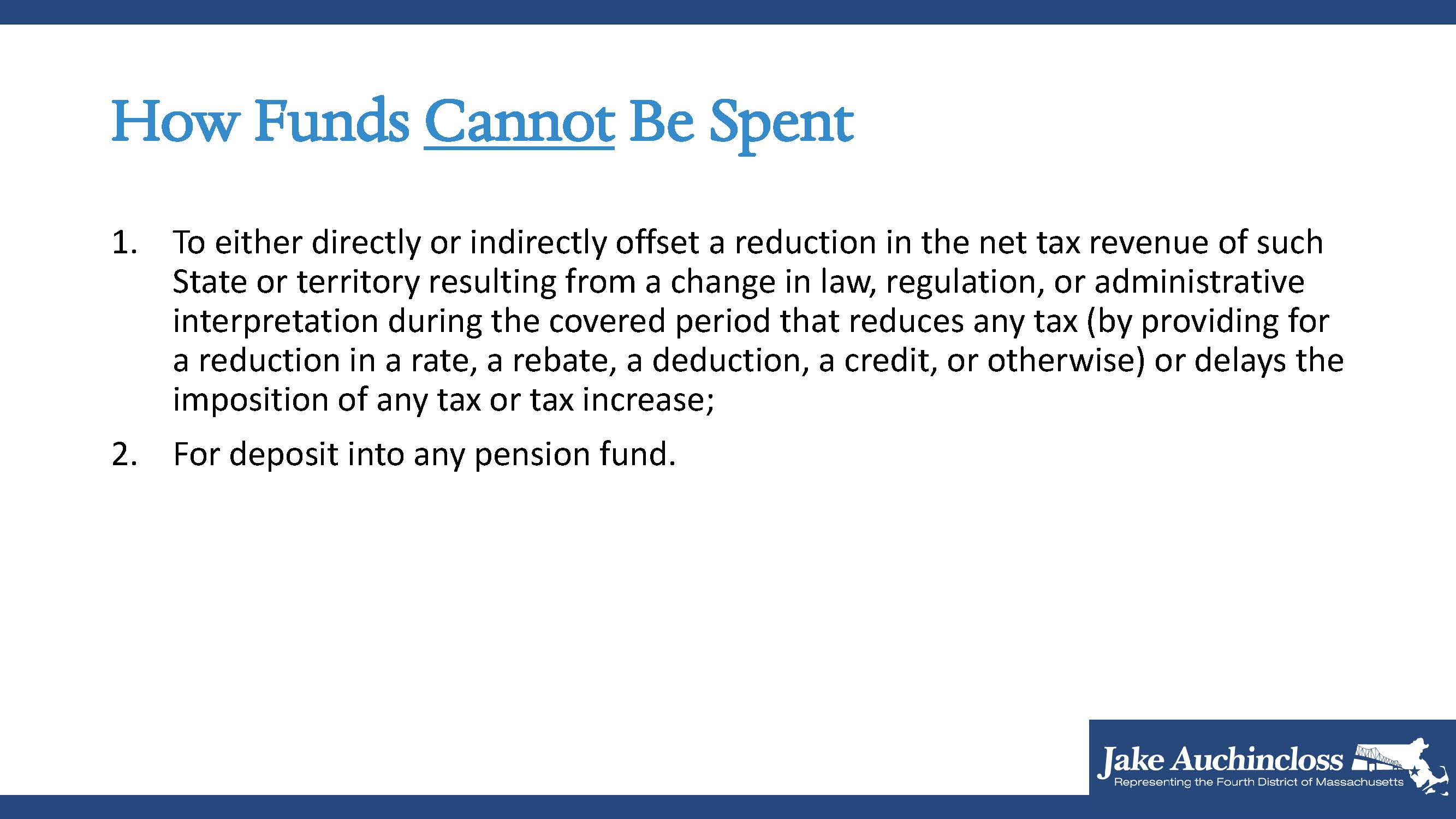
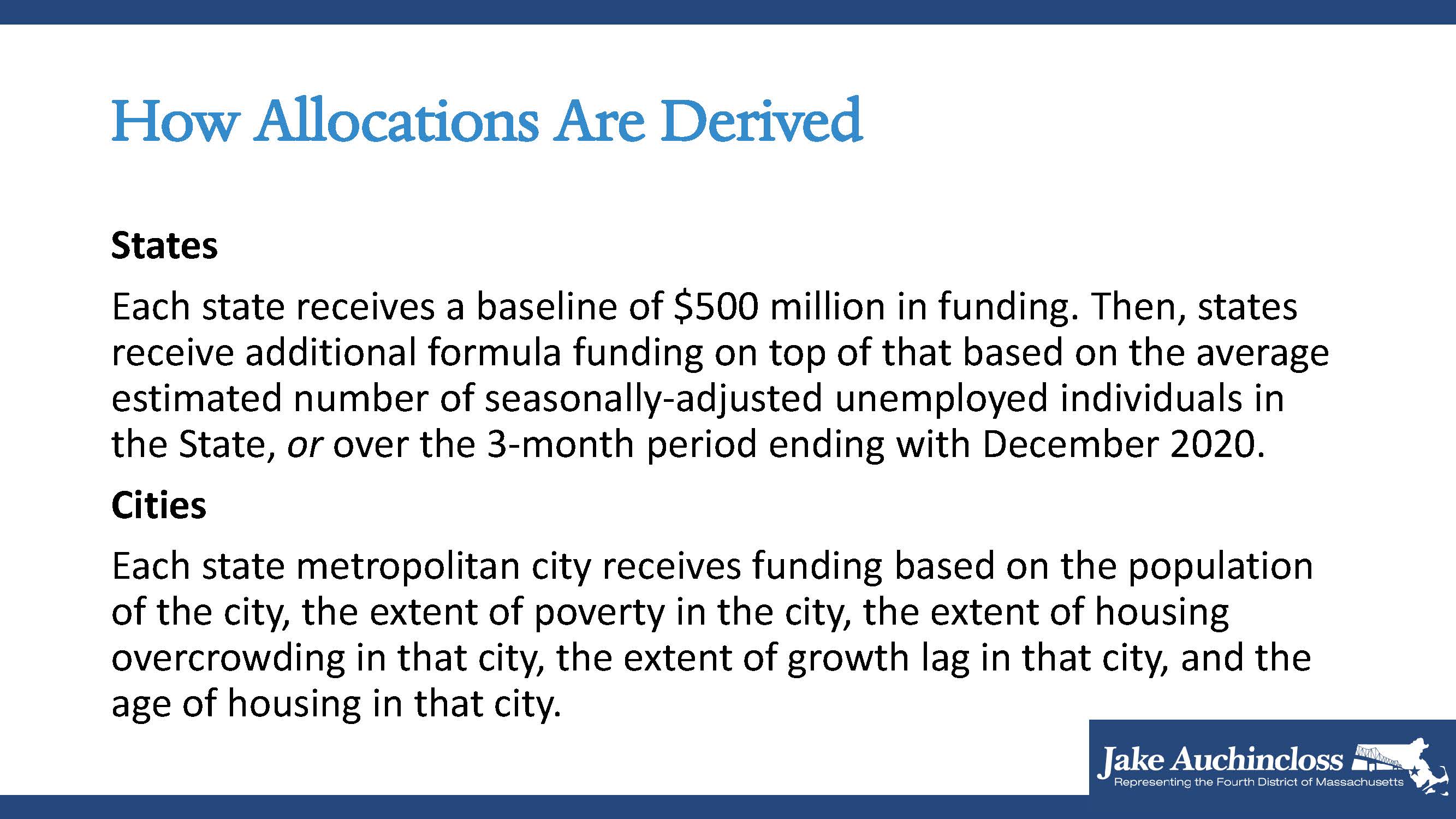
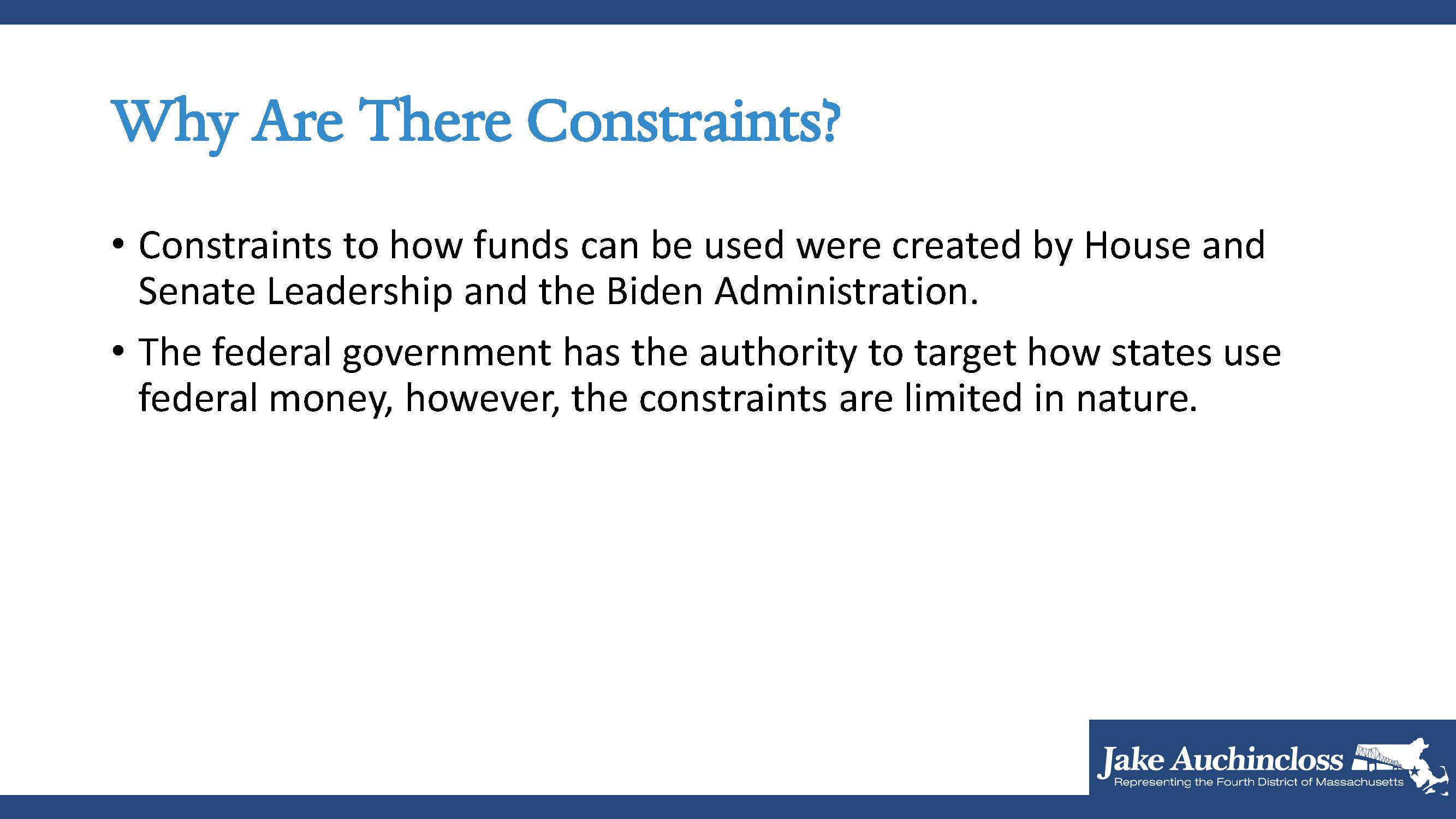
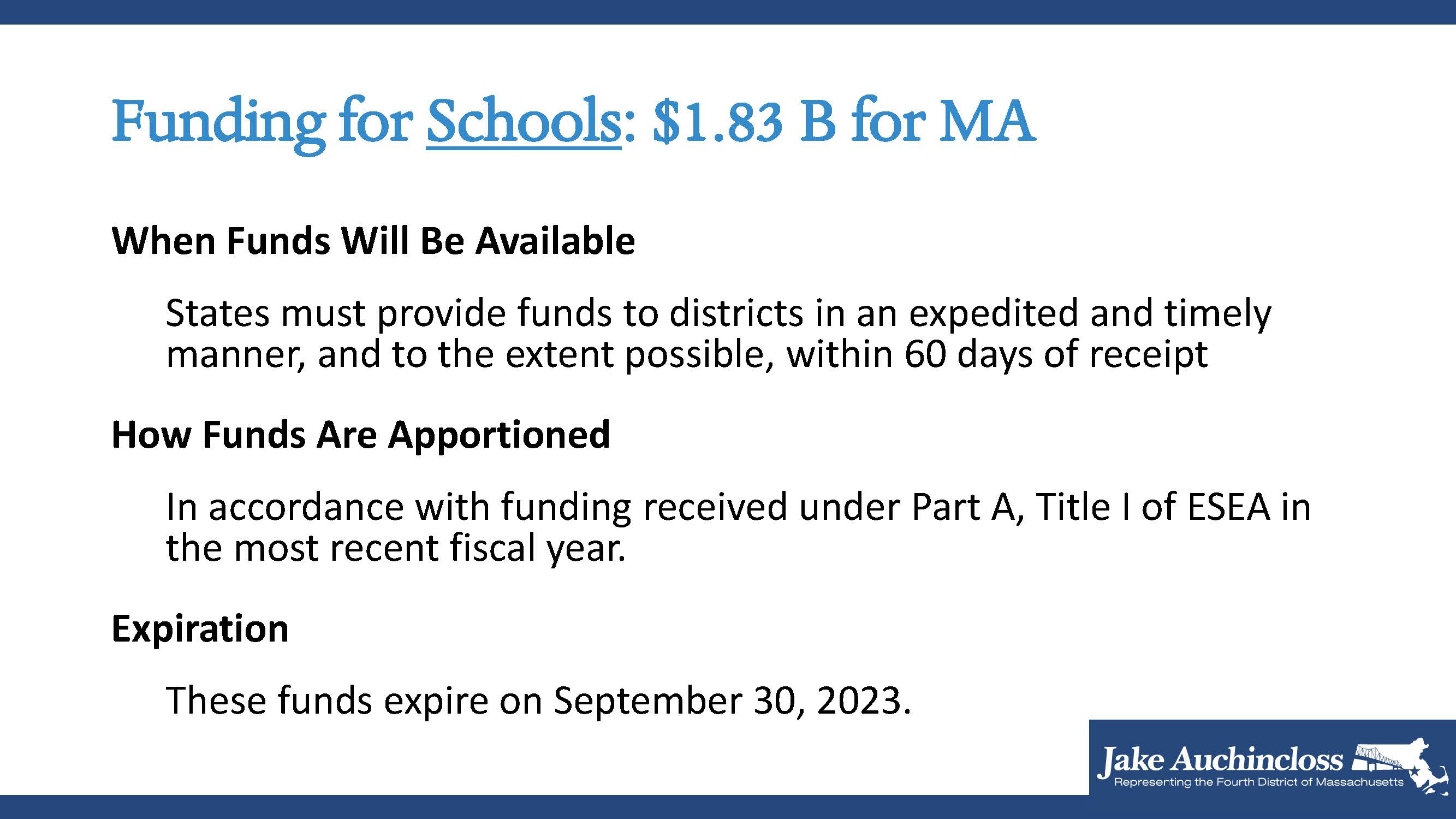
The second attachment is a slide deck on the total funding that Medfield will receive from the American Rescue Plan’s Coronavirus State & Local Fiscal Relief fund. Please note this is a preliminary estimate. This also includes details on when funds are expected to be disbursed, when the funding will expire, how it may be spent, and an explanation of why Medfield is receiving this amount. The deck also includes information on school funding that the state will distribute to districts.
1 The American Rescue Plan The COVID-19 pandemic and the corresponding economic crisis have undermined the health and economic wellbeing of American workers. Millions of Americans, many of whom are people of color, immigrants, and low-wage workers, continue to put their lives on the line every day to keep the country functioning through the pandemic. And more than 9.5 million workers have lost their jobs in the wake of COVID-19, with 4 million out of work for half a year or longer. Without additional government assistance, the economic and public health crises could drag on and our national vaccination program will be hobbled at a critical moment. The American Rescue Plan will change the course of the pandemic and deliver immediate relief for American workers. The plan will build a bridge to an equitable economic recovery and immediately reduce child poverty. In fact, a Columbia University study found that passing the plan will lift more than 5 million children out of poverty this year, cutting the poverty rate by 50%. The bill is one of the most progressive pieces of legislation in history, with more than two thirds of its tax cuts and direct payments going to families making less than $90,000 per year. It will: Mount a national vaccination program, contain COVID-19, and safely reopen schools. American workers should not have to lie awake at night wondering if they’ll make it home from work safely the next day, or if they’ll bring home the virus to their loved ones and communities. President Biden has a comprehensive plan to address the pandemic that will: • Invest about $160 billion to provide the supplies, emergency response, testing, and public health workforce to stop the spread of COVID-19, while distributing vaccines as quickly as possible and addressing racial disparities in COVID-19 outcomes. These emergency measures will help combat the heavy toll this virus is exacting, and will deliver community-based and culturally competent care. • Provide $130 billion to help schools serve all students, no matter where they are learning, and help achieve President Biden’s goal to safely open the majority of K-8 schools within the first 100 days of his Administration. These investments include set asides at the local and state level to ensure states and districts address the learning loss and social and emotional needs of students disproportionately impacted by COVID-19, including students of color, English learners, and students with disabilities. Deliver immediate relief to American families bearing the brunt of this crisis. The American Rescue Plan devotes about $1 trillion towards building a bridge to economic recovery for working families. All told, a single parent with one young child making the minimum wage could see her income increase from the equivalent of $7.25 to around $11 per hour. The plan will: • Give working families a $1,400 per-person check, bringing their total relief payment from this and the December down payment to $2,000. More than 85% of households will receive a check and checks in this bill are bigger than the checks in the CARES Act or in the December bill. And, for the first time, adult dependents are entitled to a check as well. This 2 means a lower or middle-income family of four will see an additional $5,600 in their pockets. • Extend current unemployment insurance benefits and eligibility to September 6 (saving 11 million Americans from losing benefits starting in about a week), provide a $300 per week supplement, and help protect Americans from surprise tax bills on unemployment insurance they received last year. • Help Americans stay in their homes by providing emergency aid to cover back rent. In addition, the bill provides assistance to help struggling homeowners catch up with their mortgage payments and utility costs through the Homeowners Assistance Fund. And, it provides additional funding for families and individuals who are recovering from or at risk of homelessness. • Increase the value of Supplemental Nutrition Assistance Program (SNAP) benefits. The American Rescue Plan will increase SNAP benefits by 15 percent through September 2021. The bill also funds partnerships with restaurants to feed American families and keep workers in the restaurant industry on the job. And, it provides U.S. territories like Puerto Rico additional nutrition assistance funding, in addition to funding to make sure women, infants and children get the food they need to help address food insecurity. • Increase the Child Tax Credit from $2,000 per child to $3,000 per child ($3,600 for a child under age 6) and make 17-year-olds qualifying children for the year. This means a typical family of four with two young children will receive an additional $3,200 in assistance to help cover costs associated with raising children. The families of more than 66 million kids will benefit. • Increase the Earned Income Tax Credit for 17 million workers by as much as $1,000. The top occupations that will benefit are cashiers, food preparers and servers, and home health aides – frontline workers who have helped their communities get through the crisis. • Expand child care assistance, help hard-hit child care providers cover their costs, and increase tax credits to help cover the cost of childcare. This is the single biggest investment in child care since World War II. • Give families an additional tax credit to help cut child care costs. Families will get back as a refundable tax credit as much as half of their spending on child care for children under age 13, so that they can receive a total of up to $4,000 for one child or $8,000 for two or more children. • Provide an additional $1 billion for states to cover the additional cash assistance that Temporary Assistance to Needy Families (TANF) recipients needed as a result of the crisis. • Lower or eliminate health insurance premiums for millions of lower- and middle-income families enrolled in health insurance marketplaces. A family of four making $90,000 could see their monthly premium come down by $200 per month. This will help well over a million uninsured Americans gain coverage. The plan also subsidizes premiums for continuation health coverage (COBRA). Support communities that are struggling in the wake of COVID-19. Millions of American workers reside in communities that suffered disproportionately in recent months. The Plan provides critical support to these communities. It will: 3 • Provide emergency grants, lending, and investment to hard-hit small businesses so they can rehire and retain workers and purchase the health and sanitation equipment they need to keep workers safe. This includes a Small Business Opportunity Fund to provide growth capital to main street small businesses in economically disadvantaged areas, including minority-owned businesses. • Distribute more than $360 billion in emergency funding for state, local, territorial, and Tribal governments to ensure that they are in a position to keep front line public workers on the job and paid, while also effectively distributing the vaccine, scaling testing, reopening schools, and maintaining other vital services. State and local employment has fallen by around 1.4 million jobs since the pandemic began including layoffs of 1 million educators, compared to around 750,000 job losses during the Great Recession. • Help hard-hit public transit agencies avoid layoffs and service reductions, which disproportionately harm workers who are more likely to be dependent on public transportation.
Comments Off on Medfield to get $1.28 million of Federal $
Chelsea Goldstein-Walsh, Interim Director of Medfield Youth Outreach announced this afternoon that Medfield Cares About Prevention (MCAP) (www.MedfieldCares.org) was today awarded a Drug-Free Communities grant of $625,000, to fund a Substance Use Prevention Coordinator who will run MCAP’s prevention efforts. The Federal grant will pay MCAP $125,000 per year for five years, with the hope that the Substance Use Prevention Coordinator position will become permanent after five years. About 150 DFC grants nation wide were awarded this year. Towns that have received past DFC grants have seen a statistical decrease is substance abuse.
Medfield Youth Outreach, first through Dawn Alcott and now Chelsea, initiated, oversee, and manage the MCAP coalition. MCAP had come exceedingly close to getting the Federal grant in prior years it applied.
This year, however, MCAP had the added benefit of having received a $5,000 grant from the Medfield Foundation Legacy Fund’s 2018 inaugural round of grants, which monies MCAP used to hire a grant writer, thereby parlaying the Legacy Fund grant into the $625,000 of benefit for the Town of Medfield.
Above photo was from the inaugural Medfield Foundation Legacy Fund grant awards celebration. From L to R are Todd Trehubenko, Christian Donner of the Medfield Rail Trail, Dawn Alcott of MCAP, Jean Mineo of the Cultural Alliance, and Chris Cahill (Todd and Chris are the Co-chairs of the Medfield Foundation Legacy Fund’s Community Board).
The following was Chelsea’s email announcing her good news to MCAP –
I am happy to report that Medfield Cares About Prevention was selected as one of the Drug-Free Communities grant recipients for this funding cycle! Our town will receive $125,000 a year for 5 years ($625,000 total) to implement prevention strategies aimed at reducing youth substance use. You can see the list of recipients here: https://www.whitehouse.gov/wp-content/uploads/2019/10/FY-2019-DFC-New-Grant-Award-Recipients-10.29.2019.pdf
Thank you all for your hard work in making our grant application a success! Our next step is to solidify the hiring process for a full-time coalition coordinator with the grant funding to help us implement this work. Our next MCAP meeting on Monday, November 4th at 11:30 am will largely be dedicated to coming up with a hiring plan. I’ve attached a copy of the job description for the coalition coordinator for your reference.
Congratulations to you all for this successful team effort!
More from the American Association for Justice daily newsletter –
FDA warns more secondary product recalls likely over potentially contaminated whey.
CBS News (7/25, Gibson, 6.78M) reports on its website, “Consumers can expect additional recalls of products possibly contaminated with salmonella in coming days” as “believe a common whey ingredient supplied by Associated Milk Producers Inc. (AMPI) may have been contaminated with salmonella.” FDA Commissioner Dr. Scott Gottlieb said in a statement on Tuesday, “As there are likely other food products made by other manufacturers that also use this common ingredient, there may be other recalls initiated in the coming days,” citing certain food products under the Hungry Man label.
TIME (7/25, Ducharme, 19.27M) reports that Associated Milk Producers “reiterated in a statement that the whey powder recall is precautionary, and that all samples have so far tested negative for salmonella.”
Kraft Heinz recalls Taco Bell brand cheese dip over botulism concerns.
The Miami Herald (7/25, Neal, 1.07M) reports that Kraft Heinz “recalled about 7,000 cases of Taco Bell Salsa Con Queso dip on Tuesday night as a precautionary measure” against potential botulism contamination. No illnesses have been reported. According to the recall notice, “Consumers are warned not to use the product even if it does not look or smell spoiled.” .
CDC issues warning about salmonella outbreak from live chickens, ducks.
USA Today (7/25, May, 11.4M) reports that “at least 212 cases of salmonella infections have been linked to contact with backyard chickens, the Centers for Disease Control and Prevention warns.” The CDC says as of Monday, about 25 percent of the reported cases are children younger than five years old, and at least 34 people have been hospitalized. The article says the outbreak has been reported in 44 states and includes several strains of salmonella.
Gallup poll: 38% of Americans think vaping is “very harmful.”
Politico Pulse also highlights a new Gallup (7/25, 35K) poll, which found that 38% of Americans viewed vaping as “very harmful,” while 82% thought the same of cigarettes and 27% saw marijuana this way. A “majority” thought all of these substances, plus chewing tobacco cigars, and pipes, are “at least ‘somewhat harmful.’”
U.S. News & World Report (7/25, Lardieri, 1.97M) reports 96% of Americans consider cigarettes to be “at least somewhat harmful” to smokers. The coverage states, “Researchers even suggest that, as cigarettes become even more tightly regulated and laws governing marijuana use continue to loosen, a day could come in which more people report smoking pot than tobacco.”
Posted onDecember 23, 2017|Comments Off on More about what was in the tax bill
This from the ABA – “Pass-through businesses include partnerships, Subchapter S corporations and sole proprietorships. . . – owners of pass-through businesses can take a 20 percent deduction for qualified business income they receive from the entity.”
There is a link to the 570 page Conference Committee report with more explanation.
Law firms and other professional service entities won’t be entirely excluded from tax relief for pass-through entities in the final version of the tax bill that is awaiting passage.
The consensus provision on pass-through businesses is in many ways a victory for the ABA. The association had lobbied Congress to accept the Senate version of the tax bill giving a tax deduction to owners of pass-through businesses, including professional service firms.
The House version of the bill would have excluded law firms and all other professional service business from pass-through tax relief, and it would have lowered the maximum tax rate rather than provide for a deduction.
The conferees accepted the Senate approach, but did not eliminate caps that phase out the pass-through deduction for higher-income professional service providers. The ABA had asked conferees to drop the phase-out.
Pass-through businesses include partnerships, Subchapter S corporations and sole proprietorships. Income for such entities pass through to the owners’ individual returns, where it is currently taxed at ordinary income tax rates.
Under the consensus bill, owners of pass-through businesses can take a 20 percent deduction for qualified business income they receive from the entity, according to the Washington Post, the conference report (PDF) and the conference committee’s joint explanatory statement (PDF, see pages 20-40). Qualified business income is nonwage income that is calculated according to a formula. The deduction in the original Senate bill was 23 percent.
The tax deduction is phased out for owners of professional services businesses whose taxable income exceeds $315,000 for married individuals filing jointly or $157,500 for individuals. The threshold in the consensus bill is lower than the thresholds of $500,000 and $250,000 that were in the original Senate bill.
Many high-income law firm partners will still benefit, however, because the final tax bill lowers the top individual income tax rate from 39.6 percent to 37 percent. The bill also increases income thresholds for the higher tax brackets.
The ABA position also prevailed in regards to these provisions in the consensus bill:
• The student loan tax deduction is preserved.
• Some contingency-fee lawyers will still be able to deduct upfront litigation-related expenses. Lawyers within the jurisdiction of the San Francisco-based 9th U.S. Circuit Court of Appeals are permitted to deduct such expenses.
• There is no requirement that high-income law firms or other professional service businesses use accrual accounting. The accrual method would have forced many law firms to pay taxes on accounts receivable and other “phantom” income they hadn’t received and may never receive.
The ABA Section of Taxation had asked Congress (PDF) to preserve the deduction for tax code compliance expenses. But the final tax bill prevents a deduction for costs connected with the determination, collection, or refund of any tax unless the expenses are for the production of income.
Comments Off on More about what was in the tax bill
I started this blog to share the interesting and useful information that I saw while doing my job as a Medfield select board member. I thought that my fellow Medfield residents would also find that information interesting and useful as well. This blog is my effort to assist in creating a system to push the information out from the Town House to residents. Let me know if you have any thoughts on how it can be done better.
For information on my other job as an attorney (personal injury, civil litigation, estate planning and administration, and real estate), please feel free to contact me at 617-969-1500 or Osler.Peterson@OslerPeterson.com.




 Chelsea Goldstein-Walsh, Interim Director of Medfield Youth Outreach announced this afternoon that Medfield Cares About Prevention (MCAP) (