
From The Atlantic –
Why I Am Resigning
A federal judge explains his reasoning for leaving the bench.
By Mark L. Wolf
November 9, 2025, 7:14 AM ETShareSave

In 1985, President Ronald Reagan appointed me as a federal judge. I was 38 years old. At the time, I looked forward to serving for the rest of my life. However, I resigned Friday, relinquishing that lifetime appointment and giving up the opportunity for public service that I have loved.
My reason is simple: I no longer can bear to be restrained by what judges can say publicly or do outside the courtroom. President Donald Trump is using the law for partisan purposes, targeting his adversaries while sparing his friends and donors from investigation, prosecution, and possible punishment. This is contrary to everything that I have stood for in my more than 50 years in the Department of Justice and on the bench. The White House’s assault on the rule of law is so deeply disturbing to me that I feel compelled to speak out. Silence, for me, is now intolerable.
When I accepted the nomination to serve on the U.S. District Court in Massachusetts, I took pride in becoming part of a federal judiciary that works to make our country’s ideal of equal justice under law a reality. A judiciary that helps protect our democracy. That has the authority and responsibility to hold elected officials to the limits of the power delegated to them by the people. That strives to ensure that the rights of minority groups, no matter how they are viewed byothers, are not violated. That can serve as a check on corruption to prevent public officials from unlawfully enriching themselves. Becoming a federal judge was an ideal opportunity to extend a noble tradition that I had been educated by experience to treasure.
My public service began in 1974, near the end of Richard Nixon’s presidency, at a time of dishonor for the Department of Justice. Nixon’s first attorney general, John Mitchell, who had also been the president’s campaign manager, later went to prison for his role in the break-in at the Democratic headquarters at the Watergate complex and for perjury in attempting to cover up that crime. His successor, Richard Kleindienst, was convicted of contempt of Congress for lying about the fact that, as instructed by the president, he’d ended an antitrust investigation of a major company after it pledged to make a $400,000 contribution to the Republican National Convention. The Justice Department was also discredited by revelations that FBI Director J. Edgar Hoover had obtained and disseminated derogatory information about political adversaries, including Martin Luther King Jr.
I joined the Department of Justice as a special assistant to the honest and able Deputy Attorney General Laurence Silberman. Soon after, in 1975, President Gerald Ford named Edward Levi as attorney general to restore confidence in the integrity of the department. Levi, then the president of the University of Chicago, had a well-deserved reputation for brilliance, honesty, and nonpartisanship. Ford told Levi that he wanted the attorney general to “protect the rights of American citizens, not the President who appointed him.”
I organized Levi’s induction ceremony and was there when he declared that “nothing can more weaken the quality of life or more imperil the realization of the goals we all hold dear than our failure to make clear by word and deed that our law is not an instrument of partisan purpose.” For the next two years I served as one of Levi’s special assistants, working closely with a man who was always faithful to this principle.
With Levi as my model, in 1981 I became the deputy United States attorney and chief federal prosecutor of public corruption in Massachusetts. In about four years, my assistants and I won more than 40 consecutive corruption cases. Many convictions were of defendants close to the powerful mayor of Boston at the time. As a result, I received the Attorney General’s Distinguished Service Award and was appointed a federal judge.
Some of the cases over which I presided as judge involved corruption and were highly publicized. Most notable was the prosecution of the notorious Boston mobsters James “Whitey” Bulger and Stephen “the Rifleman” Flemmi. Both, it turned out, were also FBI informants. Agents in the bureau, I discovered, were involved in crimes and egregious misconduct, including murders committed by Bulger and Flemmi. I wrote a 661-page decision detailing my findings. This led to orders that the government pay more than $100 million to the families of people murdered by informants whom the FBI had improperly protected. Their FBI handler was convicted twice and sentenced to serve a total of 50 years in prison.
I also presided over a six-week trial of a former speaker of the Massachusetts House of Representatives. After he was convicted of demanding and accepting bribes, I sentenced him to serve eight years in prison.
I decided all of my cases based on the facts and the law, without regard to politics, popularity, or my personal preferences. That is how justice is supposed to be administered—equally for everyone, without fear or favor. This is the opposite of what is happening now.
As I watched in dismay and disgust from my position on the bench, I came to feel deeply uncomfortable operating under the necessary ethical rules that muzzle judges’ public statements and restrict their activities. Day after day, I observed in silence as President Trump, his aides, and his allies dismantled so much of what I dedicated my life to.
When I became a senior judge in 2013, my successor was appointed, so my resignation will not create a vacancy to be filled by the president. My colleagues on the United States District Court in Massachusetts and judges on the lower federal courts throughout the country are admirably deciding a variety of cases generated by Trump’s many executive orders and other unprecedented actions. However, the Supreme Court has repeatedly removed the temporary restraints imposed on those actions by lower courts in deciding emergency motions on its “shadow docket” with little, if any, explanation. I doubt that if I remained a judge I would fare any better than my colleagues.
Others who have held positions of authority, including former federal judges and ambassadors, have been opposing this government’s efforts to undermine the principled, impartial administration of justice and distort the free and fair functioning of American democracy. They have urged me to work with them. As much as I have treasured being a judge, I can now think of nothing more important than joining them, and doing everything in my power to combat today’s existential threat to democracy and the rule of law.
What Nixon did episodically and covertly, knowing it was illegal or improper, Trump now does routinely and overtly. Prosecutorial decisions during this administration are a prime example. Because even a prosecution that ends in an acquittal can have devastating consequences for the defendant, as a matter of fairness Justice Department guidelines instruct prosecutors not to seek an indictment unless they believe there is sufficient admissible evidence to prove guilt beyond a reasonable doubt.
Trump has utterly ignored this principle. In a social-media post, he instructed Attorney General Pam Bondi to seek indictments against three political adversaries even though the officials in charge of the investigations at the time saw no proper basis for doing so. It has been reported that New York Attorney General Letitia James was prosecuted for mortgage fraud after Deputy Attorney General Todd Blanche, one of Donald Trump’s former criminal-defense lawyers, questioned the legal viability of bringing charges against James. Former FBI Director James Comey was charged after the interim U.S. attorney who had been appointed by Trump refused to seek an indictment and was forced to resign. Senator Adam Schiff, the third target of Trump’s social-media post, has yet to be charged.
Trump is also dismantling the offices that could and should investigate possible corruption by him and those in his orbit. Soon after he was inaugurated, Trump fired, possibly unlawfully, 18 inspectors general who were responsible for detecting and deterring fraud and misconduct in major federal agencies. The FBI’s public-corruption squad also has been eliminated. The Department of Justice’s public-integrity section has been eviscerated, reduced from 30 lawyers to only five, and its authority to investigate election fraud has been revoked.
The Department of Justice has evidently chosen to ignore matters it would in the past have likely investigated. Some directly involve the president. It has been reported that at a lavish April 2024 dinner at Mar-a-Lago, after executives from major oil companies complained about how the Biden administration’s environmental regulations were hurting their businesses, Trump said that if they raised $1 billion for his campaign he would promptly reverse those rules and policies. The executives raised the money, and Trump delivered on his promise. The law may be unclear concerning whether Trump himself could have been charged with conspiracy to bribe a public official or honest-services fraud. In addition, Trump himself may have immunity from prosecution if similar payments for his benefit continued after he became president. However, the companies that made the payments, and the individuals acting for them, could possibly be prosecuted. There is no public indication that this matter has been investigated by Trump’s Department of Justice.
As a prosecutor and judge I dealt seriously with the unlawful influence of money on official decisions. However, Trump and his administration evidently do not share this approach. After Trump launched his own cryptocurrency, $TRUMP, his Department of Justice disbanded its cryptocurrency-enforcement unit. The top 220 buyers of Trump’s cryptocurrency were invited to a dinner with Trump. Sixty-seven of them had invested more than $1 million. The top spender, Justin Sun, who was born in China and is a foreign national, reportedly spent more than $10 million. Sun also reportedly spent $75 million on investments issued by a crypto company controlled by Trump’s family. It is illegal for people who are not U.S. citizens to donate to American political candidates, and the most that anyone can donate directly to one candidate is $3,500. Ordinarily, the Department of Justice would investigate this sort of situation. There is, however, no indication that any investigation has occurred. Rather, a few months after Sun started purchasing tokens from the Trump-family cryptocurrency company, the Securities and Exchange Commission paused its fraud suit against Sun and his companies pending the outcome of settlement negotiations. (Sun and his companies have denied any wrongdoing.)
Trump is not the only member of his administration whose conduct is apparently shielded from investigation. In September of last year, Tom Homan, who became Trump’s “border czar,” reportedly was recorded accepting $50,000 in cash in return for a promise to use his potential future public position to benefit a company seeking government contracts. The FBI had created the fictitious company as part of an undercover investigation. Typically, an investigation of that sort would have continued after Homan became a Department of Homeland Security official, with the FBI seeking any additional evidence of bribery. However, after Trump took office, the investigation was shut down, with the White House claiming there was no “credible evidence” of criminal wrongdoing. Weeks after the FBI investigation was reported, Homan denied taking $50,000 “from anybody” and has said he did “nothing criminal.” An honest investigation could reveal who is telling the truth.
There is also the matter of Trump’s executive orders. A good number are, in my opinion, unconstitutional or otherwise illegal. For example, contrary to the express language of the Fourteenth Amendment, one order declares that not everyone born in this country is a U.S. citizen. Trump’s administration also has deported undocumented immigrants without due process, in many cases to countries where they have no connections and will be in great danger. Although many federal judges have issued orders restraining the government’s effort to implement those executive orders, some appear to have been disobeyed by members of the Trump administration. Trump has responded by calling for federal judges to be impeached, even though the Constitution permits impeachment only for “high crimes and misdemeanors,” such as treason and bribery.
From the December 2025 issue: President for life
Trump’s angry attacks on the courts have coincided with an unprecedented number of serious threats against judges. There were nearly 200 from March to late May 2025 alone. These included credible death threats, hundreds of vitriolic phone calls, and anonymous, unsolicited pizza deliveries falsely made in the name of the son of a federal judge, who was murdered in the judge’s home in 2020 by a disgruntled lawyer.
Over the past 35 years I have spoken in many countries about the role of American judges in safeguarding democracy, protecting human rights, and combatting corruption. Many of these countries—including Russia, China, and Turkey—are ruled by corrupt leaders who rank among the worst abusers of human rights. These kleptocrats jail their political opponents, suppress independent media that could expose their wrongdoing, forbid free speech, punish peaceful protests, and frustrate every effort to establish an independent, impartial judiciary that could constrain these abuses. These kleptocrats have impunity in their countries because they control the police, prosecutors, and courts.
In my work around the world, I have made many friends, young and old, who have been inspired by the example of American judges, lawyers, and citizens. They have suffered greatly for trying to make their countries more like ours. Among them are impartial judges who have been imprisoned in Turkey, a brilliant young Russian lawyer who was alleged to be a spy and forced into exile, and a Venezuelan law student who almost lost sight in one eye while protesting his country’s oppressive government. They courageously share what have historically been our nation’s convictions. These brave people inspire me.
I resigned in order to speak out, support litigation, and work with other individuals and organizations dedicated to protecting the rule of law and American democracy. I also intend to advocate for the judges who cannot speak publicly for themselves.
I cannot be confident that I will make a difference. I am reminded, however, of what Senator Robert F. Kennedy said in 1966 about ending apartheid in South Africa: “Each time a man stands up for an ideal, or acts to improve the lot of others, or strikes out against injustice, he sends forth a tiny ripple of hope.” Enough of these ripples can become a tidal wave.
And as Nobel Laureate Seamus Heaney wrote, sometimes the “longed-for tidal wave of justice can rise up, and hope and history rhyme.” I want to do all that I can to make this such a time.
About the Author
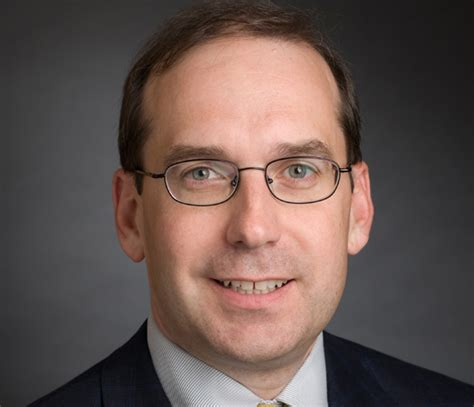
Mark L. Wolf is a retired senior United States district judge in Massachusetts.








 Medfield02052's Blog