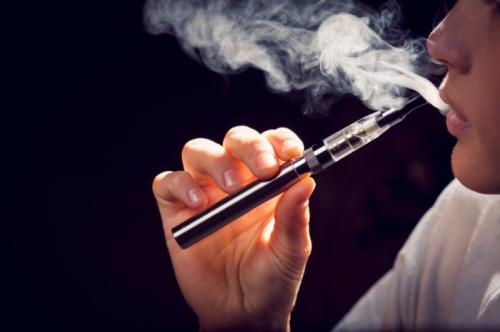
Norwood – Age to Buy Nicotine
Instructive and horrifying to read the precatory clauses to Norwood’s latest tobacco regulations. Thanks to Carol Read of the Town of Medfield’s Board of Health for sharing. Makes one wonder why we as a society let these companies profit off selling their addictive nicotine to our kids.
****************************************************************
Regulation of the Norwood Board of Health
Restricting the Sale of Tobacco Products and Smoke Accessories
A. Statement of Purpose:
Whereas there exists conclusive evidence that tobacco smoking causes cancer, respiratory and cardiac diseases,
negative birth outcomes, irritations to the eyes, nose and throat1;
Whereas the U.S. Department of Health and Human Services has concluded that nicotine is as addictive as
cocaine or heroin2 and the Surgeon General found that nicotine exposure during adolescence, a critical window
for brain development, may have lasting adverse consequences for brain development,3 and that it is addiction
to nicotine that keeps youth smoking past adolescence.4
Whereas a Federal District Court found that Phillip Morris, RJ Reynolds and other leading cigarette
manufacturers “spent billions of dollars every year on their marketing activities in order to encourage young
people to try and then continue purchasing their cigarette products in order to provide the replacement smokers
they need to survive” and that these companies were likely to continue targeting underage smokers5;
Whereas more than 80 percent of all adult smokers begin smoking before the age of 18, more than 90 percent
do so before leaving their teens, and more than 3.5 million middle and high school students smoke;6
Whereas 18.1 percent of current smokers aged <18 years reported that they usually directly purchased their
cigarettes from stores (i.e. convenience store, supermarket, or discount store) or gas stations, and among 11th
grade males this rate was nearly 30 percent ;7
Whereas the Institute of Medicine (IOM) concludes that raising the minimum age of legal access to tobacco
products to 21 will likely reduce tobacco initiation, particularly among adolescents 15 – 17, which would
improve health across the lifespan and save lives8.
Whereas cigars and cigarillos, can be sold in a single “dose;” enjoy a relatively low tax as compared to
cigarettes; are available in fruit, candy and alcohol flavors; and are popular among youth9;
1 Center for Disease Control and Prevention, (CDC) (2012), Health Effects of Cigarette Smoking Fact Sheet. Retrieved from:
http://www.cdc.gov/tobacco/data_statistice/fact_sheets/health_effects/effects_cig_smoking/index. htm.
2 CDC (2010), How Tobacco Smoke Causes Disease: The Biology and Behavioral Basis for Smoking-Attributable Disease. Retrieved
from: http://www.cdc.gov/tobacco/data_statistics/sgr/2010/.
3 U.S. Department of Health and Human Services. 2014. The Health Consequences of Smoking – 50 Years of Progress: A Report of
the Surgeon General. Atlanta: U.S. National Center for Chronic Disease Prevention and Health Promotion, Office on Smoking and
Health, p. 122. Retrieved from: http://www.surgeongeneral.gov/library/ reports/ 50-years-of-progress/full-report.pdf.
4 Id. at Executive Summary p. 13. Retrieved from: http://www.surgeongeneral.gov/library/reports/50-years-of-progress/execsummary.
pdf
5 United States v. Phillip Morris, Inc., RJ Reynolds Tobacco Co., et al., 449 F.Supp.2d 1 (D.D.C. 2006) at Par. 3301 and Pp. 1605-07.
6 SAMHSA, Calculated based on data in 2011 National Survey on Drug Use and Health and U. S. Department of Health and Human
services (HHA).
7 CDC (2013) Youth Risk Behavior, Surveillance Summaries (MMWR 2014: 63 (No SS-04)). Retrieved from: http://www.cdc.gov.
8 IOM (Institute of Medicine) 2015. Public Health Implications of Raising the Minimum Age of Legal Access to Tobacco Products.
Washington DC: The National Academies Press, 2015.
9 CDC (2009), Youth Risk Behavior, Surveillance Summaries (MMWR 2010: 59, 12, note 5). Retrieved from:
http:www.cdc.gov/mmwr/pdf/ss/ss5905.pdf.
2
Whereas research shows that increased cigar prices significantly decreased the probability of male adolescent
cigar use and a 10% increase in cigar prices would reduce use by 3.4%10;
Whereas 59% of high school smokers in Massachusetts have tried flavor cigarettes or flavored cigars and 25.6%
of them are current flavored tobacco product users; 95.1 % of 12 – 17 year olds who smoked cigars reported
smoking cigar brands that were flavored;11
Whereas the Surgeon General found that exposure to tobacco marketing in stores and price discounting increase
youth smoking;12
Whereas the federal Family Smoking Prevention and Tobacco Control Act (FSPTCA), enacted in 2009,
prohibited candy- and fruit-flavored cigarettes,13 largely because these flavored products were marketed to
youth and young adults,14 and younger smokers were more likely to have tried these products than older
smokers15, neither federal nor Massachusetts laws restrict sales of flavored non-cigarette tobacco products, such
as cigars, cigarillos, smokeless tobacco, hookah tobacco, and electronic devices and the nicotine solutions used
in these devices;
Whereas the U.S. Food and Drug Administration and the U.S. Surgeon General have stated that flavored
tobacco products are considered to be “starter” products that help establish smoking habits that can lead to longterm
addiction;16
Whereas the U.S. Surgeon General recognized in his 2014 report that a complementary strategy to assist in
eradicating tobacco related death and disease is for local governments to ban categories of products from retail
sale;17
10 Ringel, J., Wasserman, J., & Andreyeva, T. (2005) Effects of Public Policy on Adolescents’ Cigar Use: Evidence from the National
Youth Tobacco Survey. American Journal of Public Health, 95(6), 995-998, doi: 10.2105/AJPH.2003.030411 and cited in Cigar,
Cigarillo and Little Cigar Use among Canadian Youth: Are We Underestimating the Magnitude of this Problem?, J. Prim. P. 2011,
Aug: 32(3-4):161-70. Retrieved from: http://www.nebi.nim.gov/pubmed/21809109.
11 Massachusetts Department of Public Health, 2015 Massachusetts Youth Health Survey (MYHS); Delneve CD et al., Tob Control,
March 2014: Preference for flavored cigar brands among youth, young adults and adults in the USA.
12 U.S. Department of Health and Human Services. 2012. Preventing Tobacco Use Among Youth and Young Adults: A Report of the
Surgeon General. Atlanta: U.S. National Center for Chronic Disease Prevention and Health Promotion, Office on Smoking and
Health, p. 508-530, http://www.surgeongeneral.gov/library/reports/preventing-youth-tobacco-use/full-report.pdf.
13 21 U.S.C. § 387g.
14 Carpenter CM, Wayne GF, Pauly JL, et al. 2005. “New Cigarette Brands with Flavors that Appeal to Youth: Tobacco Marketing
Strategies.” Health Affairs. 24(6): 1601–1610; Lewis M and Wackowski O. 2006. “Dealing with an Innovative Industry: A Look at
Flavored Cigarettes Promoted by Mainstream Brands.” American Journal of Public Health. 96(2): 244–251; Connolly GN. 2004.
“Sweet and Spicy Flavours: New Brands for Minorities and Youth.” Tobacco Control. 13(3): 211–212; U.S. Department of Health
and Human Services. 2012. Preventing Tobacco Use Among Youth and Young Adults: A Report of the Surgeon General. Atlanta: U.S.
National Center for Chronic Disease Prevention and Health Promotion, Office on Smoking and Health, p. 537,
http://www.surgeongeneral.gov/library/reports/preventing-youth-tobacco-use/full-report.pdf.
15 U.S. Department of Health and Human Services. 2012. Preventing Tobacco Use Among Youth and Young Adults: A Report of the
Surgeon General. Atlanta: U.S. National Center for Chronic Disease Prevention and Health Promotion, Office on Smoking and
Health, p. 539, http://www.surgeongeneral.gov/library/reports/preventing-youth-tobacco-use/full-report.pdf.
16
Food and Drug Administration. 2011. Fact Sheet: Flavored Tobacco Products,
http://www.fda.gov/downloads/TobaccoProducts/ProtectingKidsfromTobacco/FlavoredTobacco/UCM183214.pdf; U.S. Department of
Health and Human Services. 2012. Preventing Tobacco Use Among Youth and Young Adults: A Report of the Surgeon General.
Atlanta: U.S. National Center for Chronic Disease Prevention and Health Promotion, Office on Smoking and Health, p. 539,
http://www.surgeongeneral.gov/library/reports/preventing-youth-tobacco-use/full-report.pdf.
17 See fn. 3 at p. 85.
3
Whereas the U.S. Centers for Disease Control and Prevention has reported that the current use of electronic
cigarettes, a product sold in dozens of flavors that appeal to youth, among middle and high school students
tripled from 2013 to 2014;18
Whereas 5.8% of Massachusetts youth currently use e-cigarettes and 15.9% have tried them;19
Whereas the Massachusetts Department of Environmental Protection has classified liquid nicotine in any
amount as an “acutely hazardous waste”;20
Whereas in a lab analysis conducted by the FDA, electronic cigarette cartridges that were labeled as containing
no nicotine actually had low levels of nicotine present in all cartridges tested, except for one21;
Whereas according to the CDC’s youth risk behavior surveillance system, the percentage of high school
students in Massachusetts who reported the use of cigars within the past 30 days is 10.8% in 2013; 22
Whereas data from the National Youth Tobacco Survey indicate that more than two-fifths of U.S. middle and
high school smokers report using flavored little cigars or flavored cigarettes;23
Whereas the sale of tobacco products is incompatible with the mission of health care institutions because these
products are detrimental to the public health and their presence in health care institutions undermine efforts to
educate patients on the safe and effective use of medication, including cessation medication;
Whereas educational institutions sell tobacco products to a younger population, who is particularly at risk for
becoming smokers and such sale of tobacco products is incompatible with the mission of educational
institutions that educate a younger population about social, environmental and health risks and harms;
Whereas the Massachusetts Supreme Judicial Court has held that “ . . . [t]he right to engage in business must
yield to the paramount right of government to protect the public health by any rational means”24.
Whereas data from the Norwood MetroWest Adolescent Health Survey showed 45% of Norwood High school
students have tried a vaping product and 31% currently use vaping products25.
18 Centers for Disease Control & Prevention. 2015. “Tobacco Use Among Middle and High School Students — United States, 2011–
2014,” Morbidity and Mortality Weekly Report (MMWR) 64(14): 381–385;
19 Massachusetts Department of Public Health, 2015 Massachusetts Youth Health Survey (MYHS)
20 310 CMR 30.136
21 Food and Drug Administration, Summary of Results: Laboratory Analysis of Electronic Cigarettes Conducted by FDA, available at:
http://www.fda.gov/newsevents/publichealthfocus/ucm173146.htm.
22 See fn. 7.
23 King BA, Tynan MA, Dube SR, et al. 2013. “Flavored-Little-Cigar and Flavored-Cigarette Use Among U.S. Middle and High
School Students.” Journal of Adolescent Health. [Article in press], http://www.jahonline.org/article/S1054-139X%2813%2900415-
1/abstract.
24 Druzik et al v. Board of Health of Haverhill, 324 Mass.129 (1949).
25
MetroWest Adolescent Health Survey: Key Indicator Report (2018) Metrowest Health Foundation. Submitted by Education
Development Center, Inc.
4
Now, therefore it is the intention of the Norwood Board of Health to regulate the sale of tobacco products.
B. Authority:
This regulation is promulgated pursuant to the authority granted to the Norwood Board of Health by
Massachusetts General Laws Chapter 111, Section 31 which states “Boards of health may make reasonable
health regulations”.
C. Definitions:
For the purpose of this regulation, the following words shall have the following meanings:
Adult-only retail tobacco store: An establishment that is not required to possess a retail food permit whose
primary purpose is to sell or offer for sale but not for resale, tobacco products and/or smoke accessories, in
which the sale of other products is merely incidental, and in which the entry of persons under the minimum
legal sales age is prohibited at all times, and maintains a valid permit for the retail sale of tobacco products as
required to be issued by the Norwood Board of Health.
Blunt Wrap: Any tobacco product manufactured or packaged as a wrap or as a hollow tube made wholly or in
part from tobacco that is designed or intended to be filled by the consumer with loose tobacco or other fillers
regardless of any content.
Business Agent: An individual who has been designated by the owner or operator of any establishment to be the
manager or otherwise in charge of said establishment.
Characterizing Flavor: A distinguishable taste or aroma, other than the taste or aroma of tobacco, imparted or
detectable either prior to or during consumption of a tobacco product or component part thereof, including, but
not limited to, tastes or aromas relating to any fruit, chocolate, vanilla, honey, candy, cocoa, dessert, alcoholic
beverage, menthol, mint, wintergreen, herb or spice; provided, however, that no tobacco product shall be
determined to have a characterizing flavor solely because of the provision of ingredient information or the use
of additives or flavorings that do not contribute to the distinguishable taste or aroma of the product.
Cigar: Any roll of tobacco that is wrapped in leaf tobacco or in any substance containing tobacco with or
without a tip or mouthpiece not otherwise defined as a cigarette under Massachusetts General Law, Chapter
64C, Section 1, Paragraph 1.
Component part: Any element of a tobacco product, including, but not limited to, the tobacco, filter and paper,
but not including any constituent.
Constituent: Any ingredient, substance, chemical or compound, other than tobacco, water or reconstituted
tobacco sheet, that is added by the manufacturer to a tobacco product during the processing, manufacturing or
packaging of the tobacco product. Such term shall include a smoke constituent.
5
Coupon: Any card, paper, note, form, statement, ticket or other issue distributed for commercial or promotional
purposes to be later surrendered by the bearer so as to receive an article, service or accommodation without
charge or at a discount price.
Distinguishable: Perceivable by either the sense of smell or taste.
Educational Institution: Any public or private college, school, professional school, scientific or technical
institution, university or other institution furnishing a program of higher education.
Employee: Any individual who performs services for an employer.
Employer: Any individual, partnership, association, corporation, trust or other organized group of individuals
that uses the services of one (1) or more employees.
Flavored tobacco product: Any tobacco product or component part thereof that contains a constituent that has
or produces a characterizing flavor. A public statement, claim or indicia made or disseminated by the
manufacturer of a tobacco product, or by any person authorized or permitted by the manufacturer to make or
disseminate public statements concerning such tobacco product, that such tobacco product has or produces a
characterizing flavor shall constitute presumptive evidence that the tobacco product is a flavored tobacco
product.
Health Care Institution: An individual, partnership, association, corporation or trust or any person or group of
persons that provides health care services and employs health care providers licensed, or subject to licensing, by
the Massachusetts Department of Public Health under M.G.L. c. 112 or a retail establishment that provides
pharmaceutical goods and services and is subject to the provisions of 247 CMR 6.00. Health care institutions
include, but are not limited to, hospitals, clinics, health centers, pharmacies, drug stores, doctor offices,
optician/optometrist offices and dentist offices.
Liquid Nicotine Container: A bottle or other vessel which contains nicotine in liquid or gel form, whether or
not combined with another substance or substances, for use in a tobacco product, as defined herein. The term
does not include a container containing nicotine in a cartridge that is sold, marketed, or intended for use in a
tobacco product, as defined herein, if the cartridge is prefilled and sealed by the manufacturer and not intended
to be open by the consumer or retailer.
Listed or non-discounted price: The higher of the price listed for a tobacco product on its package or the price
listed on any related shelving, posting, advertising or display at the place where the tobacco product is sold or
offered for sale plus all applicable taxes if such taxes are not included in the state price, and before the
application of any discounts or coupons.
Marijuana Accessories: Equipment, products, devices, or materials of any kind that are intended or designed
for use in ingesting, inhaling, or otherwise introducing marijuana into the human body.
Marijuana Retailer: “Marijuana Retailer” as defined in 935 CMR 500.002.
6
Minimum Legal Sales Age (MLSA): The age an individual must be before that individual can be sold a tobacco
product in the municipality.
Non-Residential Roll-Your-Own (RYO) Machine: A mechanical device made available for use (including to an
individual who produces cigars, cigarettes, smokeless tobacco, pipe tobacco, or roll-your-own tobacco solely
for the individual’s own personal consumption or use) that is capable of making cigarettes, cigars or other
tobacco products. RYO machines located in private homes used for solely personal consumption are not Non-
Residential RYO machines.
Permit Holder: Any person engaged in the sale or distribution of tobacco products who applies for and receives
a tobacco product sales permit or any person who is required to apply for a Tobacco Product Sales Permit
pursuant to these regulations, or his or her business agent.
Person: Any individual, firm, partnership, association, corporation, company or organization of any kind,
including but not limited to, an owner, operator, manager, proprietor or person in charge of any establishment,
business or retail store.
Registered Marijuana Dispensary: “Medical Marijuana Treatment Center, also known as a Registered
Marijuana Dispensary” as defined in 935 CMR 500.002.
Self-Service Display: Any display from which customers may select a tobacco product, as defined herein,
without assistance from an employee or store personnel.
Schools: Public or private elementary or secondary schools.
Smoke Accessories: Equipment, products, devices, or materials of any kind that are intended or designed for
use in ingesting, inhaling, or otherwise introducing Tobacco Product, marijuana, tetrahydrocannabinol (THC),
or cannabidiol (CBD) into the human body, including, but not limited to, Marijuana Accessories, bongs, pipes,
glass pipes, vaporizers, vape pens, hookah apparatus, dab rigs, pods, tanks, and cartridges.
Smoke Constituent: Any chemical or chemical compound in mainstream or sidestream tobacco smoke that
either transfers from any component of the tobacco product to the smoke or that is formed by the combustion or
heating of tobacco, additives or other component of the tobacco product.
Tobacco Product: Any product containing, made, or derived from tobacco or nicotine that is intended for human
consumption, whether smoked, chewed, absorbed, dissolved, inhaled, snorted, sniffed, or ingested by any other
means, including, but not limited to: cigarettes, cigars, little cigars, chewing tobacco, pipe tobacco, snuff; or
electronic cigarettes, electronic cigars, electronic pipes, electronic hookah, liquid nicotine, “e-liquids” or other
similar products, regardless of nicotine content, that rely on vaporization or aerosolization. “Tobacco product”
includes any component or part of a tobacco product. “Tobacco product” does not include any product that has
been approved by the United States Food and Drug Administration either as a tobacco use cessation product or
for other medical purposes and which is being marketed and sold or prescribed solely for the approved purpose.
7
Tobacco Product Sales Permit: A permit issued by the Norwood Board of Health for selling or otherwise
distributing Tobacco Products in the Town of Norwood.
Vending Machine: Any automated or mechanical self-service device, which upon insertion of money, tokens or
any other form of payment, dispenses or makes cigarettes or any other tobacco products, as defined herein.
D. Tobacco Sales to Persons Under the Minimum Legal Sales Age Prohibited:
1. No person shall sell tobacco products or smoke accessories or permit tobacco products or smoke accessories,
as defined herein, to be sold to a person under the minimum legal sales age; or not being the individual’s parent
or legal guardian, give tobacco products, as defined herein, to a person under the minimum legal sales age. The
minimum legal sales age in Norwood is 21.
2. Required Signage:
a. In conformance with and in addition to Massachusetts General Law, Chapter 270, Section 7, a copy of
Massachusetts General Laws, Chapter 270, Section 6, shall be posted conspicuously by the owner or
other person in charge thereof in the shop or other place used to sell tobacco products at retail. The
notice shall be provided by the Massachusetts Department of Public Health and made available from the
Norwood Board of Health. The notice shall be at least 48 square inches and shall be posted
conspicuously by the permit holder in the retail establishment or other place in such a manner so that it
may be readily seen by a person standing at or approaching the cash register. The notice shall directly
face the purchaser and shall not be obstructed from view or placed at a height of less than 4 feet or
greater than 9 feet from the floor. The owner or other person in charge of a shop or other place used to
sell tobacco products at retail shall conspicuously post any additional signs required by the
Massachusetts Department of Public Health. The owner or other person in charge of a shop or other
place used to sell hand rolled cigars must display a warning about cigar consumption in a sign at least 50
square inches pursuant to 940 CMR 22.06 (2) (e).
b. The owner or other person in charge of a shop or other place used to sell tobacco products, as defined
herein, at retail shall conspicuously post signage provided by the Norwood Board of Health that
discloses current referral information about smoking cessation.
c. The owner or other person in charge of a shop or other place used to sell tobacco products that rely on
vaporization or aerosolization, as defined herein as “tobacco products”, at retail shall conspicuously post
a sign stating that “The sale of tobacco products, including e-cigarettes, to someone under the minimum
legal sales age of 21 years is prohibited.” The notice shall be no smaller than 8.5 inches by 11 inches and
shall be posted conspicuously in the retail establishment or other place in such a manner so that it may
be readily seen by a person standing at or approaching the cash register. The notice shall directly face
the purchaser and shall not be obstructed from view or placed at a height of less than four (4) feet or
greater than nine (9) feet from the floor.
3. Identification: Each person selling or distributing tobacco products, as defined herein, shall verify the age of
the purchaser by means of a valid government-issued photographic identification containing the bearer’s date of
birth that the purchaser is 21 years old or older. Verification is required for any person under the age of 27.
8
4. All retail sales of tobacco products, as defined herein, must be face-to-face between the seller and the buyer
and occur at the permitted location.
E. Tobacco Product Sales Permit:
1. No person shall sell or otherwise distribute tobacco products, as defined herein, within the Town of Norwood
without first obtaining a Tobacco Product Sales Permit issued annually by the Norwood Board of Health. Only
owners of establishments with a permanent, non-mobile location in Norwood are eligible to apply for a permit
and sell tobacco products, as defined herein, at the specified location in Norwood.
2. As part of the Tobacco Product Sales Permit application process, the applicant will be provided with the
Norwood regulation. Each applicant is required to sign a statement declaring that the applicant has read said
regulation and that the applicant is responsible for instructing any and all employees who will be responsible for
tobacco product sales regarding federal, state and local laws regarding the sale of tobacco and this regulation.
3. Each applicant who sells tobacco products is required to provide proof of a current Tobacco Retailer License
issued by the Massachusetts Department of Revenue, when required by state law, before a Tobacco Product
Sales Permit can be issued.
4. A separate permit, displayed conspicuously, is required for each retail establishment selling tobacco products,
as defined herein. The fee for which shall be determined by the Norwood Board of Health annually.
5. A Tobacco Product Sales Permit is non-transferable. A new owner of an establishment that sells tobacco
products, as defined herein, must apply for a new permit. No new permit will be issued unless and until all
outstanding penalties incurred by the previous permit holder are satisfied in full.
6. Issuance of a Tobacco Product Sales Permit shall be conditioned on an applicant’s consent to unannounced,
periodic inspections of his/her retail establishment to ensure compliance with this regulation.
7. A Tobacco Product Sales Permit will not be renewed if the permit holder has failed to pay all fines issued and
the time period to appeal the fines has expired and/or the permit holder has not satisfied any outstanding permit
suspensions.
8. A Tobacco Product Sales Permit will not be renewed if the permit holder has sold a tobacco product to a
person under the MLSA (§D.1) three times within the previous permit year and the time period to appeal has
expired. The violator may request a hearing in accordance with subsection 4 of the Violations section.
9. Maximum Number of Tobacco Product Sales Permits.
a. At any given time, there shall be no more than 34 Tobacco Product Sales Permits issued in Norwood
reduced by the number of permits not renewed pursuant to §9(c). No permit renewal will be denied
based on the requirements of this subsection except any permit holder who has failed to renew his or her
permit within thirty (30) days of expiration will be treated as a first-time permit applicant.
9
b. At any given time, there shall be no more than two (2) Tobacco Products Sales Permits issued to Adult-
Only Retail Tobacco Stores, as defined herein, in Norwood. No permit renewal by an Adult-Only Retail
Tobacco Store will be denied based on the requirements of this subsection except any permit holder who
has failed to renew his or her permit within thirty (30) days of expiration will be treated as a first-time
permit applicant. As of the publication date of the legal notice (June 27, 2019), any permit not renewed
either because an Adult-Only Retail Tobacco Store no longer sells tobacco products, as defined herein,
or because a retailer closes the retail business, shall be returned to the Norwood Board of Health and
shall be permanently retired by the Board of Health and the total allowable number of Tobacco Product
Sales Permits issued to Adult-Only Retail Tobacco Stores under this paragraph shall be reduced by the
number of the retired permits. Applicants who purchase or acquire an existing Adult-Only Retail
Tobacco Store that holds a valid Tobacco Product Sales Permit at the time of the sale or acquisition of
said business must apply within sixty (60) days of such sale or acquisition for the permit held by the
Current Permit Holder if the Applicant intends to operate as an Adult-Only Retail Tobacco Store, as
defined herein. Any conversion of an existing Retail Tobacco Store Permit holder to an Adult Only
Retail Tobacco Store must be in compliance with §9(d).
c. As of January 1, 2018 any permit not renewed either because a retailer no longer sells tobacco products,
as defined herein, or because a retailer closes the retail business, shall be returned to the Norwood Board
of Health and shall be permanently retired by the Board of Health and the total allowable number of
Tobacco Product Sales Permits under paragraph 11(a) shall be reduced by the number of the retired
permits.
d. A Tobacco Product Sales Permit or Adult-Only Retail Tobacco Store Permit shall not be issued to any
new applicant for a retail location within 500 feet of a public or private elementary or secondary school
as measured by a straight line from the nearest point of the property line of the school to the nearest
point of the property line of the site of the applicant’s business premises.
e. Applicants who purchase an existing business that holds a valid Tobacco Product Sales Permit at the
time of the sale of said business must apply within sixty (60) days of such sale for the permit held by the
Seller if the Buyer intends to sell tobacco products, as defined herein.
F. Cigar Sales Regulated:
1. No person shall sell or distribute or cause to be sold or distributed a single cigar.
2. No person shall sell or distribute or cause to be sold or distributed any original factory-wrapped package of
two or more cigars, unless such package is priced for retail sale at $5.00 or more.
3. This Section shall not apply to:
a. The sale or distribution of any single cigar having a retail price of two dollars and fifty cents ($2.50) or
more.
10
b. A person or entity engaged in the business of selling or distributing cigars for commercial purposes to
another person or entity engaged in the business of selling or distributing cigars for commercial
purposes with the intent to sell or distribute outside the boundaries of Norwood.
4. The Norwood Board of Health may adjust from time to time the amounts specified in this Section to reflect
changes in the applicable Consumer Price Index by amendment of this regulation.
G. Sale of Flavored Tobacco Products Prohibited:
No person shall sell or distribute or cause to be sold or distributed any flavored tobacco product.
H. Sale of Smoke Accessories Prohibited:
No person shall sell or distribute or cause to be sold or distributed any smoke accessories, as defined herein,
except in adult-only retail tobacco stores, marijuana retailers, or registered marijuana dispensaries, as defined
herein.
I. Prohibition of the Sale of Blunt Wraps:
No person or entity shall sell or distribute blunt wraps in Norwood.
J. Free Distribution and Coupon Redemption: No person shall:
1. Distribute or cause to be distributed, any free samples of tobacco products, as defined herein;
2. Accept or redeem, offer to accept or redeem, or cause or hire any person to accept or redeem or offer
to accept or redeem any coupon that provides any tobacco product, as defined herein, without charge or for
less than the listed or non-discounted price; or
3. Sell a tobacco product, as defined herein, to consumers through any multi-pack discounts (e.g., “buy-twoget-
one-free”) or otherwise provide or distribute to consumers any tobacco product, as defined herein,
without charge or for less than the listed or non-discounted price in exchange for the purchase of any other
tobacco product.
4. Sections 2 and 3 shall not apply to products, such as cigarettes, for which there is a state law prohibiting
them from being sold as loss leaders and for which a minimum retail price is required by state law.
K. Out-of-Package Sales:
1. The sale or distribution of tobacco products, as defined herein, in any form other than an original factorywrapped
package is prohibited, including the repackaging or dispensing of any tobacco product, as defined
herein, for retail sale. No person may sell or cause to be sold or distribute or cause to be distributed any
cigarette package that contains fewer than twenty (20) cigarettes, including single cigarettes.
11
2. A retailer of Liquid Nicotine Containers must comply with the provisions of 310 CMR 30.000, and must
provide the Norwood Board of Health with a written plan for disposal of said product, including disposal
plans for any breakage, spillage or expiration of the product.
3. All retailers must comply with 940 CMR 21.05 which reads: “It shall be an unfair or deceptive act or
practice for any person to sell or distribute nicotine in a liquid or gel substance in Massachusetts after March
15, 2016 unless the liquid or gel product is contained in a child-resistant package that, at a minimum, meets
the standard for special packaging as set forth in 15 U.S. C.§§1471 through 1476 and 16 CFR §1700 et.
Seq.”
L. Self-Service Displays:
All self-service displays of tobacco products, as defined herein, are prohibited. All humidors including, but not
limited to, walk-in humidors must be locked.
M. Vending Machines:
All vending machines containing tobacco products, as defined herein, are prohibited.
N. Non-Residential Roll-Your-Own Machines:
All Non-Residential Roll-Your-Own machines are prohibited.
O. Prohibition of the Sale of Tobacco Products by Health Care Institutions:
No health care institution located in Norwood shall sell or cause to be sold tobacco products, as defined herein.
No retail establishment that operates or has a health care institution within it, such as a pharmacy,
optician/optometrist or drug store, shall sell or cause to be sold tobacco products, as defined herein.
P. Prohibition of the Sale of Tobacco Products by Educational Institutions:
No educational institution located in Norwood shall sell or cause to be sold tobacco products, as defined herein.
This includes all educational institutions as well as any retail establishments that operate on the property of an
educational institution.
Q. Incorporation of Attorney General Regulation 940 CMR 21.00:
The sale or distribution of tobacco products, as defined herein, must comply with those provisions found at 940
CMR 21.00 (“Sale and Distribution of Cigarettes, Smokeless Tobacco Products, and Electronic Smoking
Devices in Massachusetts”).
12
R. Violations:
1. It shall be the responsibility of the establishment, permit holder and/or his or her business agent to ensure
compliance with all sections of this regulation. The violator shall receive:
a. In the case of a first violation, a fine of one hundred dollars ($100.00).
b. In the case of a second violation within 36 months of the date of the current violation, a fine of two
hundred dollars ($200.00) and the Tobacco Product Sales Permit shall be suspended for seven (7)
consecutive business days.
c. In the case of three or more violations within a 36 month period, a fine of three hundred dollars
($300.00) and the Tobacco Product Sales Permit shall be suspended for thirty (30) consecutive business
days.
d. In the case of four violations or repeated, egregious violations of this regulation within a 36 month
period, the Board of Health shall hold a hearing in accordance with subsection 4 of this section and may
permanently revoke a Tobacco Product Sales Permit.
2. Refusal to cooperate with inspections pursuant to this regulation shall result in the suspension of the Tobacco
Product Sales Permit for thirty (30) consecutive business days.
3. In addition to the monetary fines set above, any permit holder who engages in the sale or distribution of
tobacco products while his or her permit is suspended shall be subject to the suspension of all Board of Health
issued permits for thirty (30) consecutive business days.
4. The Norwood Board of Health shall provide notice of the intent to suspend or revoke a Tobacco Product
Sales Permit, which notice shall contain the reasons therefor and establish a time and date for a hearing which
date shall be no earlier than seven (7) days after the date of said notice. The permit holder or its business agent
shall have an opportunity to be heard at such hearing and shall be notified of the Board of Health’s decision and
the reasons therefor in writing. After a hearing, the Norwood Board of Health shall suspend or revoke the
Tobacco Product Sales Permit if the Board of Health finds that a violation of this regulation occurred. For
purposes of such suspensions or revocations, the Board shall make the determination notwithstanding any
separate criminal or non-criminal proceedings brought in court hereunder or under the Massachusetts General
Laws for the same offense. All tobacco products, as defined herein, shall be removed from the retail
establishment upon suspension or revocation of the Tobacco Product Sales Permit. Failure to remove all
tobacco products, as defined herein, shall constitute a separate violation of this regulation.
S. Non-Criminal Disposition:
Whoever violates any provision of this regulation may be penalized by the non-criminal method of disposition
as provided in Massachusetts General Laws, Chapter 40, Section 21D or by filing a criminal complaint at the
appropriate venue.
13
T. Separate Violations:
Each day any violation exists shall be deemed to be a separate offense.
U. Enforcement:
Enforcement of this regulation shall be by the Norwood Board of Health or its designated agent(s).
Any resident who desires to register a complaint pursuant to the regulation may do so by contacting the
Norwood Board of Health or its designated agent(s) and the Board shall investigate.
V. Severability:
If any provision of this regulation is declared invalid or unenforceable, the other provisions shall not be affected
thereby but shall continue in full force and effect.
W. Effective Date:
This regulation shall take effect on September 15, 2019.
Kathleen F. Bishop
Joan M. Jacobs
Carolyn Riccardi











 Medfield02052's Blog