Category Archives: Uncategorized

CPA for affordable housing

This article is from my EfficientGov.com newsletter – see it on-line here

The Massachusetts Community Preservation Act (CPA) in my analysis is all about the town being smart enough to pick up the matching state monies, because we know that in the future we will be spending  on the three CPA categories: affordable housing, historic preservation, and open spaces/recreation.

Medfield is currently getting a double whammy, because (1) our residents are paying in to the state the funds that are distributed to other towns, but (2) we just are not sharing any of the state CPA matching monies that others are getting.  Medway gets about a 40% state match.

 

budget-bowl of money

Community Preservation Funds & Affordable Housing

See how some Massachusetts’ towns are managing community preservation funds for affordable housing projects and requests.

In Massachusetts towns that have adopted the state’s Community Preservation Act, appointed committees make recommendations to town councils on how to spend the money. The community preservation funds are often used for open space, historic preservation or recreation projects, but they can also be applied to community housing projects.

Community housing is defined in the law as “low and moderate income housing for individuals and families, including low or moderate income senior housing.”

Gatehouse Media reporters took a close look at how several Massachusetts towns are handling their community preservation spending. While a lot of the money is dedicated to open spaces and historic preservation of town properties, some affordable housing projects are funded. For example, the town of Chelmsford has spent $2.1 million in community preservation funds on the 116-unit Chelmsford Woods complex, a property of the Chelmsford Housing Authority.

The town of Belmont, west of Boston, and two current affordable housing projects offer a dichotomy in how effective community preservation funds are for improving or increasing affordable housing.

In the first case, Belmont Village, 25 four-family buildings with 100 total units, had outdated electrical wiring with only one outlet per room. Most people were using extension cords, according to Margaret Velie, chairwoman of the Belmont Community Preservation Committee.

Belmont Village, originally built in 1950, is a state-aided housing project of the Belmont Housing Authority that is home to families and veterans. There are 50 two-bedroom and 50 three-bedroom apartments. Belmont earmarked more than $522,000 in its community preservation funding in 2015. Interior wiring upgrades, and additional electrical outlets, are being completed this summer.

According to Gatehouse Media, the town also previously set aside $375,000 of community preservation funds for a first-time homeowners assistance program to procure three more affordable housing units. But the program has not been very effective. A lottery gave three residents earning below 80 percent of median average income a chance to use a portion of the earmark to help them purchase condominiums, in exchange for the three properties becoming part of the housing authority’s affordable housing portfolio.

According to Velie, all three residents have not been able to find affordable condos in the Belmont housing market.

How are Community Preservation Funding Requests Made?

Local groups and town agencies are typically allowed to seek community preservation funds. But it’s usually a town committee or official working with a community organization making the request, Evan Belansky, director of community development in Chelmsford, told Gatehouse Media.

Chelmsford Housing Authority requests come through the authority’s executive director, for example. Small projects may also receive community preservation funding through capital improvements cycles.

But there are also ways to get approved without having to make a request through the community preservation committee and then have it recommended and approved at a town meeting.

“What we do in Chelmsford over the years, is we have learned some lessons on how to expedite the process,” Belansky said. “For example, we have an open space and recreation account, whereby the community preservation committee can approve smaller-dollar figure projects, so it is direct, without town meeting approval.”

Read the original story on the Arlington Advocate website.

Note in other states, there is similar funding for historic preservation designations. But, the historic preservation designation can play the double agent in local affordable housing battles, as EfficientGov has reported on previously.

http://efficientgov.com/blog/2016/02/18/historic-preservationist-rails-against-designation-opponents/embed/#?secret=nqpDAZKlWk

Mega-B ConCom applications

These are the two Cheney Engineering applications dated 7/25/16 to the ConCom for the mega-B site parcel that is to the West of Rte. 27, that I just scanned and uploaded:

  • Request for Determination of Applicability (RDA); and
  • Abbreviated Notice of Resource Area Delineation (ANRAD)

20160725-Cheney Engineering-ANRAD

20160725-Cheney Engineering-RDA

This parcel has one big hole – there is up to a 30′ elevation difference from the edge of the property at the intersection of Grove and Dale Streets to the bottom, and a 15-20′ differential along the Rte. 27 side.

West Nile Virus in Dover

mosquito

Email just now from Mike –


The Board of Health was notified today that a mosquito sample taken in Dover tested positive for the West Nile Virus(WNV). The notice was a moderate risk notice. I notified the School Department and the Parks & Recreation Department. I also called Norfolk County Mosquito Control and spoke to David Lawson, Director, who confirmed this. He said recently positive samples have been found in other area towns. There are no positive findings in horses or people in this area as of this date. He said that the group most at risk for complications from WNV  are the elderly as they might have weakened immune systems. I am notifying Roberta Lynch so that she can take appropriate action to alert Medfield Seniors. Mike

Housing Production Plan

40b

Town Planner, Sarah Raposa, sent along last week

  • the final draft of the town’s Housing Production Plan  Final Draft HPP – 02-05-15,
  • some 40B data put together by Planning Board member Sarah Lemke, and
  • the planned adoption schedule for the Housing Production Plan.

In light of yesterday’s 40B news, I thought it might be useful to pass along some information prepared by PB member, Sarah Lemke, on the status of the Town’s SHI and the first draft of the Housing Production Plan. A second draft with more refined sites and strategies for consideration will be available at the end of September and the Board anticipates having a public meeting on the draft HPP on October 17th. Both the Planning Board and Board of Selectmen must vote to adopt/endorse the plan (scheduled for November) before it is sent to DHCD for approval (scheduled for December).

Thanks and best,

Sarah


40B / Subsidized Housing Inventory (SHI)

Medfield has 4,220 units of housing, with 283 units of Affordable Housing., leaving us 139 units short of the 10% test, at 6.7%.


If a Comp Permit application is submitted, the Town can deny the application only if:

  • The town has met the 10% test- 422 units (10% of the total number of housing units in the Town) – We are at 6.7%
  • The Town has 1.5% of its developable land area dedicated to affordable housing (not addressed here) – We are at approximately 0.8%
  • The Town has an approved Housing Production Plan (HPP) and has a current certificate of compliance from DHCD (which lasts 1 to 2 years)(more below)
  • The Town has, within the 12 months preceding the application, approved 2% of its housing units (84.4 units)(the test is whether these units are “occupied, available for occupancy or under permit as of the date of the application”
  • The proposed project is greater than 200 units (for a town the size of Medfield)

Housing Production Plan (HPP)

  • Term of 5 years from date of approval by DHCD, may be updated and renewed
  • A town is in compliance with its HPP (and can deny an unfriendly 40B application per above) if during a single calendar year the town has increased its SHI units by the number required in the HPP (which must be at least .5%).  Units are counted on the SHI at the earliest of: a) where zoning approval is required (e.g. 40B, 40A or 40R) the approval is filed with the Town Clerk, notwithstanding any appeal of that approval that may be filed subsequently, or the resolution of any appeal, or c) where no zoning approval is required, when the building permit or certificate of occupancy is issued, or when the unit is occupied.  HOWEVER, in the event zoning approval is required, if more than 12 months elapses between the issuance of the zoning approval and the issuance of a building permit for the project, the units come off the SHI until the building permit issues.  If more than 18 months elapses between the approval and the issuance of a building permit, then the units come off of the SHI until the certificate of occupancy is issued.  Additionally, note that the units have to been created in the year the certification is sought to count (there’s no rolling units into the next year for credit)
  • DHCD must certify the Town’s compliance- if the SHI units are increased .5% of the total housing units in Town (i.e. 21 units using 2010 census), the DHCD certificate lasts for 1 year from the date the units were eligible for inclusion on SHI.  If the units are increased 1.0% (42 units using 2010 census), then the DHCD certificate lasts for 2 years from the date the units were eligible for inclusion on the SHI.
  • The town can only deny a 40B is the town has a valid DHCD certificate before the application is filed, and follows the procedural requirements of the regulations.


Sarah Raposa, AICP

Town Planner

Town control over speed limits

State-House-smaller_1 (1)

One part of the recently signed Municipal Modernization Act gives towns greater rights with respect to setting speed limits.  Previously the town had limited control over what the speed limit would be, because the town had to set speed limits at what 85% of the drivers were going, which was usually higher than the town wanted.  this is the new provision:

Local Speed Limits / Safety Zones (Sections 193-194)
Provides municipalities with flexibility around the establishment of speed limits. Cities and towns can now establish a speed limit of 25 MPH on any roadway inside a thickly settled or business district on any way that is not a state highway. It also allows for the creation of designated safety zones on, at, or near any way in the city or town that is not a state highway, and with the approval of MassDOT if the same is a state highway.  Such safety zones would have a posted speed limit of 20 MPH.

More on the mega-40B

Chris McCue just asked:

More questions for Pete Peterson, Sarah Raposa or someone else in the know:…if we approve the Building Production Plan before this project gets permitted (and/or reach our requirement for # of units), will it stop or delay this Dale Street 40B project? Also, if we need far fewer than 200 units to meet our affordable housing quota, does that mean this project is automatically capped at that number (which I believe to be significantly lower)? Does the housing production plan need to be voted on by residents at a town meeting, or just approved by Selectmen and/or Planning Board? There also looks to be a historic home that may be affected by the project — with a 40B is the town allowed to impose its 18-month demolition delay if the home is found to be historically significant, or do we lose that power to protect historic structures too?

I do not claim to be “in the know,” which is reflected in how few of the questions I can answer, but I am at least available:

  • I do not know the answer to the Housing Production Plan timing issue, but rest assured it is on my mind, as the Housing Production Plan is virtually ready to be filed.
  • I understand that the Housing Production Plan only needs the approval of the Board of Selectmen and the planning board, not town meeting approval. 
  • I also do not know how a demolition delay of a historic home effects a 40B application.

Mega-40B update

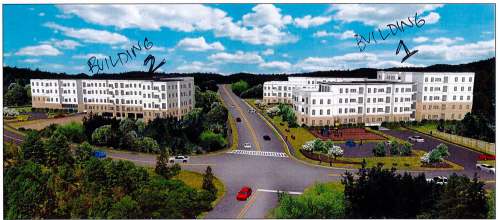
Rendering

I have seen much more discussion about the mega-40B and questions have been posed to me, so while not a 40B expert, I will try to share what I do know and have learned in my readings.  Plus I own a copy of Mark Brobowski’s Handbook of Massachusetts Land Use and Planning Law, from which I can reference things.

Christian Donner asked about the infrastructure impacts and whether the state, in the form of the Housing Appeals Committee (HAC), which would review any permit denial by our ZBA and/or any conditional approval that allegedly made the project uneconomic, would take those into account.  Brobrowski states in his book:

“Boards of appeals denying or approving comprehensive permits with conditions almost invariably fall back on well-worn planning arguments as a justification.  Almost invariably, the HAC rejects such contentions.  Some of the local concerns that have been repeatedly adjudicated before the HAC include:
•    school crowding
•    drainage
•    traffic
•    sewers
•    water provisions
•    noise
•    site accessibility
•    inconsistency with local plans
•    environmental degradation
•    open space
•    density
For all practical purposes, the burden of proof for the board of appeals is set forth in 760 CMR 31.07(2)(b).  The natural environment must be “endangered”; design of the site or the proposed housing must be “seriously deficient”; and open spaces must be “critically needed.”  Only in the rare case will the local planning concerns outweigh the regional housing need.  In such cases, the board’s decision to deny or approve a comprehensive permit with conditions that render the project uneconomic will be upheld by the HAC.”

In Bobrowski’s book, each of these items has a footnote to the cases that underlie those statements, and as with all legal issues, one must know both the statues, the regulations, and the cases interpreting both, to really know the law.  One case that I read that indicates the level of expense the town in expected to absorb, stated that it is not a reason to deny a 40B development because the town has to build a new waste water treatment plant – indicating the high level of expense that the state is willing to impose on the community hosting the 40B.

Karen Scotti questioned the water supply to service the new housing, and I do not know the answer to that question, except that I do see that Bobrowski seems to indicate that is not a basis, citing Groton Hous. Auth. v. Groton Zoning Board of Appeals, HAC Dec. at 5-6  (Sept. 19, 1991).   What I have been told by Mike Sullivan is that our aquifer actually has a plenty of water, but the still DEP limits the amount that we can take out via permits because of various regional factors, such as wanting greater water flow in the Charles River.  One of my first ideas on how to reduce our property taxes was actually for the town to sell our water, where we had so much – Mike said the town cannot go into such businesses, and that was before I knew the DEP limited what we pumped out of the ground.  I attended a meeting of municipal officials about 10-15 years ago, hosted by the DEP and the Charles River Water Shed Association, at which both groups advocated for towns to limit resident water usage to 60 gallons per person per day (we were at 90, and as I understand the issue would basically have to forego lawn watering to get to 60) because the Charles River had pond fish in it instead of river fish – they were saying because the river needed greater flow, that we should use less water.  Those in attendance, with greater knowledge than I pointed to the dams on the river, the years of recorded data on water flows in the Charles showing no lessening in the amount of that flow, and a study that had been done in Connecticut on the issue that pointed to the dams as the reason the river fish had disappeared.

Shawn Collins questioned infrastructure improvements installed by The Parc, and it is my understanding, as Shawn said, that the developer did pay for the off site school bus stop and the new sidewalk.  It is also my understanding from discussions with town counsel that such extractions must be closely connected with the site itself for the extractions to be legally upheld.  I did hear Chief Kingsbury make the point that his ladders could not reach the tops of the proposed buildings at The Parc, but I never learned how that issue was resolved.

I had once suggested that the town should make any new developments basically pay for the existing town infrastructure, essentially to buy in for what prior residents have already paid, and I learned that was constitutionally prohibited in Massachusetts – I have been told that other state do allow such a buy in requirement.  The City of Boston seems to have linkage payment requirements that require developers to contribute monies.

If there is interest, I will try to arrange for the town to hold an information meeting to inform residents about the mega-40B and the town’s options.

Rte. 27 lines – more

I was working backwards through my emails, and had not gotten to this one from THE Chief about the lines when I posted.


The current line painting company is going out of business. DPW Director Mo Goulet and I are meeting with a new potential company this morning…..Chief

Rte. 27 traffic lines

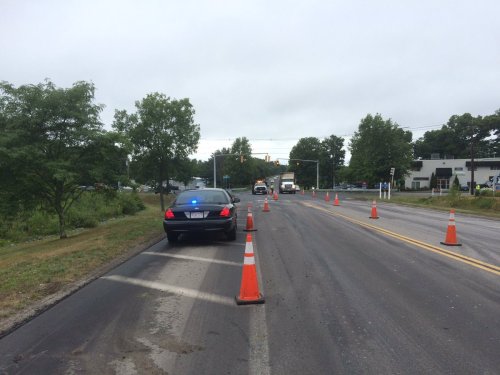
rte 27

There have been concerns expressed over the workmanship of the recent Rte. 27 line painting, and today I was asked about it, so I queried Chief Meaney.  The Medfield Police Department is responsible for the line painting of streets in town for some historic reason, a responsibility that I have heard may soon get shifted over to the DPW.

The Chief responded that :


Actually just met with the line painting company. The situation is going to be corrected.

40B follow up

Rendering

There has been tremendous reaction and interest to the 200 unit 40B that has been proposed, and I have been asked how it can be stopped and/or what the town can do.

The 200 unit proposal will have to go through a rigorous permitting process with the Zoning Board of Appeals of the Town of Medfield, at which time public input is accepted, peer review will likely be required, and reasonable health and safety conditions can be imposed.

In addition to Zoning Board of Appeals approval, the 200 unit proposal has to get ComCon approval, however, the owner was already in before the ConCom within the past month to seek a wetlands delineation, so the project as laid out may well probably comply with the wetland regulations.  When the owner was recently before the ConCom they were not required and did not tell the ConCom the reason for seeking the wetland delineation.

The Zoning Board of Appeals cannot safely turn the 200 unit proposal down, as the applicant then just appeals to the state Housing Appeals Committee and, traditionally, the HAC will just approve the project, perhaps without any of the conditions that the ZBA might impose.  Therefore, the ZBA strategy needs to be to approve the proposal with reasonable conditions related to health and safety sorts of issues, that modify and mitigate its impact, without making it in the terms of the 40B statute “uneconomic.”

Massachusetts General Laws c. 40B creates a conundrum for towns that do not have 10% affordable housing and/or a safe harbor via some other mechanism, namely having either an approved Housing Production Plan and/or devote 1.5% of available land in town to affordable housing.  Even if the town had an approved Housing Production Plan, then the town would still need to build 22 units of affordable housing a year to keep the protection.

Medfield is currently short about 139 units of affordable housing to get to the 10% level, and only about a little more than half way to the 1.5% safe harbor.  Ironically, with the Hospital Road 40B 48 unit condo ownership proposal and the new 200 unit rental proposal, the town would add 212 affordable units, so the town would be way over the 10% level.  For ownership 40B’s the town gets credit only for the actual 25% of the units that are affordable, whereas in a rental projects such as the 200 unit proposal, one gets credit for all the units, even though only 25% are affordable and 75% are market rate units.

A draft Housing Production Plan was prepared a  couple of years ago, and after it left the selectmen with general positive comments it went to the planning board.  I was told the planning board did not like it, although I was never learned why.  The draft Housing Production Plan was then set aside, and only just recently addressed anew.  The planning board started meeting to push forward on both the Housing Production Plan and the necessary plans on how to meet the 10% affordable housing levels – I just attended on 8/8/16 a kickoff and really productive planning board meeting on those topics, at which both the Housing Production Plan and possible affordable housing sites and strategies were discussed in depth.

Interestingly, the main property on the East side of Rte. 27 that is part of the 200 unit proposal had been the  subject of town purchase discussions between the town and the then owner, Mary Solari, after her husband had died, as that site was suggested as a better location for the new public safety building, one that would have saved the town over $500,000 in construction costs because the project would not have to have been phased.  I am informed that at that time, the town was told that Mrs. Solari was not interested in selling, and I am also told that she has since died.