Category Archives: State

MMA info #5

MMA-2

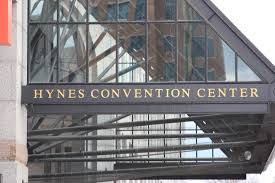
Last Friday and Saturday I attended the MMA’s annual meeting at the Hynes Convention Center, where I always get good insights and gather great information.  I posted some of them while I was there.

Hynes

This morning as I heard about the Governor releasing his proposed version of the state budget for FY17, I was recalling Governor Baker telling us last Friday morning that last year he saw that municipalities got 75% of the state’s revenue increases in FY16 passed along to them via increased local aid from the state, that this year he is proposing that we get 100% of the state’s revenue increases passed along.  This sounds a lot like the revenue sharing that the MMA has been asking the state to commit to for a long time – now it just needs to be institutionalized and made permanent.

The state’s consensus revenue numbers for FY17 predict a 4.3% increase in state revenue, so our local aid should be going up 4.3% in the Governor’s proposed budget.


MBTA’s The Ride at risk in Medfield

This from the Statehouse News Service, via John Nunnari –

State-House-smaller_1 (1)

SENIORS TURN OUT TO WARN AGAINST CHANGES THAT COULD MAKE THEM “SHUT-INS”


By Andy Metzger and Matt Murphy

STATE HOUSE NEWS SERVICE


BOSTON, DEC. 14, 2015…..If the MBTA Fiscal and Management Control Board votes to eliminate “premium” services on the Ride, a door-to-door paratransit system, about a dozen people are prepared to be arrested Monday, according to Carolyn Villers, executive director of Mass Senior Action Council.


Villers anticipates the board will not take that step, and said if the elimination of “premium” services remains a possibility, a group of activists will go to Gov. Charlie Baker’s office to protest the proposal. If the board votes Monday to eliminate it “we will be rather disruptive,” Villers told the News Service.


The MBTA is wrestling with a projected $242 million deficit in fiscal 2017. The premium service applies to areas outside the Americans with Disabilities Act-mandated para-transit zone and applies to rides that are scheduled and taken on the same day, according to Villers.


A map Villers provided shows areas deemed premium in the Ride’s service area, including Medfield, most of Concord, Topsfield and part of Weymouth. The control board is meeting Monday after a joint meeting with the MassDOT board.


Advocates are warning against any reductions in services for elders and the disabled who rely on The Ride to buy grocery and get to doctor appointments.


Mass Home Care says that any move to cut back on “premium” services will lead to more “shut-ins” cut off from help to conduct their daily lives.


“If the MBTA takes The Ride off the road, we will lose more than 210,000 trips that not only link elders to needed services — but reduces their isolation in their homes for those who no longer can drive on their own,” Candy Kuebel, of Mass Home Care, plans to tell the board.


The T has estimated that it could save $5.2 million to $10.4 million starting early next year by limiting the door-to-door Ride service to the areas specifically required by the Americans with Disabilities Act.


Mass Home Care said seniors were already impacted by Ride fare increases in 2012 and did not receive a cost-of-living adjustment in their Social Security. Use of The Ride fell 20 percent after the fare hikes, according to Mass Home Care.


“You have heard the term ‘shut-ins.’ Well, no senior wants to be called a “shut-in,” but that’s exactly what the MBTA will be creating if you put the brakes on ‘premium rides,'” Kuebel said.


END

12/14/2015


Serving the working press since 1910

http://www.statehousenews.com

Municipal reform legislation proposed

State-House-smaller_1 (1)

The Baker-Polito administration has propose legislation that includes the following changes in the ways towns operate (this is from its press release today) –


The four foundational themes for the proposed municipal modernization bill are: eliminating or updating obsolete laws; promoting local independence; streamlining state oversight; and providing municipalities with greater flexibility. The need for modernization is further reflected by the fact that the proposed bill includes amending laws that haven’t been modified since the early 1900’s.

Eliminate or Update Obsolete Laws

  • County Government Reporting: Repeals provisions of the county finance statute that require DLS to review various aspects of county government finance.
  • Electronic Advertising for Required Notices: Modifies the public notice requirement for town warrants and other required notices, including procurement, to permit municipalities to post notice in any manner prescribed or approved under the Open Meeting Law.
  • Electronic Issuance of Civil Motor Vehicle Infraction (CMVI): Adopts the necessary changes to the civil motor vehicle infraction law to allow cities and towns to issue citations electronically.
  • Accrual of Interest on Unpaid Taxes: Makes the charging of interest on overdue property taxes more equitable in terms of semi-annual versus quarterly billing.

Promote Local Independence

  • Stabilization and Revolving Funds: Broadens the revolving funds statutes to permit more flexibility in the use of such funds and to eliminate all caps.
  • Insurance Proceeds: Allows up to $150,000 of insurance proceeds that a city or town receives in payment of a claim to be used without appropriation to repair or replace damaged real and personal property.
  • Right of First Refusal for Non-Profit Property: Gives a municipality a right of first refusal if property owned by a charitable organization or a church is being sold or developed for a non-exempt purpose.
  • Liquor Licenses: Allow municipalities, except Boston, to set the quotas for liquor licenses issued to facilities (such as restaurants) permitting on-premises drinking.

Streamline State Oversight

  • Boat excise reform – The Environmental Police will provide more up-to-date boat registration and documentation to local assessors that will ensure a more efficient process for the collection of the excise tax.
  • Local Property Assessments: Decreases the frequency with which Department of Revenue (DOR) must certify that local property assessments reflect fair cash valuation from every three years to every five years.
  • State-Owned Land Valuation: Eliminates the current procedure under which the DOR values state-owned land every four years, replacing that process with a statutory formula for determining the valuation every two years after the 2017 valuation required by current law.
  • Remove DLS approval on certain abatements: Eliminate the need to have DLS approve abatement of taxes on low-valued land and abatement of taxes on properties being made available for affordable housing.

Provide Municipalities with Greater Flexibility

  • “Double poles” Enforcement Power: Allows cities and towns to enforce the statutory prohibition on keeping double poles up after ninety days, after passing a local ordinance authorizing them to do so.
  • State and Municipal Procurement Thresholds: Simplifies, clarifies and increases state and municipal procurement thresholds with various reforms designed to give municipalities more flexibility in how they procure construction contracts.
  • Debt Statutes: Increase the short-term borrowing maximum from 5 to 10 years, allow borrowing for a reimbursable federal or state grant, and increases the de minimis surplus bond balance that may be used to pay debt service.
  • Unemployment Insurance: Extends the “reasonable assurance” standard to school employees paid through the municipal budget and addresses the issue of retirees collecting unemployment.

The legislation also proposes changes that would modernize procurement at the local level and allow municipalities to use Operational Services Division contracts for construction contracts under $50,000. Once passed, this legislation will also allow cities, towns, or districts to adopt a local option that would require direct deposit of municipal employee compensation; will permit mayors and selectmen to initiate movement to optional forms of municipal administration or charter commission; will allow municipalities to exempt positions from civil service by vote of the governing body rather than through special legislation; and will enable cities and town to invest in CD’s for more than one year.

CPA meeting 12/10 at 7pm

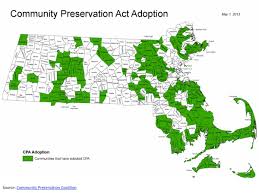
Adopting the Community Preservation Act is a way for Medfield to save money on our property taxes – it saves us money because of the state  matching money.  This year Medway is getting a state match at over 40% of what they paid in to their CPA fund, because they do the CPA at 3%, like we should be doing.  Medfield is already paying in to the money being distributed to the CPA towns, but we do not share in the payout because we have not yet adopted the CPA.

The letter below is from the newly formed town committee exploring the CPA for Medfield.

cpa


Dear Community Member,

Care about preserving Medfield’s unique character?  We urge you to join us at *7 p.m. on Dec. 10 at the Zullo Gallery* for conversation, wine, beer and bites to eat so you can learn more about the Community Preservation Act (see attached flyer for basic points).

We’ve all witnessed rapid changes taking place in Medfield over the years. Numerous historic structures have disappeared or are at great risk of disappearing; open space is  threatened by development pressures; affordable housing for our seniors is desperately needed; and a costly recreation project will be proposed to Medfield taxpayers at the 2016 Town Meeting.

At the same time, it was recently announced that $36 million in funding will be distributed to 156 towns across the Commonwealth specifically earmarked for preservation of open space, historic structures, affordable housing, and recreation, but Medfield will not be among the towns receiving any funding. Why? Because we have yet to adopt the Community Preservation Act (CPA).

In towns that have adopted the CPA, taxpayers will be receiving an almost 30% return on their investment this year alone.

So what can you do?  Join us at the Zullo Gallery on Dec. 10!  This is an opportunity to be among a group of concerned citizens working to educate fellow residents about the Community Preservation Act, and to see who might want to play a role in getting it adopted in the town of Medfield. If you’d like to attend, please just click on the registration form below (not mandatory, but helpful for planning purposes).

http://events.constantcontact.com/register/event?llr=l6t4gcdab&oeidk=a07ebv18ggm8b822a8a

Sincerely,

Chris McCue Potts
Dan Bibel
Russ Hallisey

Permissible spending / wrong spending

This is a good explanation from the DOR’s Division of Local Services’ e-newsletter, instructing we towns on what we can and cannot spend our town money –


budget-3

Municipal Expenditures: Proper Public Purposes
Mary Mitchell, Esq. (retired) – Municipal Finance Law Bureau


The following article, originally published in the February, 2006 edition of City & Town, is being republished(1) due to ongoing interest in the subject.

Increasingly over the past few years, DLS legal and accounting staffs are asked if certain expenditures made by cities and towns are allowable.  Many of these issues arise as the municipal accounting officer reviews departmental bills for payment. This article discusses the rules regarding the expenditure of public funds and makes recommendations for ensuring proper payment.

Authority to Spend

The authority for cities and towns to spend money arises under Section 5 of MGL c. 40. That section provides that:

“[a] town may at any town meeting appropriate money for the exercise of any of its corporate powers; provided, however, that a town shall not appropriate or expend money for any purpose, on any terms, or under any conditions inconsistent with any applicable provision of any general or special law.(2)”

Cities and towns are free to exercise any power or function, except those denied to them by their own charters or reserved to the State, that the Legislature has the power to confer on them, as long as the exercise of these powers is not inconsistent with the Constitution or laws enacted by the Legislature.(3) In general, the properties and purposes for which cities and towns are authorized to spend are not specified, but rather they include any necessary expenditures arising from the exercise of their powers or functions.

Public Purpose Limitation

Cities and towns can spend only for public purposes. Public funds cannot be used for private purposes. Thus, cities and towns have the right to spend money for any purpose where the public good will be served but not where the expenditure of money is directly for the private benefit of certain individuals. This principle is expressed in the Massachusetts constitution and in numerous cases.(4)

In some situations, however, the expenditure of public funds advances both public and private interests.  In those situations, if the dominant motive for the expenditure is a public one, incidental private benefits will not invalidate the expenditure.(5) If, however, the dominant motive is to promote a private purpose, the expenditure will be invalid even if incidentally some public purpose also is served.(6)

Prohibitions Against Certain Expenditures

In addition to the general prohibitions against spending money for any purpose or under any conditions inconsistent with any general or special law, there are two other prohibitions on municipal spending.

1.) Anti-Aid Amendment

The first is a prohibition against the giving of money or property by a city or town to or in aid of any individual, association or corporation embarking upon any private enterprise. This prohibition is referred to as the Anti-Aid Amendment.(7) It provides in pertinent part:

“No grant, appropriation or use of public money or property or loan of credit shall be made or authorized by the Commonwealth or any political subdivision thereof for the purpose of founding, maintaining or aiding any infirmary, hospital, institution, primary or secondary school, or charitable or religious undertaking which is not publicly owned and under the exclusive control, order and supervision of public officers or public agents authorized by the Commonwealth.”

This amendment prohibits the use of public money or property by cities and towns for the purpose of maintaining or aiding any institution or charitable or religious undertaking that is not publicly owned. The kinds of expenditures barred by the amendment are those that directly and substantially benefit or “aid” private organizations in a way that is unfair, economically or politically.(8)

The prohibition against using public funds for private organizations includes any grants, contributions or donations made by a city or town to an organization for the specific purpose of directly supporting or assisting its operations. However, the Anti-Aid Amendment does not preclude a city or town from purchasing specific services from private organizations in order to carry out a public purpose.(9) Further, as with the public purpose limitation discussed above, if an expenditure is for a public purpose but also incidentally benefits a private organization, the expenditure generally will not violate the Anti-Aid Amendment.(10)

2.) Wines, Liquors, Cigars

In addition to the prohibition against the use of public funds for private organizations, there is also a prohibition against the use of public funds to purchase alcohol and tobacco under Section 58 of MGL c. 44.

What Constitutes a Public Purpose?

The question of what constitutes a permissible “public purpose” has been discussed in many cases.(11) The cases “do not, however, establish any universal test.”(12) Instead, they generally stress the certainty of benefits to the community.(13) Thus, the basic test is whether the expenditure is required for the general good of the inhabitants of the city or town.(14)

Generally speaking, local government spending for the following purposes satisfies the public purpose test:

  • Wages and Benefits – Cities and towns have the right to spend reasonable amounts to execute their powers and duties.(15) This right includes the right to compensate people for services rendered.(16)  Compensation for services may include sick leave and vacations.(17) Cities and towns also have the right to settle employment or other claims that may be made upon them arising out of their administration of their municipal affairs.(18)
    .
  • Merit Awards – Cities and towns may spend reasonable amounts on awards for students.(19) Cities and towns may also spend reasonable amounts on retirement gifts, plaques, merit service payments, and other similar awards for municipal employees and officials. The expenditure of public money in recognition of services rendered, even though such expenditure of money is directly for the private benefit of certain individuals, is a public purpose where the benefit is conferred as an appropriate recognition of distinguished and exceptional service, such that the public welfare will be enhanced or the loyalty and productivity of the other employees will be promoted.(20)

By contrast, local government spending for these purposes does not satisfy the public purpose test:

  • Gifts and Gratuities – Since public money can only be expended for public purposes, cities and towns have no power to appropriate money for gifts or gratuities to persons whose situations may appeal to public sympathy.(21)
    .
  • Lobbying – Cities and towns cannot spend money to influence elections.(22)

Frequently Asked Questions

We are asked frequently whether the following expenditures are for public purposes and may be paid:

  • Alcohol purchased by a department to be served at a fundraiser or for compliance testing

The language of MGL c. 44, s. 58 is prohibitive. It reflects an explicit Legislative disapproval of spending municipal resources for alcoholic beverages and cigarettes. We have advised, however, that they can be purchased for the limited purpose of compliance testing for law enforcement or public health purposes. For example, local officials may stage purchases of alcohol or cigarettes by minors from local stores using money for anti-smoking or underage drinking campaigns. We think those expenditures would not be prohibited because they are not for consumption but to ensure compliance with local regulations and state statutes.

  • Floral arrangements for funerals of municipal employees

Funeral flowers, sympathy cards and other expenses for the customary expression of sentiments that are incidental to the social relationships that employees develop during work are not expenses made for public purposes. Those expenses are not within a municipal department’s budget simply because the relationships developed in conjunction with the conduct of departmental business. Therefore, it is not appropriate to pay for funeral flowers or sympathy cards out of municipal funds. They should be covered from private donations.

  • Plaques and gifts awarded to persons retiring from municipal government or to current employees for outstanding performance during the year

Retirement gifts, plaques, merit payments and other similar awards given to retirees or employees may be considered a proper purpose for the expenditure of municipal funds if they are not excessive and are used to (i) encourage continuity of service or to (ii) enhance efficiency and loyalty or to (iii) promote productive performance. Similarly, appreciation gifts to volunteers and unpaid interns may also be considered a proper municipal expenditure if the purpose is to promote volunteerism and they are in token amounts. The expense of holding a retirement party should be covered from private donations because it is mostly an expression of support and appreciation from colleagues. However, paying for the cost of dinner for the retiree would be appropriate. By contrast, paying for the dinners, gifts or party expenses for any attendees other than the retiree would generally be considered a mere gratuity and not for a proper municipal purpose.

  • Refreshments at public functions, such as a ribbon cutting ceremony, an opening day, a reception or banquet, or a presentation

Refreshments and meals may be served at legitimate public functions such as ribbon-cutting ceremonies, opening day events, receptions or banquets, presentations, and the like so long as they are modest and served to provide a benefit for the city or town by helping to keep the participants alert and receptive. The public function must be a department sponsored public event for authorized persons and related to the public purpose of the department sponsoring it. If the function is open only to select groups or individuals, or spouses are in attendance, it is more likely to be considered a private celebration of primarily a social character.

  • Refreshments served to employees, such as coffee made available at a staff meeting or light refreshments provided to election workers or lunch served at an all-day training program or planning meeting

Refreshments and meals may be served to officers or employees of the city or town or persons doing business with the municipality at official meetings or official events so long as they are modest and benefit the city or town by helping to keep the participants alert and receptive or by enhancing efficiency by avoiding loss of time and disruption if participants leave the premises. The official meeting or event must be a department or municipal sponsored meeting or event for authorized persons and related to the public purpose of the sponsor.

  • Reimbursement of a department head for attending retirement or department dinners or parties or for attending other events not sponsored by the department or municipality

Employees and officials may be reimbursed for the expenses of attending functions that relate to their public duties. The function must relate to and further the public purpose of the department sponsoring it. If a department head incurs an expense in the performance of official duties in the representation of his or her department, the expense is reimbursable. Thus, the cost of a department head’s attendance at a retirement dinner or department party at which he or she is the official presenter of token gifts or awards, as a representative of his or her department, would be a legitimate municipal expense. If the event is arranged and funded by department employees or others, and attendance is optional, then the event would seem to be social and for private purposes rather than for public ones. In addition, if the event is outside of the municipality and not related to the department or the community, the use of municipal funds would not be appropriate.

  • Reimbursement of purchases or expenses incurred during authorized travel or while engaged in authorized business

Employees who are out of town or working late on business or attending training programs or conferences on behalf of a city or town may be reimbursed for out-of-pocket costs of travel, meals, and other purchases incurred in furtherance of that objective and as a term or condition of employment. These types of expenses are permissible municipal expenses, provided that attendance is authorized by the municipal official or board with the authority to expend department funds. Included within the realm of reimbursable expenses are: (i) registration charges, including late fees; (ii) local surcharges and taxes on car rentals; (iii) taxes and tips on meals, and (iv) taxes on petty cash purchases, so long as these expenses are reasonable and not in conflict with the reimbursement policies of the city or town. Late registration fees are considered to be part of the contract price for the training program or conference. Similarly, surcharges, taxes and tips are a necessary and customary part of legitimate expenses incurred by employees in the course of their employment.

  • Payment of expenses associated with fundraising for departments, e.g., mailings seeking donations or door prizes and refreshments at a fundraising event.

Municipal departments, like the Parks and Recreation Department, the Library, the Historic Commission, or the schools, may want to raise money for a particular departmental project. Generally, solicitations for donations or financial support from private individuals or businesses must be conducted in accordance with MGL c. 268A, the Conflict of Interest law. In that regard, the State Ethics Commission has issued Advisory Opinion EC-COI-12-1, which provides guidance on fundraising by municipal employees. We suggest that you consult with your municipal counsel for advice before proceeding with fundraising.

Fundraising activities that go beyond applying for grants or soliciting contributions and involve expending municipal funds or receiving funds in exchange for goods are more problematic. For example, if the Recreation Department wants to sell T-shirts as a fundraiser, then it would need an appropriation from which to purchase the T-shirts(23) and proceeds from their sale would be general fund revenue, which could not be spent without an appropriation.(24) Arguably, such a transaction is more in the nature of a profit on a business transaction than a donation. We believe the better practice in such a case is to have a private entity, such as a “friends” group, sponsor and conduct the fundraising event and turn over the net proceeds to the municipal department as a grant or gift under MGL c. 40, s. 53A. Under section 53A, the funds are held by the treasurer in a separate gift account and may be spent by the department for the purposes of the gift without appropriation upon the approval of the board of selectmen, or the city manager and city council, or the mayor and city council, as appropriate.

An additional issue arises when municipal resources are used to assist a private group’s fundraising activities even if the activities will benefit the municipality. Pursuant to the Anti-aid Amendment, public funds may not be used to assist a private organization’s fundraising activities, no matter how worthy or related the cause. For example, the school department cannot pay to print and mail a flyer by the Parent-Teachers Organization to promote a car wash it is holding to raise monies for the schools.

Sharing the expenses of a community event co-sponsored by a municipal department and a private organization also raises Anti-Aid Amendment issues because the event is not under the exclusive control of public officers.

Conclusion

DLS strongly recommends that municipalities develop clear, written policies or guidelines, preferably by bylaw or ordinance, about allowable expenditures. For example, to ensure the municipality receives the maximum benefit from its sales tax exemption, there should be clear standards about when department employees can purchase necessary supplies or materials and be reimbursed. Travel expenses are often set out in collective bargaining agreements, but the municipality should also adopt a policy to cover travel expenses for nonunion employees. DLS also recommends that standards be established for merit awards, food or fundraising expenses. Finally, DLS recommends that accounting officers advise managers and employees at the beginning of each fiscal year of the municipality’s policies. This will help to avoid uncertainty or disagreements about whether certain expenditures are permissible and payable.


1.) With appropriate updating.

2.) MGL c. 40, s. 5 applies to cities under MGL c. 40, s. 1.

3.) See art. 2 of the Amendments to the Massachusetts Constitution, as appearing in art. 89, sec. 6, 7 and 8.

4.) Mass. Const., Art. XI, c. 2, s. 1 and Art. IV, c. 1, s. 1; Lowell v. City of Boston, 111 Mass. 454, (1873);Matthews v. Inhabitants of Westborough, 131 Mass. 521 (1881); Mead v. Acton, 139 Mass. 341 (1885); In re Opinion of Justices, 190 Mass. 611  (1906); Whittaker v. Salem, 216 Mass. 483 (1914); In re Opinion of Justices, 240 Mass. 616  (1922); Jones v. Inhabitants of Town of Natick, 267 Mass. 567 (1929); D.N. Kelley & Son, Inc. v. Selectmen of Fairhaven, 294 Mass. 570 (1936); Quinlan v. City of Cambridge, 320 Mass. 124 (1946); Eisenstadt v. County of Suffolk, 331 Mass. 570 (1954).

5.) See e.g., Opinion of the Justices, 313 Mass. 779 (1943) (“The fact that the owner of a way may profit by expenditures ‘for the removal of snow and ice’…does not invalidate expenditures…where the primary purpose of such removal is the benefit of the public to whose use the way is open.”).

6.) See e.g., Salisbury Land & Improvement, Co. v. Commonwealth, 215 Mass. 371 (1913) (act was unconstitutional where it authorized the condemnation of lands for a public beach and the sale or leasing to private parties of any portion not needed for the public beach).

7.) The Anti-Aid Amendment is contained in Section 2 of Article 46 of the Amendments to the Massachusetts Constitution (as amended in 1974 by Art. 103 of the Amendments).

8.) See Commonwealth v. School Committee of Springfield, 382 Mass. 665 (1981); Helmes v. Commonwealth, 406 Mass. 873 (1990).

9.) See e.g., Commonwealth v. School Committee of Springfield, 382 Mass. 665 (1981)(court held that the purchase of services by the school committee from private schools to meet the needs of special education students did not run counter to the anti-aid amendment because the purpose was to fulfill the obligation of the public school system which had chosen not to provide the services in its own schools).

10.) See e.g., Benevolent & Protective Order of Elks, Lodge No. 65 v. Planning Board of Lawrence, 403 Mass. 531 (1988) (the taking of property for urban renewal project did not violate the Anti-Aid Amendment because the taking had a public purpose to eliminate a blighted open area and any benefit to college was incidental to that purpose).

11.) See Eisenstadt v. Suffolk County, 331 Mass. 570, 573 (1954) and cases cited.

12.) Allydonn Realty Corp. v. Holyoke Housing Authority, 304 Mass. 288,  292 (1939).

13.) See e.g., Opinion of the Justices, 313 Mass. 779, 784-85 (1943) (expenditures for snow removal from private ways that were open to public were for the public purpose of accommodating the public as to means of travel and transportation); McLean v. Boston, 327 Mass. 118 (1951) (expenditure of money for the development of housing for residents made homeless by tunnel expansion was for the public purpose of addressing a local emergency caused by a public improvement); Opinion of the Justices, 349 Mass. 794 (1965) (payments by city for retirement of certain alcoholic beverage licenses was for the public purpose of cleaning up of the city).

14.) See Opinion of the Justices, 337 Mass. 777, 781 (1958).

15.) See e.g., M.G.L. c. 40, s. 4 (“A city or town may make contracts for the exercise of its corporate powers…”); Leonard v. Middleborough, 198 Mass. 221 (1908).

16.) See e.g., Curran v. Holliston, 130 Mass. 272 (1881); Attorney General v. Woburn, 317 Mass. 465 (1945).

17.) See e.g., Quinlan v. City of Cambridge, 320 Mass. 124 (1946); Wood v. Haverill, 174 Mass. 578 (1899).

18.) See Matthews v. Westborough, 131 Mass. 521 (1881); Jones v. Natick, 267 Mass. 567 (1929); George A. Fuller Co. v. Commonwealth, 303 Mass. 216 (1939).

19.) See e.g., M.G.L. c. 71, s. 47 (specifically authorizes the expenditure of municipal funds for student prizes).

20.) See e.g., Eisenstadt v. County of Suffolk, 331 Mass. 570 (1954); In re Opinion of Justices, 190 Mass. 611 (1906); see also In re Opinion of Justices, 240 Mass. 616  (1922).

21.) See e.g., Matthews v. Westborough, 131 Mass. 521, 522 (1881); Whittaker v. Salem, 216 Mass. 483(1914); Jones v. Inhabitants of Town of Natick, 267 Mass. 567 (1929).

22.) See e.g., Anderson v. Boston, 376 Mass. 178 (1978), appeal dismissed, 439 U.S. 1060, 99 S. Ct. 822 (1979).

23.) MGL c. 44, sec. 31.

24.) MGL c. 44, sec. 53.

CPA match at 29.7% – none for us

The state announced its matching money for Community Preservation Act towns – 29.7% on average, but Medway which is in for 3% CPA surcharges got over 40% matching money.

Medfield residents continue to pay our money in so it can go to other towns, and leave our potential state matching money on the table.


Statewide CPA Trust Fund Distribution Announced

State-House-smaller_1 (1)

November 17, 2015:  The Massachusetts Department of Revenue (DOR) has released the Community Preservation Trust Fund distribution for each CPA municipality. The revenue from this year’s trust fund distribution comes from two sources: document recording fees collected over the past 12 months at the state’s Registries of Deeds, and a transfer of $10 million from the state’s FY2015 budget surplus. In total, more than $36 million will be distributed to the 156 communities eligible for a distribution this year.

All CPA communities will receive a 29.7% match on round one of the trust fund distribution this year.  Communities that adopted CPA with a full 3% local property tax surcharge will receive a higher percentage.  Click on the link below for details on this year’s distribution and a way to view the specific amounts for each community.

> SPREADSHEET: Click here for the CPA Trust Fund distribution amount for each municipality <

PLEASE NOTE:  According to a statement from DOR, this year’s CPA Trust Fund distribution amount for most communities was adjusted due to an update to FY2015 data after last year’s distribution was made. The adjustment was necessary because the surcharge percentage was incorrectly calculated in one community and another community did not notify DOR that they had adopted CPA and were therefore not included in last year’s distribution.

Met with MA Secretary of Housing & Economic Development

Jay Ash

Yesterday morning Mike Sullivan, Richard DeSorgher and I met with Jay Ash, the Massachusetts Secretary of Housing and Economic Development to learn what the state can do to assist Medfield with our economic development and housing issues (see photo above).

After that four town meeting (Wrentham, Norfolk, Walpole, and Medfield) at the Wrentham Town Hall, Medfield showed the Secretary the former Medfield State Hospital site (see photo below).

Jay Ash at MSH

My main take aways:

  • the opportunities to get the MSH site listed as ready for development on the MassEcon 100,
  • to have the man who talks to more developers than any one else in the state be able to talk up our site, and
  • to just have the man who administers all state economic development and housing monies know about the MSH site and its expected development so he can help get the word out and be knowledgeable if and when grant applications are made.

Interesting tidbits learned during the discussions:

  • Electric Time reportedly could not complete on price with what The Parc was willing to pay for that site, so an industrial site became a residential site, and
  • Walpole is negotiating with an international company to site a facility that will provide 600 jobs – company is looking for 90% reduction in its taxes.

Community Compact

community compart-2

The Baker Polito administration initiated the Community Compact  to provide state assistance to towns.  Medfield has now applied to be a member, and specified the three areas with which Medfield wants state assistance:

  • capital planning
  • transperancy
  • citizen engagement

This was the state response today to Medfield’s application to join –


Dear Kristine Trierweiler,

Thank you for completing the Community Compact application for Medfield. Your application is now with the Division of Local Services for review.

According to your submission the Best Practices you will commit to are:

Best Practice #1 –  Financial Management

Capital Planning // Best Practice: Funding capital needs on a regular basis is critical to maintaining publicly-owned assets and delivering services effectively. The community develops and documents a multi-year capital plan that reflects a community’s needs, is reviewed annually and fits within a financing plan that reflects the community’s ability to pay.

Best Practice #2 (optional) –  Information Technology

Transparency // Best Practice: There is a documented open data strategy including timelines for making municipal spending and budget information accessible from the city or town website in a machine readable and graphical format.

Best Practice #3 (optional) –  Information Technology

Citizen Engagement // Best Practice: There is a documented citizen engagement strategy for deployment of technology solutions, including a public communication strategy and a professional development strategy to ensure that internal resources can effectively engage with users via technology.

As part of the review process, the Division of Local Services may be contacting Kristine Trierweiler with follow-up questions.  Once the review of your application is complete and the best practice area(s) are agreed upon, I will be in touch regarding the signing of the Compact. We are looking forward to working with your community as you continue to strive toward excellence!

Sincerely,

Sean Cronin
Senior Deputy Commissioner of Local Services
Division of Local Services

Selectman education

This past month I attended two almost day long programs designed to educate municipal officials.  The state and the MMA both seek to assist local officials to learn how to do a better job.

MMA

  • Massachusetts Selectman Association (part of the Massachusetts Municipal Association). There I got an update on legislation issues from the MMA’s executive director, heard from the Lt. Governor about their Community Compact initiative (Medfield will join), and attended workshops on budgeting and communicating.

DLS

  • Massachusetts DOR’s Division of Local Services annual legal update, which DLS describes below –  I opted for the OPEB workshop.

Local Officials Gather to Hear “What’s New in Municipal Law”
Municipal Finance Law Bureau

Over 400 local officials attended the 30th annual “What’s New in Municipal Law” seminars held on October 1, 2015 at The Log Cabin Banquet and Meeting House in Holyoke and October 8th, 2015 at The Lantana in Randolph.

In the morning general sessions, they heard Municipal Finance Law Bureau attorneys Kathleen Colleary, Bureau Chief, Gary Blau, James Crowley, John Gannon, Donald Gorton and Patricia Hunt review new legislation and recent court and Appellate Tax Board cases. In the afternoon session, the attorneys led three workshops on (1) assessing condominiums and time-shares, and collecting personal property taxes, (2) adopting and amending municipal operating and capital budgets; and (3) negotiating and funding retiree post-employment benefits.

If you were not able to attend one of this year’s seminars, the morning presentation materials and afternoon workshop booklets are available on our website.

We look forward to seeing you at the 31st annual “What’s New in Municipal Law” seminar next fall. The dates to save are Thursday, September 29th, 2016 at The Log Cabin Banquet and Meeting House in Holyoke and Thursday, October 6th, 2016 at The Lantana in Randolph.

$49K more state $ for last winter

Governor Baker has proposed $25m. of supplemental FY15 monies for snow relief, that would mean $49,474 for Medfield.  This is the full alert this afternoon from the Massachusetts Municipal Association:


Friday, July 17, 2015

GOV. BAKER SIGNS $38.1B FY 2016 STATE BUDGET TO FUND KEY MUNICIPAL AND SCHOOL AID PROGRAMS

***BREAKING NEWS: GOV. BAKER ALSO PROPOSES $25M IN SNOW AND ICE RELIEF FUNDS IN YEAR-END FY 2015 BUDGET FILING***

NEW STATE BUDGET INCREASES UGGA BY $34M, ADDS $18.1M TO FULLY FUND SPECIAL EDUCATION CIRCUIT BREAKER, RESTORES $7.5M TO REGIONAL SCHOOL TRANSPORTATION, FUNDS CH. 70 MINIMUM AID AT $25 PER STUDENT, ADDS $3.6M TO CHARTER SCHOOL REIMBURSEMENTS – HOWEVER, GOVERNOR REDUCES KINDERGARTEN DEVELOPMENT GRANTS DOWN TO $1 MILLION – A $17.6M REDUCTION

GOVERNOR BAKER ALSO FILED A YEAR-END FISCAL 2015 BUDGET WITH $25M TO ASSIST CITIES AND TOWNS WITH SNOW AND ICE DEFICITS, TO BE DISTRIBUTED THROUGH THE CHAPTER 90 FORMULA – LEGISLATIVE APPROVAL IS NEEDED

Seventeen days into the new fiscal year, Governor Charlie Baker signed the first full-year state budget into law, a $38.1 billion spending plan for fiscal 2016 that will increase overall expenditures by approximately 3.5 percent, as the state closes a projected $1.8 billion structural budget deficit by restraining spending and eliminating up to 5,000 state jobs through a hiring freeze, attrition and an early retirement program.

In terms of local aid, the Governor’s signature pen inked into law strong progress on many important municipal priorities, including the significant victory in embracing the $34 million increase in Unrestricted General Government Aid as proposed by Gov. Baker and requested by the MMA. Beyond that, the Governor has approved more than $30 million to key municipal and education aid accounts and reimbursement programs above the amount he initially in his March budget proposal. This is a major victory for cities and towns that was made possible by your strong advocacy.

In a win for Gov. Baker, the Legislature’s budget includes a three-year suspension of the Pacheco anti-outsourcing law for the MBTA, and provides for a Fiscal and Management Control Board to oversee the MBTA.

GOV. PROPOSES $25M IN SNOW AND ICE RELIEF FUNDS FOR CITIES AND TOWNS ACROSS THE STATE:

AT THE SAME TIME THE GOVERNOR SIGNED THE FISCAL 2016 STATE BUDGET INTO LAW, HE ALSO FILED A YEAR-END FISCAL 2015 SUPPLEMENTAL BUDGET TO CLOSE THE BOOKS ON THE YEAR THAT JUST ENDED. BECAUSE OF THE RECORD-BREAKING WINTER AND RECORD-BREAKING SNOW AND ICE DEFICITS AT THE LOCAL LEVEL, GOV. BAKER’S FISCAL 2015 SUPPLEMENTAL BUDGET INCLUDES $25 MILLION IN ADDITIONAL RELIEF FOR CITIES AND TOWNS, WHICH WOULD BE DISTRIBUTED STATEWIDE THROUGH THE CHAPTER 90 FORMULA.

PLEASE CLICK HERE TO SEE YOUR COMMUNITY’S SHARE OF GOV. BAKER’S PROPOSED $25 MILLION IN SNOW AND ICE RELIEF FUNDING, INCLUDED IN HIS BUDGET SUBMISSION LETTER: http://www.mass.gov/anf/docs/anf/fy15/fy2015-supplemental-filing-letter.pdf

PLEASE CALL YOUR LEGISLATORS AND ASK THEM TO SUPPORT THE GOVERNOR’S PROPOSAL FOR SNOW AND ICE RELIEF FUNDS

FINAL FY 2016 STATE BUDGET FUNDS KEY MUNICIPAL AND SCHOOL AID PROGRAMS:

IN TERMS OF THE FISCAL 2016 STATE BUDGET THAT GOV. BAKER SIGNED INTO LAW TODAY, HERE IS A SUMMARY OF THE KEY MUNICIPAL AND SCHOOL FUNDING INCLUDED IN THE FINAL BUDGET:

$34 MILLION INCREASE IN UNRESTRICTED MUNICIPAL AID
In a major win for cities and towns, the final budget provides $979.8 million for UGGA, a $34 million increase over current funding.  This will be the largest increase in discretionary municipal aid in nearly a decade.  Every city and town will see their UGGA funding increase by 3.6 percent.

GOVERNOR EMBRACES $18.3 MILLION INCREASE TO FULLY FUND SPECIAL EDUCATION CIRCUIT BREAKER
In another victory for cities and towns, the final budget would fully fund the Special Education Circuit Breaker program with $271.7 million, an $18.3 million increase above fiscal 2015.  This is a vital program that every city, town and school district relies on to fund state-mandated services.

BUDGET ADDS $7.5 MILLION FOR REGIONAL SCHOOL TRANSPORTATION REIMBURSEMENTS
The final budget would restore $7.5 million to regional school transportation funding, providing a total of $59 million for the upcoming year.  Last November, former Gov. Patrick used his 9C budget powers to reduce this important program down to $51.5 million.  The final budget is a major step forward for communities with regional school districts.

GOVERNOR BACKS CHAPTER 70 MINIMUM AID OF $25 PER STUDENT
The final fiscal 2016 budget provides a $111.2 million increase in Chapter 70 education aid, with a provision providing every city, town and school district an increase of at least $25 per student, an improvement over the $20 per student amount originally proposed in March.  The appropriation is $5.9 million more than the recommendation in March, and the increase would be used to ensure the $25 per student minimum aid level and to slightly accelerate the implementation of the target share provisions enacted in 2007.

GOVERNOR REDUCES KINDERGARTEN DEVELOPMENT GRANTS DOWN TO $1 MILLION, A CUT OF $17.6 MILLION
This account has faced serious challenges during the fiscal 2016 budget process, with Gov. Baker’s original budget proposal including no funding for the Kindergarten Development Grant program, and the Senate budget funding the program at $1 million.  Only the House budget maintained funding at the fiscal 2015 level of $18.6 million.  177 communities and school districts depend on these funds, and the MMA and cities and towns will be calling on their legislators to override this $17.6 million reduction, and restore the funds.

BUDGET INCREASES CHARTER SCHOOL REIMBURSEMENTS BY $3.64 MILLION, ACCOUNT REMAINS UNDERFUNDED
Under state law, cities and towns that host or send students to charter schools are entitled to be reimbursed for a portion of their lost Chapter 70 aid.  The state fully funded the reimbursement program in fiscal 2013 and 2014, but is underfunding reimbursements by approximately $34 million this year (fiscal 2015).  The final fiscal 2016 budget will provide a $3.64 million increase up to $80.5 million, however this is still $50 million below full funding.  The action to increase funding is appreciated, yet it is important to remember that the account is still significantly underfunded.

STATE ADDS $1 MILLION TO McKINNEY-VENTO REIMBURSEMENTS
The final budget would add $1 million to increase fiscal 2016 reimbursements for the transportation of homeless students to $8.35 million.  The account remains below the full reimbursement called for under the state’s unfunded mandate law, yet this would be the first increase since fiscal 2013.

PAYMENTS-IN-LIEU-OF-TAXES (PILOT), LIBRARY AID ACCOUNTS, METCO, AND SHANNON ANTI-GANG GRANTS, VOKE ED TRANSPORTATION
PILOT PAYMENTS: The final budget would level-fund PILOT payments at $26.77 million.
LIBRARY AID: The budget funds library grant programs at $18.9 million, a $400 thousand increase above fiscal 2015 post-9C levels.
METCO: The final budget funds METCO at $20.14 million, a $2.23 million increase above fiscal 2015 post-9C levels.
SHANNON GRANTS: The final appropriation is $7 million, the same amount proposed by Gov. Baker in March.
VOCATIONAL EDUCATION TRANSPORTATION: Last year, Gov. Patrick wiped out all fiscal 2015 funding using his 9C powers, and the good news is that the fiscal 2016 budget would restore $1.75 million for fiscal 2016.

STATE MAY PROVIDE UP TO $10M FOR COMMUNITY PRESERVATION ACT FUNDING
During fiscal 2015, 156 cities and towns collected the local Community Preservation Act (CPA) surcharge and are eligible for state matching grants in fiscal 2016.  The Division of Local Services (DLS) estimates that the balance in the state trust fund will be sufficient to provide a first round match of only 18 percent of the surcharge levied by each city and town.  This would be the lowest state match in the program’s history.  Knowing this, the fiscal 2016 state budget would devote up to $10 million of any fiscal 2015 year-end state budget surplus to supplement the fiscal 2016 state match, a significant boost for all CPA communities.  The final amount available will depend on the final fiscal 2015 surplus, which will not be determined until later this autumn.

Please Call Your Legislators and Thank Them for a Strong Fiscal 2016 State Budget that Makes Progress on Key Municipal and Education Aid Priorities, and Ask Them to Support Gov. Baker’s Proposed $25 Million for Snow and Ice Funding in the Fiscal 2015 Year-End Budget