This one is on Preservation Way. The sign is unique, so I am guessing it was a trail required by the Planning Board or the ZBA as part of the permitting process, in which case the developer, Ralph Costello, would have made up the sign.
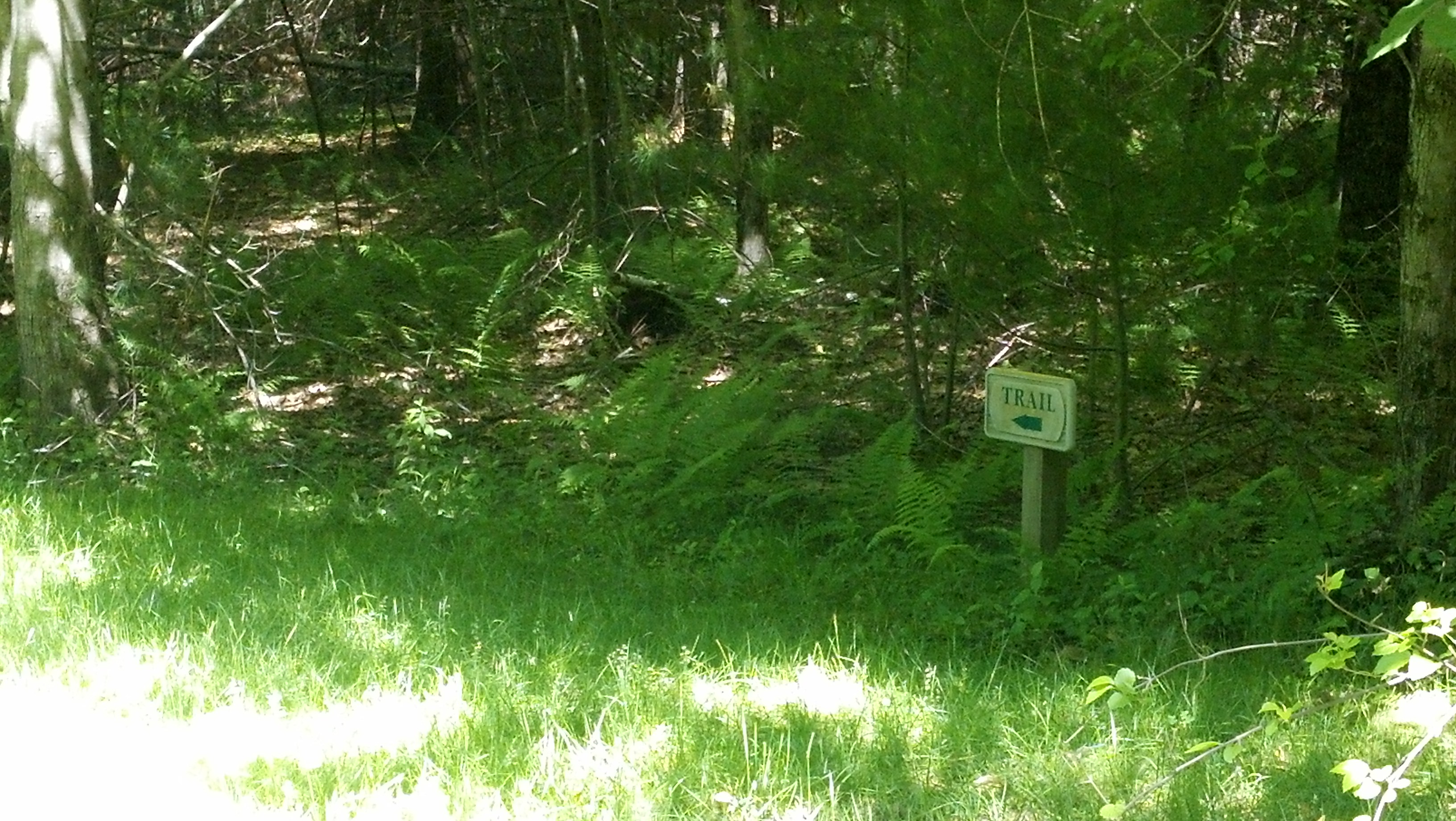

This one is on Preservation Way. The sign is unique, so I am guessing it was a trail required by the Planning Board or the ZBA as part of the permitting process, in which case the developer, Ralph Costello, would have made up the sign.
Posted in Uncategorized
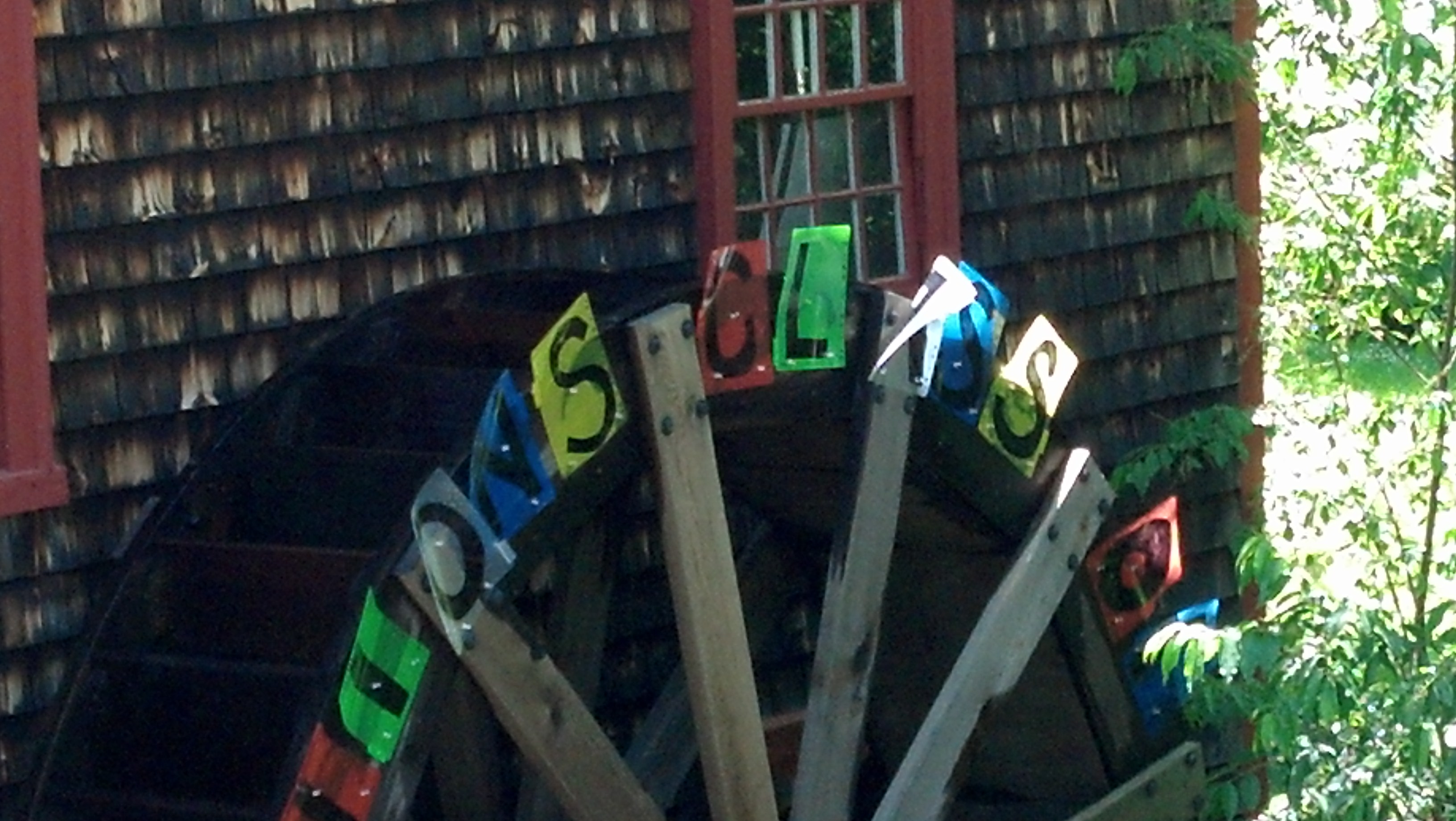
Saw this on the Kingsbury Grist Mill’s water wheel this morning. "Congratulation class of 2014."
Comments Off on Best message to the graduates
Posted in Uncategorized
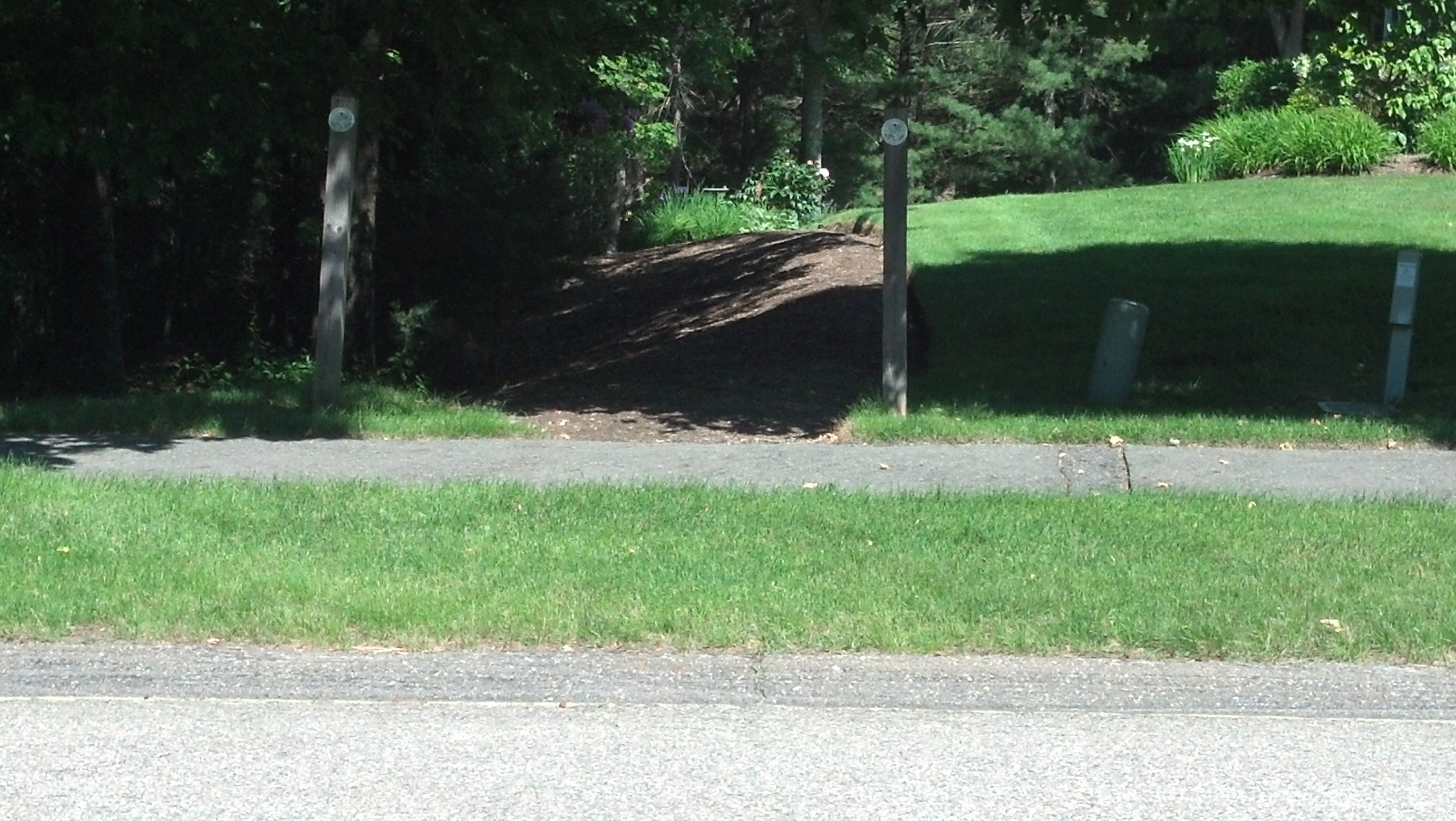
Jade Walk trailhead actually has Conservation Commission small round 3" signs on twin posts. Good marking, but it is not likely that one would know what it is unless one knew what you were looking for.
Comments Off on Trailhead series #2
Posted in Uncategorized
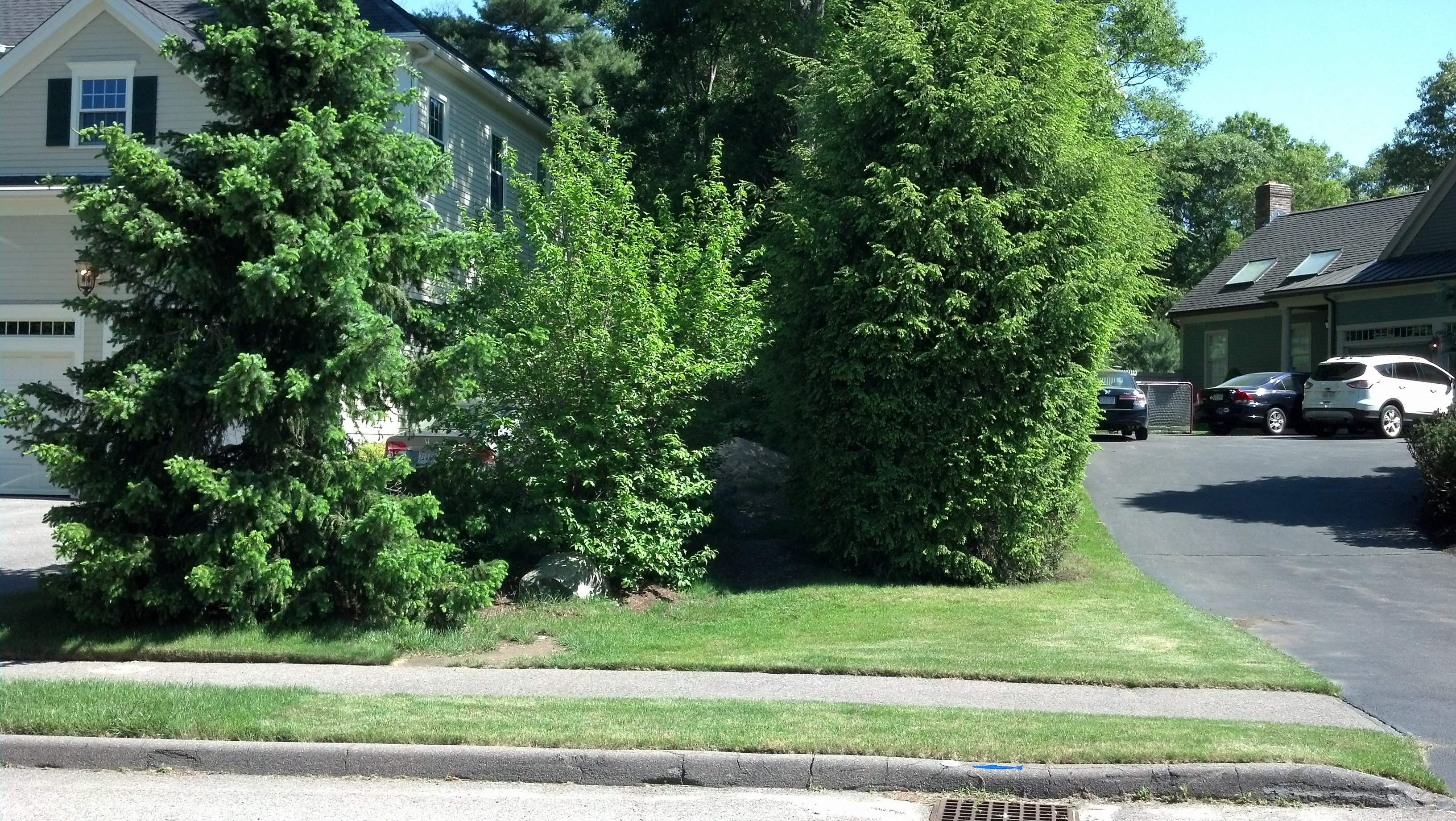
One of the things the town needs to do better is to map the trails in town and clearly mark the trailheads. This trail into Rocky Woods from Boyden comes out between the two evergreens on the right. Hard to find this trail unless you already know where it is. This is a perfect example of why the town needs to better mark all the trailheads.
Comments Off on Unmarked trailhead
Posted in Uncategorized
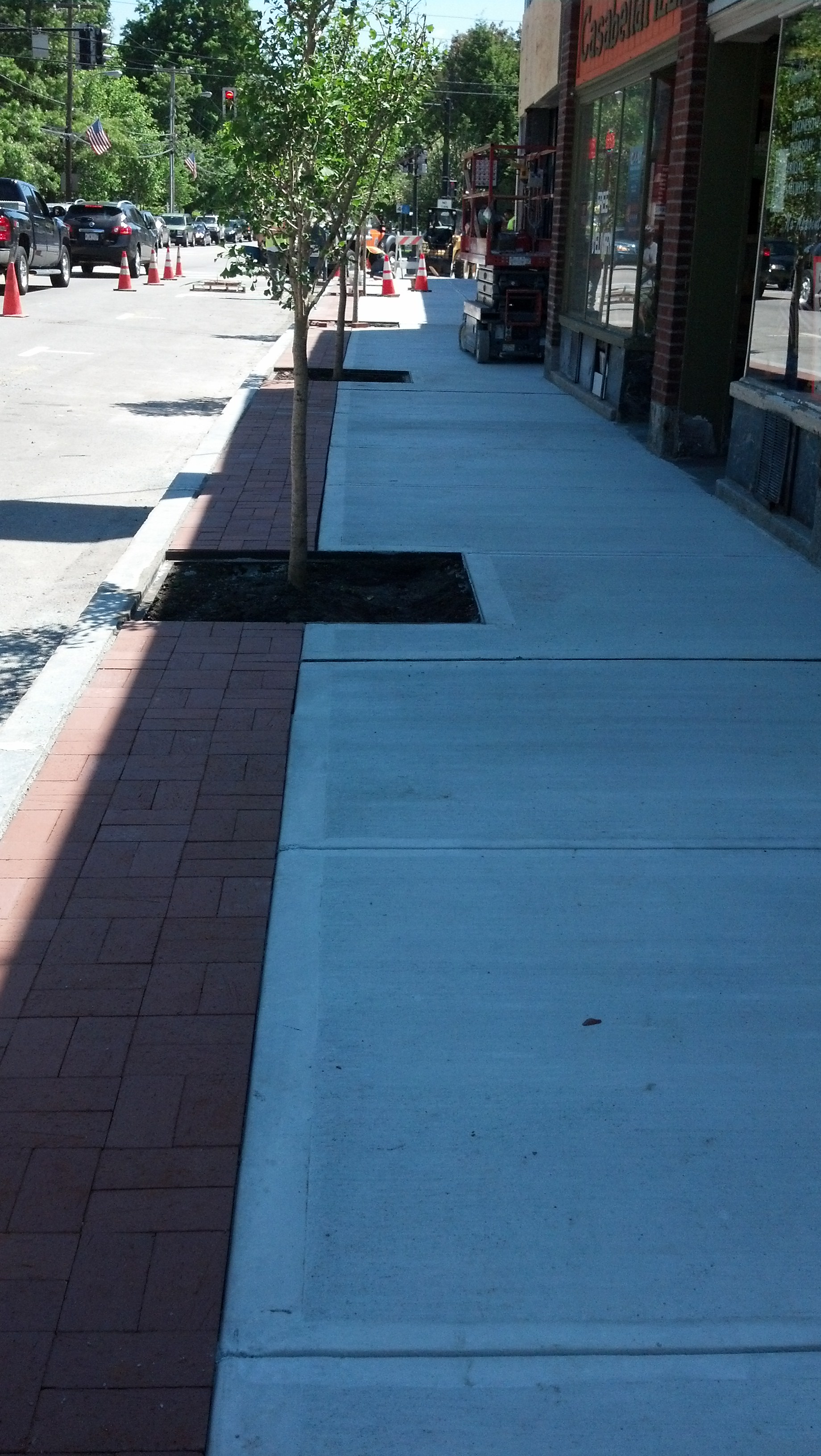
New sidewalk just needs a few bricks cut to fit to be done.
Comments Off on Sidewalk almost done
Posted in Uncategorized
Email from Bill Massaro –
Comments Off on Odyssey House Demolition Prep In Process
Posted in Uncategorized
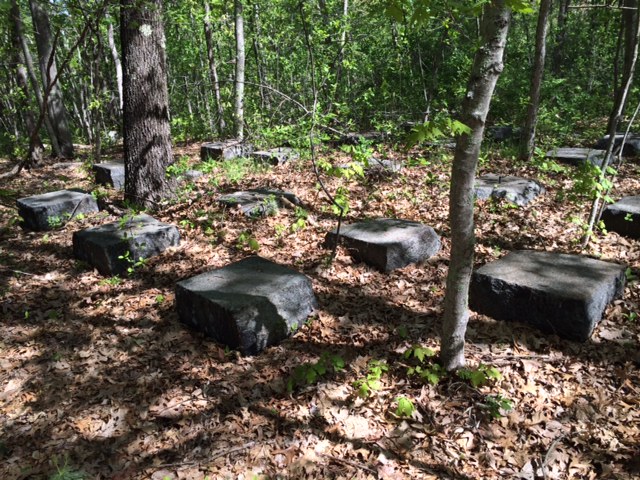
The MBTA today agreed to give Medfield a set of sixteen granite blocks that once probably formed the foundation of a railroad water tower. The town will use them for seating at the Straw Hat Pocket Park. Below is the exchange of emails that made it happen.
6/06/2014 1:03PM
RE: Re-purposing MBTA granite blocks into park seats
Boyle, Mark E.
===========================================================
Mr. Boyle,
Thank you! Unbelievable, but every dealing I have had with the MBTA have been so incredibly fast and efficient, that you get it done in less than one day! I hope we get back to you soon about the Bay Colony Rail Trail.
PS – We will send you pictures of the Straw Hat Park and the MBTA’s granite blocks when the park opens.
Best,
Pete
Osler L. Peterson, Attorney at Law
— Original Message—
To: “‘Osler L. Peterson'”
From: “Boyle, Mark”
Sent: 6/06/2014 12:26PM
Subject: RE: Re-purposing MBTA granite blocks into park seats
>> Mr. Peterson:
>>
>> This request is APPROVED. Please work with Patricia Barrett (copied on this
>> message) to complete the license/right of entry paperwork to access MBTA property
>> and remove the blocks.
>>
>> Thank you.
>>
>> Mark
>>
>> Mark E. Boyle
>> Assistant General Manager
>> Real Estate and Asset Development
>> MBTA
>> Ten Park Plaza, Suite 5720
>> Boston, MA 02116
>>
>> —–Original Message—–
>> From: Osler L. Peterson
>> Sent: Friday, June 06, 2014 11:12 AM
>> To: Boyle, Mark
>> Cc: Michael Sullivan; Kristine Trierweiler; Jean Mineo; Robert Kennedy
>> Subject: Re-purposing MBTA granite blocks into park seats
>>
>> Mr. Boyle,
>>
>>
>> I am a fourteen year selectman in Town of Medfield, and you and I had cursory
>> dealings in 2009 over the Bay Colony Rail Trail (copies of those emails appear
>> below). Despite how quickly I then thought the Bay Colony Rail Trail process might
>> happen, please know that Medfield is still hoping to make it a reality.
>>
>>
>> However, I am writing today about a second matter in the Town of Medfield, in hopes
>> that you are the proper person at the MBTA with whom to deal. The Town of Medfield
>> would like to re-purpose a group of about sixteen granite blocks owned by the MBTA
>> that originally served as a foundation for what we believe was a water tower that
>> serviced the railroad off West Mill Street, in what was then know as Medfield Junction
>> (the intersection of our north/south and east/west railroad lines), along what is now the
>> MBTA’s Bay Colony right of way in Medfield.
>>
>> With the MBTA’s permission, we propose to use the granite blocks as seating
>> elements in a new town park in our downtown, and feel that the historical tie in to
>> Medfield’s past would make them both especially interesting and appropriate.
>>
>> I have attached photos of both the granite blocks and the town owned land in our
>> downtown where the new pocket park is proposed. The granite blocks are about two
>> feet square on top, and a perfect height to serve as seats. The proposed pocket park
>> is along North Street in our downtown, and in the photos you can see Zebra’s
>> Restaurant to the left, Starbuck’s to the right, and our Town House at the right rear
>> behind the Starbuck’s.
>>
>> I would be happy to show anyone from the
>> MBTA the granite blocks, if that would help.
>>
>> Thank you in advance for your courtesies and assistance with this matter. Please let
>> me know if you have any questions.
>>
>>
>>
>> Best,
>> Pete
>> Osler L. Peterson, Attorney at Law
>> PETERSON | Law
>> 580 Washington Street, Newton, MA 02458
>> 66 North St, PO Box 358, Medfield, MA 02052 T – 617.969.1500 T – 617.969.1501 (direct)
>> M – 508-359-9190 F – 617.663.6008 osler.peterson@verizon.net
>> http://mysite.verizon.net/osler.peterson/
>> Medfield Information at: Facebook, https://medfield02052.wordpress.com/ &
>> http://twitter.com/Medfield
>> — Original Message—
>> To: “Osler L. Peterson”
>> From: “Boyle, Mark”
>> Sent: 6/29/2009 3:51PM
>> Subject: RE: Bay Colony tracks rail/trail bike path
>>
>> >> The MBTA is fast, but perhaps not quite that fast! At some point when
>> >> you’re ready, I’d suggest a meeting or workshop with interested
>> >> parties to discuss our rail trail program with municipalities. As I
>> >> mentioned, the MBTA conveys (via long-term 85-year leases) unused
>> >> railroad right of ways to local communities at no cost for conversion
>> >> to rail trails. We do stipulate and reserve the right to re-claim the
>> >> property if needed for a future transportation use. We have a growing
>> >> list of successful conversions.
>> >>
>> >> Thank you and I look forward to working with you on this important
>> >> effort.
>> >>
>> >> Mark E. Boyle
>> >> Assistant General Manager for Development MBTA Ten Park Plaza Boston,
>> >> MA 02116
>> >> —–Original Message—–
>> >> From: Osler L. Peterson
>> >> Sent: Tuesday, June 30, 2009 3:38 PM
>> >> To: Christian Donner; Connors, Thomas; Michael Sullivan;
>> >> Subject: RE: Bay Colony tracks rail/trail bike path
>> >>
>> >> Tom,
>> >>
>> >> Thanks for all the detailed information. I just spoke to Mark Boyle
>> >> (a copy of my notes are attached and copied in below). and he says if
>> >> I write him a letter he will send me the keys. Easiest real estate
>> >> deal I have ever done. So what’s holding Needham up?
>> >>
>> >>
>> >> Best,
>> >> Pete
==============================================
>> >> Telephone call to Mark Boyle, Director of Real Estate MBTA 10 Park
>> >> Plaza Boston, MA 02116
>> >> June 30, 2009 (3:09pm)
>> >>
>> >> 1. Related contact with Tom Connors with respect to Newton to
>> >> Medfield rail trail
>> >> 2. Procedure with MBTA =
>> >> a. Town writes a letter to the MBTA to ask about acquiring
>> >> the land
>> >> b. MBTA lease land for 85 years at no cost
>> >> c. Town of Medfield must agree to do the repair and
>> >> maintenance
>> >> i. What does that require? ==> “not much”
>> >> 3. Mass Highway and TIP funds to develop a rail trail
>> >> 4. MBTA has a boilerplate lease agreement that K&P finds acceptable
>> >> 5. Another model = Mass Central RR right of way ran through nine
>> >> towns, and DCR stepped in to design and develop the rail trail
>> >> 6. Bay Colony has to relinquish its freight rights to the line
>> >> first
>> >> a. It will require them to spend about $10,000 for a RR
>> >> attorney to do the paper work
>> >> b. He spoke to Bernie Regan, president of Bay Colony RR
>> >> recently
>> >> i. He says he does not want to continue to use it
>> >> ii. They so have a repair and maintenance
>> >> obligation, so they have an incentive to cease control
>> >> 7. G. L. c. 21E issues
>> >> a. Legislature amended statute recently to protect towns
>> >> acquiring old RR beds for rail trails, as long as town is following
>> >> best practices
>> >> b. Liability reverts from the town to last owner, which
>> >> would be MBTA, but by statute they sluff it off onto the owner prior
>> >> to them
Comments Off on MBTA gives town granite blocks for park
Posted in Downtown
I am holding an evening mini-town hall on Alder Road next Thursday, June 12, and my hosts informed me that I could let people know that anyone is welcome to come. Just please RSVP to JeanMineo@aol.com if you want to come.
Comments Off on 6/12 mini-town hall
Posted in On being a selectman, Select Board matters
From Medfield Green’s Megan Sullivan –
Have you been to the swap at the transfer station yet this season? It is a busy place…busier than last year.
There is a dedicated group of volunteers who work to keep it neat and at the end of the day work to minimize the number of items that are put in the trash for incineration. All items that can be are sorted for a few charities or recycling.
This week in particular they are short staffed for the clean-up on Saturday. It starts around 2:30 and they are usually done in an hour. Can you help?
Volunteers help all day but the clean-up time is particularly important.
If volunteers aren’t available to do the clean-up, EVERYTHING ends up in the TRASH. And that is a bummer for so many reasons.
It’s going to be a beautiful afternoon tomorrow. Why don’t you come meet some new friends!
You can stop by anytime and help. Just look for a volunteer. If you can’t help this week, could you or a family member volunteer another time? For more info contact N.nancyirwin@verizon.net
Megan Brott Sullivan
Comments Off on Swap help
Posted in Recycling & Solid Waste
The Division of Local Services’ e-newsletter today has an excellent article on how Needham is dealing with its Other Post Employment Benefits (OPEB) liability. OPEB is mainly future health insurance costs for town employees, in their retirement. Medfield’s OPEB liability has been estimated by our actuaries at about $40 m. The town started to fund the liability in the past two years, but still at a level way below the estimated $1.5 m. per year that Medfield’s OPEB liability grows each year, so we are continuing to fall behind and our OPEB liability continues to get larger. The state has a study committee looking into solutions, but none that have been mentioned get around the need to pay what has already been incurred.
Best Practice: How is Needham Addressing OPEB?
Rick Kingsley – Municipal Data Management and Technical Assistance Bureau Chief
With many local officials struggling to understand and plan for looming liabilities related to Other Post-Employment Benefits (OPEB), we thought it would be beneficial to explore the approach that the Town of Needham has taken to address these future obligations. A community that fails to act on its OPEB liabilities runs the risk that future health insurance expenses will become so large that they eventually overwhelm other budget priorities and have a detrimental impact on municipal services.
Background
For those that may not be familiar with this topic, other post-employment benefits refer to benefits other than pensions that employees receive after they retire. By far, the most significant of these is health insurance, but may also include life insurance, dental or other benefits paid after an employee’s retirement. In 2004, the Governmental Accounting Standards Board (GASB) issued directives concerning how these liabilities must be presented in a municipality’s financial statements going forward (Pronouncements 43 and 45).
Similar to an employee’s pension benefits, OPEB are earned during the employee’s active working career, but are not actually paid until after the employee retires. GASB directed that these future costs no longer be accounted for on a pay-as-you-go basis, but rather these liabilities must be recognized as they are earned or accrued. In other words, employees earn the right to receive health insurance and other benefits upon retirement incrementally over their active working career. Therefore, on an accrual basis, the annual cost of an employee’s health insurance includes both the municipal share of the actual premium paid on the employe’s behalf plus a portion of the projected post-retirement benefit earned in the current accounting period.
These projections are done by actuaries who look at several variables to estimate these future costs. These variables include a projected rate of inflation for future medical costs, assumptions about employee turnover, age at retirement, Medicare eligibility, election rates for various plans at retirement, and mortality. Factored in as well are the respective cost sharing agreements for splitting benefit costs between the municipality and retirees. To attribute these future costs to current accounting periods, it is necessary to calculate a present value of these future benefits using a discount rate. As we will discuss later, the discount rate has a tremendous impact on the calculation of OPEB liabilities.
The important estimates that emerge from an actuarial analysis include the total present value of future OPEB benefits and the required contribution that must be appropriated annually to address this liability over multiple years. The projected cost of future benefits discounted to a present value is referred to as the Actuarial Accrued Liability (AAL). This amount is then attributed to the current and prior fiscal years based on when these benefits were earned. The amount of the AAL is reduced in cases where there are OPEB reserves set aside. The Annual Required Contribution (ARC) is the portion of projected benefits earned in or attributable to the current fiscal year (normal cost), plus an additional amount necessary to amortize the unfunded actuarial accrued liability for prior years. The amortization period cannot be more than 30 years.
Needham’s Experience
Well before the formal issuance of GASB’s OPEB pronouncements, Needham was among the first municipalities in the state to recognize the need to take action regarding OPEB liabilities. In January of 2002, the Legislature approved the Town’s special act to establish a post retirement insurance liability trust fund. The act was modeled after similar legislation that had been approved earlier for Bedford.
An initial appropriation of $380,000 was achieved through savings that arose in the contributory pension appropriation and a favorable actuarial analysis of the retirement system. An additional $380,000 was appropriated to the trust fund in each subsequent year from FY2002 through FY2007. In FY2005, when the town converted its health insurance coverage to the West Suburban Health Group, it saved more than $1 million. Half of the savings ($500,000) were also appropriated to the trust fund.
By 2007, with a modest amount set aside in the trust, the Town reviewed its pay-as -you-go retiree health insurance appropriation in relation to its Annual Required Contribution. It found that with the retiree health insurance appropriation, plus the annual set aside of $380,000, that the town was only about $120,000 away from appropriating its full ARC. The important message here is that retiree health costs can be paid as part of the annual appropriation of the ARC with the difference between the ARC and retiree health costs reserved in the trust for future liabilities.
Through a second special act approved by the Legislature in 2008, the Town amended the investment standard for assets in the trust from investments that are legal for savings banks to the more flexible prudent investor standard. This change opened the door to more lucrative investment opportunities and put the fund on equal footing with the investments allowed for a pension fund. It also made it far more likely that the town could achieve its targeted rate of return on these investments of eight percent.
As noted earlier, the discount rate used to calculate the present value of future OPEB costs plays a significant role in the size of the liability. For communities contributing their full ARC, GASB allows a discount rate of eight percent based on the estimated long-term yield on plan investments needed to pay future benefits. For plans that are pay-as-you-go and not funded at all, a discount rate of four percent or less is required, reflective of the much lower rate of return on general assets. For partially funded plans, a blended discount rate can be used.
To illustrate the importance of this discount/investment rate in these actuarial calculations, Needham’s unfunded actuarial accrued liability as of July 1, 2007 was $76.4 million using a four percent discount rate and it dropped to $43.6 million with the use of an eight percent discount rate.
Investing with PRIT
With the adoption of the prudent investor standard, Needham began analyzing its options for investments and investment advisory services. For many years, the Town’s pension assets had been invested with state pension assets in the Pension Reserves Investment Trust (PRIT). Through this long-standing relationship, Town officials were aware that the PRIT fund had an average annual rate of return of more than 9.6 percent since its inception in 1985. At the time, however, there was no legal mechanism to combine the Town’s OPEB funds with its pension assets or otherwise invest these funds with PRIT, so the Town was forced to invest its OPEB trust on its own.
With the approval of Outside Sections 50 and 57 of the FY2012 state budget (Chapter 68 of the Acts of 2011), cities, towns, districts, counties and municipal lighting plants were authorized to invest their OPEB trusts with PRIT. To do so, entities must accept MGL c.32B, s.20 to establish a trust fund and seek approval from the Board of Trustees of the state’s Health Care Security Trust (HCST) to invest in the State Retiree Benefits Trust Fund (SRBTF, MGL c.32A, s.24). The SRBTF is invested in the PRIT Fund’s General Allocation Account (GAA), also known as the PRIT Core Fund. This fund contains about $58 billion in state and local pension assets, as well as the state’s OPEB assets. For communities like Needham with existing OPEB trusts authorized by special act, similar permission to invest in PRIT was contained in an amendment to MGL c.32A, s.24.
To receive approval from the HCST Board to invest in PRIT requires that a municipality submit several documents as part of the application process. This documentation includes evidence of adoption of MGL c.32B, s.20 or special legislation, acknowledgement of investment risk and an investment agreement and a designation of a custodian. The custodian can be either the municipal treasurer or the HCST. If the treasurer is to be the custodian, the SRBTF should be identified as an authorized investment vehicle for the treasurer. Lastly, the Board requires indication of the commitment to fund these liabilities. The Board has set a minimum initial investment requirement of $250,000 and a non-binding goal for qualified governmental entities to reach $1,000,000 over three years.
Earlier this fiscal year, Needham liquidated its OPEB investments and transferred the resulting cash balance to PRIT. The town now has about $15 million in assets invested with PRIT, or roughly 20 percent of the total municipal OPEB assets invested with PRIT. Needham officials identified several factors that influenced their decision:
Conclusion
Needham’s experience provides several important takeaways for other cities and towns that might not be as far along with OPEB. Although GASB has not mandated a funding requirement for OPEB liabilities, it is important for municipalities to start saving for these costs as soon as possible. Through the adoption of MGL c.32B, s.20, a community can establish an OPEB trust, use the prudent investor rule for trust assets and invest these funds with PRIT. Even if your community is not in the position to contribute the full ARC each year, modest and manageable contributions are better than nothing. Strategies to set aside one-time revenues, appropriation balances or other windfalls and appropriate them to the trust as available or identifying an appropriate recurring revenue stream can make a significant difference.
Once funding sources have been identified, it is important that these assets are invested with a long-term outlook similar to pension assets. A simple, low cost way to meet these long-term funding needs is to apply for authorization to invest these funds in the state?s PRIT fund. The tremendous diversification of investments, the annual performance of this fund over time for pension assets and the similarities between the long-term investment horizons for pension and OPEB liabilities make the PRIT fund an excellent vehicle for the investment of OPEB trusts. For additional information about PRIT, please contact Senior Client Services Officer Paul Todisco at 617-946-8423 or ptodesco@mapension.com.
Needham Town Manager Kate Fitzpatrick, Assistant Town Manager/Finance Director David Davison and Treasurer/Collector Evelyn Poness contributed to this article.
Comments Off on DLS on OPEB
Posted in Budgets
Medfield Select Board member
I started this blog to share the interesting and useful information that I saw while doing my job as a Medfield select board member. I thought that my fellow Medfield residents would also find that information interesting and useful as well. This blog is my effort to assist in creating a system to push the information out from the Town House to residents. Let me know if you have any thoughts on how it can be done better.
For information on my other job as an attorney (personal injury, civil litigation, estate planning and administration, and real estate), please feel free to contact me at 617-969-1500 or Osler.Peterson@OslerPeterson.com.
 | boldlyquality1014b85… on VOTE TODAY – (got it rig… |
| boldlyquality1014b85… on VOTE TODAY |
 | pmdunner on Crosswalks & Sidewalks at… |
 | EILEEN DESORGHER on Vote Djuna Perkins for DA |


