Category Archives: Zoning

86 Plain Street 40B filed

Per the following email just received, a 40B application has been filed for a 24 unit development at 86 Plain Street –

NEW Comprehensive Permit Application: 86 Plain St – 30 DAYS TO COMMENT

Dear Boards and Staff Members,

As is required by G.L. c.40B §21, and 760 CMR 56.05(3), I am hereby sending notice of a new Comprehensive Permit Application the Zoning Board received on February 28, 2025. 86 Plain Street, LLC and Benjamin Virga (the Applicant) have proposed to build twenty-four (24)

homeownership units on approximately 14.86 acres of land located at 86 Plain Street. Six of these units will be affordable to those making 80% or less of the AMI.

The Application materials can be found here.

The hearing will be scheduled for April 2, 2024, at 6 pm, most likely in person. The remote hearing provision is set to expire at the end or March, and it may or may not be extended by the time I need to post the legal ad. The most likely scenario here is an in-person meeting. I’ll notify you when we’ve agreed on a space.

The agenda will be posted on the website soon.

Since the ZBA acts in place of municipal boards whose local regulations would normally apply, obtaining comments from you is critical for the ZBA to reach an informed decision and craft appropriate conditions of approval. The following boards, commissions, and departments are receiving a copy of the comprehensive permit application and are asked to attend the public hearing in addition to providing written comments (as outlined on Page 18 of the Ch 40B Handbook):

  • -Planning Board
  • -Conservation Commission (Finn, I believe this will also come your way as an NOI)
  • -Board of Health (Nancy, can you please forward to the Board?)
  • -Affordable Housing Trust
  • -Board of Water or Sewer Commissioners (Moe/Sarah, can you please forward to the Board?)
  • -Department of Public Works
  • -Police Department
  • -Fire Department
  • -Building Commissioner (Dana, can you please forward this to the Historic Commission?)
  • and, in addition to the Handbook’s requirements, I’m also sending a copy to the Select Board, as they’re included in the request for waivers list.

Please note the attached list of waivers and let me know if these are not acceptable to you and your Board/Department. If we do not hear from you, the ZBA has the authority to grant any and all waivers they consider reasonable. The list of waivers can be found here. Finn, please note that many of these waiver requests are wetlands related— please flag this with the Commission accordingly.

Please review the attached application and plans and provide written comments to us before the hearing on April 2nd. I strongly encourage you to attend the hearing if you have any comments/feedback for the Zoning Board.

Thank you, everyone!

Maria De La Fuente
Medfield Director of Land Use and Planning
459 Main Street
Medfield, MA  02052
(508) 906-3027
mdelafuente@medfield.net  

MAPC issues report on IE district

MAPC’S PLAN CAN BE ACCESSED HERE.

My thumbnail summary: 2 recommendation for zoning changes:

Recommendation #1: Reflect Priority Uses in the Zoning (= rewrite use regulations.)

Recommendation #2: Update Dimensional Regulations (= rewrite the dimensional regulations.)

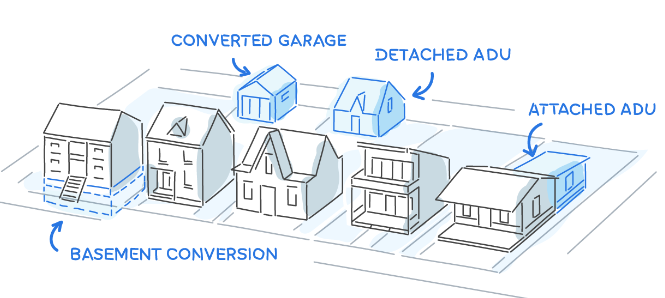
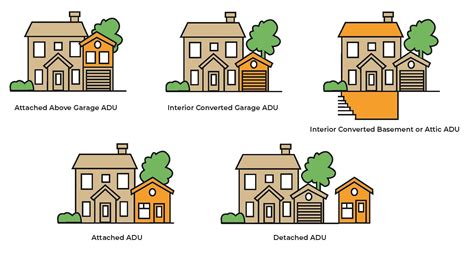
ADU’s – coming to a Medfield yard near you in February

Accessory Dwelling Units (ADU’s), or small homes of up to 900 sq. ft., become permitted as of right in Massachusetts starting 2/2/2025 on any single family lot, subject only to “reasonable regulations.” The recently enacted Affordable Homes Act (AHA) stated the new rules, adding ADU’s onto the exemptions from local zoning that already exist for educational, religious, and agricultural uses. The permitted reasonable regulations cited are “dimensional setbacks and the bulk and height of structures and . . . short-term rental.”

STATUTE

The Affordable Homes Act, Chapter 150 of the Acts 2024

SECTION 7. Section 1A of chapter 40A of the General Laws, as appearing in the 2022 Official Edition, is hereby amended by striking out the definition “Accessory dwelling unit” and inserting in place thereof the following definition:-
“Accessory dwelling unit”, a self-contained housing unit, inclusive of sleeping, cooking and sanitary facilities on the same lot as a principal dwelling, subject to otherwise applicable dimensional and parking requirements, that: (i) maintains a separate entrance, either directly from the outside or through an entry hall or corridor shared with the principal dwelling sufficient to meet the requirements of the state building code for safe egress; (ii) is not larger in gross floor area than 1/2 the gross floor area of the principal dwelling or 900 square feet, whichever is smaller; and (iii) is subject to such additional restrictions as may be imposed by a municipality, including, but not limited to, additional size restrictions and restrictions or prohibitions on short-term rental, as defined in section 1 of chapter 64G; provided, however, that no municipality shall unreasonably restrict the creation or rental of an accessory dwelling unit that is not a short-term rental.
SECTION 8. Section 3 of said chapter 40A, as so appearing, is hereby amended by adding the following paragraph:-
No zoning ordinance or by-law shall prohibit, unreasonably restrict or require a special permit or other discretionary zoning approval for the use of land or structures for a single accessory dwelling unit, or the rental thereof, in a single-family residential zoning district; provided, that the use of land or structures for such accessory dwelling unit under this paragraph may be subject to reasonable regulations, including, but not limited to, 310 CMR 15.000 et seq., if applicable, site plan review, regulations concerning dimensional setbacks and the bulk and height of structures and may be subject to restrictions and prohibitions on short-term rental, as defined in section 1 of chapter 64G. The use of land or structures for an accessory dwelling unit under this paragraph shall not require owner occupancy of either the accessory dwelling unit or the principal dwelling; provided, that not more than 1 additional parking space shall be required for an accessory dwelling unit; and provided further, that no additional parking space shall be required for an accessory dwelling located not more than 0.5 miles from a commuter rail station, subway station, ferry terminal or bus station. For more than 1 accessory dwelling unit, or rental thereof, in a single-family residential zoning district there shall be a special permit for the use of land or structures for an accessory dwelling unit. The executive office of housing and livable communities may issue guidelines or promulgate regulations to administer this paragraph.

ANALYSIS

The law firm Mirrick O’Connell last week sent out an emailed update that summarized the legislative change that permits ADU’s as follows:

  1. Accessory Dwelling Units Permitted By-Right (Sections 7 and 8)

The AHA amends the Zoning Act by prohibiting towns and cities from restricting accessory dwelling units (ADUs) in single-family zoning districts. ADUs, sometimes known as in-law apartments, now fall under the protection of M.G.L. c. 40A, Section 3, which exempts religious, educational, and other uses from local zoning.

One ADU is now allowed by-right on each lot in a single-family zoning district, subject to “reasonable regulations”, which may include non-discretionary site plan review, certain dimensional controls, Title 5 septic regulations, and restrictions on short-term rentals.

The AHA provides that an accessory dwelling unit must have a separate entrance (interior or exterior) that complies with the State Building Code and may not be larger than half the gross floor area of the principal dwelling or 900 square feet, whichever is smaller. The AHA prohibits restrictions on owner-occupancy and rentals of ADUs, eliminating the requirement in many towns and cities that in-law apartments may only be used by an owner’s close relative.

In addition, towns and cities must allow additional ADUs in single-family zones through a special permit process.

The ADU provisions take effect on February 2, 2025, so municipalities have a few months to consider zoning amendments consistent with the AHA.

MBTA Communities Act Zoning guest post by Chris Potts

Guest post by Chris Potts, shared from her Medfield Insider –

Click here to see the better formatted version that Chris did, which does not look as good here    


Special Edition – March 26, 2024IMPORTANT UPCOMING PUBLIC HEARINGS


There’s a lot to digest with the MBTA Communities Zoning article coming up for a vote at this year’s Town Meeting on Monday, May 6 at 7 p.m. in the Medfield High School gym.
Here are two chances to learn more, ask questions, and become better informed far in advance of the meeting:

Public hearings via Zoom

1. Thursday, March 28 (6:30 p.m. bylaw review, 7:30 p.m. public hearing)

2. Monday, April 1 (7:30 p.m.)

(Do you plan to attend? Would an in-person information session before Town Meeting be helpful? Your feedback here will be relayed to town officials.Questions can also be directed to Maria De La Fuente, Director of Land Use and Planning; phone 508-906-3027).

Three quick takeaways
MBTA Communities Act only requires special zoning to be created — there is no town mandate to build housing.

Towns retain a certain amount of control over what gets built and where under MBTA Communities Zoning, and no land is taken against an owner’s will because of the law.
Towns become ineligible for state funds due to failure to enact MBTA Communities Zoning by their deadline (Dec. 31, 2024 for Medfield).

Much is at stake with MSH
As noted by Abby Goldenfarb, VP at Trinity Financial, the firm charged with redeveloping the former Medfield State Hospital (MSH) site, “It is imperative that the Town prioritizes compliance with the state housing law requirements imposed by the MBTA Communities Act.” 

In a recent letter to the Select Board, Goldenfarb explained that if a successful town meeting vote is not achieved — as mandated by law — the town will no longer be eligible for the millions of dollars of state grants on which Trinity depends for creation of MSH infrastructure and other redevelopment needs.

Town officials have acknowledged that the new law has created unique challenges for Medfield – a town that has been diligently increasing affordable housing, and created the MSH redevelopment master plan to help achieve its objectives. It has taken more than 10 years for the MSH vision to come to fruition.

“We realize there has been some frustration with the mandate, but the upcoming vote is not the time for any of us to be tilting windmills. For Medfield especially, so much of our state hospital progress is on the line if we do not comply with the new law,” said Select Board member Gus Murby at a recent forum. “Thanks to the work of the Planning Board, we have a solid path forward that will allow us to adhere to the mandate, while still respecting the character of our town.”


A short explanation
The word “zoning” can often make eyes glaze over, but it simply means establishing a set of rules for how land is used, regulating the structures that go on it, and guiding development decisions.

Massachusetts cities and towns have been given the authority to adopt their own ordinances and bylaws. However, in the case of MBTA Communities Zoning, the state is mandating that Medfield and many other Commonwealth communities enact specific multi-family housing zoning by right based on proximity to MBTA transit services.

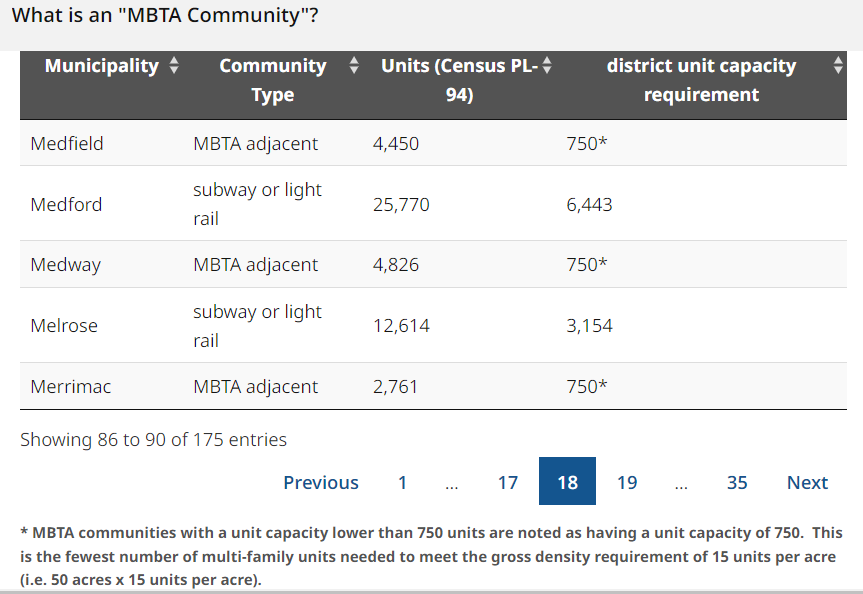
Medfield has been deemed an “adjacent town” because of its proximity to the Walpole and Norfolk MBTA Commuter Rail.

No mandate to build
As stressed by town officials, the MBTA Zoning law in no way requires that multi-family housing must be built – only that the town rules and regulations (via zoning bylaws) must permit the development plans.
However, unlike the 40B law, the MBTA Communities Act gives towns and cities more flexibility to establish certain parameters and exclusions, which could involve protection of wetlands, historic structures and conservation land.


Arriving at a proposal
Based on Medfield’s “Adjacent Community” status, the state is requiring the town to create zoning that would allow for a total of 50 acres providing a minimum capacity of 750 multi-family units (once again, this refers to zoning only — there is no actual requirement for the units to be built). 

The total unit quota can be reached a variety of ways. For example, no town or city is expected to create one site that can house all of the required units – the state allows multiple districts to be created, as long as certain requirements are met for density, size and contiguity.
After the Medfield Planning Board analyzed all of the variables, allowances, and restrictions underlying the law and took into consideration public feedback, it settled on three town areas (“districts”) to propose for MBTA Zoning compliance at Town Meeting:

The PARC
Medfield Gardens (with Olde Village Square)
Core downtown

With substantial amounts of multi-family housing already located in the districts identified for rezoning, town planners have been able to minimize potential negative impacts of new construction that may be pursued down the road as a result of the MBTA Communities law.
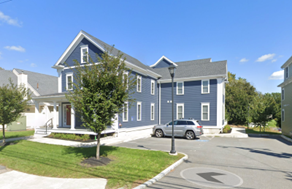
(Pictured: 71 North St., a relatively new multi-housing development with eight units in the core downtown district.)

The path forward
Developing the MBTA Zoning proposal for the town has taken substantial time and effort, and has benefited from the guidance of independent consultants. Multiple officials have recently stated they believe the Town Meeting proposal is the best possible path forward for Medfield to adhere to the mandate.

“We encourage Medfield community members to attend an upcoming hearing and review as much information as possible beforehand, so that questions and concerns can be addressed far in advance of Town Meeting,” said Town Administrator Kristine Treirweiler.

Frequently Asked QuestionsTown Website
Medfield Insider | 7 Curve St., Medfield, MA 02052Unsubscribe christine.mccue@verizon.netUpdate Profile | Constant Contact Data NoticeSent by editor@medfieldinsider.ccsend.com powered byTry email marketing for free today!

ADU’s

This is from the METROPOLITAN AREA PLANNING COUNCIL’s (MAPC) monthly newsletter that came today, and contains great information on accessory dwelling units (ADU). I think ADU’s make sense for Medfield as a way to both create the small housing units that are missing from our current housing stock, while also likely reducing our property taxes.

It would require a zoning change, but if implemented, it would add a lot of wealth to current home owners by effectively creating a new buildable lot on their existing property next to their home, all at little cost to the town because the owner builds the ADU. If the ADU’s are limited to a small enough size, they will not likely be suitable for families, so will mainly be occupied by single individuals or couples. However, ADU’s would increase density, so the town would need to decide whether it wants the increased density that the ADU’s would cause.

The ADU’s would be built by each property owner, so no cost there for the town to have the ADU’s appear. The town would just need to open the door to the ADU’s by changing our existing zoning.

https://living-little.mapc.org/

ADU example from the article

Chipolte permitting begins at Shaw’s Plaza

From Town Planner, Sarah Raposa –

Departmental Review
Chipotle
(ZBA Special Permit & PB Site Plan Approval)
TO:    
Staff
FYI to Boards, Commissions, Committees

 
Comments Due By: 05/09/22 (noon)            
ZBA Hearing Date: 05/11/22 (7 pm)
PB Hearing Date: 05/16/22 (7 pm)
                  
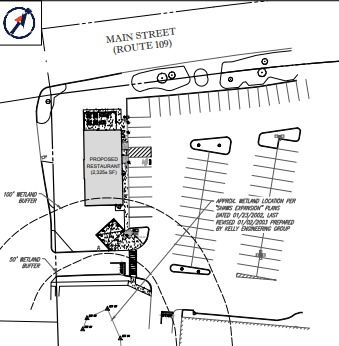
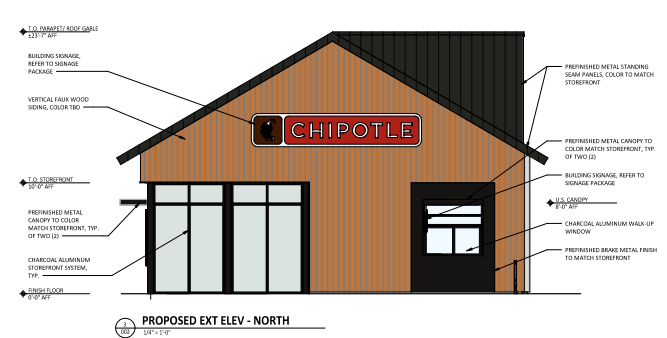
– R K Medfield, LLC (owner/applicant) seeks the following relief from the PB: RK Medfield, LLC (owner/applicant) seeks Site Plan Approval for the project known as “Chipotle.” The proposed project is includes the construction of a new 2,325 +/- sf building on the northwestern corner of the site, as well as associated sidewalks, landscaped areas, stormwater management components, utilities, and an outdoor seating patio. Minor parking modifications to include ADA parking are also proposed. The property is located at 230 Main Street (at the Shaws Plaza which is the subject of Site Plan Approvals from January 29, 1979 and November 23, 1987.
 
PB APPLICATION: http://ma-medfield.civicplus.com/DocumentCenter/Index/691
 
– R K Medfield, LLC (owner/applicant) seeks the following relief from the ZBA:
1)    A Special Permit under the Medfield Zoning Bylaw (the “Bylaw”) – 300 Attachment 1 :3 Sec. 4.2 to allow the construction of a building for use as a restaurant in the northwest corner of locus on an area that is currently a grass slope.
2)    A Special Permit under Bylaw Sec. 300-8.2.G that the proposed parking to be provided for the new restaurant building will be adequate.
3)    As an alternative to item #2 above, a Variance from the parking requirements of Article 8 to allow the proposed parking to be provided for the new restaurant building will be adequate.
4)    A Special Permit under Bylaw Sec. 300-9.1.C.(3) to allow the expansion of the existing nonconforming property where the existing maximum lot coverage already exceeds the 40% limit set forth in Bylaw Sec. 300-16.8.A.(2)(a) so that the maximum impervious lot coverage will change from the current 64.5% to a proposed 65.5%.
 
The property is the subject of ZBA Decision Nos. 309 (1979) and 874 (2001).
 
ZBA APPLICATION: http://ma-medfield.civicplus.com/DocumentCenter/Index/692
 
The property is located at 230 Main Street (at the Shaws Plaza) in the B Zoning District with Partial Secondary Aquifer Overlay and is shown on Assessors’ map 51 as lot 058. 
 
o      No comment                 o      Comments below (or attached):


See links for Applications, site plans, arch plans, sign plans, stormwater report, traffic report


Sarah Raposa, AICP
Town Planner
459 Main Street
Medfield, MA  02052
Office Phone: (508) 906-3027
Work Cell: (339) 206-1773
sraposa@medfield.net  
www.town.medfield.net

MBTA Communities Law requires multifamily zoning in town or we lose state grants

From the Charles River Chamber Regional Chamber enewsletter today –

At issue is that new zoning reform law — the MBTA Communities Law – that’s designed to chip away at two urgent problems: Our housing crisis and our climate crisis.

As I wrote yesterday, the new law doesn’t mandate new housing. It changes zoning codes to allow property owners to build small multi-unit homes if they choose — a process that could take years, or decades, if ever.

We’re not talking about massive apartment towers. The law is designed to encourage more townhouses, triple-deckers and carriage houses near T-stops — instead of McMansions.

Failure to rezone would make a community ineligible for certain state grants, according to draft regulations.

MBTA Communities – Cohort Designations and Capacity Calculations (Excel)

++++++++++++++++++++++++++++++++++++++++++++++++++

See also the white paper done by the Boston Foundation on this legislation.

Clark Tavern 5 condo proposal

Clark Tavern Proposal

The application to turn the Clark Tavern into a five unit condominium development (two in the renovated/expanded existing structure and three all new behind) has been filed and the plans are now available on-line at the town website.


Posted on: June 1, 2020

Clark Tavern – Historic Property Reuse

rendering crop 353-355 MAIN ST. UNIT 1 and 2 copy

The project requires the following approvals under the Medfield Zoning Bylaw:

Section 5.6 (ZBA Special permit for historic properties, adaptive reuse) 14.10 (ZBA special permit criteria), and 14.12 (PB site plan approval). The Medfield Board of Health will also review the stormwater component of the application per their more stringent rules and regulations.

ZBA Application HERE

Planning Board Application HERE

Preliminary schedule via Zoom:

  • July 8 – Joint Planning Board and ZBA meeting scheduled to kick-off the application (open PB & ZBA public hearings, present concepts, identify issues, continue as needed)
  • August – Board continuances as needed

More information will be posted as it is received.

Aura approved by ZBA

aura

Mayrock’s 56 Unit 40B Project Called “Aura” Approved Today by ZBA for the Former Legion Site

Today the Zoning Board of Appeals issued its decision approving the 56 unit 40B rental complex called the Aura, to be constructed at the site of the former Legion.  The development both hopefully creates an endowment for the Legion from the purchase price and reportedly allows the Legion the use of the Aura’s common room facility for the Legion’s meetings.

Per the decision, “The Project shall consist of thirty-one (31) one-bedroom units, nineteen (19) two-bedroom units, and six (6) three-bedroom units”

The full decision can be read via the following link – Decision 1386 – Mayrock – Legion-50 Peter Kristof

MSH zoning passes at STM

651 Yes, 295 NO

68.8% Yes

The vote at the special town meeting last night to change the zoning at the Medfield State Hospital had to pass by a two-thirds vote (i.e. 66.67%), and it got 68.8%, meaning that it both passed by the slimmest of margins and that it was also preferred by a landslide majority of residents in attendance.

Next steps will be for the Development Committee to:

  • vet requests for qualifications from developers,
  • draft a request for proposals (RFP), and
  • then solicit requests for actual development proposals.

Those proposals will then tell the town what the real world market actually thinks.

The selectmen will select from among the proposals.  The town, as the property owner, can write into the land disposition agreement with the developer, whatever assurances the town feels are needed to safeguard both the property and the town’s long term interests in the property.

Ultimately, the chosen proposal and the land disposition agreement will be submitted to the residents at a town meeting for their approval, which vote will again require a two-thirds vote to proceed.  The town residents are thereby assured full control over any development that will occur.

The attendance at the STM last night was large enough that the cafeteria was employed as an overflow space, and the cafeteria was reportedly full as well.

The following was part of the official report published by Town Clerk Carol Mayer:

***********************************************************

VOTED: To amend the code of the Town of Medfield Chapter 300 Zoning by adding a new Article 300-20, Medfield State Hospital District as printed in the warrant and further to amend the official zoning map as printed in the Warrant except in Section 2. Definitions. “MSHD Map” substitute 89 acres for 135 acres, Section 3A. Establishment of Medfield State Hospital District substitute 89 acres for 135 acres and Section 3B. Sub-Zones substitute six Sub-Zones for eight Sub-Zones. MOTION PASSED BY 2/3 VOTE YES-651, NO- 295 (11/18/2019)

And you are directed to serve the Warrant by posted an attested copy thereof, in the usual places for posting warrants in said Medfield, fourteen days at least before the time of holding said Special Town Meeting.

Hereof fail not and make due return of this Warrant with your doings thereon, unto the Town Clerk at the time and place of the Special Town Meeting aforesaid. Given unto our hands this thirty first day of October, Two-Thousand and Nineteen.

Gustave H. Murby /s/
Osler L. Peterson /s/
Michael T. Marcucci /s/
BOARD OF SELECTMEN

By virtue of this Warrant, I have notified and warned the inhabitants of the Town of Medfield, qualified to vote in elections and at town meetings, by posting attested copies of the same at five public places fourteen days before the date of the Special Town Meeting as within directed.

Constable: Robert Flaherty /s/
Date: October 31, 2019

A TRUE COPY ATTEST:
Carol A. Mayer, CMMC /s/
Town Clerk