Category Archives: MCAP – Medfeild Cares About Prevention

Mass AG investigates vaping company

From my American Association for Justice daily e-newsletter –

juul

Massachusetts AG investigating whether Juul Labs took adequate steps to prevent sales to minors.

Reuters (7/24, Raymond) reports Massachusetts Attorney General Maura Healey said at a press briefing that her office has opened an investigation into Juul Labs Inc. and online retailers Direct Eliquid LLC and Eonsmoke LLC to determine if they broke state law by “failing to prevent minors from buying their products.” The investigation intends to evaluate the effectiveness of Juul underage sales prevention efforts and what it does, “if anything” to stop its products from being sold by online retailers without age verification. The office said it was sending cease-and-desist letters to the online retailers to stop sales of Juul and e-cigarettes to Massachusetts residents “without adequate age verification systems.”

CNBC (7/24, LaVito, 4.81M) reports Healey said, “I want to be clear with the public. This isn’t about getting adults to stop smoking cigarettes. This is about getting kids to start vaping. That’s what these companies are up to. They’re engaged in an effort to get kids addicted, get them hooked so they will have customers for the rest of their lives.” Healey’s office will investigate whether the Massachusetts consumer protection statute or state e-cigarette regulations were violated.

The Hill (7/24, Wheeler, 2.71M) reports Healey “said Tuesday morning her office has sent Juul Labs subpoenas for information.” The Verge (7/24, Becker, 1.55M) reports the investigation is part of “a statewide push to end youth vaping and nicotine addiction.”

Also reporting are the Associated Press (7/24), Boston Globe (7/24, Campbell, 945K), and the Springfield (MA) Republican (7/24, 412K).


Substance abuse issue

Interesting article from a Boston Globe email today.  20%  of Massachusetts adults drink excessively, which makes it a major societal issue, as lots of societal costs result from that behavior. –


Perspective | Magazine

The legal drug we should be worried about isn’t marijuana

Alcohol is a far more dangerous substance. Yet the state of Massachusetts is thinking about making it easier to get.

Alcohol Silhouette Theme iStock 20crit
Richard Clark/iStock

Massachusetts recently issued its first recreational marijuana license, bringing pot more fully into the ranks of regulated substances. Bravo! Decriminalizing drugs is a tactic that has been demonstrated to reduce their harm, notably in Portugal. And legalizing pot in Colorado and other states has not led to a surge in usage and related crime — or indeed even that collective societal zombification predicted by legalization opponents. But regulation is not a panacea, as we’re seeing with a substance that’s been legal for much longer: alcohol.

Almost 1 in 5 adults in Massachusetts drinks excessively, according to the Centers for Disease Control and Prevention, one of the higher rates in the United States. Consumption comes with substantial costs. For instance, the Massachusetts economy lost more than $5.6 billion in 2010, according to a 2015 study, from lost productivity, health care expenses, and other costs, including those from accidents caused by drunken driving. About 31 percent of driving deaths in the state in 2016 were alcohol-related. Nationally there are more than 88,000 alcohol-related deaths every year.

Beyond the statistics is the tragic personal impact of alcohol abuse: broken families, physical and sexual assaults, and infants born with physical abnormalities and mental disabilities when expectant mothers consume. Heavy alcohol consumption causes other serious illnesses, too. Liver disease and strokes are the two big killers, but as a medical student on rounds, I saw one patient whose drinking had caused issues leading to the removal of several abdominal organs. I was startled when that patient told me, “I would still drink if I could.” Also, people addicted to alcohol can die if they’re deprived of it, which is not the case with pot or even cocaine. Alcohol withdrawal syndrome claims the lives of between 5 and 10 percent of those who suffer from it.

Yet, we are bombarded with ads selling us on alcohol’s magical properties. Commercials seduce us with the promise that drinking will bring us happy, active social lives featuring sensual, fit men and women. Alcohol is indeed life altering; in 2010, British researchers ranked alcohol as the most harmful drug, legal or illegal, beating out heroin and crack cocaine.

The American approach to drinking is irrational, and must change. Two years ago, public health officials in the United Kingdom cut their recommended alcohol consumption limits to no more than seven 6-ounce glasses of wine or six pints of beer a week, for both men and women. A recent study by scientists at the University of Cambridge made the startling find that after five drinks a week, each one lowers life expectancy by 30 minutes. This is comparable to the life expectancy smokers are expected to lose per cigarette.

Care to guess what the recommended alcohol consumption limit is in the United States? The Department of Health and Human Services dietary guidelines allow men two drinks a day, or about 77 percent more alcohol per week than the United Kingdom does (suggested limits for US women are slightly lower than those in the UK).

From a public health perspective, the answer is crystal clear: We must immediately lower recommended drinking levels in the United States and then strive to reduce alcohol consumption. Following the model used for cigarettes, we should add strongly worded public health warnings on alcoholic beverages, ban alcohol advertisements, and decrease product visibility.

This will not be easy. The alcohol industry is a behemoth — the global alcoholic beverages market was valued at $1.34 trillion in 2015 — and is sure to fight back against attempts to enforce drinking guidelines. But we know it can be done. Tens of millions of people have quit smoking. If you are among them, never even touched a cigarette, or feel under siege for your habit, you are living proof that decades of coordinated assaults by public health experts on tobacco have worked. These efforts are estimated to have saved 8 million American lives over the last 50 years. Turning the public against the Marlboro Man shows societal attitudes toward drugs can change.

This is not a moral call, nor a cry for abstinence: The results of the American experiment with Prohibition were clear. And, drinking wine within recommended guidelines may reduce heart attack risk (sorry, beer and spirits drinkers, the same does not apply to you).

Instead of dogmatic approaches, we need a public conversation on why we drink to stupor, on the damage alcohol can cause, and on how to best regulate its consumption. All the controversy about where to let pot dispensaries open obscures the truth that we already patronize establishments dedicated to the consumption of legal narcotics: bars. Massachusetts is ridiculed for abolishing happy hour, but bringing it back would play into the hands of the liquor industry, which is known to target heavy drinkers, “super consumers” who are highly profitable for the industry. This is irresponsible if not immoral, and it ought to be illegal.

Late last year, the state’s Alcohol Task Force called for major changes in Massachusetts liquor laws, including relaxing some restrictions, which could increase drinking, while also recommending measures that will raise prices, which should lower consumption. The Legislature has since taken little action. You can help counter the power of industry lobbyists: Contact your state legislators and urge them to make sure any revisions to the law rein in cheap alcohol, help reduce binge drinking, and safeguard us from the worst effects of liquor.

Gianmarco Raddi is an MD/PHD student at the University of Cambridge and the University of California at Los Angeles. Send comments to magazine@globe.com. Get the best of the magazine’s award-winning stories and features right in your e-mail inbox every Sunday.Sign up here.

Image

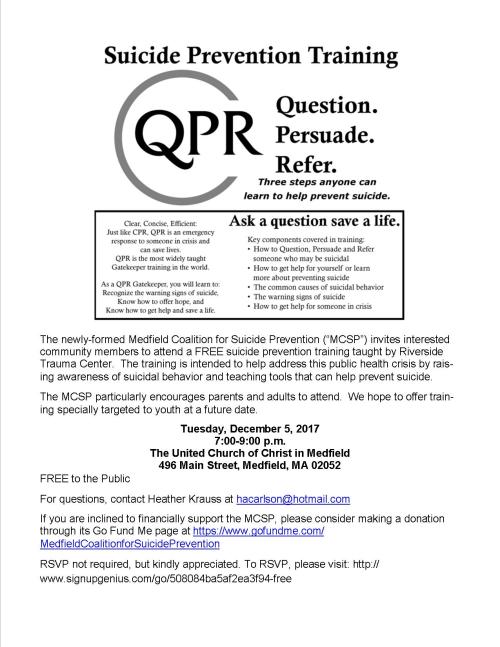
Suicide prevention training

The newly-formed Medfield Coalition for Suicide Prevention (“MCSP”) invites interested community members to attend a FREE suicide prevention training taught by Riverside Trauma Center. The training is intended to help address this public health crisis by rais-ing awareness of suicidal behavior and teaching tools that can help prevent suicide. The MCSP particularly encourages parents and adults to attend. We hope to offer train-ing specially targeted to youth at a future date. Tuesday, December 5, 2017 7:00-9:00 p.m. The United Church of Christ in Medfield 496 Main Street, Medfield, MA 02052 FREE to the Public For questions, contact Heather Krauss at hacarlson@hotmail.com If you are inclined to financially support the MCSP, please consider making a donation through its Go Fund Me page at https://www.gofundme.com/MedfieldCoalitionforSuicidePrevention RSVP not required, but kindly appreciated. To RSVP, please visit: http://www.signupgenius.com/go/508084ba5af2ea3f94-free

NYT article on anxiety among adolescents

This really interesting article was shared by Medfield Youth Outreach Director, Dawn Alcott with Medfield Cares About Prevention (MCAP) and Medfield Coalition for Suicide Prevention (MCSP).  The article reports on extremely high levels of anxiety (30%) among all of our youth.

====================================================

Just could not avoid sending this link to a terrific article from the NY times about youth anxiety and depression.


https://www.nytimes.com/2017/10/11/magazine/why-are-more-american-teenagers-than-ever-suffering-from-severe-anxiety.html?_r=0&WT.mc_id=SmartBriefs-Newsletter&WT.mc_ev=click&ad-keywords=smartbriefsnl

MCAP newsletter

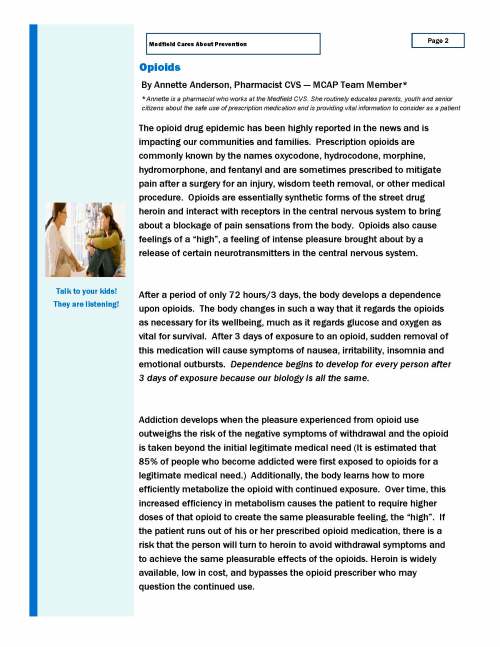
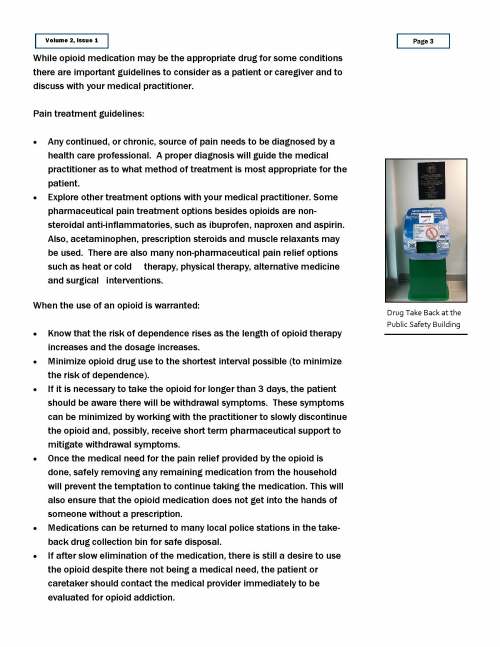
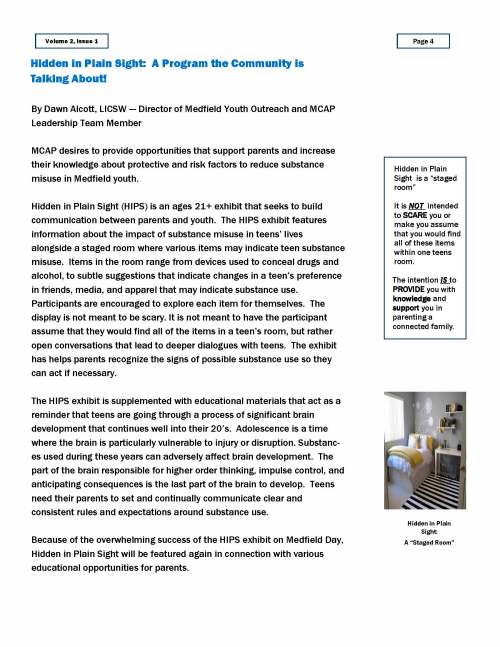
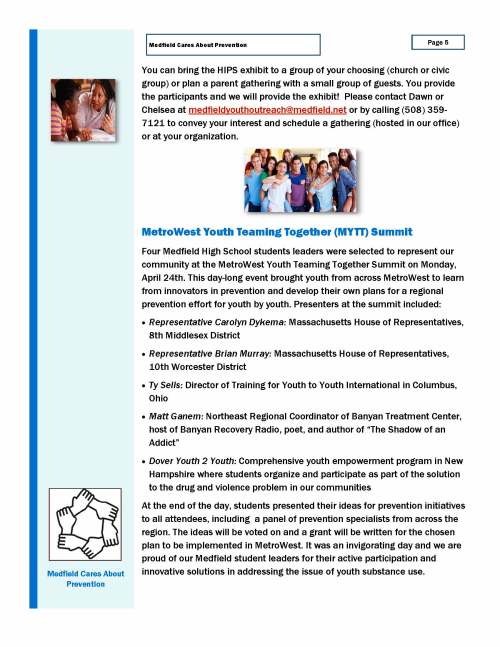
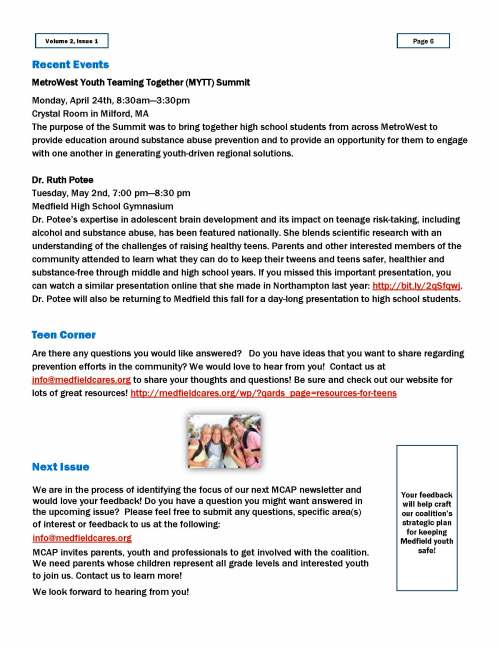
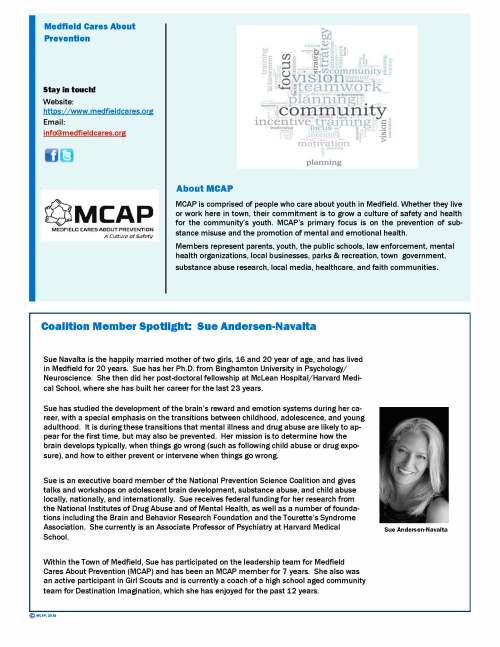
As the blossoms of spring give way to sprawling summer leaves, we too are beginning to soak up the sun, breath in the fresh air, and harness a renewed energy as we work to support Medfield youth! In keeping with the bustle of the spring season, March, April, and May were busy MCAP months! On March 16th during the Medfield High School Spring Athletics Night, MCAP member Sue Andersen-Navalta gave a short presentation on the impact of substance use on the teen brain and body. Parent attendees were presented with the opportunity to sign up to view the Hidden in Plain Sight exhibit in a “parent coffee” style format, with both morning and evening presenta-tions available. MCAP also had a resource table at MHS’ “The Other Talk” event, educating parents about protecting their teens against substance misuse as they prepare to enter college and at Dr. Ruth Potee’s talk about the impact of substance use on the developing teen brain. As you may know, Massachusetts communities are facing a growing opioid epidemic. In this issue, our education series focuses on providing you with relevant information so that you can be informed about opioids and addiction prevention. Wishing you health and happiness! Warmly, MCAP Coalition Members MCAP Newsletter: Welcome Medfield Cares About Prevention (MCAP) Stay in touch! Website: https://www.medfieldcares.org Email: info@medfieldcares.org Medfield Cares About Prevention (MCAP) Working together to promote mental health and prevent alcohol, marijuana, and other drug use amongst our youth Spring 2017 Volume 2, Issue 1 “…Bringing people together to ensure community programs work!” Inside This Issue: Opioids 2 Hidden in Plain Sight: Parent Coffees 4 MYTT Summit 5 Recent Events 6 Teen Corner 6 Next Issue 6 Member Spotlight: Sue Andersen-Navalta 7 Page 2 Medfield Cares About Prevention Opioids By Annette Anderson, Pharmacist CVS — MCAP Team Member* Talk to your kids! They are listening! The opioid drug epidemic has been highly reported in the news and is impacting our communities and families. Prescription opioids are commonly known by the names oxycodone, hydrocodone, morphine, hydromorphone, and fentanyl and are sometimes prescribed to mitigate pain after a surgery for an injury, wisdom teeth removal, or other medical procedure. Opioids are essentially synthetic forms of the street drug heroin and interact with receptors in the central nervous system to bring about a blockage of pain sensations from the body. Opioids also cause feelings of a “high”, a feeling of intense pleasure brought about by a release of certain neurotransmitters in the central nervous system. After a period of only 72 hours/3 days, the body develops a dependence upon opioids. The body changes in such a way that it regards the opioids as necessary for its wellbeing, much as it regards glucose and oxygen as vital for survival. After 3 days of exposure to an opioid, sudden removal of this medication will cause symptoms of nausea, irritability, insomnia and emotional outbursts. Dependence begins to develop for every person after 3 days of exposure because our biology is all the same. Addiction develops when the pleasure experienced from opioid use outweighs the risk of the negative symptoms of withdrawal and the opioid is taken beyond the initial legitimate medical need (It is estimated that 85% of people who become addicted were first exposed to opioids for a legitimate medical need.) Additionally, the body learns how to more efficiently metabolize the opioid with continued exposure. Over time, this increased efficiency in metabolism causes the patient to require higher doses of that opioid to create the same pleasurable feeling, the “high”. If the patient runs out of his or her prescribed opioid medication, there is a risk that the person will turn to heroin to avoid withdrawal symptoms and to achieve the same pleasurable effects of the opioids. Heroin is widely available, low in cost, and bypasses the opioid prescriber who may question the continued use. *Annette is a pharmacist who works at the Medfield CVS. She routinely educates parents, youth and senior citizens about the safe use of prescription medication and is providing vital information to consider as a patient Volume 2, Issue 1 Page 3 While opioid medication may be the appropriate drug for some conditions there are important guidelines to consider as a patient or caregiver and to discuss with your medical practitioner. Pain treatment guidelines:  Any continued, or chronic, source of pain needs to be diagnosed by a health care professional. A proper diagnosis will guide the medical practitioner as to what method of treatment is most appropriate for the patient.  Explore other treatment options with your medical practitioner. Some pharmaceutical pain treatment options besides opioids are non-steroidal anti-inflammatories, such as ibuprofen, naproxen and aspirin. Also, acetaminophen, prescription steroids and muscle relaxants may be used. There are also many non-pharmaceutical pain relief options such as heat or cold therapy, physical therapy, alternative medicine and surgical interventions. When the use of an opioid is warranted:  Know that the risk of dependence rises as the length of opioid therapy increases and the dosage increases.  Minimize opioid drug use to the shortest interval possible (to minimize the risk of dependence).  If it is necessary to take the opioid for longer than 3 days, the patient should be aware there will be withdrawal symptoms. These symptoms can be minimized by working with the practitioner to slowly discontinue the opioid and, possibly, receive short term pharmaceutical support to mitigate withdrawal symptoms.  Once the medical need for the pain relief provided by the opioid is done, safely removing any remaining medication from the household will prevent the temptation to continue taking the medication. This will also ensure that the opioid medication does not get into the hands of someone without a prescription.  Medications can be returned to many local police stations in the take-back drug collection bin for safe disposal.  If after slow elimination of the medication, there is still a desire to use the opioid despite there not being a medical need, the patient or caretaker should contact the medical provider immediately to be evaluated for opioid addiction. Drug Take Back at the Public Safety Building Volume 2, Issue 1 Page 4 By Dawn Alcott, LICSW — Director of Medfield Youth Outreach and MCAP Leadership Team Member MCAP desires to provide opportunities that support parents and increase their knowledge about protective and risk factors to reduce substance misuse in Medfield youth. Hidden in Plain Sight (HIPS) is an ages 21+ exhibit that seeks to build communication between parents and youth. The HIPS exhibit features information about the impact of substance misuse in teens’ lives alongside a staged room where various items may indicate teen substance misuse. Items in the room range from devices used to conceal drugs and alcohol, to subtle suggestions that indicate changes in a teen’s preference in friends, media, and apparel that may indicate substance use. Participants are encouraged to explore each item for themselves. The display is not meant to be scary. It is not meant to have the participant assume that they would find all of the items in a teen’s room, but rather open conversations that lead to deeper dialogues with teens. The exhibit has helps parents recognize the signs of possible substance use so they can act if necessary. The HIPS exhibit is supplemented with educational materials that act as a reminder that teens are going through a process of significant brain development that continues well into their 20’s. Adolescence is a time where the brain is particularly vulnerable to injury or disruption. Substanc-es used during these years can adversely affect brain development. The part of the brain responsible for higher order thinking, impulse control, and anticipating consequences is the last part of the brain to develop. Teens need their parents to set and continually communicate clear and consistent rules and expectations around substance use. Because of the overwhelming success of the HIPS exhibit on Medfield Day, Hidden in Plain Sight will be featured again in connection with various educational opportunities for parents. Hidden in Plain Sight is a “staged room” It is NOT intended to SCARE you or make you assume that you would find all of these items within one teens room. The intention IS to PROVIDE you with knowledge and support you in parenting a connected family. Hidden in Plain Sight: A “Staged Room” Hidden in Plain Sight: A Program the Community is Talking About! Page 5 Medfield Cares About Prevention MetroWest Youth Teaming Together (MYTT) Summit Four Medfield High School students leaders were selected to represent our community at the MetroWest Youth Teaming Together Summit on Monday, April 24th. This day-long event brought youth from across MetroWest to learn from innovators in prevention and develop their own plans for a regional prevention effort for youth by youth. Presenters at the summit included:  Representative Carolyn Dykema: Massachusetts House of Representatives, 8th Middlesex District  Representative Brian Murray: Massachusetts House of Representatives, 10th Worcester District  Ty Sells: Director of Training for Youth to Youth International in Columbus, Ohio  Matt Ganem: Northeast Regional Coordinator of Banyan Treatment Center, host of Banyan Recovery Radio, poet, and author of “The Shadow of an Addict”  Dover Youth 2 Youth: Comprehensive youth empowerment program in New Hampshire where students organize and participate as part of the solution to the drug and violence problem in our communities At the end of the day, students presented their ideas for prevention initiatives to all attendees, including a panel of prevention specialists from across the region. The ideas will be voted on and a grant will be written for the chosen plan to be implemented in MetroWest. It was an invigorating day and we are proud of our Medfield student leaders for their active participation and innovative solutions in addressing the issue of youth substance use. Medfield Cares About Prevention You can bring the HIPS exhibit to a group of your choosing (church or civic group) or plan a parent gathering with a small group of guests. You provide the participants and we will provide the exhibit! Please contact Dawn or Chelsea at medfieldyouthoutreach@medfield.net or by calling (508) 359-7121 to convey your interest and schedule a gathering (hosted in our office) or at your organization. Volume 2, Issue 1 Page 6 MetroWest Youth Teaming Together (MYTT) Summit Monday, April 24th, 8:30am—3:30pm Crystal Room in Milford, MA The purpose of the Summit was to bring together high school students from across MetroWest to provide education around substance abuse prevention and to provide an opportunity for them to engage with one another in generating youth-driven regional solutions. Dr. Ruth Potee Tuesday, May 2nd, 7:00 pm—8:30 pm Medfield High School Gymnasium Dr. Potee’s expertise in adolescent brain development and its impact on teenage risk-taking, including alcohol and substance abuse, has been featured nationally. She blends scientific research with an understanding of the challenges of raising healthy teens. Parents and other interested members of the community attended to learn what they can do to keep their tweens and teens safer, healthier and substance-free through middle and high school years. If you missed this important presentation, you can watch a similar presentation online that she made in Northampton last year: http://bit.ly/2qSfqwj. Dr. Potee will also be returning to Medfield this fall for a day-long presentation to high school students. Are there any questions you would like answered? Do you have ideas that you want to share regarding prevention efforts in the community? We would love to hear from you! Contact us at info@medfieldcares.org to share your thoughts and questions! Be sure and check out our website for lots of great resources! http://medfieldcares.org/wp/?qards_page=resources-for-teens Recent Events We are in the process of identifying the focus of our next MCAP newsletter and would love your feedback! Do you have a question you might want answered in the upcoming issue? Please feel free to submit any questions, specific area(s) of interest or feedback to us at the following: info@medfieldcares.org MCAP invites parents, youth and professionals to get involved with the coalition. We need parents whose children represent all grade levels and interested youth to join us. Contact us to learn more! We look forward to hearing from you! Next Issue Your feedback will help craft our coalition’s strategic plan for keeping Medfield youth safe! Teen Corner Sue Navalta is the happily married mother of two girls, 16 and 20 year of age, and has lived in Medfield for 20 years. Sue has her Ph.D. from Binghamton University in Psychology/Neuroscience. She then did her post-doctoral fellowship at McLean Hospital/Harvard Medi-cal School, where she has built her career for the last 23 years. Sue has studied the development of the brain’s reward and emotion systems during her ca-reer, with a special emphasis on the transitions between childhood, adolescence, and young adulthood. It is during these transitions that mental illness and drug abuse are likely to ap-pear for the first time, but may also be prevented. Her mission is to determine how the brain develops typically, when things go wrong (such as following child abuse or drug expo-sure), and how to either prevent or intervene when things go wrong. Sue is an executive board member of the National Prevention Science Coalition and gives talks and workshops on adolescent brain development, substance abuse, and child abuse locally, nationally, and internationally. Sue receives federal funding for her research from the National Institutes of Drug Abuse and of Mental Health, as well as a number of founda-tions including the Brain and Behavior Research Foundation and the Tourette’s Syndrome Association. She currently is an Associate Professor of Psychiatry at Harvard Medical School. Within the Town of Medfield, Sue has participated on the leadership team for Medfield Cares About Prevention (MCAP) and has been an MCAP member for 7 years. She also was an active participant in Girl Scouts and is currently a coach of a high school aged community team for Destination Imagination, which she has enjoyed for the past 12 years. Sue Andersen-Navalta Medfield Cares About Prevention Coalition Member Spotlight: Sue Andersen-Navalta Stay in touch! Website: https://www.medfieldcares.org Email: info@medfieldcares.org MCAP, 2016 MCAP is comprised of people who care about youth in Medfield. Whether they live or work here in town, their commitment is to grow a culture of safety and health for the community’s youth. MCAP’s primary focus is on the prevention of sub-stance misuse and the promotion of mental and emotional health. Members represent parents, youth, the public schools, law enforcement, mental health organizations, local businesses, parks & recreation, town government, substance abuse research, local media, healthcare, and faith communities. About MCAP20170726-MCAP Newsletter Spring 2017_Page_220170726-MCAP Newsletter Spring 2017_Page_320170726-MCAP Newsletter Spring 2017_Page_420170726-MCAP Newsletter Spring 2017_Page_520170726-MCAP Newsletter Spring 2017_Page_620170726-MCAP Newsletter Spring 2017_Page_7

Parental skills training tonight

From Medfield Cares About Prevention (MCAP) yesterday –

All parents welcome

You are welcome to attend and bring other parents/adults who care about Medfield youth with you.  If you could tweet about this, post to your facebook pages, blogs, share from Medfield Youth Outreach’s facebook page or MCAP’s it would be so very helpful.  This is coming together quickly due to the needs of hurting parents in the community and literally just gained final approval this evening.  This rose organically from the community. Let’s get behind it and spread the word!

Medfield Youth Outreach


Open Invitation For All Parents:

St. Edward Church of Medfield warmly welcomes Jim McCauley, LICSW, from Riverside Trauma Center for an evening where parents can develop their skills in navigating conversations with youth about depression and feelings of hopelessness. The Regional MetroWest data supports that youth are reporting more stress and that some have reported depressive symptoms and thoughts of suicide (MWAHS, 2016).  Parents have been reaching out community wide for ways to have meaningful conversations with their youth about these issues and to find pathways to build greater support in the community.

This evening is sure to be a dialogue to empower Medfield families in navigating these discussions and finding resources for the future.


Please join us on TUESDAY, JUNE 20TH AT 7PM AT ST. EDWARD CHURCH.  For more information please contact St. Edward Church: 508-359-6150 or amosheabrooke@stedward-ma.org.

Childcare available for ages 4+.


RSVP here


All community parents are welcome.


Dr. Ruth Potee tomorrow night

I heard Dr. Potee speak over a year ago, and she is really good.  This is the flyer –

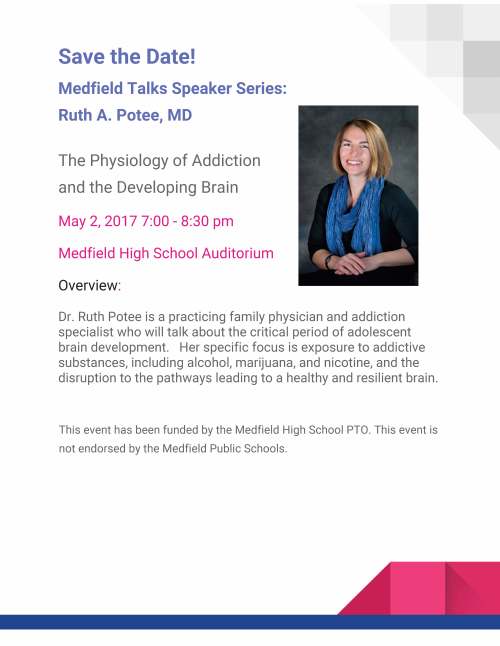
Save the Date! Medfield Talks Speaker Series: Ruth A. Potee, MD The Physiology of Addiction and the Developing Brain May 2, 2017 7:00 - 8:30 pm Medfield High School Auditorium Overview: Dr. Ruth Potee is a practicing family physician and addiction specialist who will talk about the critical period of adolescent brain development. Her specific focus is exposure to addictive substances, including alcohol, marijuana, and nicotine, and the disruption to the pathways leading to a healthy and resilient brain. This event has been funded by the Medfield High School PTO. This event is not endorsed by the Medfield Public Schools.

Marijuana policy issues

MCAP Logo_1C_300

Medfield Cares About Prevention (MCAP) (www.MedfieldCares.org) circulated the email they below that they got  from the Massachusetts Prevention Alliance, about the hearings on marijuana that the legislature is holding.

Dr. Ruth Potee (see below) is coming to Medfield to speak (in May, I think).  I heard her speak over a year ago at Weston High School and I was so impressed with both her information and her delivery, that I asked her if she would come to Medfield to speak, and she agreed that she would.  I passed that information along to Medfield Cares About Prevention (MCAP) and the Superintendent arranged to have her come.  She lives and practices medicine as a primary care physician in Greenfield, Massachusetts, including treating addicts.  When we spoke, she was booking dates a year out, as she needed to come on the nights when her husband could do child care.  Plus she does not charge.  She is impressive. –

MAPA

THIS TOOK PLACE AT THE SECOND HEARING ON MARIJUANA POLICY 


We had a good showing for addiction and substance abuse prevention at the West Springfield public hearing on Marijuana Policy this past Monday (March 27).  Here are brief notes on a few of the statements that were made:

—  Greenfield physician, Dr. Ruth Potee said the minimum age to legally purchase marijuana should be 25, the age at which the brain is done developing.  She called for the committee to limit the psychoactive chemical THC in retail marijuana to 15 percent at most. Some marijuana edibles and concentrates are 90 percent THC. (To learn more about Dr. Potee’s important work, click here >> )
—  A business leader presented the math:  the optimistically projected $100m state revenues from marijuana taxes, at .002 percent of the $40 billion state budget, is less than one day’s operating budget for our state government. Associated costs for a new marijuana regulation bureaucracy plus compliance and enforcement costs will dwarf the proceeds for the people and taxpayers of the Commonwealth.

— Hampden County District Attorney Anthony Gulluni offered thoughtful input about law enforcement resource requirements.

— Attorney John Scheft of Law Enforcement Dimensions addressed negligent provisions in the law by offering specific legal language recommendations that would make the existing marijuana law at least consistent with alcohol law in regard to access and penalties for breaking the law. As currently written, the marijuana law is more lax than alcohol law in the Commonwealth.

—  West Springfield Mayor Will Reichelt said a majority of his town’s voters opposed the ballot initiative, called Question 4, and there is concern that the Town Council cannot stop retail pot shops from opening. The law requires a ballot initiative in each town that wants to opt out. Mayor Reichelt made the point that no other zoning is mandated to go on a town’s ballot to opt out; that is a decision made by local governing boards.

— There was strong cannabis industry representation advocating for the broadest possible access to building and growing marijuana production, sales and customer-base.

— Holyoke City Mayor Alex Morse expressed enthusiastic support for a 200,000 square foot marijuana grow space planned for a vacant Holyoke factory space.

— One “expert” freelance journalist cited a study on Jamaican babies born to heavy Cannabis using mothers saying the children were brighter and better socialized.  “Stoner babies”, he called them. (NOTE: Pediatricians are needed to get accurate pediatric health and toxicology information to these lawmakers.)

— Another woman testified that use rates should not be raised to age 25 because she is actively recruiting young women into her Amherst area practice of psychedelic feminism, promoting expanded conscious through hallucinogenic drugs.  She criticized the committee for not having diversity, particularly in their views of cannabis use. Legislative committee members, specifically Rep. Rogers speaking for others on the committee as well, expressed an openness to her views on marijuana use.

Thank you to all those who have submitted testimony and have carved out time to participate in this hearing process.  Our prevention network of cooperation and emerging partners must continue to unite and bring strong voice from all sectors and stakeholders to help this legislative committee shape a marijuana law that protects public health and safety.  We must continue vigilant presence and testimony to protect our children, families and communities from substance abuse and addiction – and all the costly corresponding problems that emerge from building state economy off drug use.

TAKE ACTION
Please offer specific recommendations for improvements to the Massachusetts Marijuana Act of 2016.

1) ATTEND THE REMAINING PUBLIC HEARINGS AND SUBMIT TESTIMONY

Final two hearing dates, times and locations:

APRIL 3RD, 11 AM, STATE HOUSE, RMS. A-1, A-2:   At this hearing a list of bills will be considered.  Your position statement on specific bills would be most helpful.  The Committee needs comments on these bills: offer context, amendments, support, support with changes, or oppose. You do not need to present detailed analysis of any of the bills.  For example, it is perfectly fine to say something like “I support H3183 and S1073 because we need to better understand the impact of high potency marijuana products” etc.
To view the hearing agenda and list of bills, click here >>

APRIL 10th, 4 PM, SHREWSBURY HIGH SCHOOL AUDITORIUM

  • To download a template letter with suggested changes to help get you started with testimony, click here >>
  • For a simple document on best practices for state marijuana policy, click here >> 
  • For an excellent public health analysis of marijuana policy that was released in February 2016, click here >>


Committee Email Addresses to submit written testimony
Patricia.Jehlen@masenate.gov (Chair Representing the Senate)
Jason.Lewis@masenate.gov
James.Eldridge@masenate.gov
Linda.DorcenaForry@masenate.gov
James.Welch@masenate.gov
Vinny.deMacedo@masenate.gov
Mark.Cusack@mahouse.gov (Chair Representing the House)
Dave.Rogers@mahouse.gov
Tackey.Chan@mahouse.gov
Michael.Finn@mahouse.gov
Aaron.Vega@mahouse.gov
john.velis@mahouse.gov
RoseLee.Vincent@mahouse.gov
Adrian.Madaro@mahouse.gov
Stephan.Hay@mahouse.gov
Hannah.Kane@mahouse.gov
Nicholas.Boldyga@mahouse.gov
2) MEET WITH SENATOR JEHLEN AND REPRESENTATIVE CUSACK
It is critical that the Chairs of the Committee understand the data-driven, research-based facts, and why it is important to mitigate the harms and consequences with specific policy measures (see links above for suggestions). Visits from the following sectors are particularly important:

  • Health: Hospitals, Doctors, Pediatricians, Nurses, Hospital Administrators
  • Mental Health: Behavior and Cognitive Health Advocates
  • Business: Business owners, Chambers of Commerce, Business Groups
  • Municipal and Civic Organizations
  • Education: Administrators and Teachers
  • Medical and Health-related Associations/Societies
  • Public Health: Prevention, Recovery and Treatment Professionals 
  • Child and Family Welfare & Protection: Parents, Agencies & Associations
  • Community and Youth Serving Agencies
  • Public Safety and Law Enforcement
  • Parents and Youth

LEARN HOW TO OPT OUT OF RECREATIONAL MARIJUANA
On Wednesday, April 12th 5:30-9pm at 17 Willow Street, Westborough, MA Westborough Concerned Citizens will be holding a workshop on the OPT OUT process.  All Massachusetts citizens – official and volunteers – are welcome and encouraged to attend. Seating is limited. To register, email optoutwestboro@gmail.com with subject line: “Reserve Seating for 4/12 Workshop.” Please include your name, names of guests and your community.

IN THE NEWS THIS WEEK:
We are pleased to report The Town of Medfield successfully voted to opt-out of recreational marijuana this past week.  To learn more, click here >>

Growing number of towns ban pot sales – Boston Herald | Click here >>

Head spinning marijuana questions – Cape Cod Times | Click here >>

Chelmsford Police: Bus driver set to take kids on field trip was high on marijuana – Fox 25 Boston | Click here >>

State marijuana committee hears testimony from mayors, citizens in West Springfield – Mass Live | Click here >>

As pot industry ramps up in Mass., get the rules right – The Boston Globe | Click here >>

Thank you for standing with us to protect the health and wellness of all youth in the Commonwealth.

The Team at the Massachusetts Prevention Alliance


Thank you for taking action on this very important drug policy issue in Massachusetts.  MAPA continues as an all-volunteer organization working to provide information and resources helpful to all stakeholders in the Commonwealth working to address and prevent drug use and addiction. You may learn more about the Massachusetts Prevention Alliance here: www.mapreventionalliance.org

Promoting drug-free communities and lifestyles in the Commonwealth requires everyone to play a part in prevention. Thanks to generous donors, we continue to advocate, educate and collaborate to protect Massachusetts’ young people from drug use and addiction.  Every dollar donated goes directly to our advocacy efforts and is tax-deductible. Please make a donation today to help build our capacity to promote primary drug prevention in the Commonwealth.


DONATE


The Massachusetts Prevention Alliance (MAPA) continues to advocate for drug policies and regulations that prioritize public health and safety to protect youth, families and communities from drug use and addiction in the Commonwealth; collectively we continue to lead environmental prevention strategies to prevent youth drug and alcohol use.

If you have questions or would like to connect, please reach out to us at info@mapreventionalliance.org.

Also, please select the link below and take a moment to provide us with your updated contact information to be certain you receive future MAPA updates and notices.


Update Your Contact Information
Copyright © 2017 Massachusetts Prevention Alliance, All rights reserved.

Our mailing address is:

Massachusetts Prevention Alliance

PO Box 65

Lincoln, MA 01773
Add us to your address book

unsubscribe from this list    update subscription preferences

MCAP newsletter #1

The first Medfield Cares About Prevention (MCAP) newsletter is attached –

Welcome to the first edition of MCAP’s electronic newsletter. This newsletter is intended to provide you with information about teen substance abuse, trends, educational resources and stories and examples of community prevention efforts that work. We hope you will join us for upcoming focus groups in January. Your feedback will help craft our coalition’s strategic plan for keeping Medfield youth safe! See more details regarding dates/times of focus groups in this issue. Let us know what you think of our first edition! Expect our next quarterly edition in February 2017! Warmly, MCAP Coalition Members Inaugural MCAP Newsletter: Welcome About MCAP Medfield Cares About Prevention (MCAP) Stay in touch! Website: https://www.medfieldcares.org Email: info@medfieldcares.org Medfield Cares About Prevention (MCAP) Working together to promote mental health and prevent alcohol, marijuana, and other drug use amongst our youth November 2016 Volume 1, Issue 1 “…Bringing people together to ensure community programs work!” MCAP is comprised of people who care about youth in Medfield. Whether they live or work here in town, their commitment is to grow a culture of safety and health for the community’s youth. Members represent parents, youth, the public schools, law enforcement, mental health organi-zations, local businesses, parks & recreation, town government, substance abuse research, local media healthcare and faith communities. MCAP invites parents, youth and professionals to get involved with the coalition. We need parents whose children represent all grade levels and interested youth to join us. Contact us to learn more! Inside This Issue: Marijuana and Your Teen 2 Legalized Marijuana in Massachusetts: What You Should Know 2 Medfield Day Recap: Hidden in Plain Sight 3 MCAP: Community in Action 4 Upcoming Parent Focus Groups 5 Teen Corner 6 Member Spotlight: Cathleen Farrell 7 Page 2 Medfield Cares About Prevention Marijuana and Your Teen: What You Should Know By Sue Navalta, Ph.D. — MCAP Leadership Team Member* Talk to your kids! They are listening! The adolescent brain is still actively developing, especially in regions that are in-volved in abstract reasoning, decision-making, and even social interactions. The plasticity of ongoing development allows teens to develop their own individual identities, however, the same plasticity can leave them vulnerable to the effects of drugs of abuse. Research has shown that marijuana use during the teenage years is associated with increased impulsivity, lower IQ scores, and changes in social processing. Why? First, we need to appreciate that the marijuana that is available today is – at a minimum – 4-6 times more potent for THC (the active component that provides the “high”) than potency 20 years ago. That means that what we thought we knew about what marijuana’s effects cannot be based on past history. Second, this is not medical marijuana where the medicinal cannabidiol component is sig-nificantly represented. If it was, teens would not be using it. Marijuana effects short-term memory that is needed for learning. Marijuana use impairs motor skills, perception, and reaction times that are needed for driving and playing sports. Taken together, being high decreases our teens’ ability to do well in school and on the field. Finally, research has shown that college entrance and income in adulthood are lower for individuals that regularly used marijuana as a teenager. As teen per-ception that marijuana use is harmless increases, research tell us that use will certainly increase as well. With these facts in mind, don’t our teens deserve something better? Are you informed and ready to make a decision in November about Ballot Question #4 which would legalize adult recreational use and the sale of marijuana? Massachusetts Prevention Alliance (MAPA) has compiled fact sheets that may be of interest to parents and teens regarding the proposed legalization of marijuana in the Commonwealth. Visit http://www.mapreventionalliance.org/ or these links for the following key facts (please note that these links will take you away from our newsletter and will not open in a new window): 1) Be informed on MA Ballot Question 4 2) Marijuana Policy Fact Sheet 3) Details of changes in local controls proposed in Ballot Question 4 4) BQ4: Marijuana versus Alcohol 5) Report of the Special Senate Committee on Marijuana March 2016 Legalized Marijuana in Massachusetts: What You Should Know www.mapreventionalliance.org *Sue is an Associate Professor of Psychiatry at McLean’s Hospital & Harvard Medical School and researches marijuana and its effect on the teenage brain Volume 1, Issue 1 Page 3 By Dawn Alcott, LICSW — Director, Medfield Youth Outreach & MCAP Leadership Team Member Hidden in Plain Sight: A Program the Community is Talking About! MCAP desires to provide opportunities that support parents and increase their knowledge about protective and risk factors to reduce substance mis-use in Medfield youth. MCAP participated in a display of Hidden in Plain Sight (HIPS) at the Natick Mall last May as part of a regional effort. Hidden in Plain Sight (HIPS) is an ages 21+ exhibit that seeks to build communication between parents and youth. As MCAP gathered the feedback from families who attended that exhibit, it was apparent that parents feel under-resourced when it comes to identifying and preventing teen substance misuse. MCAP created a Hid-den in Plain Sight display of its own and launched it at Beginning Years on Medfield Day. The HIPS exhibit features information about the impact of substance mis-use in teen’s lives alongside a staged room where various items may indi-cate teen substance misuse. Items in the room range from devices used to conceal drugs and alcohol, to subtle suggestions that indicate changes in a teen’s preference in friends, media, and apparel that may indicate substance use. Participants are encouraged to explore each item for themselves. The display is not meant to be scary. It is not meant to have the participant assume that they would find all of the items in a teen’s room, but rather open conversations that lead to deeper dialogues with teens. The exhibit has helped parents recognize the signs of possible sub-stance use so they can act if necessary. The HIPS exhibit is supplemented with educational materials that act as a reminder that teens are going through a process of significant brain devel-opment that continues well into their 20’s. Adolescence is a time where the brain is particularly vulnerable to injury or disruption. Substances used during these years can adversely affect brain development. The part of the brain responsible for higher order thinking, impulse control, and anticipat-ing consequences is the last part of the brain to develop. Teens need their parents to set and continually communicate clear and consistent rules and expectations around substance use. The educational materials also highlight the risk teens face from medica-tion misuse. Opioid medications are frequently prescribed to athletes fol-lowing an injury or to teens following wisdom teeth extraction. Through ac-tively partnering with teens and their healthcare providers, parents can be Hidden in Plain Sight is a “staged room” It is NOT intended to SCARE you or make you assume that you would find all of these items within one teens room. The intention IS to PROVIDE you with knowledge and support you in parenting a connected family. Hidden in Plain Sight: A “Staged Room” Page 4 Medfield Cares About Prevention a crucial part in the management process through administering only the medication necessary for acute pain and helping a teen to transition quickly to non-addictive pain control. On Medfield Day, in just four hours, MCAP was pleased to guide 85 individu-als representing parents, grandparents, educators, clergy, business owners, and other concerned community members through the HIPS exhibit at Begin-ning Years. During that time, many residents expressed interest and commu-nicated that they did not have the time to fully view the exhibit Medfield Day. Hidden in Plain Sight will be featured again in connection to various educa-tional opportunities for parents in the upcoming months. MCAP is also ex-ploring other settings for the exhibit, perhaps even parent coffee evenings where one set of parents invite a circle of parents to come together to view the exhibit and discuss the prevention of teen substance misuse following the viewing. HIPS was sponsored by a generous donation from Needham Bank. MCAP has also enjoyed support from Jack Conway Realtors who sold ‘02052’ baseball caps to raise funds for MCAP! MCAP: Community in Action — Medfield Day HIPS Exhibit MCAP is a coalition of dedicated volunteers working together to promote mental health and prevent alcohol, marijuana, and other drug use amongst our youth. It takes a village to keep our kids safe and HIPS is just one of the ways the coalition and the community came together for this purpose. MCAP would like to thank the following supporters that made the HIPS exhib-it possible: Beginning Years Child Development Center — location Department of Public Works — use of printer for posters Evan Weisenfeld—web master Liz Sandeman—logistical support Melissa Zilinski—marketing design Medfield Foundation—financial management Medfield Public Schools — lamination and publicity Medfield Youth Outreach and Sue Navalta — educational materials Needham Bank — general donation to support our efforts Parent and community volunteers: Kathy Thompson, Jeff Marsden, Cathleen Farrell, Bob Meaney, Carryl Navalta, Ali Cronin, Osler Peterson, Susan Cowell, David Traub, Annette Anderson, Dawn Alcott, Chelsea Goldstein-Walsh Page 5 Medfield Cares About Prevention Parent Focus Groups: Coming Soon! Interested? Our next two focus groups will be offered on Wednesday, January 25, 2017 11AM - 1PM (light lunch provided) or 7PM - 9PM (dessert, coffee and tea provided) Registration required. Please contact Dawn or Chelsea at medfieldyouthoutreach@medfield.net or 508-359-7121 This focus group is sponsored by the Medfield Cares About Prevention (MCAP) coalition www.medfieldcares.org Your feedback will help craft our coalition’s strategic plan for keeping Medfield youth safe! Medfield Cares About Prevention Volume 1, Issue 1 Page 6 Medfield youth, we’d love to hear from you! We were so thankful to hear from many of you during focus groups in the Spring of 2016 and we want to keep the conversation going. We are still seeking teens to participate in upcoming youth focus groups in an ongoing effort to hear your voice! Stay tuned for more information in our next newsletter regarding focus groups for Spring 2017. If you have questions or ideas you want to share, please contact us at info@medfieldcares.org Do you want to meet other teens from the region and share ideas about how to address substance misuse in our communities? In our next issue, we will have more information on the upcoming Spring 2017 Metrowest Youth Summit. In the meantime, be sure and check out our website for lots of great resources geared towards teens: http://medfieldcares.org/wp/?qards_page=resources-for-teens Overcoming the Shame and Stigma: Mental Health and Today’s Youth Walpole Library Community Room Monday, November 7 at 7PM or Wednesday, November 9 at 10AM Upcoming Event Teen Corner Our next MCAP newsletter will focus on opioid abuse. Do you have a ques-tion you might want answered in the upcoming issue? Please feel free to submit any questions, specific area(s) of interest or feedback to us at info@medfieldcares.org We look forward to hearing from you! Next Issue Cathleen Farrell is the mother of three children, two of whom are currently in the Medfield school system. The other child attended Medfield through 9th grade and then attended private school for three years (and is now a freshman in college). Cathleen has lived in Medfield for 14 years. Cathleen has an Associate’s Degree from Lasell College and a Bachelor’s Degree in Early Childhood Education and Child Life from Wheelock College. She also has a Certificate in Business Administration from the University of Illinois at Chicago. Cathleen has owned Beginning Years Child Development Center in Medfield for 12 years and recently opened Beginning Years at Medfield High School. Prior to owning Beginning Years, her career was spent working with children and families through a variety of state and federal grants for Partners Health Care and Children's Hospi-tal. Cathleen was also the state wide Inclusion Coordinator for the Commonwealth of Massachusetts Department of Early Education and Care. Within the Medfield community, Cathleen is the representative of MEMO on Medfield Cares About Prevention (MCAP) and is also a member of the Medfield Cares About Prevention (MCAP) Leadership Team. Finally, she also serves on the Parent Advisory Committee for Lasell College. Cathleen Farrell Medfield Cares About Prevention Coalition Member Spotlight: Cathleen Farrell Stay in touch! Website: https://www.medfieldcares.org Email: info@medfieldcares.org MCAP, 201620161107-newsletter_page_220161107-newsletter_page_320161107-newsletter_page_420161107-newsletter_page_520161107-newsletter_page_620161107-newsletter_page_7

Image

MCAP parent focus groups

MCAP Focus Group Communication (2)