Monthly Archives: December 2016

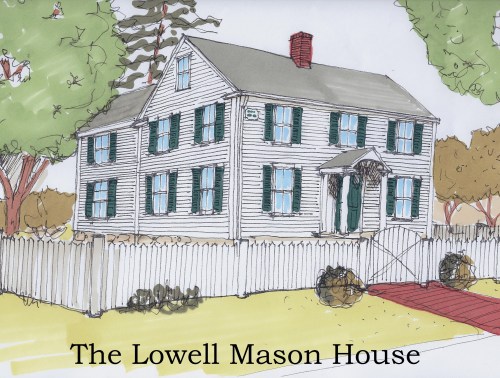
Lowell Mason challenge

LMH Hi Res Logo.jpg

Lowell Mason House donations to double via $25,000 Challenge Grant


MEDFIELD, MA—Lowell Mason House President Thomas Reynolds and Treasurer Thomas Scotti announced today that the non-profit received a $25,000 challenge grant from an anonymous donor that  will match dollar-for-dollar all donations made from Nov. 15, 2016 to Feb. 1, 2017, doubling the impact of contributions.


“The Lowell Mason House has been making tremendous progress with construction getting the house available for music students of all ages –all of which has been made possible by our loyal supporters,” said Reynolds. “Whether through time or dollars, the generosity of Lowell Mason House supporters is bringing us closer to preserving Lowell Mason’s birthplace and transforming it into an active space for music making. We are grateful to our anonymous donor for investing in a way that encourages both current and new donors to help preserve Lowell Mason’s Medfield legacy.” Scotti explained that the  next phase of construction will encompass installing new windows, exterior doors and re-side the entire house, at an estimated cost of about $50,000.


To make a tax-deductible donation, checks can be made payable to the Lowell Mason House and mailed to PO Box 913, Medfield, MA 02052.  Donations can also be made online at www.lowellmasonhouse.org.  “Thanks to the match, donors large and small will allow us to proceed with the next round of construction and then move forward more quickly on the interior of the house.”


Lowell Mason was born in Medfield in 1792, and is considered the Father of Music Education in America due his efforts in teaching both students and teachers of music. In 1838, he became  the first music superintendent in the Boston public schools, and was instrumental in making music a part of the regular school curriculum in America.


Through the work of a team of volunteers, the Lowell Mason House was saved from demolition in 2011 and moved from its original location on Adams Street.


“We’re one step closer to making the House  a major cultural hub in Medfield where it will serve as a living museum that not only honors the father of music education, but also provides practice and performance space to further encourage artistic expression, and strengthen the value of the arts in the community,” noted Reynolds. For more information, please contact either Tom Reynolds at treynold@worldpath.net or Tom Scotti at tscotti@lowellmasonhouse.org.

Affordable housing doings

affordable-housing

The Town of Medfield is currently actively engaged in trying to meet its affordable housing needs, one benefit of which will be to preclude developers from forcing unfriendly 40B developments onto the town.

To be protected from such unfriendly 40B’s, the town needs 10% of its housing to be affordable units (Subsidized Housing Inventory, or SHI) as defined by the Department of Housing and Community Development (DHCD).  We are currently at about 7% and need about 150 additional SHI units to be over 10%.  Where the Town of Medfield is not yet at the 10% threshold, to be protected from unfriendly 40B developments int he interim, the town must have a Housing Production Plan (we recently adopted one first proposed about five years ago, which was subsequently approved by DHCD last month), and actually be constructing 21 units of SHI per year.

The Zoning Board of Appeals is currently hearing an application from the Larkin Brothers to build a 40B on Hospital Road consisting of 48 units of single family home condos, 12 of which were to be affordable units, and the remainder market rate units.  At the town’s request,  the Larkins have agreed to amend the project to add one extra affordable unit, so that it will be 49 total units, with 13 affordable units.

Additionally, Bob Borrelli had been permitting the Jacob Cushman house on North Street, across from my office, that he bought from Montrose School for commercial and retail on the first two floors, with two apartments on the third floor, but approached the town about changing the project to be eight rental units under a Local Initiative Program (LIP), with two affordable units.  The Board of Selectmen voted last week to approve that LIP.  Where the LIP is a rental project, under 40B rules, the entire eight units count as affordable (SHI) units.

Thus, the town currently has 21 SHI units in development, which if they get permitted before any other 40B proposal applies to the ZBA for a comprehensive permit, would allow the ZBA to safely decline to approve any 40B applications for the year following the approval of the 21 SHI units.  At the moment, there is somewhat of a race going on between the Mega-B process and the two other 40B projects noted above – if the latter two are permitted first by the ZBA before the Mega-B can apply to the ZBA, then the town will have a one year safe harbor, and the ZBA can say “no” to the Mega-B.

Additionally, I have been meeting and working with Riverside Community Care and The Price Center to see if we could get some group homes built in town, as group homes for disable individuals has the advantage of providing one SHI for each bed, such that a group home for four people gives the town credit for four SHI units..

With that background in mind, Mike Sullivan circulated an email late last week about the status of the Borrelli LIP and the hearing postponement requested by the Larkins.


Kristine Trierweiler has hired a company to do the marketing on Borrelli’s North St. project. She said it would take about two weeks, once they get started. She has been trying to reach Atty Murphy to go over what else Borelli has to do the complete the application to DHCD for a LIP project and will keep trying.

I spoke to the Larkins last night and they said they would have everything ready for the ZBA continued hearing in January. They also told me that the had asked the ZBA for an additional affordable unit and the ZBA was supportive.

Mark Cerel called and said that he had received a response to the neighbors’ appeal of the Conservation Commission’s decision on the Dale St. land. It was from an Attorney Peter Freeman of the Freeman Law Group.

Will update you as more information is available. Mike S

My newsletter

Having trouble viewing this email? Click here to view newsletter online +SUBSCRIBE
December 2016
Associate Photo
Osler “Pete” Peterson
617-969-1500 – Newton
508-359-9190 – Medfield
Dear Subscriber,In keeping with the December spirit of reflection, we reviewed a year’s worth of headlines for a list of the top safety and justice stories from 2016. Progress was made, but there are still many challenges ahead. Thanks for supporting civil justice!

Information that makes us safer
These newsletters are based on a simple idea – the more each one of us knows, the better off each us will be. Each newsletter focuses on a topic that relates to the health, wellness, and safety of each of us, our families, and our friends. I hope that you will find the information both interesting and informative, and that each month you can take away at least some nugget, that can make you or your family more secure.

Remember, the safer you remain, the less likely is that you will need the courts, as legal claims are generally only needed when proper safety measures were missing.

Pete

U.S. Civil Justice: The Gift That Keeps on Giving

2016 Top Safety and Justice Stories

It was a busy year for those who fight for the health, safety and legal rights of all Americans. Here are some of the top stories we were watching in 2016:

Forced Arbitration Two St. Jude Medical defibrillators recalled due to battery defects.

1> Faulty Medical Devices: Recalls Double
According the the FDA, medical device recalls doubled from 2003 to 2012, and new data shows that the numbers keep climbing. While the FDA approves medical devices before release, they do not do any testing and instead rely on the manufacturers to provide accurate and comprehensive testing data.

Two examples of faulty medical devices now on the market include the Essure birth control coil and the St. Jude defibrillator. The FDA has received over 10,000 complaints from women suffering painful side effects due to the Essure birth control device. Countless lawsuits against Essure’s manufacturer, Bayer, have sprung up across the country. Rep. Mike Fitzpatrick (R-PA) has since introduced a bill to pull Essure off the market. Meanwhile, more than 400,000 defibrillation devices made by St. Jude medical were the subject of a recent recall due to a faulty battery. To learn more about medical device recalls, click here.

2> Forced Arbitration: Sign a Contract, Lose Your Rights
There’s always a holiday gift year that’s a dud. Maybe you’ve received an ugly sweater three times too big, or a candle that smells so terrible it gives you a headache. Unfortunately, many corporations are now giving you those ugly sweaters (and forcing you to wear them), hiding “forced arbitration” clauses in consumer and employment contracts.

This loophole prohibits Americans from taking companies to court and instead forces them into secretive arbitrations, which are typically stacked in favor of the company. An investigation by The New York Times has focused renewed scrutiny on the harm caused by forced arbitrations in claims of medical malpractice, sexual harassment, hate crimes, discrimination, theft, fraud, elder abuse and wrongful death. You can join others in petitioning Congress to ban forced arbitration right here.

Exploding AirbagLead found in the Flint water supply has poisoned thousands, including 27,000 children.

3> Flint, Michigan: Lead In Water Sickens Thousands
Residents of Flint, Michigan were exposed to dangerous levels of lead in their drinking water ever since a decision was made to switch the source of the city water supply from Lake Huron to the Flint River.

Dr. Mona Hanna-Attisha, a young pediatrician known affectionately in Flint as Dr. Mona, discovered the problem when she noted an increase in the symptoms of lead poisoning in her young patients. Knowing that it was her moral and ethical duty to share her discovery with the public as soon as possible, Dr. Mona held a press conference. Michigan officials and lawmakers denounced her findings at first, only to relent when Dr. Mona wouldn’t back down. Dr. Mona continues to lead the recovery efforts today.

Nursing Home AbuseHead injuries in the NFL are down 25 percent since the concussion lawsuit.

4> Concussions and Brain Disease: NFL Settles Lawsuit
If you’re a movie fan, you probably saw the film Concussion, starring Will Smith. This movie is based on the true story of Dr. Bennet Omalu and his discovery of chronic traumatic encephalopathy in NFL football players. CTE is a disease of the brain tissue and is caused by repetitive brain trauma. CTE is associated with dementia, aggression, memory loss and depression.

Subsequent research has prompted athletic organizations to make concussion prevention and recovery a priority. This includes many “When in Doubt, Sit Them Out” laws, which mandate that any youth athlete suspected of suffering a concussion be cleared by a medical professional before returning to practice or competition. Earlier this year an appeals court upheld a settlement by the NFL with former players, setting aside almost $1 billion for medical care due to repeated head trauma. Since this lawsuit, head injuries have decreased for NFL athletes.

5> Asbestos: Still a Widespread Hazard
Asbestos may seem like a thing of the past, but any building built in the United States before 1981 is presumed to contain asbestos. And in fact, asbestos-related diseases still kill about 15,000 Americans a year. Even though asbestos is known to be extremely dangerous, the substance has not been banned in the United States. President Obama recently signed the Frank R. Lautenberg Chemical Safety for the 21st Century Act, a bipartisan bill that strengthens ways to regulate and restrict chemical substances. Because of this bill, the EPA can officially work to ban asbestos in the U.S.

SamsungOver 1 million Samsung Galaxy 7 phones have been recalled due to defective and explosive batteries.

6> Exploding Devices: Faulty Lithium-Ion Batteries
From e-cigarettes to hoverboards to smartphones, reports continue of everyday devices posing an unsafe explosion hazard. The culprit is lithium-ion batteries, which include unstable and flammable liquids. When improperly made devices include these batteries, the liquid can overheat and burst through the battery, igniting the device itself. These explosions have caused burns as well as property damage from subsequent fires. The Consumer Product Safety Commission (CPSC) recently issued a recall of all one million Samsung Galaxy 7 phones, including replacement models thought to fix the problem.

7> Prescription Drug Addiction: A National Epidemic
Prescription opiate deaths have quadrupled since 1999, killing an estimated 165,000 Americans. During the same time period, profits recorded by the drug companies that manufacture prescription painkillers have also skyrocketed. Meanwhile, a coalition of opioid manufactueres and their lobbyists have fought legislative measures introduced to stem the tide of overdose deaths.

8> Dangerous Toys: Still On Store Shelves
Nearly 260,000 kids visit emergency rooms each year for toy-related injuries, according to the CPSC. And sadly, 11 children under the age of 12 died while playing with toys in 2014. The most common injuries include poisoning, choking, ingesting magnets or falling from riding toys. While regulators, safety advocates and the parents of injured children have succeeded in ridding store shelves of many unsafe toys, too many still get through. Learn more.

What Concerns You the Most?

Browse the 2016 top safety and justice issues, and then tell us which one keeps you up at night. You could win an iPod shuffle for participating.

Add your thoughts here

Forced Arbitration: The Threat Continues

Forced arbitration continues to threaten the safety and legal rights of all Americans. Tia shares her story of sexual harassment and Circuit City.

Listen now

You Should Know is a copyrighted publication of Voice2News, LLC, and is made possible by the attorney shown above. This newsletter is intended for the interest of past and present clients and other friends of this lawyer. It is not intended as a substitute for specific legal advice. If you no longer wish to receive these emails, click here to unsubscribe from this newsletter, and your request will be honored immediately. You may also submit your request in writing to: Steven L. Miller, Editor, 4907 Woodland Ave., Des Moines, IA 50312. Be sure to include your email address.
Click here to unsubscribe from this newsletter.

Angel Run funds relief to families in need

Medfield Youth Outreach and Pastor Phil of the UCC explained why the Medfield Foundation’s Angel Run has become so important to Medfield families in need – this was MYO and Pastor Phil’s letter to the editor before the race –

angel-run-2016

Medfield Youth Outreach urges residents to participate in the 2016 Angel Run! Whether through running the race or the many facets of volunteer help needed, your participation makes a difference.  What other event in town so seamlessly builds community? The MFI took the Angel Run on in 2012 as they saw a community event that was slated to end, that met a critical need for residents.  The majority of the proceeds from the Angel Run serve residents who have come upon hard times.

The Angel Run is so much more than just a 5K race.  It is a joyous event that fills so many community needs. Whether finding an opportunity to give back and volunteer, running a race that builds one’s running statistics, or enjoying a family fun event close to the holidays, participants may be unaware that this is just the beginning of how this race blesses members of the community. From its inception, a large portion of the race’s proceeds have met the needs of residents who have hit hard times through the Angel Run Fund.   All of this is done confidentially through Medfield Youth Outreach (MYO) and in partnership with Pastor Phil and the staff of The United Church of Christ in Medfield.  While MYO provides the screening for the Angel Run Fund requests, the UCC-Medfield distributes the funds and provides as a secondary screening source for accountability purposes.  MYO is uniquely poised to field the requests for financial assistance, and form ongoing relationships with residents, through their requests, opening them up to additional services and supports that benefit their home and family. The following is a few examples of how the funds raised by the race benefitted residents over the past year.  The stories have been altered to preserve confidentiality.

Merry Jo contacted the MYO office in late February.  She could not pay her whole rent as so much of her income had been going to afford the child care that helps her sustain her job. “When my husband left, I went back to work.  It has been impossible to find a job that pays as well as my job did before I left the workforce to raise my children. The costs of child care, my rent, utilities, and car expenses often surpass what I am bringing home.  My kids have been through so much. They have lost their house, moved to an apartment and are grieving the loss of the breakdown of my marriage. I had to use part of my rent money to cover a car repair.  I was issued a letter that the land lord will take me to court if I can’t pay my rent in full soon.”  The Angel Run Fund stepped in to cover the portion of missing rent.  MYO then met with Merry Jo to apply for fuel assistance, food resources, and child care resources that took some of the financial pressure off of the family. A thank you letter appeared a few weeks later: “Dear Angels, You all have no idea what the rental help meant to me.  Beyond helping me and my kids keep our apartment, I felt less alone for the first time in a very long while. I feel like things might actually get better. Thank you again and again…thank you.”

The Hardees are long term Medfield residents.  Both parents were employed and the family enjoyed a comfortable middle class life.  When Mrs. Hardee got sick, she eventually had to leave her job.  The care -giving demands placed on her husband forced him to step down from his job and take a lower paying position with less responsibility.  The family was barely making ends meet when they came to MYO for help.  They had amassed a large utility bill, that during the winter could not be shut off, but as spring arrived came the new shut off threats from the utility company. The stress from the fear of shut off was too much for Mr. Hardee to carry.  “I am humbled.  I never thought this could happen to us.  We were just one illness away from practically losing everything. Between the medical bills, less income, and so many demands on our income as the kids get older…I never owed anybody anything and now I can’t pay for my utilities and my credit cards are to the max!” MYO reached out to Pastor Phil at UCC with an Angel Run Fund Request toward the Hardee’s utility bill.  The request was met in full so that the family could divert its resources elsewhere. MYO then referred the family to Medfield Angels/Neighbor Brigade to provide meals for the family during the medical crisis and sports organizations to help with scholarships for the children.  Through the Angel Run Fund’s giving significant stress was reduced for this family.

The Angel Run keeps our most vulnerable residents connected to the community and reminds them that even though times are tough, they still are valuable and thought of.  Be a part of bringing this joy to the community, both through the run this December 4th, and through the year via the Angel Run Fund.

Wishing you and yours a blessed holiday season,

Dawn Alcott, LICSW, Director, Medfield Youth Outreach

Pastor Phil Bauman, United Church of Christ Medfield

MHS Jazz at Lovell’s & Blue Moon this weekend

mhs-jazz-band

MHS Jazz at Lovell’s & Blue Moon this weekend


The jazz will be flowing from the greenhouse and bakery!  Take a break from holiday craziness and cold temps, and stop into the colorful greenhouse at Lovell’s Nursery on Saturday, Dec. 10, or take in the warmth and great aromas at Blue Moon on Sunday, Dec. 11, to hear some music from members of MHS Jazz Band!  The students will be fundraising for their trip to Cuba in April. All donations are welcome; checks should be made payable to Medfield Music Association (receipts available on site).


Lovell’s Nursery (greenhouse) w/hot cocoa & candy canes!

Saturday, Dec. 10 – 1:30 to 3 p.m.


MHS Jazz performers:

Francis Brooke

Brigitte Cronin

Dana Cruickshank

Micah Grinnell

Nolan Melia

Joe Pagliazzo

Justin Plakias

Brendan Tormey

Jack Wagenseller


Blue Moon

Sunday, Dec. 11 – 9:30-10:30 a.m.


MHS Jazz performers:

Melanie Baime

Gavin Connolly

Julie Han

Kyle Infantino

Patrick O’Connor

Dan Stromland

Brendan Tormeymhs-jazz-bandmhs-jazz-bandmhs-jazz-band

Hospital Road 40B hearing tonight to be continued

40b

Selectmen were told by Mike Sullivan at our Tuesday meeting that tonight’s hearing of the Zoning Board of Appeals on the Larkins’ proposed 48 unit 40B development on Hospital Road will be continued to some time in January, at the request of the Larkins.  It was expected that the ZBA would meet, just for the purposes of continuing the hearing.

WSH getting 700 units

WSH-hospital

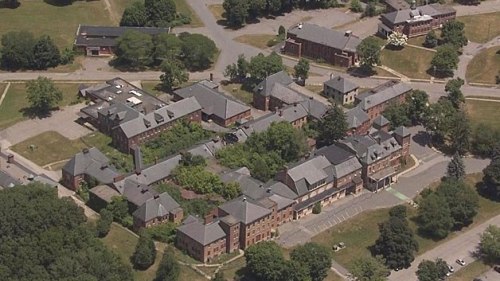
Medfield bought the Medfield State Hospital a few months after Westboro bought the Westboro State Hospital, both under the same state partnership program.  Westboro has just cut a deal for dense over 55 housing (700 units on 38 acres), while keeping much of the site for town purposes.  The Westboro State Hospital site is near Rte. 9, and reportedly therefore more valuable.

This article yesterday in the Worcester Telegram & Gazette appears below –


WESTBORO – The town plans to sell about 38 acres of the former Westboro State Hospital property to a company that wants to build 700 housing units for people 55 and older.

After receiving three bids for the property and reviewing the intended use, selectmen voted unanimously to award the bid to Pulte Homes for $7 million.

The town will not receive all of that money.

The town purchased the 95 acres from the state in 2014 for $2.2 million, in the form of a zero-interest loan financed by the state over 10 years.

Under the land disposition agreement, the state will receive 45 percent of the proceeds, less the town’s cost while owning the property.

Town Manager James J. Malloy said it looks like the split will work out to be approximately $3.1 million for the state and $3.9 million for the town.

The town and the developer are finalizing the purchase and sale agreement, which is expected to be before selectmen Dec. 20 for approval.

“This is a really nice opportunity for us. It’s a once-in-a-lifetime shot,” Mr. Malloy said.

Town officials are excited about the project, which will have no effect on school enrollment and limited traffic impact. The town also will reap approximately $6 million to $6.5 million in annual projected tax revenue at full build-out.

“This is a property that the town has never collected property tax from in the past, and this provides a new revenue stream that will offset some additional projects the town is seeking to undertake,” Mr. Malloy said.

He said the town is looking at a potential library expansion project; a stand-alone pre-kindergarten building and renovations to Hastings Elementary School; replacement of the Fales Elementary School; and a Community Recreation Center. The estimated new tax revenue generated from a full build-out would pay the town’s cost of the future projects, Mr. Malloy said.

The proposed housing site, as designed, also fits nicely with a master plan the Recreation Department has been working on for the remaining approximately 57 acres that the town will retain. The land the town will keep includes six soccer fields that have been used for more than 20 years, as well as all waterfront areas along Lake Chauncy.

The state retained 12 acres where the state Department of Youth Services operates a girls’ detention center, and 6 adjacent acres where a new boys’ detention center is planned to be built. If that happens, the town would take ownership of the 3.53 acres where the boys’ detention center is currently located at no additional cost, Mr. Malloy said.

The town has asked Pulte to consider incorporating one of the two unsuccessful bids into its project. Gary Sloan Studios in Northboro bid $100,000 to acquire one building to convert into a studio with pop-up art exhibits. Reid A. Blute, Pulte’s vice president for land, said the request will be considered.

The other bid was from Lyman Street Development, owned by Nel Anton of Hopkinton, for a mixed-use development that would contain 300 housing units for people 55 and older, hotel/conference space and retail, restaurants and entertainment uses. The bid was for $2.1 million, but it also required waiving of water and sewer connection fees, estimated to cost between $1.9 million and $4.2 million.

Mr. Malloy said the latter proposal would have made a negative financial situation for the town.

Mr. Blute said the company is excited about having been chosen to develop the active adult community with recreational amenities on the land. He said it could be a couple of years before construction begins, after the permitting process. Full build-out and home sales could span six to seven years, he said.

“We know Westboro very well. We’ve been here for many years. We’ve built other homes in town and many communities in surrounding areas,” he said. “Westboro is a very desirable community and very well located for services and commuter access.”

The property dates to 1848, with the establishment of the Lyman School, and in 1884 the Westboro Insane Hospital was opened. The name was changed to Westboro State Hospital in 1907, and it was placed on the National Register of Historic Places in 1994. It closed in 2010.

The hospital’s peak population was 2,100 patients. It once employed a staff of 800. By 1984, there were only 260 patients and a staff of 397, according to National Register documents. Patients were treated for conditions such as melancholia and acute psychiatric disorders, and at one point, there was a population of “criminally insane women” in the 1940s, some of whom, because of crowding and “lack of proper accommodations, had killed an unspecified number of other patients,” according to documents detailing the hospital’s history.

Atlanta-based Pulte Homes began more than 60 years ago. It has built homes in 27 states. The New England headquarters is at 115 Flanders Road. More than 6,000 homes have been built in New England since the 1990s. Two of the first projects are the 12-home Prentiss Forest in Westboro and the 33-home Higgins Farm in Hopkinton.

In the region, the company has also built homes in Worcester, Berlin, Grafton, Northbridge and Upton.

MEC minutes from

MEC

DRAFT Minutes:  Medfield Energy Committee: November 10, 2016 at Town Hall

Attendees: Fred Bunger, Pete Peterson, Paul Fechtelkotter, Marie Nolan, Jerry  McCarty, Maciej Konieczny, Cynthia Greene and Axum Tefara by phone

  1. October 13 meeting minutes   The committee also met on October 27 to go over the Green Communities Table 4, but minutes were not recorded.
  2. Green Communities (GC). Mike Sullivan sent the GC package that included a letter of introduction, the plan, table 4 and a link to all of the audits to the Board of Selectman (BOS) and the School Committee (SC) on 11/7.  Fred made a change to Table 4 removing the $500K for the boiler and replacing it with a zero as the boiler installment has already been done.  This reduces the cost of the entire plan from $1.7 M to $1.2 M.  Fred’s letter with the package asked that both organizations contact him with any questions.  He has not had any inquiries yet.  At both meetings Fred will explain that the dates in Table 4 can be changed.


Axum has sent the draft energy package to Kelly Brown for her review, but she does not expect that Kelly will have comments before the BOS and SC meetings.  She does not expect substantive comments from Kelly.  Axum will need at least an hour to upload the remaining documents from Medfield so that she can complete the package by 5 pm on 11/21.


Axum can attend both the BOS and SC meetings.


Once the Green Communities package is accepted by DOER, the designation event will be held with Secretary Beaton in January.  He will hand out the big checks at that meeting.  Medfield will then determine which projects we want to fund with the $148K designation grant in the first year and submit that project list by February or March.   DOER will review and approve the projects and Medfield will receive the funds in March or April.  Medfield can apply for subsequent competitive grants of up to $250K each year after we submit an annual report and show how we have spent the previous year’s funds.


Next Steps:

  • 11/14 School Committee meeting. The meeting may be postponed to 11/21 as the notice for the meeting was not put out in time to meet open meeting law requirements.  This could be a problem as the package submittal is due by 5 pm on 11/21.

ACTIONS:

  • Fred Bunger has sent a note to Kelly Brown explaining the situation and asking if we can have an extension on the submittal time for the letter from the school committee.
  • Fred will also see if the School Committee is willing to have a special meeting to consider the GC package before the 11/21 meeting.
  • Fred will notify the MEC members if the meeting is on for 11/14 so that some can attend with him.
  • Fred will contact both the BOS and SC to see if they have any questions on the package.


  • 11/15 Board of Selectman meeting. Several members will attend with Fred.
  • Remaining items to be submitted:
  • Criteria 1 and 2 information – DONE – Sent in by Sarah Raposa
  • Letter from Mark Cerel saying that an expedited permit can be done within one year. This letter was drafted in 2014, but never finalized.  Marie supplied the draft letter.

ACTION: Fred will ask Mike Sullivan to get Mark’s signature on the letter so it can be submitted.

  • Criteria 4 on fuel efficient vehicles. We need to complete the inventory.  For the older vehicles, we can leave the mileage blank as it may be difficult to determine the miles per gallon for some of them and we can just list how the vehicle is used.

ACTION:  Maurice and Andrew are working on this.


We discussed Table 4 and the start dates for projects.  Jerry said that from his experience in Weston, we can change the dates in the Table when we send in the package for the $148K designation grant.    We may want to do the EMS retro-commissioning in 2017 as it has a longer payback.  Jerry explained that the biggest problem for Weston was the plug load in the schools as more and more electronics are being used.


The plan also contains long term goals that include maximizing energy efficiency in the town buildings, adopting a certifiable green building standard, a routine demand response program and purchasing fuel efficient vehicles.  The plan includes setting aside funds for a town energy manger.


  1. Solarize Medfield will end on November 30, 2017.  Marketing has included Medfield TV, dinner meetings with Memo and the Lions and handing out leaflets at Chowder fest.  New England Clean Energy has had 185 contacts, 133 desk analyses, 53 site assessments (only one was not feasible), and 52 homes received proposals.   Of those, 14 will not being going forward and 13 systems have signed up for a total of 124 kW totals.  The goal of the project was to double the number of homes with solar which would have been 30 additional properties.  Fred Bunger reported that he had an assessment and that it was professionally done, but that he will not be able to install as his condo association will not allow solar.

Maciej explained that the SREC program will be changing to a 15 year tariff system after 1/8/17.  Those systems that are installed before 1/8/16 will still receive the SREC 2 for 10 years.  Marie will contact MA CEC for more information on this change.

Several members have noticed that the Veterinarian’s office on Rte. 27 has removed their solar panels.   Marie will call to find out why as she said the owner was happy with the panels.

  1. Public Safety Building – The solar panels have been delivered and they should be installed next week.


  1. DPW Garage Solar – We will need to redo the economics for this project because of the change to a solar tariff system. We should look to put a bid out in January.
  2. Capitol review – Jerry is doing a capital review of the town’s buildings for the BOS and the SC to determine what projects should be put in the capital plan. He will coordinate with the Energy Committee.   He is interested in having all of the EMS report to a central location.


  1. MEI – After we get through the GC submittal, we will have a discussion of the MEI results for the town’s buildings.


  1. Next meeting December 14, 7:30 pm at the DPW garage.

Meeting adjourned at 9:20 pm


Respectfully submitted by Cynthia Greene

Medfield Inclusion Project

Email from Suzanne Siino, after the first meeting of new initiative –

andrew-siino-bb

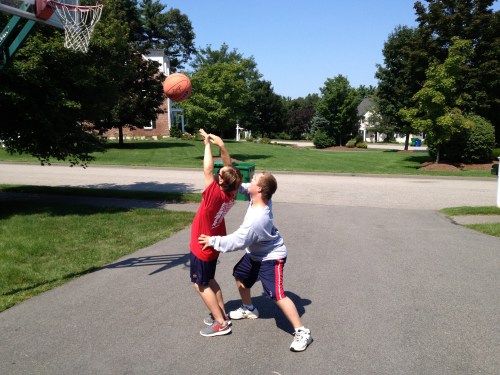
Thank you for attending the informational meeting for the Medfield Inclusion Project/40Better at the UCC Church last week.  The idea of housing for individuals with disabilities was met with overwhelming support. I am hopeful that you will be part of a team that will be meeting regularly to brainstorm creative and innovative ways to open doors for those who could benefit from supported housing.   This is also a unique way to address the towns 40B deficit, both short and long term.  This is a project that will positively impact the lives of many local families.  Your attendance will make a difference!


Be a part of the solution!    The holidays are a time of giving, we need you~


A CALL TO ACTION

Tuesday,  December 20, 2016  7 pm  Medfield Public Library Meeting Room

Tuesday, January 3, 2017  7 pm  Medfield Public Library Meeting Room


With sincere thanks,


Suzanne Siino

Pearl Harbor Facts

From an American Association for Justice attorney colleague in NJ, Tom Vesper –

25 Interesting Pearl Harbor Facts

  1. The Japanese used the codename “Operation Hawaii” for the attack on Pearl Harbor. This later changed to “Operation Z.”
  2. The Japanese specifically chose to attack on a Sunday because they believed Americans would be more relaxed and thus less alert on a weekend; indeed, many U.S. servicemen were either still in their pajamas or eating breakfast in the mess halls when the attack on Pearl Harbor began.
  3. Attack commenced at 7:55 A.M. on Sunday, December 7, 1941 and lasted 110 minutes, from 7:55 a.m. until 9:45 a.m.
  4. The Japanese launched their airplanes in two waves, approximately 45 minutes apart: The first wave of Japanese planes struck Pearl Harbor at 7:55 a.m. The second wave reached Pearl Harbor around 8:40 a.m.
  5. When Japanese Commander Mitsuo Fuchida called out, “Tora! Tora! Tora!” (“Tiger! Tiger! Tiger!”) upon flying over Pearl Harbor, it was a message to the entire Imperial Japanese Navy telling them they had caught the Americans totally by surprise.
  6. The Japanese traveled 3,400 miles across the Pacific to execute their attack on Pearl Harbor, after the Japanese attack force stationed itself approximately 230 miles north of the Hawaiian island of Oahu.
  7. Plans for a surprise attack against the United States were begun as early as January of 1941.
  8. Japanese were led by Vice Admiral Chuichi Nagumo; his “Attack Task Force” consisted of 6 aircraft carriers, 2 battleships, 2 heavy cruisers, 1 light cruiser, 9 destroyers, 8 tankers, 23 fleet submarines, 5 midget submarines, 414 aircraft
  9. U.S. servicemen identified the invading planes as Japanese because of what they called the “meatballs” – the large, red circle (the Rising Sun) on the side of Japanese planes.
  10. The Japanese only attacked the ships at Pearl Harbor Naval base and airplanes at Hickman Airfield, leaving surrounding areas such as repair facilities, the submarine base and fuel oil storages areas unharmed
  11. The Japanese struck the airfields at Hickam Field, Wheeler Field, Bellows Field, Ewa Field, Schoefield Barracks, and Kaneohe Naval Air Station.
  12. The United States aircraft carriers, the primary target of the attack, were not at the base at the time; because of this fact, the Japanese commanders decided to cancel a planned second attack that same day.
  13. There were 8 battleships at Pearl Harbor that day, which included all the battleships of the U.S. Pacific fleet except for one (the USS Colorado); 7 of the 8 U.S. battleships were lined up in “Battleship Row.”
  14. All eight U.S. battleships were either sunk or damaged during the attack. Amazingly, all but two (the Arizona and the Oklahoma) were eventually able to return to active duty.
  15. Four of the American battleships stationed in “Battleship Row” were sunk. Another was capsized and a sixth run aground
  16. USS Arizona exploded when a bomb breached its forward magazine (i.e. the ammunition room). Approximately 1,100 U.S. servicemen died on board.
  17. After being torpedoed, the Oklahoma listed so badly that it turned upside down.
  18. During the attack, the Nevada left its berth in Battleship Row and tried to make it to the harbor entrance. After being repeatedly attacked on its way, the Nevada beached itself.
  19. To aid their airplanes, the Japanese sent in five midget subs to help target the battleships. The Americans sunk four of the midget subs and captured the fifth.
  20. TheJapanese sunk 11 other ships and destroyed 188 planes; 2,343 men were killed, 1,272 were wounded and 960 left missing; A total of 2,335 U.S. servicemen were KIA + 1,143 WIA; 68 civilians were also killed and 35 wounded
  21. The Japanese lost 65 men, with 1 additional man captured; only 28 Japanese planes were shot down and 5 midget submarines sunk
  22. US declared war on Japan next day, December 8, 1941, as FDR gave his famous “Day of Infamy” speech to Congress; FDR made a last minute edit to his speech, changing “a day that will live on in world history” to “a day that will live in infamy”
  23. The U.S. declared war on Germany and Italy on December 11, after they declared war on the U.S.
  24. There was a floating National Monument erected on the hull of the sunken Arizona in 1962
  25. “Remember Pearl Harbor!” became a rallying cry for the U.S. during World War II.

Pearl Harbor – The Silver Lining

An interesting story about the insight Admiral Nimitz had into the “Mistakes” the Japanese made when they bombed Pearl Harbor.

Tour boats ferry people out to the USS Arizona Memorial in Hawaii every thirty minutes. We just missed a ferry and had to wait thirty minutes. I went into a small gift shop to kill time. In the gift shop, I purchased a small book entitled, “Reflections on Pearl Harbor ” by Admiral Chester Nimitz.

Sunday, December 7th, 1941–Admiral Chester Nimitz was attending a concert in Washington D.C. He was paged and told there was a phone call for him. When he answered the phone, it was President Franklin D. Roosevelt on the phone. He told Admiral Nimitz that he (Nimitz) would now be the Commander of the Pacific Fleet. Admiral Nimitz flew to Hawaii to assume command of the Pacific Fleet. He landed at Pearl Harbor on Christmas Eve, 1941. There was such a spirit of despair, dejection and defeat–you would have thought the Japanese had already won the war.

On Christmas Day, 1941, Adm. Nimitz was given a boat tour of the destruction wrought on Pearl Harbor by the Japanese. Big sunken battleships and navy vessels cluttered the waters every where you looked. As the tour boat returned to dock, the young helmsman of the boat asked, “Well Admiral, what do you think after seeing all this destruction?” Admiral Nimitz ‘ s reply shocked everyone within the sound of his voice. Admiral Nimitz said, “The Japanese made three of the biggest mistakes an attack force could ever make or God was taking care of America . Which do you think it was?” Shocked and surprised, the young helmsman asked, “What do mean by saying the Japanese made the three biggest mistakes an attack force ever made?”

  • Nimitz explained. Mistake number one: the Japanese attacked on Sunday morning. Nine out of every ten crewmen of those ships were ashore on leave. If those same ships had been lured to sea and been sunk–we would have lost 38,000 men instead of 3,800.
  • Mistake number two: when the Japanese saw all those battleships lined in a row, they got so carried away sinking those battleships, they never once bombed our dry docks opposite those ships. If they had destroyed our dry docks, we would have had to tow everyone of those ships to America to be repaired. As it is now, the ships are in shallow water and can be raised. One tug can pull them over to the dry docks, and we can have them repaired and at sea by the time we could have towed them to America. And I already have crews ashore anxious to man those ships.
  • Mistake number three: every drop of fuel in the Pacific is in top of the ground storage tanks 5 miles away over that hill. One attack plane could have strafed those tanks and destroyed our fuel supply. That ‘ s why I say the Japanese made 3 of biggest mistakes an attack force could make or God was taking care of America .

I’ve never forgotten what I read in that little book. It is still an inspiration as I reflect upon it. In jest, I might suggest that because Admiral Nimitz was a Texan, born and raised in Fredricksburg , Texas –he was a born optimist. But anyway you look at it–Admiral Nimitz was able to see a silver lining in a situation and circumstance where everyone else saw only despair and defeatism. President Roosevelt had chosen the right man for the right job.

We desperately needed a leader that could see silver linings in the midst of the clouds of dejection, despair and defeat.

There is a reason that our national motto is, IN GOD WE TRUST.


SUPPORT OUR TROOPS. WITHOUT THEM, WE WOULDN’T