The following letter was received by the Board of Selectmen today, wherein Department of Housing and Community Development approved the John Kelly 40B at the corner of Dale Street and Route 27. –
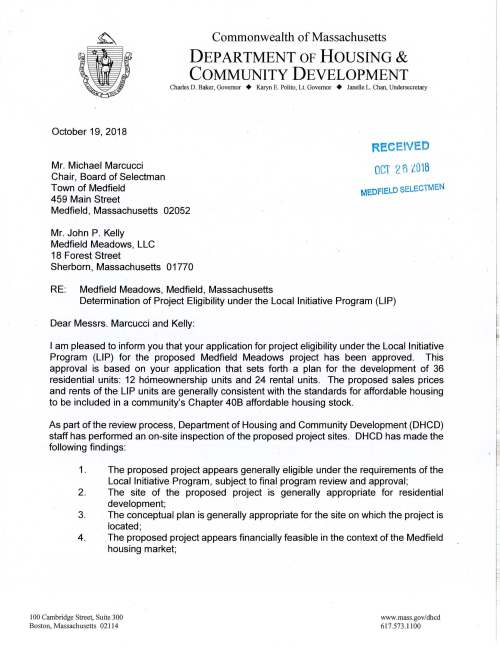
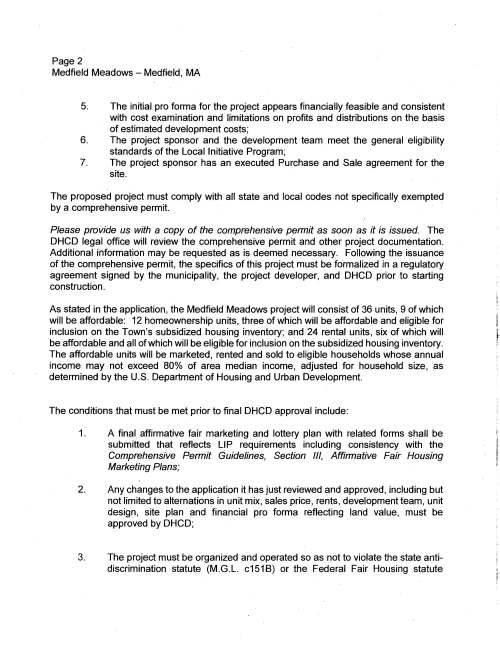
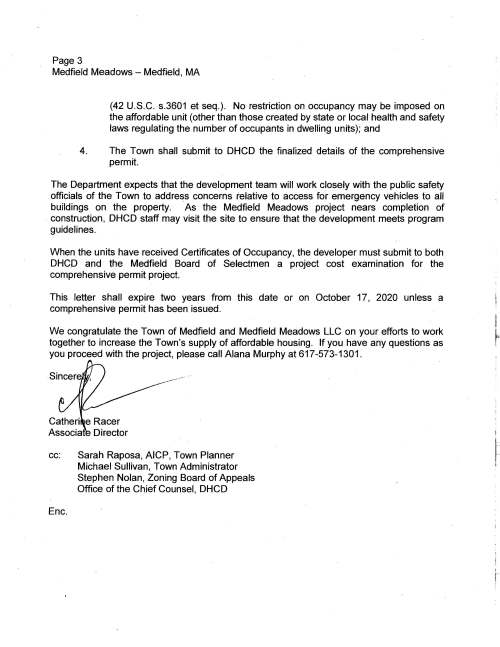
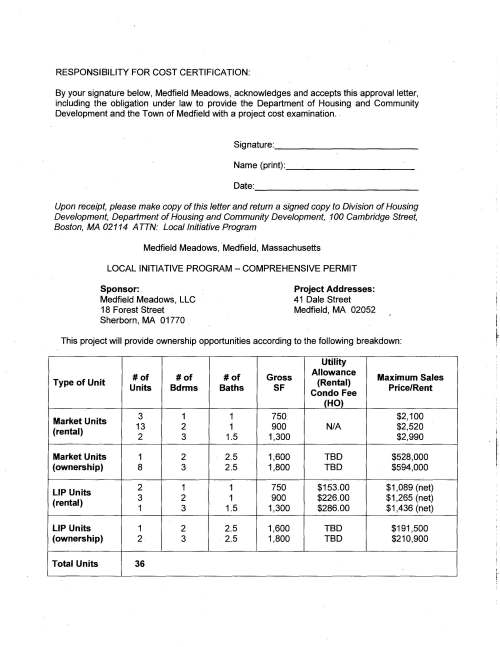

The following letter was received by the Board of Selectmen today, wherein Department of Housing and Community Development approved the John Kelly 40B at the corner of Dale Street and Route 27. –
Comments Off on DHCD OK’s Medfield Meadows
Posted in Affordable housing / 40B, Development, Downtown, State
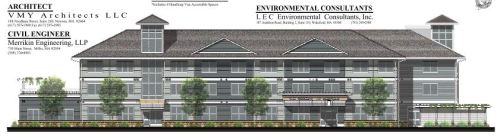
I have been asked enough about the status of the Rosebay project that I thought I would share what I know. Rosebay is the private development proposal for 45 units of senior affordable housing on Medfield Housing Authority land that is directly adjacent to Tilden Village on Pound Street. Rosebay would be all seniors, all rental, and all affordable. The developer is Brian McMillin of NewGate Housing LLC of Westwood, who was selected by the Medfield Housing Authority. Brian McMillin previously worked for Gatehouse, at the time Gatehouse built The Parc in Medfield.
In general, the Board of Selectmen have been pushing to have more affordable housing, especially for seniors, so conceptually I support the Rosebay project.
The town’s active and effective Affordable Housing Trust has been meeting with the Rosebay developer and I understand that the Affordable Housing Trust has been advancing the Rosebay project as part of the town’s solution to our affordable housing needs. I also believe that the Affordable Housing Trust even provided some monies for fees to that developer to advance the project.
The Town of Medfield is in a good spot at the moment with respect to unfriendly 40B proposals because we are currently in a safe harbor, meaning that:
I believe that we have about another year and a half of safe harbor remaining, but we also have several irons in the fire that could extend that time frame.
So as long as we remain in that safe harbor, the Zoning Board of Appeals of the Town of Medfield can turn down any 40B that it does not like on the basis that we are in that safe harbor, and the developer cannot end run the town by appealing for state approval to the Housing Appeals Committee (HAC) at the DHCD for an approval. The HAC routinely approves any developer’s 40B developments turned down by towns, but the HAC will not overturn a ZBA denial based on our being in a safe harbor, while we continue to be in that safe harbor.
The Board of Selectmen will soon send a letter to Department of Housing and Community Development opining about the suitability of the Rosebay project in general, and we would welcome citizen input as part of our formulation of that letter.
The project is not looking to be a Local Initiative Project (LIP), which is a town endorsed 40B. The need for that town endorsement of a LIP gives the Board of Selectmen a high level of control over any LIP. The Board of Selectmen therefore does not have that same high level of input and control over Rosebay that we would have if it were a LIP.
In this instance the Zoning Board of Appeals will be the main town entity that will deal with the nuts and bolts issues of the Rosebay project, and that will seek to ameliorate the proposed project and its impacts on both the neighbors and the town. The ZBA has even greater than usual control over the Rosebay proposal, because of the fact that we are in a 40B safe harbor, and any ZBA denial should be supported by the HAC.
I am trusting the Zoning Board of Appeals to see that the details are worked out as well as they can be so as to minimize the impacts and effects of the project on the neighbors.
Today I got this email follow up, below, from the developer that the Medfield Housing Authority selected for the proposed project on Medfield Housing Authority land next to Tilden Village. I also met with the Legion and its developers this week about their plans, and the issue of how their timing fits in to the town’s safe harbor needs, so I asked Brain McMillin about the timing of his plan, and he reported “it’s not out of the question that it could take until 2022 or 2023 until these units are ready to be leased up.” –
I should probably point out that The Rosebay at Medfield is not public housing, so it is technically not an expansion of Tilden Village. It will be a privately-owned development located on land leased from the Medfield Housing Authority under a long-term ground lease.
Although it will not be public housing like Tilden Village, all of the units in the proposed development would still be affordable and age-restricted (62+) to meet the Housing Authority’s requirements. For the Town of Medfield, all 45 of the proposed units would count toward its Chapter 40B Subsidized Housing Inventory and further goals stated under its Housing Production Plan.
The basic structure we have proposed is fairly common and has been used around the country for privately-owned developments built on housing authority land. We are aware, however, that that it may require some explanation and we plan to provide that detail during our Comprehensive Permit hearing before the Zoning Board.
Regards,
Brian J. McMillin | NewGate Housing LLC
Comments Off on The Rosebay at Medfield
Posted in Affordable housing / 40B, Buildings, Development, Downtown, Seniors
This email yesterday from Sarah Raposa about the Medfield Housing Authority’s planned expansion adjacent to its Tilden Village site having taken its first step by means of a filing with the Department of Housing and Community Development –
===========================================================
We haven’t received the hard copy from DHCD but Mike was cc’d on the submission to DHCD.
Here is the link to the application on the Town’s website:
http://ma-medfield.civicplus.com/CivicAlerts.aspx?AID=59
Best, Sarah
Sarah Raposa, AICP
Town Planner
===========================================================
The developer, Brian McMillin of NewGate Housing LLC, Westwood, MA stated to me that while the plans are “available on the Town’s website. . . they are a required step in preparing to file for a Comprehensive Permit for The Rosebay at Medfield, and they contain only basic preliminary information. More detailed information regarding the proposed development will be provided in the Comprehensive Permit application.”
Posted in Affordable housing / 40B, Development, Downtown, Seniors
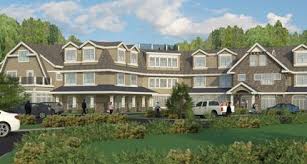
The Zoning Board of Appeals of the Town of Medfield voted to deny a special permit to the proposed LCB assisted living facility on Main Street, whose application has been pending for two and a half years. The entire decision is available here 20180621-ZBA.LCBdecision), and the essential excerpts appear below.
=========================================================
TOWN OF MEDFIELD
Office of the Board of Appeals on Zoning
NOTICE OF DECISION
APPLICANT: LCB Senior Living
DECISION DATE: June 21, 2018
DATE OF FILING DECISION: June 27,2018
DECISION NUMBER: 1339
Posted in Development, Downtown, Permitting, Zoning
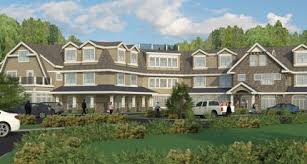
The permitting for the proposed LCB assisted living facility behind the Clark Tavern on Main Street with the Zoning Board of Appeals and the Planning Board is starting up again with a Zoning Board of Appeals hearing on 5/23 at 7PM at the Blake Middle School auditorium. In advance of that ZBA hearing Town Planner, Sarah Raposa circulated the most recent peer review by the town’s engineering consultants, BETA Engineering, dated 4/19/2016, which gives a summary of where things stand.
20160419-BETA-Medfield Senior Living Peer Review (002)
Also, I believe that there are still two outstanding and as yet unresolved apeals by LCB of the wetlands determination issues by the Town of Medfield Conservation Commission. I understand those appeals are pending with the state DEP and at the Norfolk Superior Court. The ConCom determined that Vine Brook is a “perennial stream” (i.e. it flows year round) and as a result that building setbacks are subject to the 200′ Rivers Act requirements. I believe that LCB takes the position that Vine Brook is only “intermittent,” and that therefore the Rivers Act setback do not control.
Below is Sarah’s transmission email to town department heads –
===============================================================
LCB is coming back from continuance-hiatus next Wednesday night (5/23) with the ZBA. I wanted to refresh your memories on the project and where Beta is at with the reviews. The application and plans may be viewed here: Dropbox Link
Attached is the most recent civil and traffic engineering review from Beta.
For some departments, your predecessors submitted comments on the project. Previously submitted comments are HERE. You may wish to update departmental comments, if so, please provide written comments by next Wednesday at 10 am.
Looking closely, I don’t having anything from the Fire Department (though I know Chief Kingsbury reviewed the plan).
I did not include the COA and School Dept. in 2015 but feel free to submit if you have any comments for the ZBA.
I do have several documents from the Historical Commission that I didn’t attach here but are online. I know you’ll be at the meeting on Wednesday to submit comments in person.
All are welcome to the public hearing session: Wednesday, May 23, 2017 at 7:00 pm at the Blake Middle School Auditorium.
Thank you,
Sarah
Sarah Raposa, AICP
Town Planner
459 Main Street
Medfield, MA 02052
(508) 906-3027
sraposa@medfield.net
Comments Off on LCB restart
Posted in Buildings, Business, Development, Downtown, Permitting, Planning, Zoning
From Sarah Raposa –
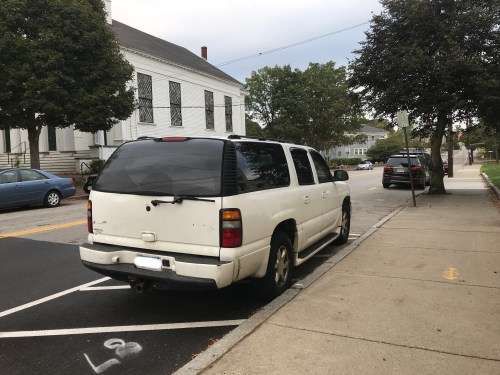
Reminder!
The Economic Development Committee (EDC) and their consultants from Nelson\Nygaard are requesting public input in formulating strategies for a parking management plan for downtown Medfield.
Please take our survey: www.surveymonkey.com/r/MedfieldParking
The survey closes Monday, March 26, 2018 at 8 am. Thank you!
Sarah Raposa, AICP
Town Planner
459 Main Street
Medfield, MA 02052
(508) 906-3027
sraposa@medfield.net
Comments Off on Take the parking survey
Posted in Downtown, Planning, Transportation
Medfield already has one Verizon permitted antennae on a light pole, in front of Palumbo Liquors, and according to this article, we may be seeing many more. The Board of Selectmen were told when presented with that pole antennae application, that in Massachusetts Verizon had the right to install on an existing pole. The town gets no revenue from that antennae. By contrast, the antennae on our two water towers pay, from memory, about $30K/year /antennae).

This is the first in two contributed articles on broadband access and local government’s role in building better connectivity for its citizens. Read the second one here.
NEWPORT BEACH, Calif. — Numerous state lawmakers are filing bills to encourage or even compel large cities to incorporate cell towers into existing municipal infrastructures. Not everyone is sold on the proposition.
Wireless carriers want to install miniature cell towers on utility poles and streetlights to keep up with fifth-generation—commonly known as 5G—cell phone technology. Carriers plan to install more than 250,000 small cell sites across the U.S. in the next few years, but they require broad access to public property in order to proceed. Legislators have introduced wireless siting bills in 25 states so far this year, with hopes to begin work on installations in 2018.
In Illinois, for instance, legislation intended to streamline this process has enjoyed a cold reception. The Small Cell Wireless Bill passed the Illinois House and Senate during the 2017 veto session, though State Senate President John Cullerton decided to hold the legislation after public outcry from area communities. Policymakers said they hoped to negotiate with local officials who have called on Gov. Bruce Rauner to veto the bill.
Meanwhile, both sides of this ongoing debate have been clashing in California Gov. Jerry Brown late last year vetoed a bill that would have made it easier for telecommunications companies to install the small transmitters on public property. Brown argued the permitting process for new technology must be weighed against the right of local governments to manage public property under their jurisdiction.
Skeptics claim these small cell sites will be more of an eyesore than an asset, but city dwellers should welcome this beneficial blend of private tech and public property.
A Rising Tide Lifts All Ships
Opponents argue that this integration of street furniture and tech will harm community aesthetics and historical preservation. Local and state representatives who oppose the legislation, however, will cause self-inflicted wounds to the long-term prosperity of their communities.
By attaching small cell antennas to streetlights and other street furniture, carriers will be able to use 5G technology to deliver wireless data much more effectively. Wireless customers in affected areas will enjoy improved coverage, fewer dropped calls, and faster download speeds.
5G technology saw an informal test in Minneapolis during Super Bowl LII, after Verizon crews installed 250 of the small cell sites throughout downtown Minneapolis to accommodate the hundreds of thousands of out-of-town visitors for the big game. The stadium itself was blanketed in wireless signals, with antennas hidden in everything from handrails to small boxes scattered among the stadium’s seats.
As 5G technology gains traction, wireless carriers hope to eventually supplant cable as the primary provider of home internet service. Speeds on 5G networks are better than traditional cable internet, and the wireless service can compete with high-end fiber networks. Homes within reach of these small cell sites would no longer require wired connections, but the infrastructure for this sort of network does not exist in many communities. As a solution, carriers want to pepper small cell antennas on existing street furniture.
Critics contend the wireless industry’s initiative will roll back public efforts to expand broadband access to underserved and rural areas. In truth, the push to install cell antennas on public furniture would actually support these efforts by forcing cable providers to bolster their infrastructure and reduce their rates in order to remain competitive.
According to Deloitte, the U.S. must spend more than $100 billion over the next five to seven years to support fiber infrastructure demands. Wireless providers can ease this burden by densifying their networks, increasing consumer access along the way. Carriers would partner with municipalities to design, permit, and construct saturated wireless networks, benefitting all parties involved.
Residents want improved connectivity, but they fear unsightly additions to city structures. To mitigate this aesthetic issue, cities should require companies to shroud antennas and install non-transmitting equipment below ground.
In exchange, cities should agree to give wireless carriers and cable companies a free market in which to solve the digital divide. To build seamless networks, wireless companies will need to serve all high-density areas — including impoverished districts. By simplifying the installation and permitting processes, cities will be able to facilitate better services for their citizens with minimal effort.
Leaping from Legislation to Implementation
Before this technology can change things for the better, local leaders must modify municipal policies and procedures. Steep lease rates for cell towers on private property inflate the operating expenses of wireless carriers. Low-cost access to public street furniture would remedy this issue, reducing operating expenses for carriers and freeing up capital for infrastructure improvements and denser networks.
Many municipalities lack defined fee structures and approval processes for the corporate use of public property. By creating straightforward licensing procedures, cities can help carriers plan ahead for new networks. Public works departments should interfere as little as possible, only stopping proposals that overstep the common sense of aesthetics and function. If cities keep rates fair and permitting reasonable, carriers can pass their savings on to customers.
Communities that oppose the installation of 5G technology on their assets risk falling behind other municipalities that cooperate with carriers. Technology-fueled startups and participants in the gig economy prefer areas with better technology. If one city is saturated with high-speed wireless service while another avoids upgrades, startups are more likely to flock to the city with the better technological offering.
Fast internet service is the lifeblood of the global economy. In nations with fewer regulations on wireless infrastructure, carriers provide denser networks with better service at lower costs. Without reliable, affordable access to these advanced systems, American communities will trail behind their global counterparts.
To remain globally competitive, government officials must work with the wireless industry to rethink commercial access to public assets. By cooperating with carriers on permitting and reasonable use rates, municipalities can create room for compromise on the shrouding and location of new equipment. Opening city hall for business will create new economic opportunities for wireless generations to come
Comments Off on 5G may look different in Medfield
Posted in Downtown, Permitting, Technology
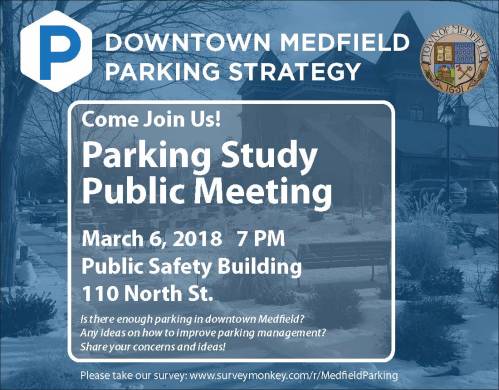
Downtown Medfield Parking Strategy Public Meeting
Tuesday, March 6, 2018
7:00 PM - 9:00 PM
Public Safety Building (First Floor Training Room)
The Economic Development Committee (EDC) and their consultants from Nelson\Nygaard will discuss and request in formulating strategies for a parking management plan for downtown Medfield. This process is funded by a grant from the Massachusetts Downtown Initiative Technical Assistance (MDI) Program. The guiding principle of the MDI is to address economic and community development needs holistically and provide a framework of interrelated activities that promote positive change in a downtown to keep it healthy and prosperous. The EDC would like to hear from property owners, business owners, residents, and users of the downtown about locations and availability of spaces, walkability, safety, and signage.
Please take our survey: www.surveymonkey.com/r/MedfieldParking
All are welcome to share concerns as well as ideas on how to improve parking management!
Sarah Raposa, AICP
Town Planner
459 Main Street
Medfield, MA 02052
(508) 906-3027
Comments Off on
Posted in Downtown, Planning, Transportation
We need to plan for the changes autonomous vehicles will make in town, and to new developments, such as at the former MSH site. I think this will be a boon to older residents who are no longer driving themselves, and also as a way to network various parts of town to the downtown and to one another, and, also, to link us to regional transportation hubs. This article is from Efficient Government –

They are not the future, in some cities, driverless taxis are taking riders now. Auto manufacturers are also ramping up orders and requesting Federal approvals for autonomous level four vehicle production.
Driverless taxis are already on the road in Pittsburgh, and GeekWire is covering all the details of what’s happening at the facility where 200 Volvos, equipped with LIDAR cameras, drive themselves in and out. According to Uber’s website, the test drives are collecting data with real passengers excited to take their self-driving selfiies:
We’re piloting a program now where you can get matched up with a self-driving Uber when you request uberX. When you do, you get a glimpse of the future AND access to the selfie machine. Mind. Blown.
But it’s not just Uber, and it’s not just Pittsburgh. Driverless taxis are operating in Phoenix, Arizona, and coming to Greenville County, South Carolina, and at least to the seven states that have already authorized autonomous vehicle operation.
According to the Greenville News, the Federal Highway Administration awarded the county $4 million to develop a public automated taxi system that would be the first of its kind in the nation.
These funds will help Greenville County lead the nation into a future with more driverless vehicles, which will improve mobility for some and reduce traffic congestion for all,” Acting Federal Highway Administrator Brandye L. Hendrickson said.
According to ArsTechnica, Waymo, the company conducting the first U.S. public trial of self-driving cars in Phoenix, just placed an order for an overwhelming number of Chrysler Pacifica Hybrid minivans. The Google-spawned company suggested it is moving beyond self-driving tests in Phoenix, Michigan and Atlanta and scaling up for wider autonomous vehicle operations.
With the world’s first fleet of fully self-driving vehicles on the road, we’ve moved from research and development, to operations and deployment,” said John Krafcik, CEO of Waymo.
According to NBC News, General Motors (GM) plans is asking to sweep seven states with driverless taxis by 2019.
GM asked the National Highway Traffic Safety Administration for waivers covering 16 regulations, said Kyle Vogt, the CEO of Cruise Automation, an autonomous technology company owned by GM. With Federal and state approvals, the company said it would produce 2,500 driverless Chevrolet Bolt electric vehicles per year.
In addition to driverless taxis, cities like Las Vegas are testing driverless shuttles.

Comments Off on Autonomous vehicles arrive
Posted in Development, Downtown, Technology, Transportation
Medfield Select Board member
I started this blog to share the interesting and useful information that I saw while doing my job as a Medfield select board member. I thought that my fellow Medfield residents would also find that information interesting and useful as well. This blog is my effort to assist in creating a system to push the information out from the Town House to residents. Let me know if you have any thoughts on how it can be done better.
For information on my other job as an attorney (personal injury, civil litigation, estate planning and administration, and real estate), please feel free to contact me at 617-969-1500 or Osler.Peterson@OslerPeterson.com.
 | Zach on Warrant Committee’s slid… |
 | Donna Knott on Reading for “Read Across… |
 | Lester Cohen on Town’s Buildings Require… |
 | Select Board member… on Black Out at Budget Works… |
| Lester Cohen on Black Out at Budget Works… |
 EfficientGov
 Medfield02052's Blog