Category Archives: Uncategorized

Bag It 7PM Tues.

This from Nancy Irwin, Member of Plastic Bag Study Committee –

The Plastic Bag Study Committee is hosting a showing of Bag It next Tuesday, May 27, at 7 p.m. at Medfield Public Library.   We will discuss film afterwards, serve refreshments, and give out green-themed gifts to early arrivals.  Come one and all!  Thanks!  

MEC meets tonight

Medfield Energy Committee
May 21, 2014
AGENDA
7:30 pm in Chenery Room, Town Hall
I. Preparation of minutes of last meeting – April 7, 2014
II. Municipal Solar PV efforts
– Review of OATA proposal – see handouts sent by Fred D.
III. Regroup of GCA efforts after Town Meeting votes
– Identify follow-up action items to pursue in short and long term
IV. DOER Energy Manager grant award
V. Sagewell letter campaign to encourage Medfield oil-heated homes to get energy
assessments – status
VI. Public Safety Building Project– status report
VII. New members drive
VIII. Various Educational / Grant Opportunities
– webinars, solicitations, report on MCAN conference
IX. New Business
X. Set Date and Agenda for next meeting

State offers to review what we do

The Division of Local Services is part of the state’s Department of Revenue (DOR), and the DLS e-newsletter offers to review how towns are operating, and to make suggestions for improvements.  It looked like a worthwhile exercise to me for Medfield to ask to have.

DLS Offers New Technical Assistance Services
Technical Assistance Section

We are pleased to announce that the Division of Local Services has redesigned its long-standing and successful technical assistance program. Our goals in doing this are to reach more communities with these services, to provide more targeted recommendations, and to do so within a shorter time frame.

Financial management reviews in the past have typically included a comprehensive review of government structure, financial operations and fiscal health among other things. With the redesigned program, we will continue to review these fundamental municipal issues through on-site interviews and analysis, but the process will allow local officials to: 1.) self-identify areas where assistance is needed or can have the most positive impact, or 2.) rely on DLS to assist in defining the focus of the analysis through an on-site assessment process.

If you think your community might benefit from this new program, whether you have in mind an area of focus or would like assistance in determining which services best meet your needs, we are available to conduct telephone or on-site meetings with local officials to decide the most appropriate course of action.

Examples of the types of technical assistance services that the Division plans to offer are listed below:

1.  Review Financial Operations – We will review your core financial operations (or a single financial office) and, where necessary, make recommendations for improvement based on sound management practices.

2.  Assess Financial Condition/Fiscal Health – We will assess your community’s financial condition through the use of a scorecard and offer suggestions to improve the long-term outlook and strengthen fiscal health and flexibility.

3.  Analyze Government Structure – We will analyze your current government structure and provide recommendations designed to improve the day-to-day management and the level of accountability across your municipal government.

4.  Prepare Costing Study/Determine Indirect Costs – We will determine the full cost of providing a particular service such as water or sewer or analyze the indirect costs in an enterprise fund to determine if they are appropriate.

5.  Evaluate Information Technology Systems – We will evaluate your Information Technology systems to identify areas of potential risk and provide recommendations to ensure that systems are performing efficiently, that important data can be restored in the event of a disaster and that systems are adequate and secure for the future.

6.  Explore Feasibility of Regionalizing/Consolidating Services –We will explore the feasibility of regionalizing or consolidating government services either within a community or where two or more communities are involved.

7.  Examine Specific or Emerging Problems – We will review various issues that may have created financial problems for your community including those that have impacted a timely certification of property values, setting a timely tax rate or that have been raised by your auditors in the management letter.

To schedule a consultation, please call Rick Kingsley at 617-626-2376 or send an email to kingsleyf@dor.state.ma.us. All requests for technical assistance services should come from your chief executive officers (usually the board of selectmen or mayor in most communities).

Please visit the Technical Assistance Services webpage to read recent reports and view other resources

Names & titles

This on titles and names in the e-newsletter from the DOR –

Antiquated Titles
Tony Rassias – Bureau of Accounts Deputy Director

Today’s cities and towns exercise many oversight and regulatory functions, which isn’t to say that 200 years ago they didn’t. It’s just that many of those functions from 200 or more years ago have slipped out of sight during the passage of time and societal change. Let’s look at three of them.

1.) Ralph Waldo Emerson once held the title. So did William Cullen Bryant. Lesser known individuals like Joseph Wayte and Thomas Newhall saw to it in Malden, as did Dr. Israel Whiton in Winchendon and Allester Grime in Salem Village. Some of these names you know, others not so much, but all of them once held the title of Hog Reeve.

The job of the Hog Reeve, sometimes called the hog constables, swine ringers, hogreaf and hog wards, was to prevent or appraise damage caused by stray swine.  Back some time, hogs could run loose provided they were collared and had rings in their noses, which reduced the amount of garden and crop damage. The owners of stray swine were fined for any damage caused, provided the damaged party had a proper fence. (Could one have claimed that they didn’t heareth yon Town Crier hollereth the new law?) The swine were captured by the Hog Reeve and taken to the pound until they were claimed by their owner. The Hog Reeve could legally charge a small service fee.

It is written that the Hog Reeve was selected from amongst the newly married men in town. One town wrote that a person could not become a Hog Reeve until he experienced a change of heart.”  Another indicated that the position was facetious.

2.) They were the morals or religious police. It has been written that the only thing certain about them was that selectmen had to see to it that they were elected annually. They were the Tythingmen.

Their history goes way back to England when families were divided into groups of ten called “tithes” and were headed by a Tythingman who was responsible for their moral behavior. In the 1700s, they were an early form of police force, peacekeepers by way of informing a Justice of the Peace or the County Court of disorders or misdemeanors occurring in taverns and inns. Disorders such as excessive drinking, selling liquor without a license, gaming, dancing, or reveling could have resulted in tavern and inn keepers forfeiting their license. They reported those attending a music concert, sporting event or unnecessarily travelling on a Sunday. They patrolled the church watching for sleeping adults or disorderly boys and for their efforts could receive half of the fine paid.

By the mid-1800s and with the beginnings of community policing, opinions varied in some towns on the need and usefulness of electing Tythingmen. One town considered the Tythingmen as the most sedate and respectable men” in the town. Another admitted that the Tythingmen weren’t popular and their position wasn’t very desirable. An Essex County town refused to elect a Tythingman until they were ordered by a sheriff to do so. Eventually, Selectmen and Constables took over the role of Tythingmen in places. All this begs the question; did the Tythingmen see their demise coming?

3.) If everyone was named either Cooper or Hooper, I wouldn’t have to explain about staves, hoops, the chime, the bilge, a bung and withies. A cooper was a barrel-maker, the hooper was an assistant and the other words are all parts of a barrel. Barrels, casks, kegs and buckets were important years ago because so many dry and liquid goods were either stored or shipped in them.

Staves are the wooden pieces that make up the shape of the barrel and the hoops are the metal pieces that hold the wood together. It was important that the wood and hoops were properly made or else dry goods such as gunpowder would become moist and liquid goods such as water would escape. The Culler of Staves and Hoops was responsible for sorting through the staves and viewing the hoops to determine if they were properly made as required by law.

If your last name is Cooper (English), Tonnelier (French), Varelas (Greek), Cuypers (Dutch), Bednarski (Polish), Bodner (Yiddish), Toneleiro (Portuguese) or Bottai (Italian), your ancestors may have been barrel-makers!

The author would like to thank Bob Bliss, Regional Offices Manager at the Division of Local Services, and Wikipedia for their assistance.

Clark Tavern

Seeing the Linnerts’ attorney embracing people in front of the Town House this evening after leaving the ZBA hearing makes me think the ZBA must have approved the application to turn the Clark Tavern into a restaurant.  I was at a MFi meeting so I missed the ZBA hearing.

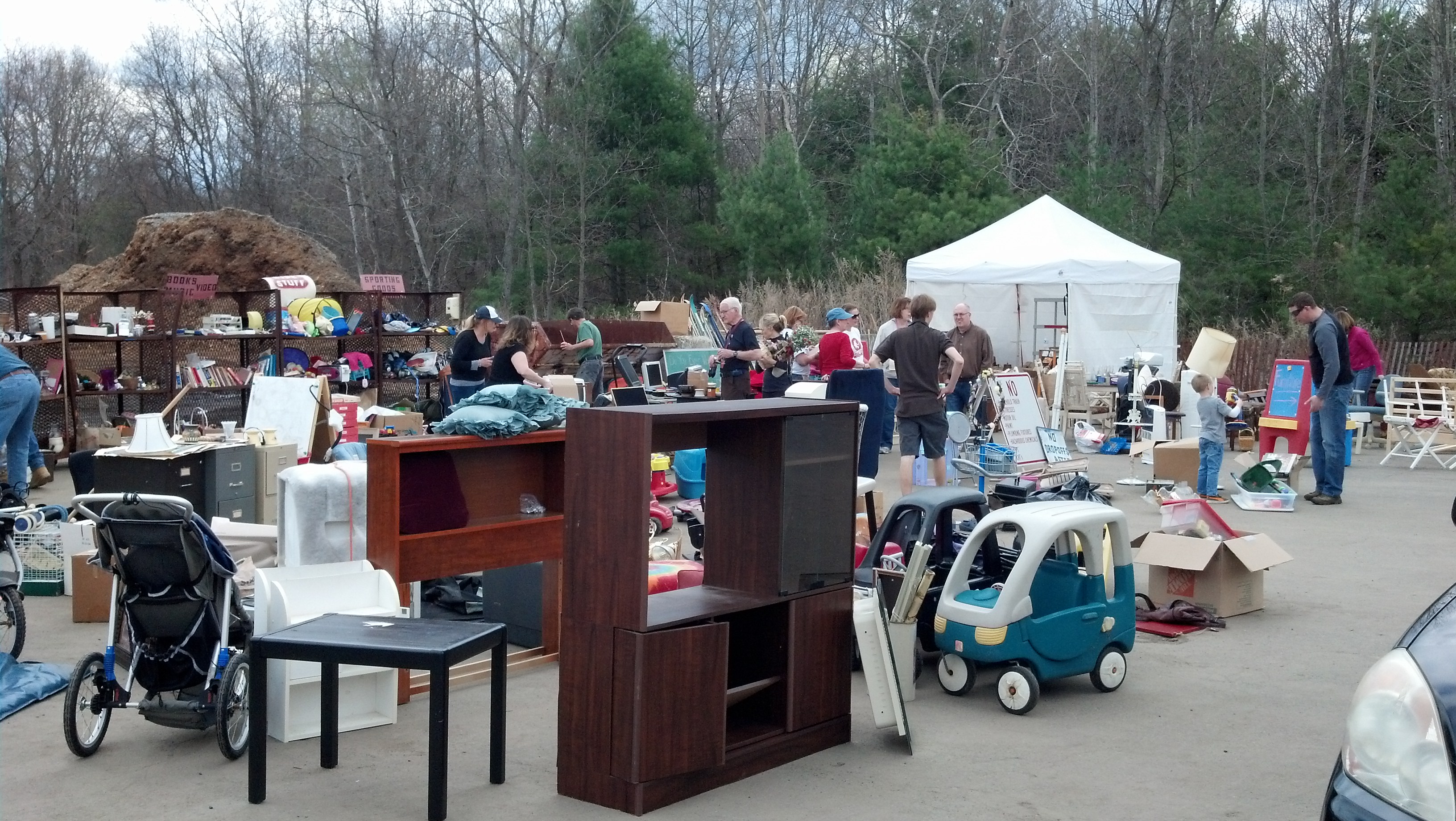
Swap area going great

Lots of stuff and lots of committee members and lots of organization.  Great start to their season.

Medicare $ to MD’s now on-line

The New York Times site provides access to the database on Medicare and Medicaid payments to physicians –

How Much Your Doctor Received From Medicare

CLICK HERE

Westwood wanted to be Nahatan

This was in the e-newsletter from the Division of Local Services of the DOR –

What’s in a Name?
Tony Rassias – Deputy Director, Bureau of Accounts

Massachusetts has 351 cities and towns and each one required a name at the time of its incorporation. But where did those names come from?

Historians often agree on the origin of a name, but sometimes no one, even those in the city or town, are really sure. The following is a brief compendium of those names, compiled through a number of sources, including those who have written about the history of their community.

I’ve divided the names into five categories based on their presumed origins. Here they are along with some examples of each:

Names and places from jolly old England or elsewhere in Europe:
Prior to the American Revolution, it was fashionable to name new settlements after places in England or after English royalty. Amesbury, Boston, Falmouth and Tolland likely honor the settlers’ towns of origin. Granville, Holland, Methuen and Orange were the names of English royalty, potential benefactors or simply someone for whom the settlers wished to honor. Avon was named after the English river and Cambridge after the University. As for other names, Berlin is German, Colrain and Charlemont are Irish, Leyden is Dutch, Melrose is Scottish, Orleans and Savoy are French and Pembroke is Welsh.

Names, places and events from the New World:
Adams and North Adams were named after Samuel Adams and Monroe after James Monroe. Both Washington and Mount Washington were named after George Washington. Franklin, Hamilton, Hancock and Revere were American Patriots during the Revolution while Webster honored Daniel Webster who rose to prominence during the Civil War. Carver, Everett, Gill and Winthrop were Massachusetts Governors and Phillips (Phillipston) was a Lieutenant Governor. Warren, Lee and Montgomery were Generals. Norwell and Huntington were benefactors, Palmer and Stoughton were Chief Justices and Alford, Brewster, Dennis and Princeton were preachers.

As for places and events, Belmont was the estate of the town’s largest donor and Ashland was Henry Clay’s Kentucky estate. Monterey was named after the Mexican War Battle of Monterrey that helped propel General Zachary Taylor to the Presidency, Greenfield after the Green River, and Arlington changed its name from West Cambridge to honor the heroes buried at Arlington National Cemetery.

Names that are in some way descriptive:
If the land separated from the north, south, east or west, that direction many times became part of the incorporated name. Northampton could have dual origins, either from its geography or as the namesake of Northampton, England. Middlefield was incorporated from surrounding lands. If the community’s name begins with “new,” it is probably because a community of that same name was already given within the Commonwealth such as New Marlborough (Marlborough) and New Braintree (Braintree). Newton was the “new town” at the time of its incorporation, Rehoboth and Salem were scriptural from the Hebrew and Sharon was named for Israel’s Sharon plain. Oak Bluffs was named for the oak groves along the bluffs and Marblehead because the first settlers mistook its granite ledge for marble. Concord was named for its “peaceful acquisition” and Somerville was just a “fanciful” name.

If the community’s name begins with “rock” or “stone” that was probably a prominent feature such as in Rockland or Stoneham. Rockport was named for the nautical shipping of high quality granite from its port, Buckland was said to have ample good hunting, Marshfield had its salt marshes and the amenable natural properties of Fairhaven brought about its name. When Goshen separated from Chesterfield, it took its name from the Land of Goshen, considered the best land in Egypt, because it was thought by some to be the best land in Chesterfield.

Names of Native American Tribes or descriptive names from the indigenous Tribal language:
In Wampanoag, Aquinnah means “land under the hill,” Mattapoisett means “a place of resting,” Seekonk means “black goose,” Scituate means “cold brook,” and Mashpee means “great pond” or “land near great cove.” In Algonquin, Nantucket means “faraway land or island” and Cohasset means “long rocky place.” In Nipmuc, Chicopee means “violent waters.” Swampscott means “land of the red rock” and Merrimac was the Tribal name and in their language meant “swift water place.”

Names with unknown or obscure origin:
For these, a call to the municipality’s historical society was necessary in order to find out what’s been embraced locally. Deerfield was named for all the deer sightings, Boxborough was cut out like a box, Spanish Florida was the topic of conversation in 1805 when the town of Florida was named and Plainfield was named for the plain fields in the center of town.

Here are a few more names of particular interest.

The last town to be separated from the west side of Dedham was to be incorporated as Nahatan. When the elected representative from Nahant objected to the name due to its similarity, it name was changed and in 1897 the town was subsequently incorporated as Westwood.

In 1778, the Town of Ward was incorporated honoring American Revolution General Artemis Ward.  After the United States Post Office objected because it was too difficult to distinguish Ward from nearby Ware, Ward changed its name to Auburn in 1837 after an area along the Charles River that Harvard College students referred to as “sweet auburn.”

Erastus Bigelow and his brother Horatio reportedly loved to visit the DeWitt Clinton Hotel in Albany, New York. The hotel was named after a former New York Governor who was instrumental in the building of the Erie Canal and whose uncle George Clinton was Vice President under Thomas Jefferson and James Madison. The Bigelow brothers founded a town in 1850 which they named Clinton. Wikipedia notes that many places around the country have been named after the Clintons.

Whether it was because Oliver Partridge was a suspected tory and an absentee proprietor as some said or that the name was just too long, in 1805 there was a petition to change the name of what was once known as Partridgefield to Troy. Instead, Reverend John Leland, an outspoken Baptist minister who in 1802 delivered by sleigh a 1,234 pound block of cheese as a gift to President Jefferson from the people of nearby Cheshire, suggested an alternative. A high mountain deserved a name mirrored its lofty status not just locally, but internationally. As a result, in 1806, Partridgefield was re-named Peru.

Similar Revolutionary War political embers were stoked when the people of Murrayfield discovered that one of their founders and the town’s namesake was actually a tory. Angered by the news, they petitioned the Legislature to change the name on the basis of the similarity of the name Murrayfield to that of Myrifield (now known as Rowe). The names of Mountfair and Fairfield were presented, but in 1783 the Legislature chose the name Chester.

Canton’s influential citizen, Elijah Dunbar, believed that the geographic opposite to the town on the other side of the world must be China.  This rationale may be that China trade was becoming important or simply that no one else had any better suggestions, but in 1797 the people eagerly voted the name of Canton for incorporation. Had anyone in the parish at the time had access to Google Maps, it can be theorized that Dunbar’s “antipodal” belief may have suffered in the final vote!

The author would also like to thank Bob Bliss, Regional Offices Manager, Division of Local Services, for his assistance.

My selectman office hours tomorrow 9-10

I have my first Friday of the month selectman drop in office hours tomorrow morning from 9 – 10 AM at The Center.

Wellfield/Water Tower Legislation Has Gone to Governor !

From Bill Massaro –