Posted onAugust 10, 2025|Comments Off on Norfolk Hunt Club PACE today at MSH
1922 NHC map – I was interested to see the “Poor Farm” and “Death’s Bridge” – latter apparently was the family’s name.
There are lots and lots of horses at the former Medfield State Hospital today as the Norfolk Hunt Club is running what I learned is called a Pace. I saw that the riders start at intervals and I was told they try to ride the many mile course through Medfield, Dover and Sherborn at the “right pace,” alternately walking, cantering, and galloping depending on the trail conditions. I understood that the target pace may even vary depending upon the level of expertise of the riders.
I was struck by the vast variety of horses – strikingly different markings, colors, and most surprising to me sizes.
This is one of my historic photos of the NHC’s drag hunt at Thanksgiving – today no one is dressed up in that finery and there are way, way more horses.
Comments Off on Norfolk Hunt Club PACE today at MSH
From a singular talent, an audacious new reach A musically dense score set to a pastiche of poetry, his ‘Music for New Bodies’ will be staged at Tanglewood Aug. 7.
By Malcolm Gay GLOBE STAFF
In 2015, The New York Times crowned composer Matthew Aucoin the “most promising operatic talent in a generation.’’ He was just 25 years old. “That is a serious curse to carry with you,’’ said Peter Sellars, a renowned opera director. “If the Times says you’re the future of American opera, and you’re still alive? That’s a miracle.’’ Raised in Medfield, Aucoin has seemingly fulfilled that promise in the ensuing decade, reaching the heights of the opera world as he won highprofile commissions, wrote a well-received book, and cofounded a critically acclaimed opera company. In case there was any doubt, the MacArthur Foundation made it official when it named him a fellow, an honor commonly referred to as a “genius’’ grant. Now, at 35, Aucoin has produced a singular musical work that is being hailed as revolutionary, an uncategorizable vocal symphony that represents a major departure — not just for Aucoin, but perhaps for operatic music more broadly. Aucoin will conduct the 70-minute piece, “Music for New Bodies,’’ with players from the company he cofounded, the American Modern Opera Company, known as AMOC, at Tanglewood on Aug. 7. Sellars, who is staging the work at Tanglewood, said Aucoin’s composition is closely attuned to the current cultural moment, as many people are distracted, overwhelmed, and apprehensive in their personal lives, while also coping with the existential upheaval brought on bygenerational challenges such as climate change or artificial intelligence. He compared “New Bodies’’ to the work of Italian composer Claudio Monteverdi, a pivotal figure in the creation of what is today called “opera.’’ “In the history of music, there’s this moment where music has to step in for things that we are still not able to describe because they’re too new,’’ said Sellars, who called it an emergent consciousness. “Matt’s piece is one of those turning-point pieces, which just begins to look forward and resists looking backwards. It’s trying to open into a way larger realm of experiences that we all know, and yet we have received inadequate language to describe.’’ Traveling between the personal, the commercial, the mythic, and the cosmological, “New Bodies’’ is musically dense. It pushes performers to the edge of what’s technically possible, while also drawing on a wide range of musical traditions, from Gustav Mahler to synth pop. The work grew out of a conversation Aucoin had with Sellars after the director saw a short piece by Aucoin that set to music a poem by Jorie Graham, a Pulitzer-winning poet at Harvard University and one of Aucoin’s early mentors. Working without a traditional commission, Aucoin said he was free to develop “New Bodies’’ without many of the logistical constraints that follow a commission, when music must carry the opera’s narrative, scene changes, and other practical considerations. “I think what defines this piece is creative freedom,’’ said Aucoin, who along with Sellars eventually lined up five groups, including AMOC, to commission the work. “We basically just made the piece that we wanted to make, and then found people to present it.’’ Sellars called the creative process “one of the things you dream of for a composer — not just write music to order, but really to explore with an open-ended sense of searching.’’ “Matt was on his own: He had no deadline, no assignment, and he could write something that was not following anybody’s instructions or that needed to respond to anybody’s programming needs,’’ he said. It’s a “piece of music that is appearing spontaneously from something that’s on his mind and in his heart.’’ The resulting work sets to music a number of Graham’s poems from the past decade or so, when she underwent cancer treatment. Enlisting five singers, a chamber orchestra, and electronics, “New Bodies’’ wrestles with questions of mortality, ecological devastation, technology, and the medical industrial complex. The singers frequently shift perspectives, alternately inhabiting the voice of a cancer patient, medical professionals, chatbots, the natural world, and even cancer-fighting pharmaceuticals as they make their way through her body. At a Lincoln Center performance earlier this month, varying hues of light raked the stage as Sellars had instrumentalists play alongside vocalists, forming and re-forming temporary musical clusters to create a dynamic soundscape. Aucoin said one aim of the piece “was to try to capture what it’s like to be alive right now in all of its contradictory, overwhelming intensity.’’ “It might feel like a total fever dream to some people because the music and the poetry are our guide,’’ he said. “But that felt, in a way, more honest to being alive right now than telling a nice, neat story.’’ With no explicit plot, “New Bodies’’ loosely follows a woman after she learns she has an aggressive form of cancer. It articulates the emotional chaos that follows the initial diagnosis, as the speaker considers nonreligious forms of immortality such as cryofreezing and grows anxious when she struggles to recognize what she sees in the mirror. The piece then leaves the human realm, traveling to the bottom of the sea, where it sings of ecological degradation: “There is nothing in particular you want—you just want.’’ When the music surfaces, the woman is undergoing a potentially life-saving (or ending) surgery. The score turns synthetic and cheery as she succumbs to the anesthesia, a trippy passage where the voice of the drugs seems to speak from inside her body. As she emerges from this journey, the protagonist can hear a calmer, more powerful voice: the Earth and the forces that created it. “Our rule was: Let’s follow the music,’’ said Aucoin. “It felt exciting to locate that question through Jorie Graham’s poetry, because she’s been writing from this predicament of having cancer and wondering what it means to have a body and to be mortal in a moment when we seem really interested as a species in living virtually and surpassing having a body.’’ Critics have compared “New Bodies’’ to Mahler’s sprawling “Das Lied von der Erde’’ (“The song of the Earth’’), but Aucoin, who once played keyboards in an indie band, has channeled a broad range of influences — jazz, percussion, even the quartz action of a clock — that goes far afield of traditional orchestral music. “A lot of us today grew up playing jazz and improvised music,’’ said Aucoin, who, like other young composers, is seeking to push the boundaries of the art form. “We have experience playing various kinds of pop, or at least hearing a huge range’’ of music. “It’s never made sense to me to say, ‘Well, I must brand myself in a narrow way.’ ’’ Aucoin, who is the son of Globe theater critic Don Aucoin, has been on a fast track since graduating from Harvard. He’s held a variety of prestigious fellowships and residencies, and his opera “Eurydice’’ was produced in 2021 by New York’s Metropolitan Opera, which commissioned the work. The Met has since commissioned him to adapt Fyodor Dostoevsky’s novel “Demons.’’ He first got to know Graham when he took her poetry workshop at Harvard. (Both Sellars and Aucoin graduated from Harvard, and all three artists have received MacArthur “genius’’ awards.) The poet gave Aucoin her blessing when he asked to set more of her work to music, giving him free rein to work with the material. “My work of imagination was already done,’’ said Graham, who added that “New Bodies’’ is a collage that combines portions of multiple poems and books. “If my words inspire them, that’s a contagion: I need them to do whatever they need to do.’’ Despite the work’s range, Sellars said “New Bodies’’ retains a feeling of human warmth. “The beauty of what Matt and Jorie are doing is that it is personal, and it is intimate,’’ he said, calling it a balm in an era of “giant, obnoxious public address.’’ “It has this sense of a private and unique moment that turned into an immense project.’’ For Graham, who attended the Lincoln Center performance, the title of the work could not be more apt. “It made every part of my body have to come into operation,’’ she recalled, adding the performance engaged not only her intellect but also the part of the body “that absorbs and distinguishes between shades of colors and all those instruments and voices.’’ “It’s a music that will give you a new body,’’ she said, “and certainly a body, I think, more capable of resistance to some of the ways in which our era wishes to shut it down.’’ Malcolm Gay can be reached at malcolm.gay@globe.com. Follow him @malcolmgay.
Comments Off on Medfield’s Matt Aucoin Featured on Front Page of Today’s Globe
Press Release Attorney General’s Office Secures Guilty Plea from Former Medfield Town Official for Abusing Public Trust and Stealing Public Funds
Former Medfield Parks and Recreation Director Sentenced To 2.5 Years in House of Correction; Must Pay Restitution to Town
For immediate release:
7/31/2025
Office of the Attorney General
BOSTON — The Massachusetts Attorney General’s Office (AGO) announced today that former Medfield Parks and Recreation Director Kevin Ryder, 51, of Medfield, pled guilty to eight charges and was sentenced by the Norfolk County Superior Court to 2.5 years in the House of Correction for stealing more than $100,000 in municipal funds and exploiting his public position to enrich himself. The Judge ordered Ryder to serve six months, with the balance suspended for three years. As a condition of his probation, Ryder was ordered to pay restitution to the Town of Medfield and refrain from holding a fiduciary role in any employment position while on probation.
Ryder was indicted in 2023 on the charges of Larceny over $1200 by Scheme (4 counts), Larceny under $1200 (1 count), Accepting Illegal Gratuities (1 count), and Use of Official Position to Secure an Unwarranted Privilege (2 counts). The indictments are the result of an investigation launched by the AGO following the Town of Medfield’s referral to the AGO of its concerns about Ryder’s apparent failure to report and turn over the cash his department collected over a period of years. The Town of Medfield later cooperated with the AGO’s subsequent investigation into Ryder’s conduct.
Ryder was Medfield’s Parks and Recreation Department Director from 2014 until August 2022. The AGO investigation revealed that Ryder had stolen approximately $125,000 from the Town of Medfield. A large portion of the stolen property consisted of cash, the bulk of which was generated from entrance fees and concessions at Medfield’s Hinkley Swim Pond. In addition, the investigation showed that Ryder had purchased thousands of dollars’ worth of personal items for himself using the Town’s Amazon business account, including merchandise to support his personal side business and electronic devices he resold on eBay for his own personal profit.
In addition, Ryder allegedly sold thousands of dollars’ worth of Town-purchased youth sports equipment, sometimes at a small mark-up, keeping all the sales proceeds for himself. Over the course of several years, he also arranged for the Parks and Recreation Department to sponsor an exercise program at a local gym, in which he received a financial kickback representing 50% of the gym’s profits from the event, totaling more than $16,000.
This matter was prosecuted by Deputy Chief Elizabeth Burke, of the AGO’s White Collar and Public Integrity Division. The case was investigated by Jonathan Pitts of the Office of the Inspector General and the Massachusetts State Police assigned to the Attorney General’s Office.
The White Collar and Public Integrity Division investigates and prosecutes serious criminal misconduct involving crimes against public agencies, corrupt public employees and public entities, crimes that have a harmful effect on public confidence in our government and other trusted institutions, and financial crimes.
Comments Off on Former Medfield Park & Rec Director, Kevin Ryder, Pleads Guilty
Pound Street and Robert Sproul Road are currently closed due to roadway reconstruction. Please use the South Street entrance for access to the high school. View it on website
Comments Off on Road Closure Alert: Pound St. & Robert Sproul Rd.
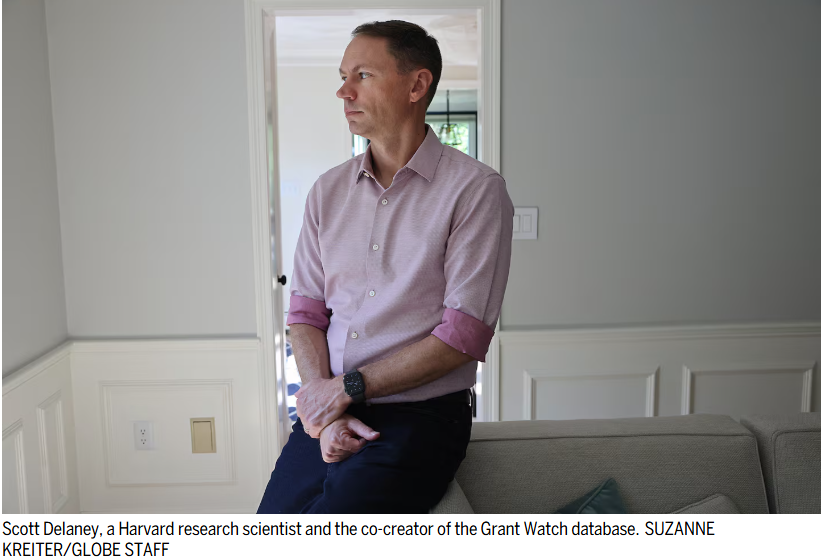
Our Medfield neighbor, Scott Delaney, was fired by the Federal government and he then built a much used data based of research projects that have been terminated by the government.
A lawyer-turned-Harvard scientist built what was known as Grant Watch from a Google spreadsheet over a matter of months
Comments Off on Our Neighbor Scott Delaney Fired by Feds
Five years ago tonight, Georgia Representative John Lewis passed away from pancreatic cancer at the age of 80.
Lewis was a “troublemaker” as a young adult, breaking the laws of his state: he broke the laws upholding racial segregation. He organized voting registration drives and in 1960 was one of the thirteen original Freedom Riders, white and black students traveling together from Washington, D.C., to New Orleans to challenge segregation. “It was very violent. I thought I was going to die. I was left lying at the Greyhound bus station in Montgomery unconscious,” Lewis later recalled.
An adherent of the philosophy of nonviolence, Lewis was beaten by mobs and arrested 45 times. As chairman of the Student Nonviolent Coordinating Committee, or SNCC (pronounced “snick”), he helped to organize the 1963 March on Washington where the Reverend Martin Luther King Jr. told more than 200,000 people gathered at the foot of the Lincoln Memorial that he had a dream. Just 23 years old, Lewis spoke at the event. Two years later, as Lewis and 600 marchers hoping to register African American voters in Alabama stopped to pray at the end of the Edmund Pettus Bridge in Selma, mounted police troopers charged the marchers, beating them with clubs and bullwhips. They fractured Lewis’s skull.
To observers in 1965 reading the newspapers, Lewis was simply one of the lawbreaking protesters who were disrupting the “peace” of the South. But what seemed to be fruitless and dangerous protests were, in fact, changing minds. Shortly after the attack in Selma, President Lyndon Baines Johnson honored those changing ideas when he went on TV to support the marchers and call for Congress to pass a national voting rights bill. On August 6, 1965, Johnson signed the Voting Rights Act authorizing federal supervision of voter registration in districts where African Americans were historically underrepresented.
New Black voters helped to elect Lewis to Congress in 1986. He held the seat from then until his death in 2020, winning reelection 16 times.
Before Representative Lewis died, reporter Jonathan Capehart asked him “what he would say to people who feel as though they have already been giving it their all but nothing seems to change.” Lewis answered: “You must be able and prepared to give until you cannot give any more. We must use our time and our space on this little planet that we call Earth to make a lasting contribution, to leave it a little better than we found it, and now that need is greater than ever before.”
“Do not get lost in a sea of despair,” Lewis tweeted almost exactly a year before his death. “Do not become bitter or hostile. Be hopeful, be optimistic. Never, ever be afraid to make some noise and get in good trouble, necessary trouble. We will find a way to make a way out of no way.”
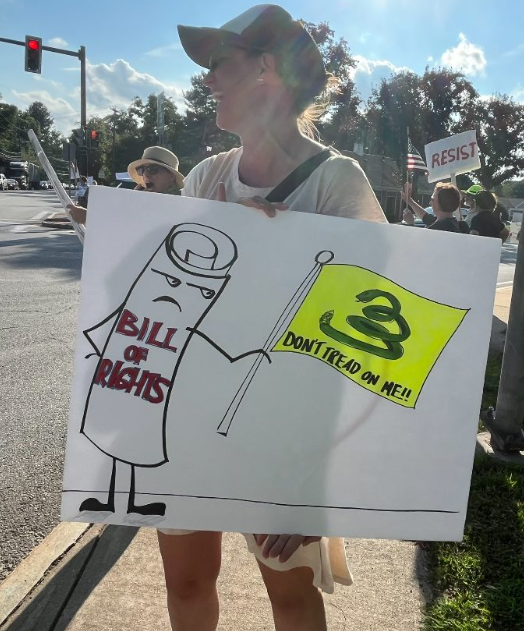
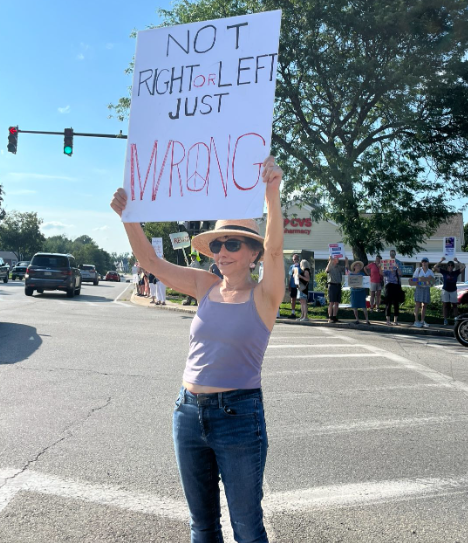
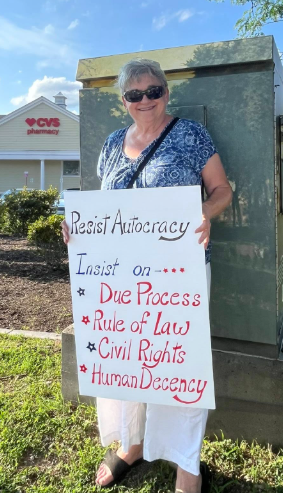
Today, as the storm over the release of the Epstein files became a maelstrom, the American people rallied at more than 1,500 sites nationwide to protest the Trump administration in a day of action to honor Representative Lewis. Organizers of the “Good Trouble Lives On” day of action vowed to “take to the streets, courthouses, and community spaces to carry forward his fight for justice, voting rights, and dignity for all.”
“My philosophy is very simple,” Representative Lewis once told an audience. “When you see something that is not right, not fair, not just, say something! Do something! Get in trouble, good trouble, necessary trouble.”
Comments Off on Honoring John Lewis in Medfield Yesterday
Posted onJuly 15, 2025|Comments Off on Standout in Medfield 7/17 – Good Trouble Lives On
From the Democratic Town Committee –
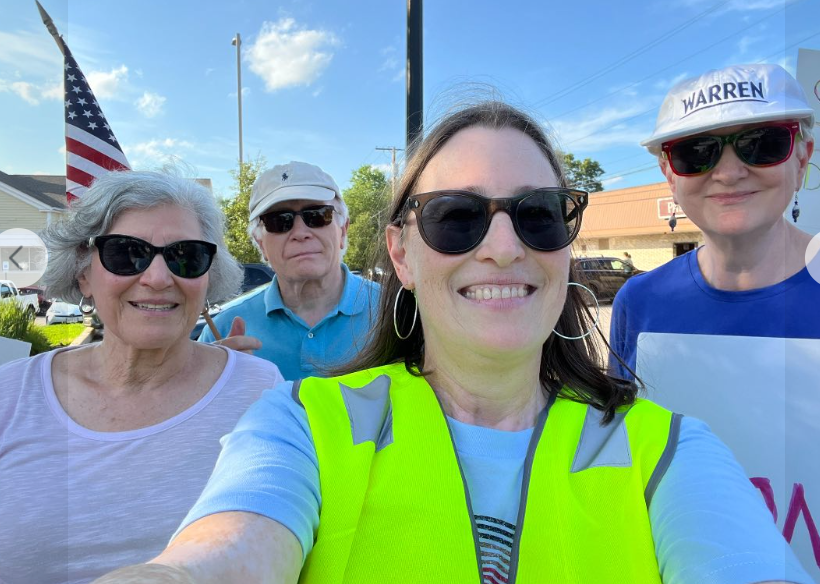
Hope to see many of you this Thursday in Medfield at 5:00!! Bring your best signs and some friends. Let’s make a strong statement by standing out all along Route 109, from Westwood to Medway!
It’s going to be hot, so we will have a cooler with water for those who need it. Intersection of Routes 109 and 27.
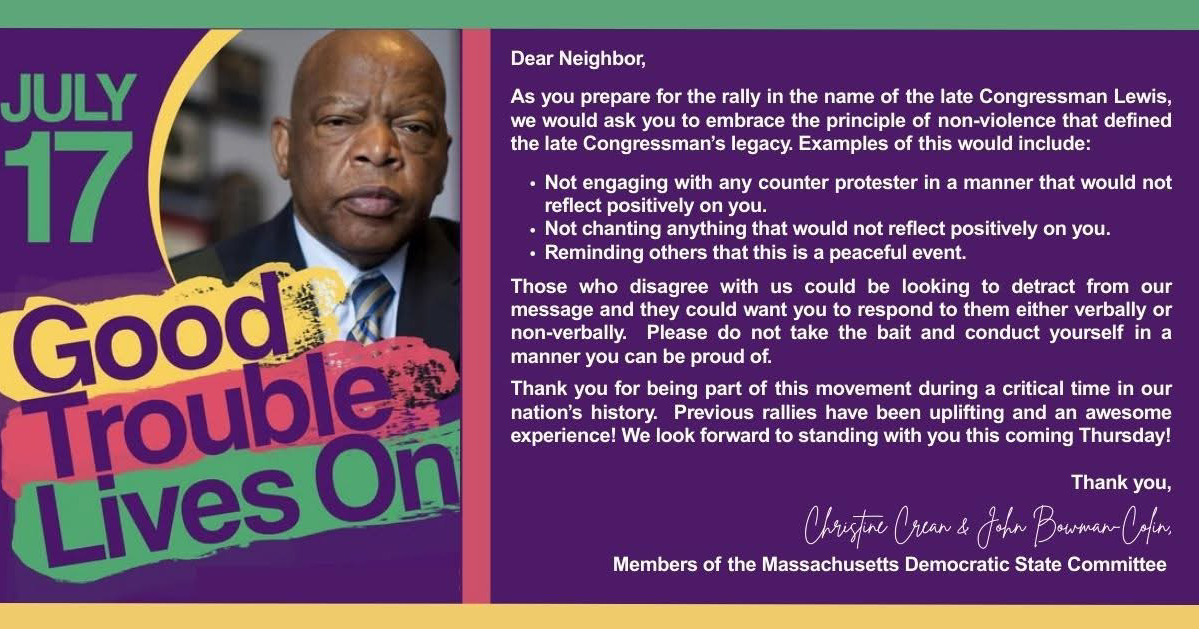
As always, this is a peaceful event. Please see attachment for some guidelines to keep in mind.
On Thursday, July 10, 2025 at 09:21:02 AM EDT, Becca Kornet <becca_kornet@yahoo.com> wrote:
Reminder – join us next Thursday to make some GOOD TROUBLE in Medfield! Please click the link to RSVP if you can – thank you!
On Monday, June 30, 2025 at 10:55:13 AM EDT, Becca Kornet <becca_kornet@yahoo.com> wrote:
The next national day of action (a la Hands off and No Kings) will be Good Trouble Lives On!
Protests will be happening all across the country on July 17th, the anniversary of Congressman John Lewis’ passing.
Rush hour standouts are planned for several towns along Rte 109. Medfield’s will take place from 5-6:30 at the intersection of Rtes 109 and 27. Bring your best signs!
Click here to RSVP if you can – it will help us easily contact folks in case of any changes (e.g., weather delay): https://mobilize.us/s/z1qByE
More info about the national day of action:
Good Trouble Lives On is a national day of nonviolent action to respond to the attacks posed on our civil and human rights by the Trump administration and to remind them that in America, the power lies with the people. On July 17, the anniversary of Congressman John Lewis’s passing, we’re taking action across the country to defend our democracy and carry forward his legacy of Good Trouble.
From voter suppression bills like the SAVE Act to the criminalization of protest, the Trump administration is launching a full-scale attack on our civil and human rights. But we know the truth: in America, the power lies with the people, and we’re rising to prove it.
This is more than a protest; it’s a moral reckoning. A continuation of the movement Lewis helped lead, and a new front in the struggle for freedom.
Please note: A core principle behind our Good Trouble Lives On actions is a commitment to nonviolence in all we do. We expect all participants to seek to de-escalate any potential confrontation with those who disagree with our values.
Comments Off on Standout in Medfield 7/17 – Good Trouble Lives On
I started this blog to share the interesting and useful information that I saw while doing my job as a Medfield select board member. I thought that my fellow Medfield residents would also find that information interesting and useful as well. This blog is my effort to assist in creating a system to push the information out from the Town House to residents. Let me know if you have any thoughts on how it can be done better.
For information on my other job as an attorney (personal injury, civil litigation, estate planning and administration, and real estate), please feel free to contact me at 617-969-1500 or Osler.Peterson@OslerPeterson.com.













 Medfield02052's Blog