
Category Archives: Uncategorized

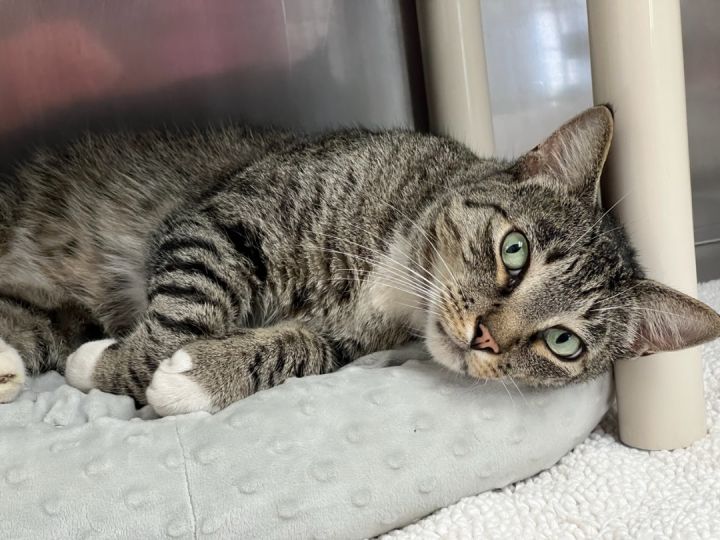
Cat found this weekend on Copperwood Road

From the Medfield Animal Shelter listing:

Meet Stray tabby cat found in Medfield

This handsome and friendly tabby cat with four white feet and a white chest showed up at the home of a family of cat lovers on Copperwood Rd in Medfield on August 4th. He was meowing a lot and very hungry. He has a microchip that was purchased by Gardner Animal Control but it is not registered to an owner. If he is your cat or you know who he belongs to, please email : info@medfieldshelter.com. We are calling him Ken. He is not available for adoption, as we are hoping to reunite him with his owner.

The first step in our adoption process is to fill out an adoption application here: medfieldshelter.com/adopt

Our cats are typically adopted quickly, and we receive many applications for each one, so if you are ready to adopt, please fill out the adoption application.

If a cat is listed on our website, they are still available for adoption, but there may be applications received ahead of yours.

All adoption meetings are by appointment. Our adoption fee for cats six months – 11 years is $150 for one cat, $250 for a pair. Senior cats over 11 years are $125. The adoption fee includes age-appropriate vaccines, dewormer, microchip, testing for FeLV and FIV, and spaying/neutering.

https://www.petfinder.com/cat/stray-tabby-cat-found-in-medfield-65763254/ma/medfield/a-medfield-animal-shelter-ma57/

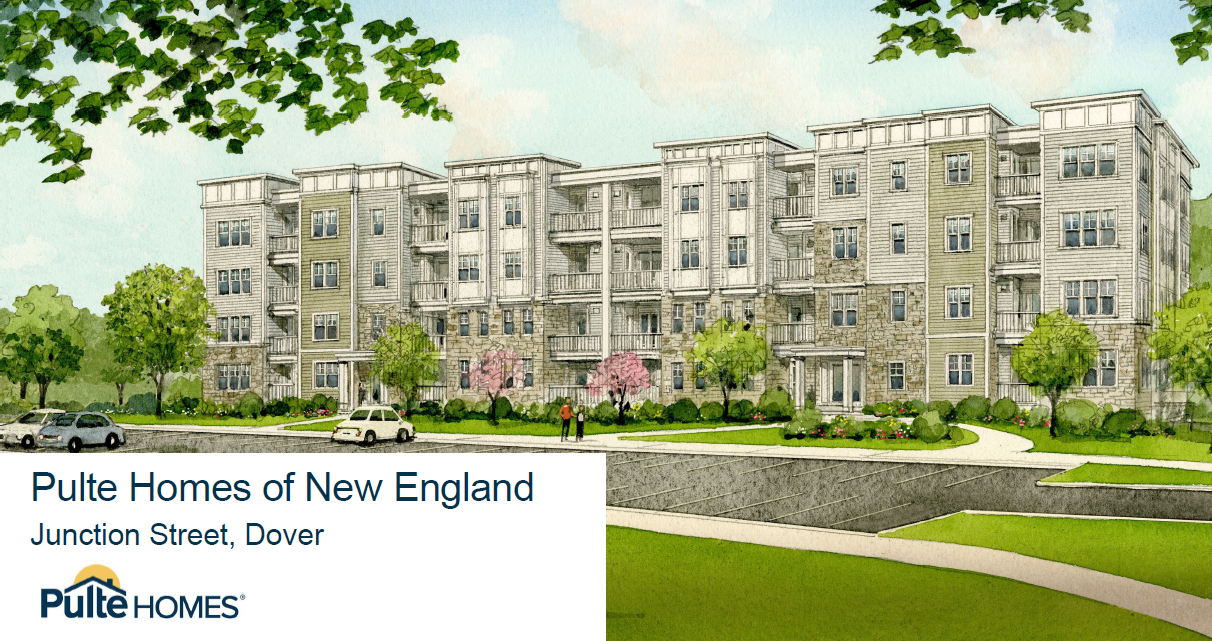
Pulte looks to develop in Dover next to Evergreen Way

On Tuesday this week Pulte presented its high density development ideas to Dover for 17 acres of land between Dover-Sherborn High School and the Town of Medfield – basically in the back yards of those living along Evergreen Way.

Town Administrator, Kristine Trierweiler shared with me that Pulte is asking to buy water and sewer use from the Town of Medfield, but Pulte apparently has alternative backup plans for both as well.

Former Dover Select Board member Carol Lisbon shared this link: “A replay of the last night’s meeting ( after the entertainment) can now be found on YouTube. https://www.youtube.com/watch?v=73WbG8KYjU8

Office Hours Tomorrow 9-10 at The Center

Selectman Office Hours this Friday

I hold regular monthly office hours at The Center on the first Friday of every month from 9:00 to 10:00 AM. 
Residents are welcome to stop by to talk in person about any town matters.
Residents can also have coffee and see the Council on Aging in action (a vibrant organization with lots going on).
I can be reached at my cell, 508-359-9190

CORRECTION = SB meeting is 7/18/23

My last post with the Select Board agenda incorrectly was captioned with the wrong meeting date. The Select Board is meeting Tuesday, July 18. My apologies.

Office hours tomorrow, 9-10AM

Select Board Office Hours this Friday


I hold regular monthly office hours at The Center on the first Friday of every month from 9:00 to 10:00 AM. 
Residents are welcome to stop by to talk in person about any town matters.
Residents can also have coffee and see the Council on Aging in action (a vibrant organization with lots going on).
I can be reached via 508-359-9190 or this blog about Medfield matters. 

Look for Carol’s Globe article today

Please read my lawyer colleague, attorney Carol Steinberg’s article in today’s Globe, “Finding freedom at the head of the class” that appears above the fold on the op ed page, on her work educating 4th graders about people’s disabilities. I have learned incredible amounts about disability issues in the past ten years of my working with Carol. She is currently on the ABA’s national attorney committee on disabilities and formerly served on the Commonwealth of Massachusetts’ Architectural Access Board, which makes decisions about required standards for buildings. She has long been active about disabilities, including authoring several other Globe articles and lobbying for needed legislation.

https://www.bostonglobe.com/2023/07/04/opinion/finding-freedom-head-class/

June 24, 1675 King Philip’s War Breaks Out

Daily emails from Mass Humanities are often fascinating, and always interesting. This is the one from today:

June 24, 1675 King Philip’s War Breaks OutMass Moments

On this day in 1675, Wampanoag warriors killed seven colonists in Swansea in retaliation for a series of injustices suffered at the hands of the English. This raid is generally considered the beginning of King Philip’s War, a bloody conflict that would involve every New England colony and Algonquian peoples throughout the region. Over the next year, members of the Abenaki, Narragansett, Nipmuc, and Wampanoag tribes attacked more than half of all the settlements in New England and reduced about a dozen towns in Plymouth and Massachusetts Bay colonies to ashes. By August of 1676, more than 600 settlers had died and 1,200 homes had been burned. An estimated 3,000 Native Americans died at the hands of the English.
By the 1670s there were more than 50,000 English colonists living in New England, and they were steadily encroaching on land held by Native people.

In 1662 the governor of Plymouth Colony summoned Wamsutta, the young sachem, or chief, of the neighboring Wampanoag tribe, to meet with him. Distrustful of the Englishman’s intentions, Wamsutta refused and was forcefully escorted to Plymouth by armed settlers. Days later, Wamsutta’s men carried their leader home, dead. Inexplicably he had become ill shortly after his conference with colonial officials. Wamsutta’s brother Metacom, called Philip by the English, succeeded him as sachem. Metacom firmly believed white settlers had poisoned Wamsutta; many Wampanoags agreed, further heightening tension.
By the 1670s there were more than 50,000 English colonists living in New England, and they were steadily encroaching on land held by Native people. Decimated by diseases Europeans brought to America in the early 1600s, the Algonquian population had fallen to about 20,000. The settlers and Native Americans were no closer to understanding each other and their respective cultures than at the beginning of the century. The Reverend Increase Mather captured English sentiments toward Philip and the Indians when he described the Wampanoag leader as one of the “heathen people amongst whom we live, and whose Land the Lord God of our Fathers hath given to us for a rightful Possession.”
Time and again, ill-trained and poorly-prepared colonists found themselves thwarted by Native warriors . . .
In June 1675 simmering hostilities erupted into open warfare. Early in the month, following a highly questionable trial, Plymouth authorities hanged three Wampanoag men for the alleged murder of John Sassamon, a Native American who had been raised and educated among the Puritan elite. Metacom was enraged. On June 20th, Wampanoag warriors burned several farms in Swansea. Three days later, a Swansea man shot and mortally wounded a Wampanoag. The attack on the 24th was the Native warriors’ revenge. Terrified Swansea settlers abandoned their farms and took refuge in garrisons.
Plymouth Colony sought help from Massachusetts Bay Colony and together their militias tried to corner Philip. He eluded them and fled to his Nipmuc allies in central Massachusetts. In the month that followed, Wampanoags attacked Taunton and Old Rehoboth; they burned much of Middleboro and destroyed the village of Dartmouth.
Time and again, ill-trained and poorly-prepared colonists found themselves thwarted by Native warriors who used guerilla-type tactics, were far more skillful marksmen, and could easily pick up and move their camps.
While the Native peoples’ tactic of remaining constantly on the move prevented the English from counterattacking, it made it impossible for the them to grow and harvest food.
The Narragansett, feared and respected for the prowess of their warriors, had initially stayed out of the conflict, but in the late fall of 1675 rumors circulated among the English that the tribe was preparing for war. On December 19th the English staged a pre-emptive strike. A combined force of 1,000 men from Massachusetts Bay, Plymouth, and Connecticut colonies attacked a fortified Narragansett village. (Rhode Island, under Roger Williams’s leadership, declined to participate.)
In what became known as the Great Swamp Fight, Englishmen slaughtered approximately 600 Narragansett men, women, and children. The English declared it a huge victory — a questionable conclusion since the Narragansett immediately joined the alliance of Native warriors and subsequently killed scores of settlers and destroyed hundreds of homes.
By the spring of 1676, the English had abandoned Springfield, Deerfield, Northfield, Brookfield, Lancaster, Groton, Mendon, Wrentham, Swansea, Rehoboth, and Dartmouth. Algonquian warriors staged raids in Chelmsford, Andover, Haverhill, Woburn, and as close to Boston as Braintree.
While the Native peoples’ tactic of remaining constantly on the move prevented the English from counterattacking, it made it impossible for them to grow and harvest food. Algonquian food supplies began to run low, a fact their enemies were quick to notice.
. . . the English staged an offensive and forced the Indians to abandon their newly planted fields. In July colonists resumed their pursuit of King Philip.
In May 1676 the Nipmuc established camps along the Connecticut River, about five miles north of Deerfield, to fish and plant crops. Flush with recent victories, they let down their guard. The English had good intelligence and, when word reached them, 150 men staged a dawn attack. They killed primarily women, children, and old people as they slept. The Nipmuc warriors regrouped, fought back and then pursued the English, killing 39 of them. The Nipmuc’s losses were estimated at 200.
The following month, the English staged an offensive and forced the Indians to abandon their newly planted fields. In July colonists resumed their pursuit of King Philip. They captured his wife and nine-year-old son and sold them into slavery. King Philip was betrayed by one of his own men, who shot and killed him on August 12, 1676. Englishmen decapitated and quartered his body. They placed his head on a stake and marched it through the streets of Plymouth, where it remained in public view for years.
Colonists systematically hunted down the other Native American leaders, killing some of them on sight and convincing others to surrender with promises of amnesty, then executing them. In September, Massachusetts Bay Colony declared that any Native person responsible for English deaths would be killed and all remaining Indians sold into slavery. Most of the enslaved were shipped to the West Indies, an almost certain death sentence.
By late 1676, English settlers had effectively cleared southern New England of its native inhabitants. A small number of King Philip’s people — Metacom’s Wampanoags — managed to survive. They sustained their culture in Mashpee on Cape Cod and on Martha’s Vineyard.

Sign up for Daily eMoments

Eagle Scout Parker Kilmer

Troop 10 honored Parker Kilmer for attaining his Eagle Scout award last Saturday at the UCC. 102 merit badges, and only a Medfield High School sophomore. Parker attributed his getting so many merit badges so fast to the COVID shut down, which allowed him to do a lot on-line.

Then town administration consults

Town leaders donned thinking caps: L -R: Mike Sullivan, Mark Fisher, me, and Sarah Raposa at a benefit Medfield trivia evening (MCPE?), where the scores documented that we were not so knowing. However, we did have the most interesting hats in the room. I was asked to field a Town House team, and Mike, Mark and Sarah were the good sports that joined me. And wore the hats I brought.

OneDrive amuses me by putting up old photos every day and this was one from today, so the trivia event was in early June.

The Garden Continuum keeps Straw Hat Park beautiful

Thank you Garden Continuum!

Monique Allen and her landscaping business, The Garden Continuum, volunteered lots of time to design and plant the Straw Hat Park. They made the Straw Hat Park a reality, and now today The Garden Continuum was back comping their time to spread mulch.

Mike Thompson